When you purchase through links on our site, we may earn an affiliate commission at no extra cost to you.
If you’re comparing Mars Hydro vs Spider Farmer, the good news is that both brands make capable LED grow lights for indoor growing.
The harder question is deciding which is better for your setup.
Mars Hydro often gives you more light output for the money, while Spider Farmer tends to focus more on even light distribution, compact designs and slightly more refined controls. Which one suits you better depends on what you’re growing, the size and shape of your growing area, and the specific models you’re comparing.
In this guide, I’ll compare the two brands across their budget, mid-range and premium grow lights, including the TS600 vs SF600, TS1000 vs SF1000 and FC3000 vs SE3000.
If you’re still comparing other brands as well, see my guide to the best LED grow lights in the UK for the wider shortlist.
🏆 Our Top Picks
If you want the short version, these are the three lights I’d look at first.
Below, I’ve compared the closest equivalent models from each brand at budget, mid-range and premium price points, focusing on the differences that matter most in real use.
Mars Hydro vs Spider Farmer: Budget Comparison
At the budget end, the Mars Hydro TS600 and Spider Farmer SF600 are both aimed at small indoor setups, but they suit different spaces.
The TS600 is a more compact, square-style light with stronger output concentrated over a smaller area. The SF600 is a long, narrow fixture designed to spread light across shelves, benches and rectangular growing spaces.
Both can work well for seedlings, herbs and smaller plants. For more demanding fruiting crops such as chillies or tomatoes, the TS600 is the better choice because it concentrates more usable intensity over a compact area. The SF600 is better suited to a wider growing area where even light spread matters more than maximum intensity, making it a stronger fit for seedlings, herbs, leafy greens and other less demanding non-fruiting plants.
Here’s how they compare side by side:


The Mars Hydro TS600 is the better choice if you want more output concentrated over a compact growing area. The Spider Farmer SF600 uses less power and spreads its light across a much longer rectangular footprint.
For chillies, tomatoes or other fruiting plants in a small square space, I’d usually lean towards the TS600. For a longer growing area where even coverage matters more than peak intensity, the SF600 makes more sense.
If the prices are close, I’d choose based on the shape of your growing space rather than the brand.


If you mainly need a grow light for seedlings, herbs or other less demanding plants, see my Best Cheap Grow Lights UK guide for more lower-cost options.
Mars Hydro vs Spider Farmer: Mid-Range Comparison
The Spider Farmer SF1000 and Mars Hydro TS1000 are the closest direct comparison between the two brands and probably the most relevant pair for many UK growers.
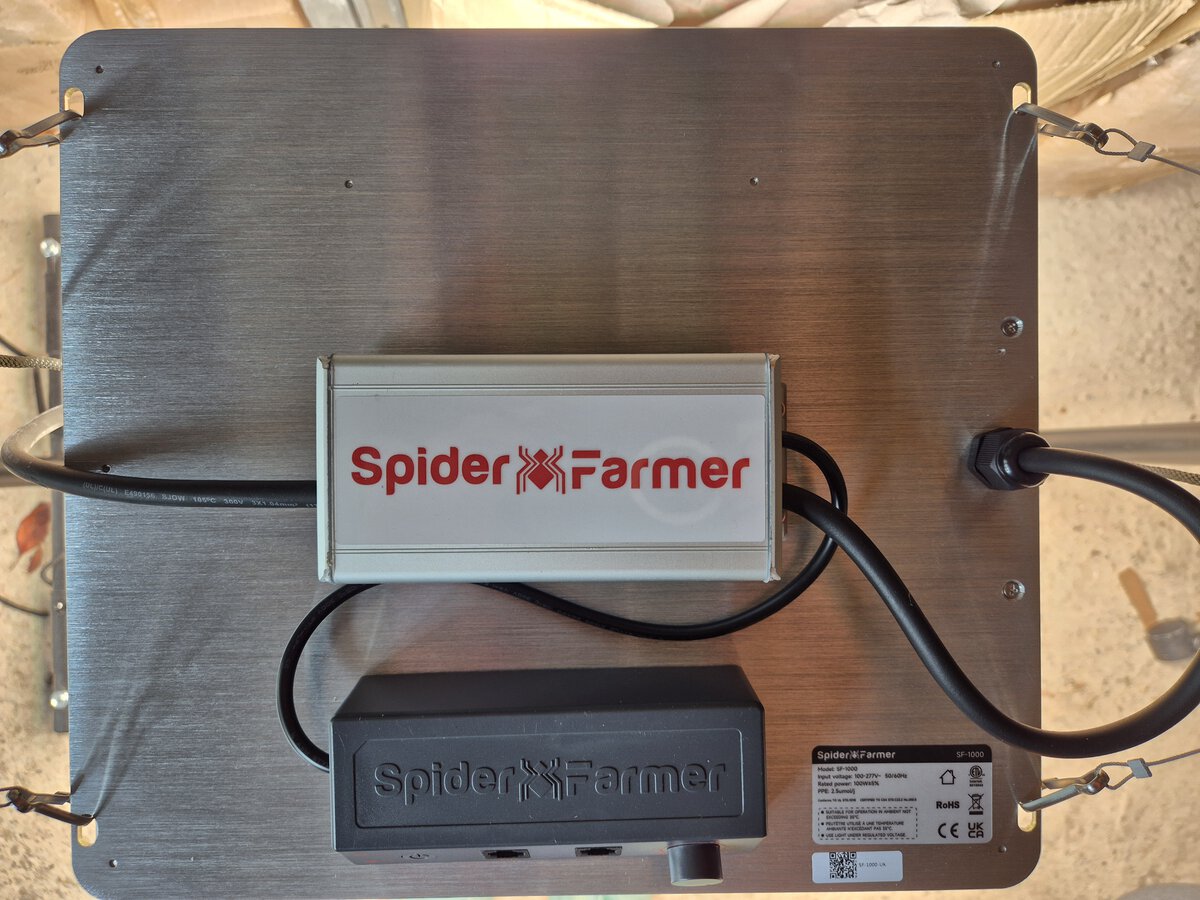
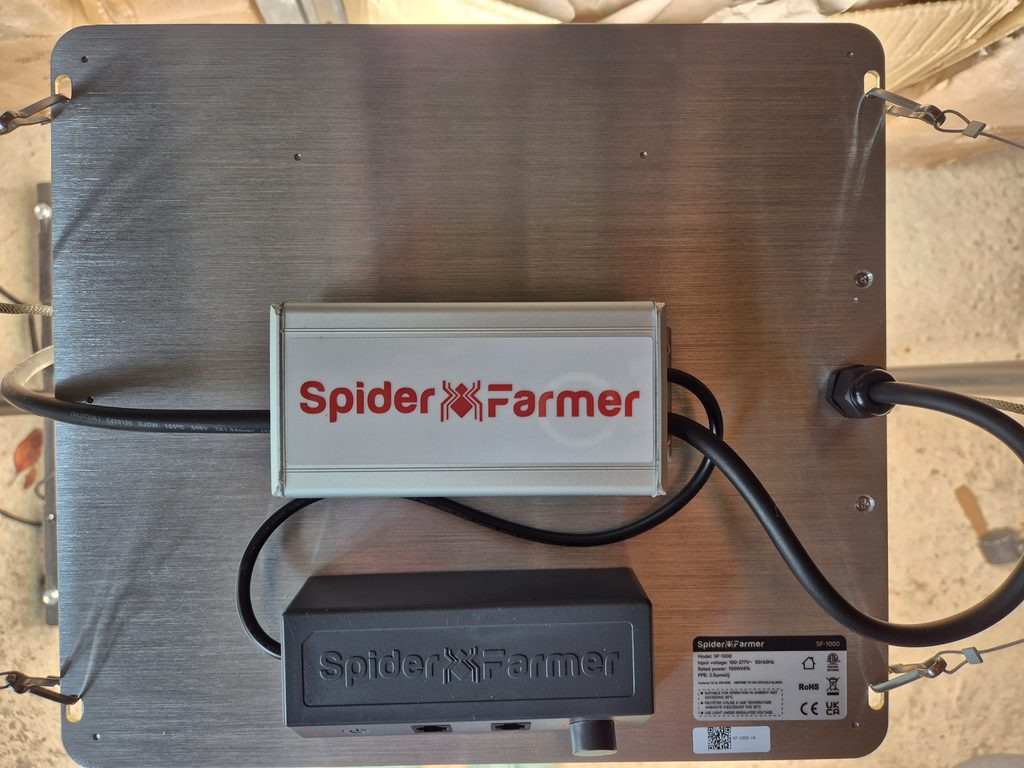
I have now finished testing the Spider Farmer SF1000 in my own setup, so I have a useful real-world reference point for what a 100W panel can comfortably do. I have also previously used the 150W ViparSpectra XS1500 Pro, which helps illustrate the practical difference between the two power classes.
The SF1000 is a compact 100W light that makes most sense where lower electricity use, less heat and a smaller growing area are priorities. In my setup, I would be comfortable using it over around two mature fruiting plants.
The Mars Hydro TS1000 draws 150W, putting it much closer to the ViparSpectra XS1500 Pro in terms of power. That extra 50W allows it to deliver more total light and generally be positioned a little further from the canopy, giving you a broader usable footprint.
In simple terms, the choice is between the SF1000’s lower power consumption and easier heat management, or the TS1000’s extra output and greater coverage.
Here’s how they compare side by side:

The TS1000’s extra 50W means it can generally be hung a little further from the canopy while still delivering useful intensity. In practice, that gives it a broader usable footprint, much like the 150W ViparSpectra XS1500 Pro I have used.
If you’re choosing specifically between these two lights, I’ve compared them in more detail in my Spider Farmer SF1000 vs Mars Hydro TS1000 guide, including running costs, output and which suits different grow spaces.
For most growers, the SF1000 vs TS1000 decision is really about lower power use and easier heat management versus the greater output of a 150W light, rather than one brand simply being better than the other.
Mars Hydro vs Spider Farmer: Premium Range Comparison
The Spider Farmer SE3000 and Mars Hydro FC3000 are the closest premium comparison between the two brands, with both using 300W bar-style designs for larger indoor growing areas.
Both are aimed at roughly 90 × 90cm / 3 × 3 ft setups, and on current specifications there is very little between them for efficiency. Both are rated at around 2.85 µmol/J, so the decision is less about raw output and more about controls, layout, current price and availability.
One useful difference is smart control. The current SE3000 has Bluetooth and Wi-Fi built in, while the FC3000 requires a compatible Mars Hydro controller for app-based control.
Here’s how they compare:


There is very little between these two on paper. Both offer similar power, coverage and claimed efficiency, so I’d choose mainly on price, control features and availability.
If one is noticeably cheaper when you buy, that is likely to matter more than the brand name.
Where the ViparSpectra XS1500 Pro Fits
The ViparSpectra XS1500 Pro is worth considering because it sits in a useful middle ground between compact 100W lights and the much larger 300W bar-style systems.
It is a 150W board-style light, so it is closer in power to the Mars Hydro TS1000 than the Spider Farmer SF1000, but in my own setup it has given me noticeably more usable coverage than the SF1000.
I previously grew three mature plants under the XS1500 Pro, whereas with the SF1000 I’d currently be more comfortable limiting the space to two mature fruiting plants. That is only my real-world setup rather than a fixed plant limit, but it gives a better idea of where the ViparSpectra fits in practice.
That makes it a strong option if you want more coverage than a compact 100W light can comfortably provide, but you do not need to jump all the way to a 300W SE3000 or FC3000.
You can read my full ViparSpectra XS1500 Pro review for my real-world experience with the light.
If you want a broader look at the brand and its other models, see my ViparSpectra grow lights guide.

Electricity Use and Running Costs
Power draw matters because even a modest difference in wattage adds up when a grow light runs for many hours each day.
Using the current UK electricity figure of 26.11p per kWh:
- A 100W light running for 16 hours a day costs about 42p per day, or roughly £12.53 per month
- A 150W light under the same schedule costs about 63p per day, or roughly £18.80 per month
That does not automatically make the lower-wattage light “better” — a higher-powered light may also produce more total light. But it does mean running cost and heat output are worth considering alongside purchase price.
Which Brand Should You Choose?
There is no clear overall winner between Mars Hydro and Spider Farmer.
Mars Hydro often makes sense if you want strong output for the money, while Spider Farmer can be particularly attractive where even coverage, compact design and integrated control features matter. The exact choice still depends much more on the individual models than the brand name.
The most important thing is to compare the actual models rather than choosing purely by brand. A TS600 and SF600 suit quite different spaces, while the SE3000 and FC3000 are much closer competitors.
For most buyers, I’d choose based on grow-space shape, required output, running cost and current price.
📎 Related Guides
- Best LED Grow Lights UK – Compare the best options across different budgets and grow spaces
- Spider Farmer SF1000 vs Mars Hydro TS1000 – A closer look at the two mid-range models
- ViparSpectra XS1500 Pro Review – My real-world experience with an alternative to both brands
- Grow Lights Explained – A simple guide to output, coverage, efficiency and grow-light terminology