
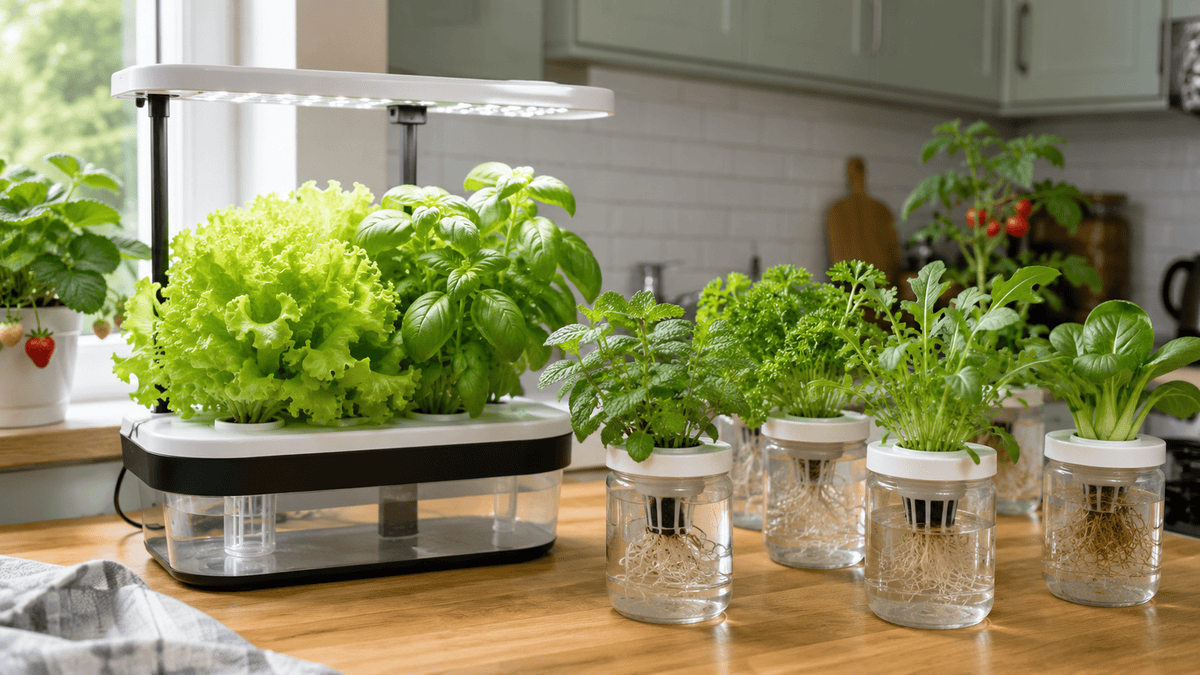
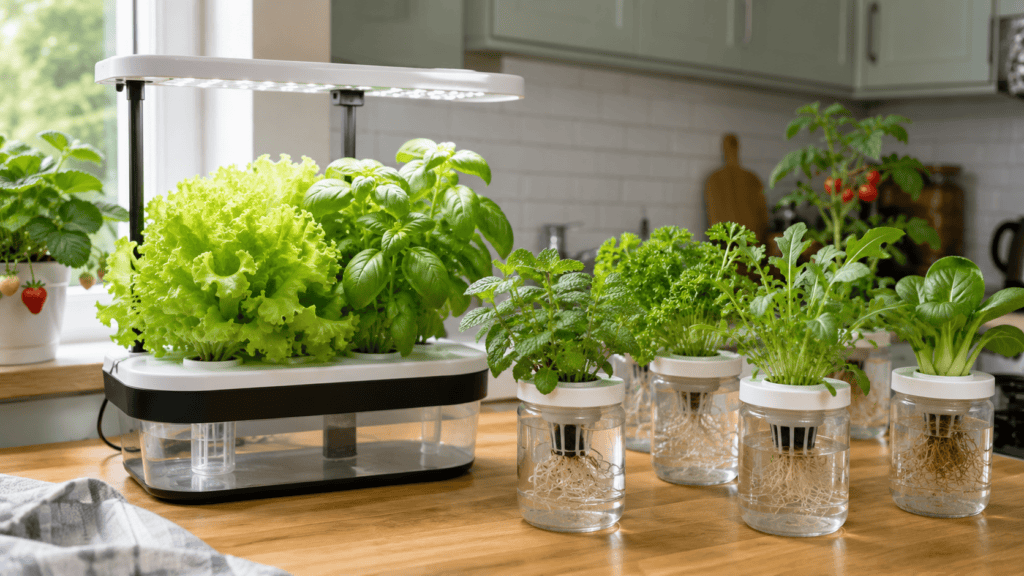
What plants can you grow hydroponically indoors? The easiest options are herbs, salad leaves and compact leafy vegetables such as basil, lettuce, rocket, pak choi, parsley and mint.
One of the easiest mistakes with indoor hydroponics is choosing plants that are too large, too hungry or too demanding for the system you are using. Tomatoes, strawberries and chillies can be grown hydroponically indoors, but they usually need more light, more space and more attention than beginner-friendly herbs and salad crops.
In this guide, we’ll look at what plants can be grown hydroponically indoors, which are easiest for beginners, and which crops are better left until you have a larger setup with stronger lighting.
If you are still choosing your equipment, you may also find my guide to the best hydroponic growing systems helpful.
Best Plants to Grow Hydroponically Indoors
The best plants you can grow hydroponically indoors are usually those that grow quickly, stay fairly compact and do not need months of strong light before they produce anything useful.
For most beginners, the easiest hydroponic plants are:
- lettuce
- basil
- mint
- parsley
- coriander
- rocket
- spinach
- pak choi
- kale
- microgreens
These plants work well because they do not need deep root space, heavy fruit support or very intense lighting compared with crops such as tomatoes, cucumbers or peppers.
They also make sense in a real kitchen. Herbs such as basil, coriander and parsley are often expensive to buy fresh and can wilt quickly once opened. Growing them hydroponically means you can cut small amounts when you actually need them, rather than buying a plastic packet and throwing half of it away a few days later.
Quick Answer: Easiest Hydroponic Plants for Beginners
If you are just getting started, lettuce and basil are probably the safest first choices. They are quick, useful in the kitchen and much more forgiving than larger vegetables.
| Plant | Difficulty | Light need | Best system type | Why it works well |
|---|---|---|---|---|
| Lettuce | Very easy | Low to medium | Countertop system or Kratky jar | Fast-growing, compact and ideal for repeat harvests. |
| Basil | Very easy | Medium | Countertop system | Grows well indoors and gives regular kitchen harvests. |
| Mint | Easy | Low to medium | Small hydroponic system or separate container | Vigorous and useful, but best kept under control. |
| Parsley | Easy to moderate | Medium | Countertop system | Slower than basil, but reliable once established. |
| Pak choi | Easy | Medium | Countertop system or larger indoor setup | A good leafy crop that grows quickly under decent light. |
| Tomatoes | Moderate to difficult | High | Larger system with strong grow light | Possible indoors, but needs more space, light and support. |
Lettuce
Difficulty: Very easy
Light need: Low to medium
Best system type: Countertop system or Kratky jar
Why it works well: Fast-growing, compact and ideal for repeat harvests.
Basil
Difficulty: Very easy
Light need: Medium
Best system type: Countertop system
Why it works well: Grows well indoors and gives regular kitchen harvests.
Mint
Difficulty: Easy
Light need: Low to medium
Best system type: Small hydroponic system or separate container
Why it works well: Vigorous and useful, but best kept under control.
Parsley
Difficulty: Easy to moderate
Light need: Medium
Best system type: Countertop system
Why it works well: Slower than basil, but reliable once established.
Pak choi
Difficulty: Easy
Light need: Medium
Best system type: Countertop system or larger indoor setup
Why it works well: A good leafy crop that grows quickly under decent light.
Tomatoes
Difficulty: Moderate to difficult
Light need: High
Best system type: Larger system with strong grow light
Why it works well: Possible indoors, but needs more space, light and support.
Best Hydroponic Herbs to Grow Indoors
Herbs are one of the best uses for indoor hydroponics. They do not take up much space, they are useful almost every day in the kitchen, and they are expensive enough in supermarkets to feel worthwhile.
Instead of buying a small pack of fresh herbs that wilts in the fridge, a hydroponic unit lets you take a few leaves when you need them. That is where indoor hydroponics starts to feel genuinely practical rather than just interesting.
Basil
Basil is one of the best herbs to grow hydroponically indoors. It grows quickly, responds well to regular harvesting and suits the warm, bright conditions found in many indoor hydroponic systems.
It is a good first crop because you can see progress quickly. Once the plant is established, pinch out the growing tips to encourage bushier growth rather than letting it become tall and leggy.
Mint
Mint grows strongly in hydroponic setups and is useful for tea, cooking and cold drinks. The main issue is that it can become vigorous, so it is often better grown in its own section or separate container rather than mixed too closely with slower herbs.
Parsley
Parsley is slower than basil, but it can still work well indoors. It is a good choice if you want a useful kitchen herb that does not need a large growing area.
Coriander
Coriander can be grown hydroponically, but it is slightly more awkward than basil. It can bolt if conditions are too warm or stressful, so it is best treated as a quick crop rather than something you expect to keep going forever.
Best Salad Leaves for Hydroponics
Salad leaves are probably the most beginner-friendly category for indoor hydroponics. They grow quickly, stay compact and do not need pollination or fruit support.
Lettuce
Lettuce is one of the easiest and most reliable hydroponic crops. Loose-leaf lettuce is usually better than large hearting types because you can harvest outer leaves while the plant continues growing.
For small indoor systems, look for compact varieties rather than large outdoor lettuces that need more space.
Rocket
Rocket grows quickly and works well if you like stronger-tasting salad leaves. It is better harvested young, before the leaves become too tough or peppery.
Spinach
Spinach can work indoors, but it prefers cooler conditions than some herbs. It is worth trying if your indoor growing area is bright but not too hot.
Microgreens
Microgreens are not always what people imagine when they think of hydroponics, but they are one of the easiest indoor crops. They need very little space and can be grown quickly on a windowsill or under a small grow light.
Best Hydroponic Vegetables to Grow Indoors
Hydroponically grown vegetables are possible indoors, but the easiest options are leafy vegetables rather than large fruiting crops.
Pak Choi
Pak choi is a good indoor hydroponic vegetable because it grows quickly and does not need months of care before harvest. Baby pak choi varieties are especially suitable for small systems.
Kale
Kale can grow hydroponically indoors, although compact varieties are best. It needs more room than lettuce but can provide regular small harvests if grown under decent light.
Chard
Chard can work in a larger indoor hydroponic setup, but it is not always ideal for small countertop systems because the leaves can become quite large.
Can You Grow Strawberries Hydroponically Indoors?
Yes, strawberries can be grown hydroponically indoors, but they are not the easiest beginner crop.
They need good light, enough space, careful feeding and some help with pollination indoors. They are much more demanding than lettuce or basil, so they are better treated as a second-stage project once you already understand your system.
Indoors, you are effectively replacing the bees. When strawberry flowers open, gently brush around the centre of each flower with a small, clean artist’s paintbrush to move pollen around. It only takes a few seconds, but it can make the difference between a plant that flowers and a plant that actually fruits.
If your main aim is quick, reliable indoor harvests, start with herbs and salad leaves before moving on to strawberries.
Can You Grow Tomatoes Hydroponically Indoors?
Tomatoes can be grown hydroponically indoors, but they need a much stronger setup than most small kitchen systems can provide.
The main challenges are:
- they need strong light for flowering and fruiting
- they need more root space than herbs or lettuce
- they usually need support as they grow
- they take longer before you get a harvest
- they may need help with pollination indoors
Small dwarf tomato varieties are more realistic indoors than large cordon types. Even then, tomatoes are better suited to a larger hydroponic setup with a proper grow light rather than a small countertop herb system.
As with strawberries, indoor tomatoes may need help with pollination. A gentle tap of the flowering stem or a quick brush inside the flower can help move pollen. Without that, you may end up with a healthy-looking green plant but very little fruit.
Can You Grow Potatoes Hydroponically?
Potatoes can be grown hydroponically, but they are not a sensible choice for most indoor hydroponic beginners.
They need a lot of space, more root volume and a different type of setup from the small water-based systems commonly used for herbs and salad leaves. For most UK home growers, potatoes are usually better grown in containers, bags or outdoor beds rather than indoors hydroponically.
Can You Grow Carrots Hydroponically?
Carrots can technically be grown hydroponically, but they are a poor fit for most small indoor systems.
The problem is that carrots need depth and physical space to form properly. In small countertop units, they are more likely to become thin, twisted or disappointing than the neat orange roots people imagine. If you are growing indoors hydroponically, you will usually get much better results from crops that grow above the water, such as lettuce, basil, pak choi and rocket.
Plants That Are Possible but Harder Indoors
Some plants can grow hydroponically indoors, but they need more space, stronger light or more experience.
These include:
- tomatoes
- chillies
- peppers
- cucumbers
- strawberries
- dwarf beans
These are not impossible, but they are less forgiving. They are better suited to larger indoor hydroponic systems, grow tents or setups with dedicated grow lights.
Plants to Avoid in Small Indoor Hydroponic Systems
Small indoor hydroponic systems are not ideal for every crop. Some plants simply become too large, too slow or too demanding.
For most beginners, it is usually best to avoid:
- potatoes
- carrots
- parsnips
- large tomato varieties
- pumpkins
- courgettes
- large cucumbers
- sweetcorn
- large brassicas such as full-size cabbages
Some of these can technically be grown hydroponically in specialist setups, but they are not a good fit for compact indoor growing. A crop being possible is not the same as it being practical.
Which Hydroponic System Is Best for Different Plants?
The best plants for your setup depend heavily on the type of hydroponic system you are using.
Small countertop hydroponic systems are usually best for herbs, lettuce and compact leafy greens. Simple Kratky jars can work well for lettuce, basil and small herbs. Larger systems with stronger lighting are better for tomatoes, chillies, strawberries and other fruiting crops.
Light is especially important once you move beyond herbs and salad leaves. Lettuce, basil and mint can often cope with modest indoor grow lights, but tomatoes, chillies and strawberries usually need a stronger setup if you want flowers and fruit rather than just leafy growth. If lighting is your main question, see my guide to the best grow lights for indoor plants.
If you are choosing a system before deciding exactly what to grow, it is worth thinking about plant size first. A neat kitchen hydroponic unit may be perfect for basil and lettuce, but it will not give large tomato plants enough space or light.
For a full comparison of beginner-friendly options, see my guide to the best hydroponic growing systems.
Best First Hydroponic Plants for a Beginner
If this is your first attempt at indoor hydroponics, keep it simple. Choose crops that reward you quickly and do not need complicated pruning, pollination or support.
My suggested first hydroponic plants would be:
- Lettuce — the easiest all-round starting crop.
- Basil — fast, useful and ideal for kitchen growing.
- Rocket — quick-growing and good for cut-and-come-again harvests.
- Pak choi — a good next step after salad leaves.
- Mint — easy, vigorous and useful, but best kept controlled.
HomeGrower tip: use staggered planting
Do not plant every pod at once if you want a steady supply. If you plant 12 lettuce pods on the same day, you may get 12 plants ready at the same time and then nothing for weeks.
A better approach is to plant a few pods, wait a week or two, then plant a few more. This gives you a more useful stream of salad leaves instead of one big harvest all at once.
Final Thoughts: Start with Easy Indoor Hydroponic Plants
The best plants to grow hydroponically indoors are not always the most impressive plants. They are the ones that suit the space, light and system you actually have.
For most beginners, herbs, lettuce, rocket, pak choi and other leafy crops are the best place to start. They grow quickly, fit small systems and give useful harvests without needing a complicated setup.
Tomatoes, strawberries, chillies and other fruiting crops can be grown hydroponically indoors, but they usually need more light, more space and more patience. Start simple, learn how your system behaves, and then move on to more ambitious plants once you have the basics working well.
For more general background on growing vegetables hydroponically, the RHS guide to hydroponics is also a useful external reference.
If you are ready to choose a setup, my guide to the best hydroponic growing systems compares the easiest options for indoor growing.
📎 Related Articles
- Best Hydroponic Growing Systems
Compare beginner-friendly indoor hydroponic systems for herbs, salad leaves and compact vegetables. - How to Grow with Hydroponics
A step-by-step beginner guide to hydroponics, including systems, nutrients, pH, lighting and planting. - Hydroponics vs Soil Growing in the UK
A practical comparison of hydroponics and compost growing for UK homes.
FAQ: What Plants Can You Grow Hydroponically Indoors?
What plants can you grow hydroponically indoors as a beginner?
The best beginner plants to grow hydroponically indoors are lettuce, basil, mint, parsley, rocket, pak choi and microgreens. These crops stay fairly compact, grow quickly and do not need the same level of light or support as tomatoes, cucumbers or peppers.
What plants can you grow hydroponically indoors in a small kitchen system?
In a small kitchen hydroponic system, the easiest plants are herbs and leafy greens. Lettuce, basil, parsley, mint, coriander, rocket and baby pak choi are much better choices than large fruiting plants because they need less space and are easier to harvest regularly.
Can you grow vegetables hydroponically indoors?
Yes, you can grow vegetables hydroponically indoors, but leafy vegetables are usually the most practical. Pak choi, kale, chard, spinach and lettuce are all more realistic for indoor hydroponics than large vegetables such as potatoes, pumpkins or full-size cabbages.
Can you grow tomatoes hydroponically indoors?
Tomatoes can be grown hydroponically indoors, but they need strong lighting, more root space and some support as they grow. They are possible, but they are not the easiest answer to what plants can you grow hydroponically indoors as a beginner.
Can you grow strawberries hydroponically indoors?
Yes, strawberries can be grown hydroponically indoors, but they are more demanding than herbs and salad leaves. They need good light, enough space and often some help with pollination if they are grown inside away from insects.
What herbs grow best hydroponically indoors?
The best hydroponic herbs for indoor growing are basil, mint, parsley, coriander and chives. Basil is one of the easiest options because it grows quickly, responds well to regular harvesting and suits compact indoor hydroponic systems.
What should you avoid growing hydroponically indoors?
For most small indoor systems, avoid potatoes, carrots, parsnips, pumpkins, courgettes, sweetcorn and large tomato varieties. These crops may be possible in specialist hydroponic setups, but they are not practical choices for a beginner kitchen system.
What plants can you grow hydroponically indoors all year round?
You can grow many herbs and leafy greens hydroponically indoors all year round if you have enough light and keep the water and nutrients stable. Lettuce, basil, mint, parsley, rocket and microgreens are some of the most useful year-round indoor hydroponic crops.