
When you purchase through links on our site, we may earn an affiliate commission at no extra cost to you.
🏆 Our Top Picks
Here are the best mini greenhouses for UK gardens, based on real-world use, durability, and value.
🏆 Our #1 Pick for Most UK Gardens
If you want a compact, practical mini greenhouse that’s sturdier than basic tiered units, the Christow Compact Walk-In Greenhouse with Shelves is the best overall choice for most UK gardens.
For most UK gardens, this is the point where mini greenhouses stop feeling flimsy and start becoming genuinely usable. It sits between a compact mini greenhouse and a full greenhouse, giving you more usable space without taking over a small garden.
- Walk-in design makes day-to-day use far easier
- More stable than typical 4-tier mini greenhouses
- Good balance of space, usability, and price
Check the latest price on Amazon
Compared to basic 4-tier mini greenhouses, it’s noticeably more stable and easier to manage day-to-day. The steel frame paired with a reinforced PE cover gives it better wind resistance, while the walk-in layout means you can organise trays properly, access plants without removing shelves, and manage ventilation more effectively.
It’s not built for harsh winter storms, but for spring seed-starting and summer growing, it offers an excellent balance of space, usability, and value.
- Compact footprint suited to patios and small gardens
- Walk-in design with built-in shelving for organised growing
- Steel frame with reinforced PE cover for improved stability
- A clear upgrade from flimsy PVC pop-up greenhouses
If you only have a balcony, a 4-tier model is more suitable — but for most patios or small gardens, this is a much more practical option.
Best for: beginner growers, renters, and gardeners who want a more stable alternative to 4-tier shelving units without committing to a full polycarbonate greenhouse. If you’re unsure which type to choose, this is the safest option for most situations.
Mini Greenhouse Comparison Table (Quick Budget-Friendly Options)
If you’re comparing the most popular budget mini greenhouses, this table gives a quick overview of size, structure, and which type suits your space best.
If you’re looking for something more durable or long-term, skip ahead to better built mini greenhouses.




Best Mini Greenhouses for UK Gardens
If your windowsills are full of leggy seedlings stretching for light, a mini greenhouse is the natural next step. It lets you start plants earlier, harden them off safely, and extend the growing season — even if you only have a patio or balcony.
In the UK, though, warmth isn’t the only factor. Wind, sudden temperature spikes, and trapped humidity are what catch most growers out. Lightweight 4-tier models can become unstable in exposed spots, and on a sunny spring morning a zipped-up greenhouse can overheat quickly.
Most mini greenhouses fall into two groups: compact, budget-friendly shelving units, and larger walk-in models that are easier to use day-to-day. The comparison table above focuses on these popular entry-level options.
If you’re looking for something sturdier or longer-lasting, it’s worth considering rigid wooden or polycarbonate models — these are covered further down the page.
For a broader look at how mini greenhouses compare to larger structures, see our HomeGrower Guide to Greenhouses and Polytunnels.
If you want a safe, reliable starting point, the Christow Walk-In Mini Greenhouse remains the best overall option for most UK gardens.
For exposed areas, prioritise sturdier walk-in frames. For balconies or tight spaces, compact 4-tier models are often the better fit.
Below, you’ll find our top mini greenhouses reviewed in more detail, based on real-world usability rather than just specifications.
These are the most practical and widely used options for UK gardens — starting with the best overall choice for most people, before moving into more compact and specialised designs depending on your space.
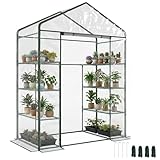
Christow Walk-In Mini Greenhouse – Best Balance of Price and Usability
If you want something that feels closer to a “proper” greenhouse without committing to polycarbonate panels, this Christow model strikes the best balance. At 195 cm tall, you can stand inside comfortably, organise trays properly, and remove shelves if you want to grow taller crops like tomatoes.
The steel frame and PE cover give it noticeably better structure than lightweight 4-tier shelving units. It still needs anchoring in exposed gardens — no portable greenhouse escapes UK wind entirely — but it feels more stable than most budget alternatives.
The mesh shelves drain water well, but very small pots can wobble slightly on them. Placing a tray or thin board underneath creates a flatter surface for seedlings.
This is the most versatile option in the list. It works well for seed starting in spring, growing salad and herbs through summer, and extending the season into autumn.
Best for: small patios, courtyards, and gardeners who want full-height access without installing a permanent greenhouse.
Gardman 4-Tier Mini Greenhouse – Best Budget-Friendly Starter Option
The Gardman 4-tier is the classic entry-level mini greenhouse. Compact and lightweight, it’s designed primarily for seedlings, plug plants, and small pots rather than larger fruiting crops.
If you want the simplest and cheapest way to start growing, this is the one most people go for — just expect to prioritise shelter and stability.
At 145 cm tall, it doesn’t offer standing access, but its slim footprint makes it suitable for balconies and tight patios. The aluminium frame keeps weight down, though this also means it needs to be placed in a sheltered position and weighted properly.
It’s not a long-term, year-round structure — but for spring seed starting and hardening off plants, it’s a very practical and affordable option.
Best for: beginners, balcony growers, and anyone testing protected growing for the first time.
Outsunny Walk-In Mini Greenhouse (8-Shelf) – Best for Narrow Spaces
This Outsunny walk-in offers full 195 cm height but in a narrower footprint than the Christow. That makes it useful where space is limited but you still want walk-in access.
If you like the Christow-style walk-in design but don’t have the width for it, this is the closest alternative.
With shelving on both sides, it maximises vertical growing space. However, the PVC cover is lighter than reinforced PE options, so it benefits from careful positioning and secure anchoring.
If you want the usability of a walk-in greenhouse but don’t have room for a square 143 × 143 cm structure, this is a sensible compromise.
Best for: narrow patios, side returns, and gardeners who want height without excessive depth.
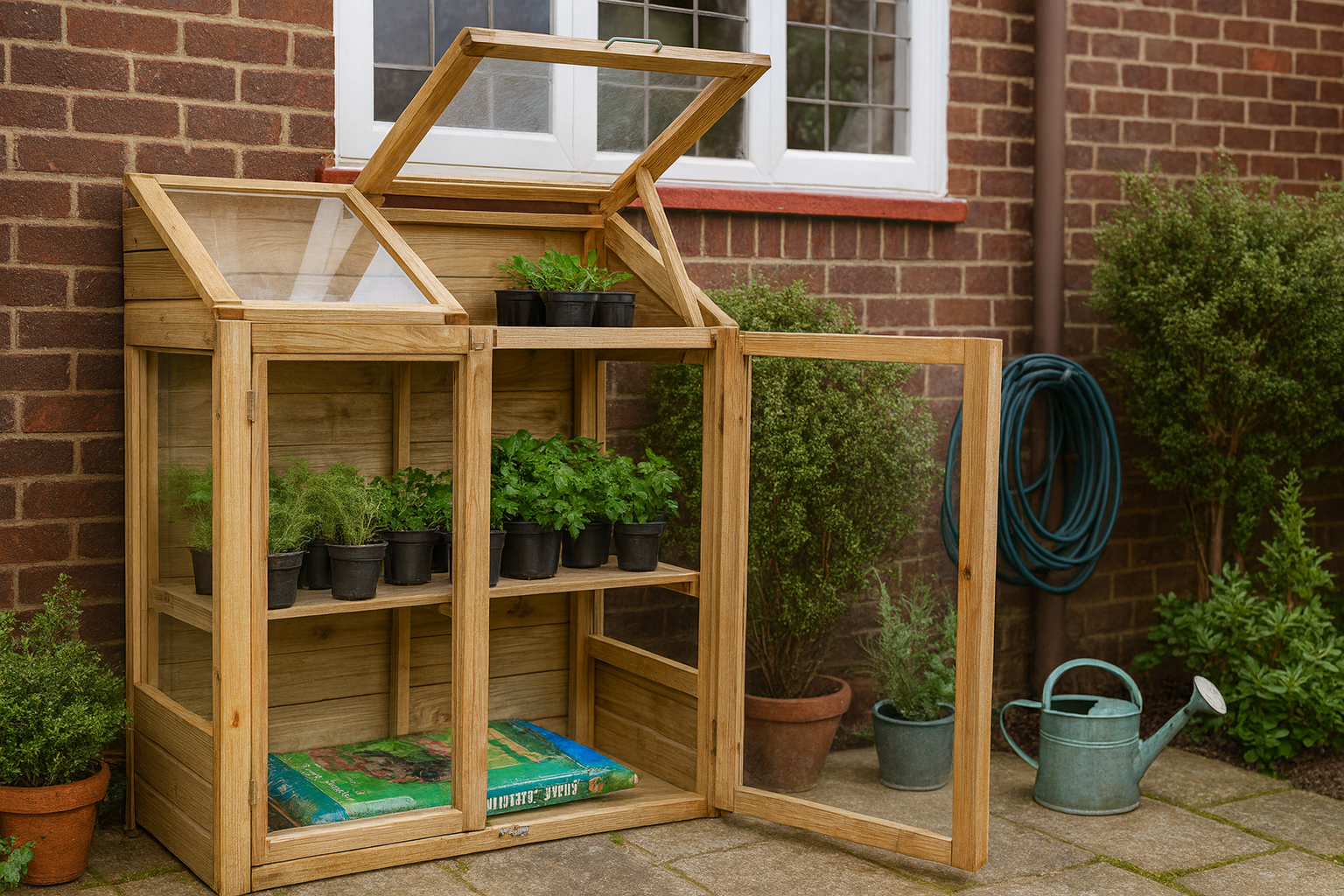
Selections Wooden Polycarbonate Mini Greenhouse – Best Compact Rigid Option
This wooden-framed model is structurally different from typical mini greenhouses. With rigid polycarbonate panels instead of a zip-up cover, it feels more permanent and wind-resistant.
At 110 cm tall, it’s better suited to herbs, salad crops, and seedlings rather than tall plants. However, the rigid construction improves insulation and longevity compared to thin PVC covers.
It works particularly well placed against a sunny wall, where it can retain warmth more effectively in early spring. The wooden frame also retains heat slightly better, which can help with earlier planting in spring.
Best for: exposed gardens, decorative patios, and gardeners who prefer a sturdier, more permanent structure.
Outsunny 4-Tier Steel Mini Greenhouse – Best Taller 4-Tier Option
This Outsunny 4-tier sits between the ultra-compact Gardman and the full walk-in models. At 160 cm tall, it offers more vertical room than typical 4-tier units while keeping a modest footprint.
The steel frame provides a sturdier feel than aluminium alternatives, and the PE cover allows good light transmission. As with all lightweight shelving-style greenhouses, anchoring is essential.
It’s a practical choice if you want more height but don’t need a full walk-in structure.
Best for: vertical growing in limited spaces and gardeners who want more headroom than basic 4-tier units.
Better Built Mini Greenhouses for Longer-Term Use
If you want something sturdier than a typical zip-cover mini greenhouse, these rigid wooden and polycarbonate options are worth considering. They cost more, but tend to last longer and cope better with exposed UK gardens.
Forest Victorian Tall Wall Greenhouse – Best Premium Wooden Option
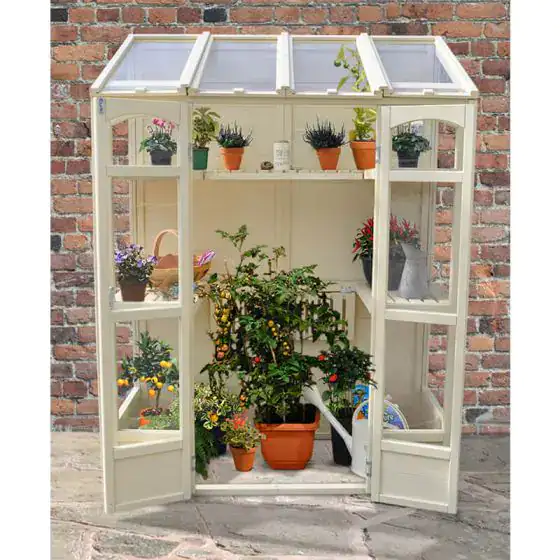
If you want something that feels much closer to a proper greenhouse, this Forest Victorian model is a clear step up from typical mini greenhouses. With a solid wooden frame and rigid panels, it’s far more stable in wind and better suited to long-term use.
Unlike zip-up models, it retains heat more effectively and doesn’t flex in bad weather, making it a more reliable option for early-season growing. The tall design also gives you better vertical space than most compact wooden units.
It does cost more, and takes up more room than basic options, but the difference in build quality is immediately noticeable.
- Solid wooden frame with rigid panels for improved durability
- Better wind resistance than fabric-covered mini greenhouses
- Taller design gives more usable growing space
- More suitable for long-term use and exposed gardens
Check price at Buy Sheds Direct
Use code AFFSTORAGE5 for an extra 5% off (when available).
Best for: patios, wall placement, and gardeners who want a more permanent mini greenhouse setup.
Palram Canopia Plant Inn – Best Compact Rigid Mini Greenhouse
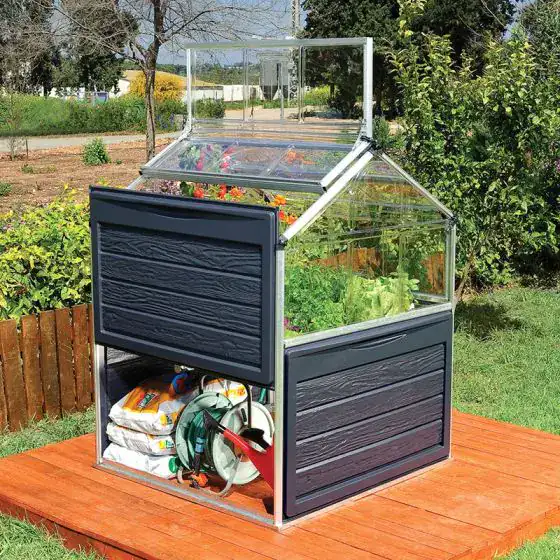
If you want something more solid than a typical mini greenhouse but don’t need a full walk-in structure, the Palram Plant Inn is a smart middle ground. It combines a raised bed with a rigid polycarbonate cover, giving you better protection and heat retention in a compact footprint.
Unlike shelving-style greenhouses, everything is contained in one unit, which makes it easier to manage and less vulnerable to wind. The clear panels allow good light in, while the enclosed design helps create a warmer growing environment for early planting.
It’s not designed for lots of trays or taller plants, but for herbs, salads, and compact crops, it’s a simple and effective setup.
- Rigid polycarbonate cover for improved durability and insulation
- Raised bed design keeps everything contained and easy to manage
- More stable than lightweight mini greenhouses in exposed spots
- Compact footprint suited to patios and small gardens
Check price at Buy Sheds Direct
Use code AFFSTORAGE5 for an extra 5% off (when available).
Best for: small patios, beginner growers, and anyone wanting a simple, contained growing setup without dealing with shelving units.
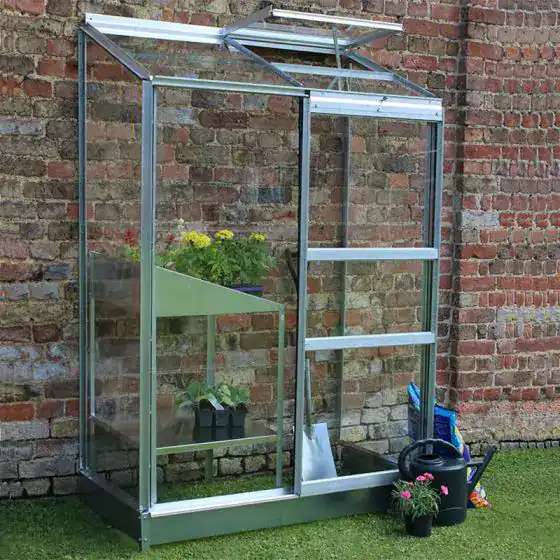
Halls 4×2 Wall Garden Greenhouse – Best Small ‘Real Greenhouse’ Option
If you want a compact greenhouse that behaves more like a full-sized structure, this Halls wall model is a clear step up from typical mini greenhouses. With an aluminium frame and polycarbonate panels, it’s more rigid, longer-lasting, and better suited to year-round use.
Unlike wooden cabinet-style mini greenhouses, it gives you proper vertical growing space and ventilation, making it more versatile if you want to grow a wider range of plants. Positioned against a wall, it also benefits from added shelter and reflected heat, which can make a noticeable difference in early spring.
The aluminium frame allows more light through and requires very little maintenance over time.
It does take up more space and requires a more permanent setup than lightweight options, but the trade-off is a structure that behaves much more like a full greenhouse.
- Aluminium frame with polycarbonate panels for durability and insulation
- More usable growing height than most mini greenhouses
- Better suited to long-term and year-round use
- Works well against a wall for improved warmth and protection
Check price at Buy Sheds Direct
Use code AFFSTORAGE5 for an extra 5% off (when available).
Best for: small gardens, wall placement, and gardeners who want a compact greenhouse that behaves more like a full-sized structure.
If you’re considering something slightly larger, our guide to the best lean-to greenhouses covers more permanent options.
What to Look for When Choosing a Mini Greenhouse
Not all mini greenhouses perform the same once they’re outside in a UK garden. Before choosing one, it’s worth paying attention to a few practical factors that affect how usable it will be.
Height and accessibility
If you want to grow tomatoes, peppers, or taller plants, standing height makes a huge difference. Walk-in models around 190–200 cm tall are far easier to manage than compact 4-tier shelving units.
Frame strength
Lightweight aluminium frames are easy to move but can flex in strong wind. Steel frames tend to be sturdier, while wooden frames with polycarbonate panels offer the most rigidity.
Cover material
Most mini greenhouses use PE or PVC covers. Reinforced PE covers (the green mesh style) tend to last longer in UK conditions, while clear PVC can become brittle after repeated temperature swings and strong sunlight. Polycarbonate panels provide better insulation but increase cost.
Ventilation
On sunny spring days, temperatures inside a mini greenhouse can rise very quickly. Even in April, a fully zipped cover can trap heat and damage young plants within a few hours. Opening the door or lid in the morning allows warm air to escape and prevents overheating.
Anchoring and placement
Even the best mini greenhouse should be secured properly. Position it in a sheltered spot and weigh down the base or use stakes to prevent wind damage. Some gardeners also secure lightweight frames using bungee cords attached to fences or posts for extra stability in windy spots.
Where to Place a Mini Greenhouse for Best Results
Even the best mini greenhouse won’t work well if it’s placed in the wrong spot. Because these structures are small and lightweight, positioning makes a big difference to temperature, stability, and plant growth.
Choose a sunny position
Mini greenhouses work best with at least 5–6 hours of direct sunlight per day. A south-facing wall often works particularly well, as it reflects heat and provides shelter from prevailing winds, but a West facing wall also works well.
For a practical example of how this works in a real setup, see how to start tomatoes early in a mini greenhouse.
Use shelter from wind
Lightweight greenhouses can act like sails in strong wind. Placing one beside a wall, hedge, or fence helps reduce exposure and keeps temperatures more stable.
Avoid waterlogged ground
If the base sits on soil, make sure the ground drains well. Standing water can damage shelving and create unstable footing.
Hard surfaces work well
Patios, paving slabs, or decking are often ideal. They provide a stable base and make anchoring easier.
Anchor lightweight models
Most mini greenhouses include ground pegs or guy ropes. Even if they feel stable at first, it’s worth securing them properly before the first windy day.
🌿 Final Thoughts – Choosing the Right Mini Greenhouse for Your Space
A mini greenhouse is one of the simplest ways to extend the growing season in a small UK garden. From starting seedlings earlier in spring to protecting herbs and salads through cooler months, even compact models can make a noticeable difference.
For very small patios or balconies, tiered shelving greenhouses are the cheapest and most space-efficient option. If you want more stability and usable growing space, a walk-in mini greenhouse offers a better balance of height, structure, and accessibility.
If you have a suitable wall, a lean-to greenhouse can retain heat more efficiently. And if your goal is maximum growing space for the footprint, a small polytunnel can sometimes be a more productive alternative.
Whatever you choose, secure anchoring, good ventilation, and a sheltered sunny position will make the biggest difference to how well a mini greenhouse performs in UK weather.
For wider guidance on greenhouse growing and seasonal planting in UK conditions, the RHS (Royal Horticultural Society) is also an excellent resource.