
When you purchase through links on our site, we may earn an affiliate commission at no extra cost to you.
In this guide to the best solar generators in the UK, I compare five portable power stations for home backup, camping, campervans and off-grid use. The recommendations cover everything from compact, affordable models to larger systems capable of running essential household appliances during extended power cuts.
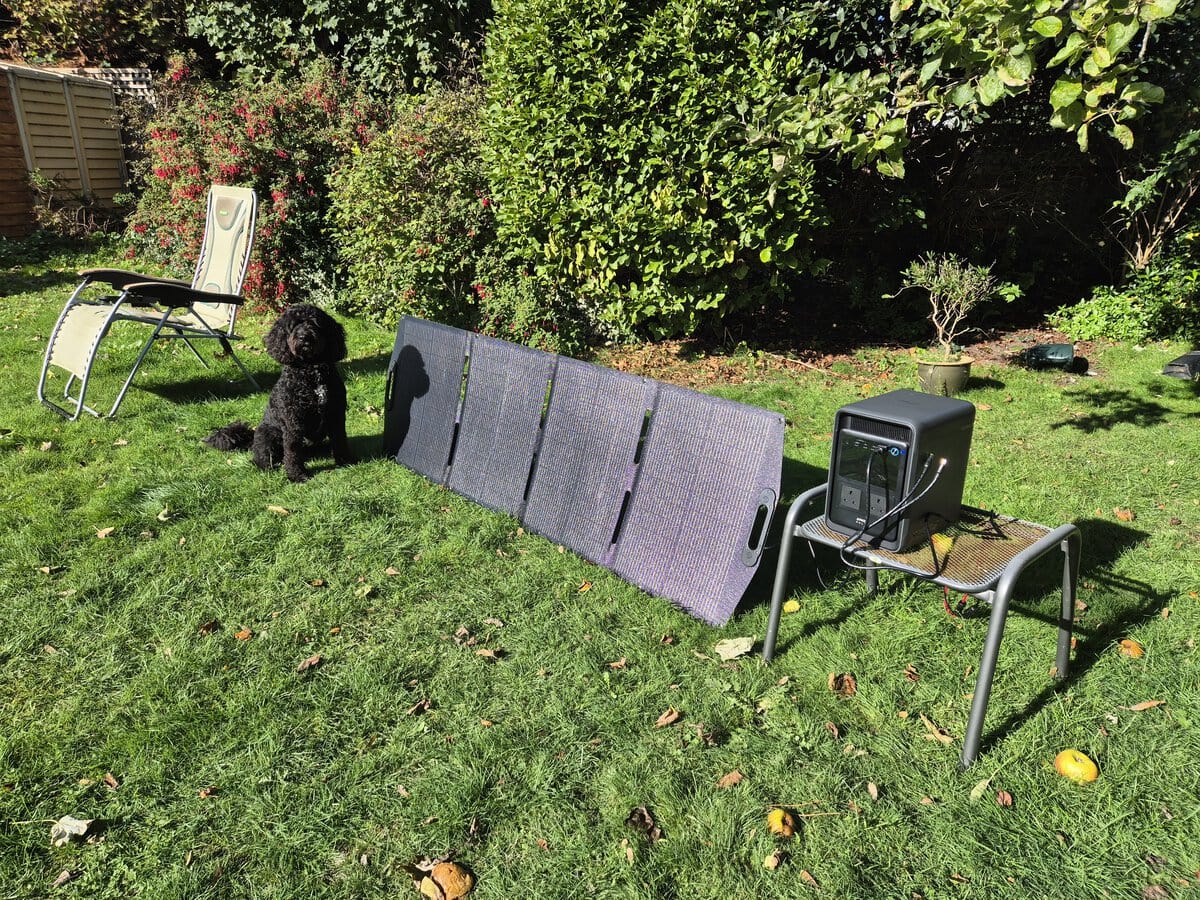
I’ve also carried out hands-on testing of the Anker SOLIX S2000, including solar charging, running our fridge-freezer for 24 hours and using it in our campervan. Alongside these real-world results, I compare battery capacity, power output, portability, charging performance and value for money.
Solar generators are essentially rechargeable portable power stations that can be paired with compatible solar panels. Unlike petrol or diesel generators, they provide quiet power without exhaust fumes during operation.
For more background, see our Complete Guide to Home Solar Generators or our Solar vs Petrol vs Diesel Generators comparison.
Not every model featured has been personally tested. Other recommendations are based on specifications, features, pricing and product research.
Our Top Picks by Setup
Here are our four standout solar generators, covering compact portable power, versatile home backup and larger-capacity systems. We’ve also included the Anker SOLIX S2000, which we’ve tested ourselves. A fifth recommendation, the Jackery Explorer 1000 v2, is covered further down the guide.
EcoFlow RIVER 3 Plus
A compact, expandable power station ideal for camping, charging electronics and lighter emergency backup. Supports solar charging and fast UPS switchover.
EcoFlow DELTA 3 Plus
A versatile 1kWh power station with fast charging, strong solar input and expandable capacity. An excellent all-round choice for home backup, camping and off-grid use.
Anker SOLIX S2000
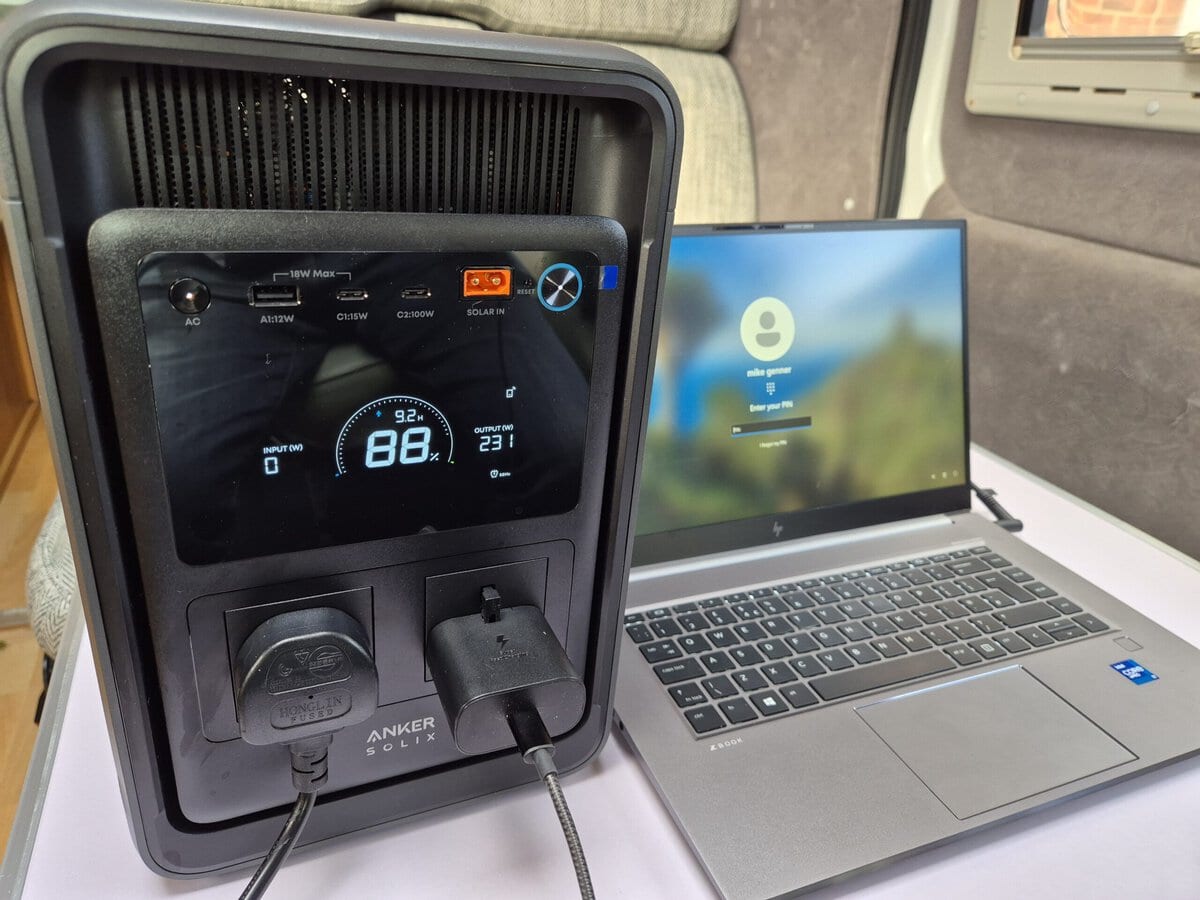
This is the power station we own and use ourselves. We’ve tested it with solar charging, household appliances and in our campervan. It offers excellent value when discounted, but we wouldn’t recommend paying more than £850 given the alternatives available.

Anker SOLIX F3000
A high-capacity, expandable power station designed for serious home backup. With powerful AC output, substantial battery storage and up to 2,400W solar input, it’s suited to longer power cuts and running larger household appliances.
Detailed Reviews of Our Recommended Solar Generators
Below, we take a closer look at all five recommended solar generators, comparing their main features, strengths, limitations and suitability for different uses.
We’ve also included our own hands-on testing of the Anker SOLIX S2000, with real-world results from solar charging, fridge-freezer backup and campervan use.
A compact, expandable portable power station suitable for camping, small appliances and emergency backup power. Supports solar charging and offers fast UPS switchover for compatible devices.
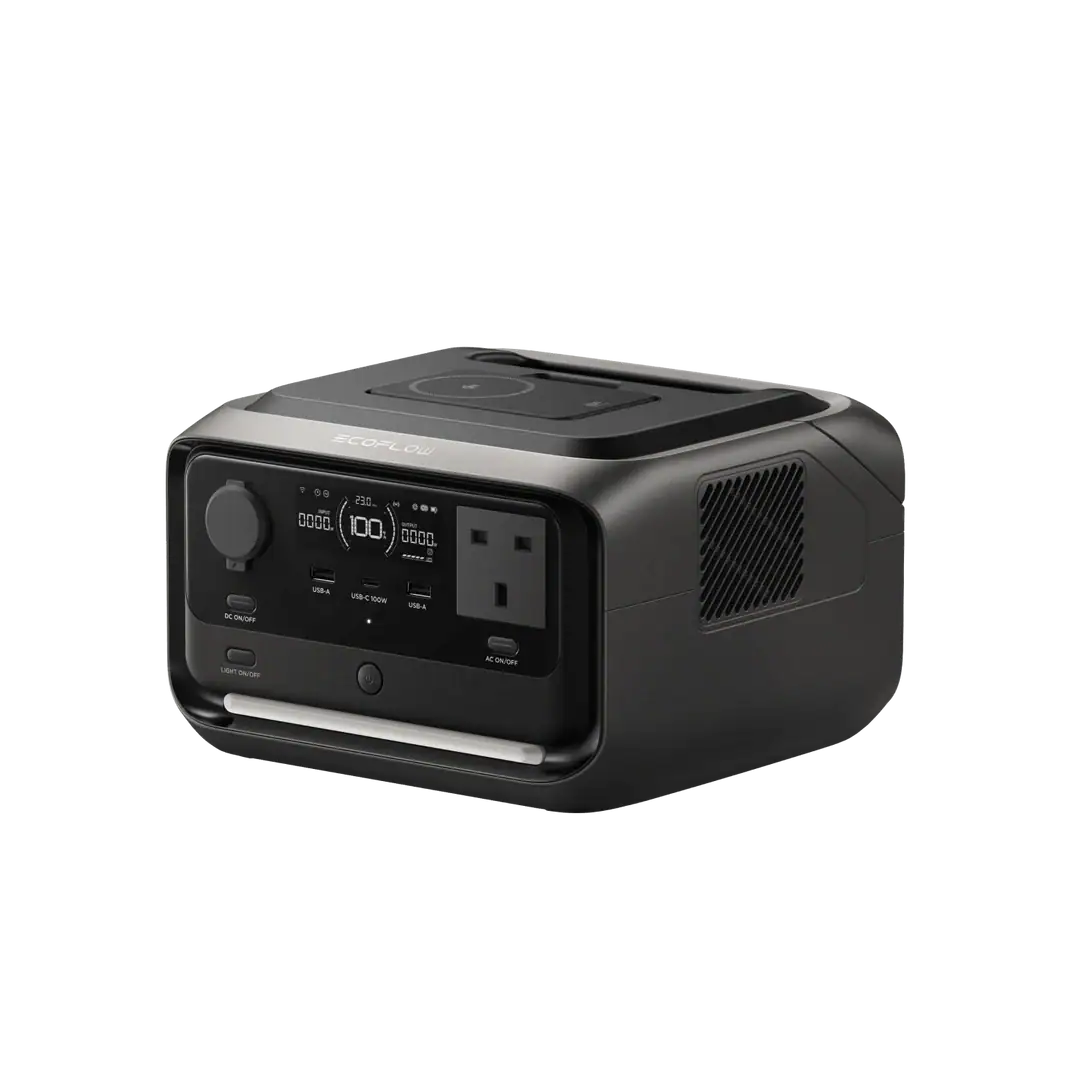
The EcoFlow RIVER 3 Plus is my pick for the best small solar generator because it combines a compact 286Wh battery with a surprisingly capable 600W AC output. At around 4.7kg, it is light enough to move around easily and makes particular sense for camping, day trips, sheds, laptops, lighting and other lighter backup uses.
Its biggest strength is flexibility. Although the built-in battery is much smaller than a 1kWh power station, the RIVER 3 Plus can be expanded with compatible extra batteries to increase total capacity to as much as 858Wh. That means you can start with a genuinely portable unit and add more storage later if you find that you need longer runtimes.
Solar input of up to 220W is well matched to a power station of this size and gives you a practical way to recharge away from the grid. The 600W inverter also gives it considerably more appliance flexibility than very small camping power stations, although it is still best suited to lighter loads rather than kettles, heaters or other high-power equipment.
If you want something with substantially more built-in capacity, the EcoFlow DELTA 3 Plus is the natural step up. It is heavier and more expensive, but its 1024Wh battery, 1800W output and much higher solar input make it far better suited to home backup and more demanding use. You can compare the wider range in my guide to the best EcoFlow solar generators in the UK.
- 286Wh LiFePO₄ battery in a compact and lightweight package
- 600W AC output for laptops, lighting, portable fridges and other lower-power devices
- Up to 220W solar input for practical off-grid charging
- Around 4.7kg, making it easy to carry between the house, car or campsite
- Expandable up to 858Wh with compatible extra batteries
Best for: buyers who want a lightweight, genuinely portable solar generator for camping, day trips, sheds and lighter emergency backup, with the option to add more battery capacity later.

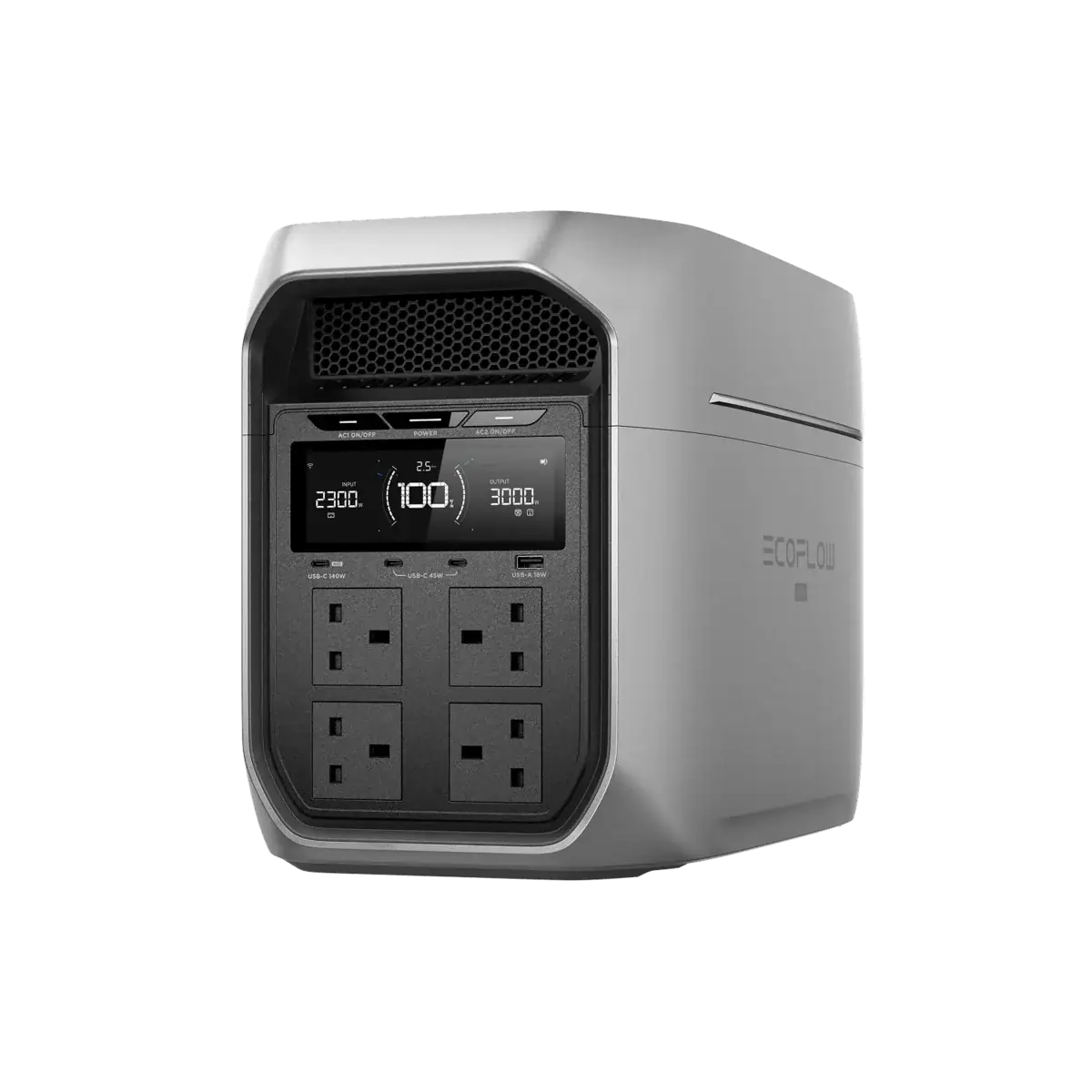
The EcoFlow DELTA 3 Plus is my best overall solar generator because it combines a useful 1024Wh battery with a strong 1800W AC output, very fast charging and two solar inputs rated at up to 500W each, for up to 1000W combined. That makes it versatile enough for camping and campervan use, as well as keeping essentials such as routers, laptops, lighting and a typical fridge running during shorter power cuts.
One of its biggest advantages is flexibility. At around 12.5kg, it is still practical to move between the house, car, campervan or campsite, although it is better suited to car-based camping than carrying any real distance. It can also be expanded with additional batteries if you later want substantially more storage for home backup or off-grid use.
The dual solar inputs are another strong point. Being able to use up to 1000W of solar charging in total makes the DELTA 3 Plus much better suited to larger panel setups than many 1kWh portable power stations, which is useful if you want to recharge meaningfully away from the grid rather than relying mainly on mains charging.
The older EcoFlow DELTA 2 is still a very capable 1kWh power station and can still make sense if you find one at a good clearance price. However, it is now being phased out and is becoming harder to find new, so the DELTA 3 generation is the better starting point for most buyers. I compare the two generations in more detail in my EcoFlow DELTA 2 vs DELTA 3 comparison.
EcoFlow also makes cheaper, larger and more specialised models, so if you like the brand but are unsure which DELTA or RIVER model suits you, see my full guide to the best EcoFlow solar generators in the UK.
- 1024Wh LiFePO₄ battery for a useful balance of capacity and portability
- 1800W AC output capable of powering many household and outdoor devices
- Two 500W solar inputs for up to 1000W combined solar charging
- Fast mains charging when you need to recharge quickly
- Expandable capacity if you later want longer backup times
Best for: buyers who want one versatile portable power station for home backup, sheds, campervans, car-based camping and occasional off-grid use.

The Jackery Explorer 1000 v2 is my pick for campervans and car-based trips because it offers a genuinely useful amount of power without becoming too large or heavy to move around regularly. With a 1070Wh LiFePO₄ battery, 1500W AC output and a weight of around 10.8kg, it sits in a very practical middle ground between small camping power stations and much heavier home-backup systems.
That is also why I prefer the 1000 v2 over Jackery’s smaller models for buyers who want something substantial enough to use beyond occasional day trips. The Jackery Explorer 240 v2 is lighter and cheaper, while the Jackery Explorer 500 v2 is a good option for lighter camping use. However, once you are buying a dedicated portable power station, I think roughly 1kWh is a much more useful amount of stored energy for the extra flexibility it gives you.
The Explorer 1000 v2 can run laptops, lighting, portable fridges, TVs and many smaller appliances, while its 1500W inverter gives it considerably more headroom than the 500 v2. Like any 1kWh power station, it is still best thought of as short-term backup rather than whole-home power, but it has enough capacity to be genuinely useful during a power cut rather than simply keeping phones charged.
This size makes particular sense for me because I’m looking at power for both our campervan and occasional home backup. Rather than buying a small unit purely for trips and then a completely separate battery for the house, a model such as the Explorer 1000 v2 could potentially cover both jobs. The same is true of the EcoFlow DELTA 3 Plus, although the Jackery is around 1.7kg lighter, which is useful if you expect to move it regularly.
Charging is another strong point. Jackery rates the 1000 v2 for a full mains recharge in as little as around an hour using its fastest charging mode, while solar input of up to 400W gives you a practical way to recharge it away from the grid. The LiFePO₄ battery is rated for around 4000 cycles, making it much better suited to long-term use than older Jackery models that used shorter-life battery chemistries.
Jackery also makes smaller and larger Explorer models, so if you like the brand but are unsure which one suits you, see my full guide to the best Jackery solar generators in the UK.
- 1070Wh LiFePO₄ battery — enough capacity to be useful for both trips and short home outages
- 1500W AC output with much more appliance flexibility than smaller Jackery models
- Around 10.8kg, making it relatively light for a 1kWh-class portable power station
- Up to 400W solar input for off-grid charging
- Fast mains charging when you need to top it up quickly
Best for: buyers who want a relatively lightweight 1kWh portable power station for campervans, car-based trips and camping that is still substantial enough to provide useful emergency backup at home.

The Anker SOLIX S2000 is my recommended 2kWh solar generator when available for £850 or less. It combines a substantial 2,010Wh LiFePO4 battery with 1,500W continuous AC output, making it a practical choice for longer home backup, camping, campervans and off-grid power. Unlike most of the models in this guide, this is a power station I own and have tested extensively myself.
Its biggest strength is the amount of battery capacity you get for the money. At roughly twice the capacity of a typical 1kWh power station, the S2000 offers significantly longer runtimes for essential appliances. However, its 1,500W inverter is less powerful than some competing 2kWh models, so it is better suited to extended operation of moderate loads than running several high-powered appliances simultaneously.
During my own testing, I connected the S2000 to our Samsung fridge-freezer and ran it continuously for 24 hours. The fridge-freezer used approximately 53% of the battery, suggesting a total runtime of around 45 hours under similar conditions. That makes it particularly useful for keeping refrigerated and frozen food safe during an extended power cut, although actual runtimes will vary with appliance consumption and room temperature.
I have also tested its solar charging performance using an ECO-WORTHY 200W solar panel, recording a peak input of 172W in suitable conditions. The S2000 supports up to 400W of solar input, making it useful for replenishing the battery during longer outages or while camping off-grid. It can also be recharged from the mains when electricity is available.
Another advantage is portability. At approximately 16.2kg, the S2000 is considerably lighter than many larger 2kWh-class systems. I’ve also used it in our campervan to power a laptop, making it useful beyond emergency backup at home. It is still a substantial unit to carry, but it is manageable when moving between the house, vehicle and campsite.
The main consideration is price. I’ve seen the S2000 advertised at considerably different prices, and I wouldn’t recommend paying over £850. At that point, competing models with higher inverter output, faster solar charging or additional features may represent better value. Below £850, however, its combination of capacity, portability and proven real-world performance makes it a strong contender.
For detailed photographs, charging measurements, appliance tests and my experience using this power station, read my Anker SOLIX S2000 hands-on review.
- 2,010Wh LiFePO4 battery for longer backup runtimes than typical 1kWh power stations
- 1,500W continuous AC output for essential household appliances and moderate loads
- Up to 400W solar input, with 172W peak recorded using my 200W solar panel
- Approximately 45 hours of fridge-freezer backup estimated from my 24-hour test
- 16.2kg weight, relatively portable for a power station with around 2kWh capacity
- Hands-on tested by HomeGrower with solar charging, household appliances and campervan equipment
- Recommended purchase price: £850 or less for the best value
Best for: buyers looking for a relatively portable 2kWh power station for extended home backup, fridge-freezer protection, campervans and off-grid use, provided it is available for £850 or less.
The Anker SOLIX F3000 is my pick for large home-backup systems because it combines a substantial 3,072Wh LiFePO₄ battery with a powerful 3,600W AC output and up to 2,400W of solar input. It sits well above the typical 1–2kWh portable power station and is designed for buyers who want longer runtimes, heavier appliance support and a system that can grow over time.
Capacity is the main advantage. With just over 3kWh built in, the F3000 offers considerably more stored energy than the EcoFlow DELTA 3 Plus or Anker SOLIX S2000, making it better suited to longer outages and more demanding home-backup use. It can also be expanded with additional batteries if you later need substantially more storage.
The 3,600W AC output means it can handle a wide range of household appliances and power-hungry equipment, while up to 2,400W of solar input gives it the potential to recharge much more quickly from a suitably sized solar array. That makes the F3000 particularly interesting for off-grid setups and emergency backup where restoring energy from solar matters as much as the battery capacity itself.
Portability is relative at this size. At around 41.5kg, this is technically still a portable power station, but I think it makes more sense to view it as a movable home-backup system rather than something you would regularly carry around a campsite. For campervans or frequent travel, a smaller 1kWh or 2kWh model will be considerably easier to live with.
If you don’t need the F3000’s additional capacity and output, the Anker SOLIX S2000 is a more portable and affordable alternative. I’ve tested the S2000 myself, including its solar charging performance and ability to run a household fridge-freezer during a simulated power cut.
Anker also makes a wide range of smaller SOLIX portable power stations for camping, campervans and lighter backup use. See my Best Anker Solar Generators UK guide for a closer look at the C300X, C1000 Gen 2, S2000, C2000 Gen 2 and F3000, including which models make the most sense for different uses and budgets.
- 3,072Wh LiFePO₄ battery for substantially longer backup than typical 1–2kWh models
- 3,600W AC output for larger household appliances and demanding equipment
- Up to 2,400W solar input for faster off-grid recharging with a larger panel setup
- Expandable capacity if you later want to build a much larger backup system
- Around 41.5kg, making it better suited to semi-fixed home or off-grid use than frequent carrying
Best for: buyers who want a large, expandable 3kWh-class portable power station for serious home backup, longer outages, off-grid use and higher-power appliances.
How to Choose the Best Solar Generator
The best solar generator depends on how you plan to use it. A lightweight unit for camping has very different requirements from a larger system for home backup, so it helps to compare a few key specifications rather than focusing on battery size alone.
The most important things to look at are battery capacity, inverter output, solar input, charging speed, portability and expandability. These determine what the power station can run, how long it can run it for, and how practical it will be to recharge and move around.
Battery Capacity
Battery capacity is measured in watt-hours (Wh) and tells you roughly how much energy a power station can store. In simple terms, the higher the capacity, the longer it can keep your devices running.
- 200–500Wh – phones, laptops, lights and short camping trips
- 500–1000Wh – portable fridges, TVs, routers and longer weekends away
- 1000–2000Wh – short home backup, campervans, sheds and more demanding equipment
- 2000Wh+ – longer outages, heavier appliances and more serious off-grid use
Capacity alone does not tell you what a solar generator can run, though. You also need to check the inverter output, because a large battery with a low-power inverter may still be unable to start or run demanding appliances.
Inverter Output
Inverter output is measured in watts (W) and tells you how much power the station can supply at one time. This is just as important as battery capacity because it determines which appliances you can actually run.
- 300–500W – phones, laptops, lighting and small electronics
- 1000–1500W – TVs, portable fridges, routers, coffee machines and many small appliances
- 1800–3000W – microwaves, kettles, power tools and a wider range of household equipment
You should also check the surge rating. Some appliances, especially fridges, pumps and power tools, briefly draw much more power when they start up than they use while running.
Output Ports and Connections
Check that the power station has the connections you actually need. Most modern models include a mix of AC sockets, USB ports and 12V outputs, but the number and power of each can vary considerably.
- UK 3-pin AC sockets for household appliances and chargers
- USB-C PD for laptops, tablets and newer devices
- USB-A for older accessories and cables
- 12V car socket for portable fridges and camping equipment
- Solar input for compatible portable or fixed panels
If you plan to charge laptops directly, look for at least one high-power USB-C port. It can be more efficient and convenient than using the AC inverter with a separate laptop charger.
Battery Chemistry
Most good portable power stations now use LiFePO₄ (LFP) batteries rather than the older lithium-ion chemistries found in many previous-generation models.
LFP batteries generally offer a much longer cycle life, better thermal stability and better long-term value, which is why they are now my preferred choice for regular use and home backup.
- LiFePO₄ (LFP) – longer lifespan, thousands of charge cycles and well suited to frequent use
- Older lithium-ion (NMC) – often lighter, but usually with a shorter cycle life
Older NMC models can still be worth considering second-hand if they are cheap and lightly used, but for a new purchase I would generally choose an LFP power station.
Charging Speed and Solar Input
Charging speed matters most when you need to refill the battery quickly between uses. Modern power stations can often recharge rapidly from the mains, but solar charging is limited by both the unit’s maximum solar input and the panels you connect to it.
For occasional camping, a few hundred watts of solar input may be enough. For larger 1–2kWh systems used for home backup or off-grid power, higher solar input can make a meaningful difference, especially when daylight hours are limited.
- 200–400W solar input – suitable for smaller portable setups and camping
- 500–1000W solar input – better suited to larger batteries, sheds and home-backup use
A high solar-input rating only helps if your panel setup can supply it, so always check the supported voltage and current as well as the headline wattage.
Expandability
Expandability is worth considering if you think your power needs may grow. Some portable power stations can connect to extra batteries, allowing you to increase total storage without replacing the main unit.
This is especially useful for home backup, where a 1–2kWh system may be enough for short outages but not for running essentials for a full day or longer.
If you only need power for camping or occasional use, expansion may not matter. But for buyers planning a more serious backup system, it can make a big difference to long-term flexibility.
Portability
Portable power stations vary enormously in size and weight. A small camping model may weigh only a few kilograms, while larger 2kWh and 3kWh units can weigh well over 20kg.
Think about how often you will actually move it. For campervans, camping and outdoor use, weight and handle design matter a lot. For home backup, a heavier unit may be perfectly acceptable if it offers substantially more capacity and output.
This is one reason I like 1kWh-class models such as the Jackery Explorer 1000 v2 and EcoFlow DELTA 3 Plus: they offer a useful amount of stored energy while still being realistic to move between the house, car or campervan when needed. The Jackery is particularly appealing for campervan use because it weighs around 10.8kg, while the EcoFlow offers more solar input and expansion flexibility.
Alternatives to Solar Generators
Portable power stations are ideal when you want quiet, fuel-free backup power, but they are not always the best solution for very long outages or continuously running high-power equipment.
Petrol and diesel generators can provide much higher sustained output and can keep running as long as you have fuel available, which makes them better suited to some workshops, construction sites and extended emergency situations. The trade-off is noise, exhaust fumes, fuel storage and ongoing maintenance.
If you are deciding between battery and fuel-powered backup, see our full solar vs petrol vs diesel generator comparison.
Which Solar Generator Is Best for You?
For most buyers, the right choice comes down to how much capacity you need, how often you will move the power station and whether you want the option to expand it later.
- For lightweight portable power: the EcoFlow RIVER 3 Plus is compact, easy to carry and expandable if you later need more capacity.
- For the best all-round option: the EcoFlow DELTA 3 Plus offers a strong balance of capacity, output, solar input, portability and expandability.
- For campervans and car-based trips: the Jackery Explorer 1000 v2 provides around 1kWh of capacity while remaining relatively lightweight at 10.8kg.
- For best-value 2kWh backup: the Anker SOLIX S2000 provides substantial battery capacity in a relatively portable 16.2kg unit. We’ve tested it ourselves with solar charging, household appliances and campervan equipment, and recommend buying at £850 or less.
- For serious home backup: the Anker SOLIX F3000 offers over 3kWh of storage, powerful 3,600W AC output, substantial solar input and expandable capacity for longer power cuts and more demanding appliances.
For many buyers, around 1kWh remains the sweet spot between portability and usefulness. However, if your priority is keeping essential household appliances running through longer outages, a 2kWh or larger system can be worth the additional cost and weight.
Solar Panels to Pair With Your Generator
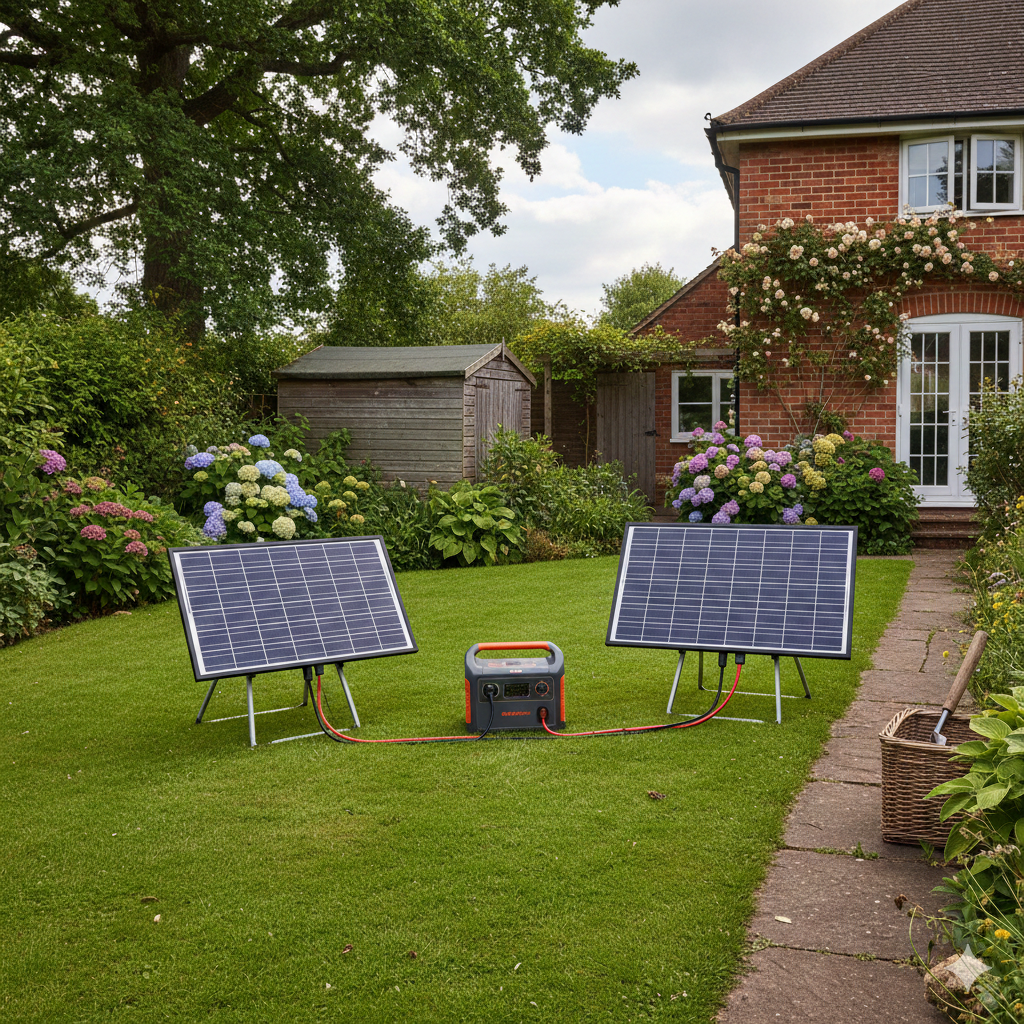
A portable power station only becomes a true solar generator when you connect solar panels, and the right panel setup depends on the unit’s maximum solar input.
Smaller systems used for camping may only need a 100–200W folding panel, while larger 1–2kWh power stations can benefit from 400W or more if you want to recharge meaningfully from solar rather than just top the battery up slowly.
- 100–200W panels – lightweight and practical for camping or occasional use
- 300–500W panels – better suited to 1kWh-class power stations
- 600–1000W panel setups – more appropriate for larger home-backup and off-grid systems
Always check the power station’s supported solar voltage, current and maximum input before connecting panels. The headline wattage alone does not tell you whether a panel setup is compatible.
Final Thoughts
For many buyers, a 1kWh-class portable power station is still the most useful middle ground. It gives you enough stored energy for meaningful camping, campervan and emergency use without becoming excessively heavy or expensive.
Smaller models make more sense when portability matters most, while 2kWh and 3kWh systems become increasingly attractive for longer outages, heavier appliances and more serious home backup. The right choice is therefore less about buying the biggest battery and more about matching capacity, output, solar input and weight to how you will actually use it.
For UK buyers, I would also pay particular attention to solar charging limits and expansion options. Winter conditions can make solar recharging much slower, so a power station that can charge quickly from the mains as well as accept a useful amount of solar input is generally more flexible.
Solar Generator FAQs
What size solar generator do I need for a UK home?
For short power cuts and essential devices, a power station around 1000Wh is a useful starting point. It can keep routers, laptops, lighting and some smaller appliances running for several hours. If you want longer backup or need to power heavier appliances, a 2000Wh+ system is more suitable.
Can a solar generator run a fridge?
Yes, provided the power station has enough inverter output to handle the fridge’s startup surge. A 1kWh-class unit can usually keep a typical fridge running during a shorter outage, but the exact runtime depends on the fridge, room temperature, how often the compressor cycles and what else is connected.
Do solar generators work well in the UK climate?
Yes, but solar charging is much slower in poor weather and during winter. For most UK users, the most practical setup is a combination of solar charging and mains charging, rather than relying on solar alone all year round.
How long do LiFePO₄ solar generators last?
Modern LiFePO₄ power stations are typically rated for several thousand charge cycles before their battery capacity falls significantly. In normal household or occasional camping use, that can translate into many years of useful service.
Do solar generators come with solar panels?
Sometimes, but often they are sold as the power station only. Buying the panels separately can be useful because it lets you choose the wattage and panel type that best matches your charging needs and the power station’s supported solar input.