
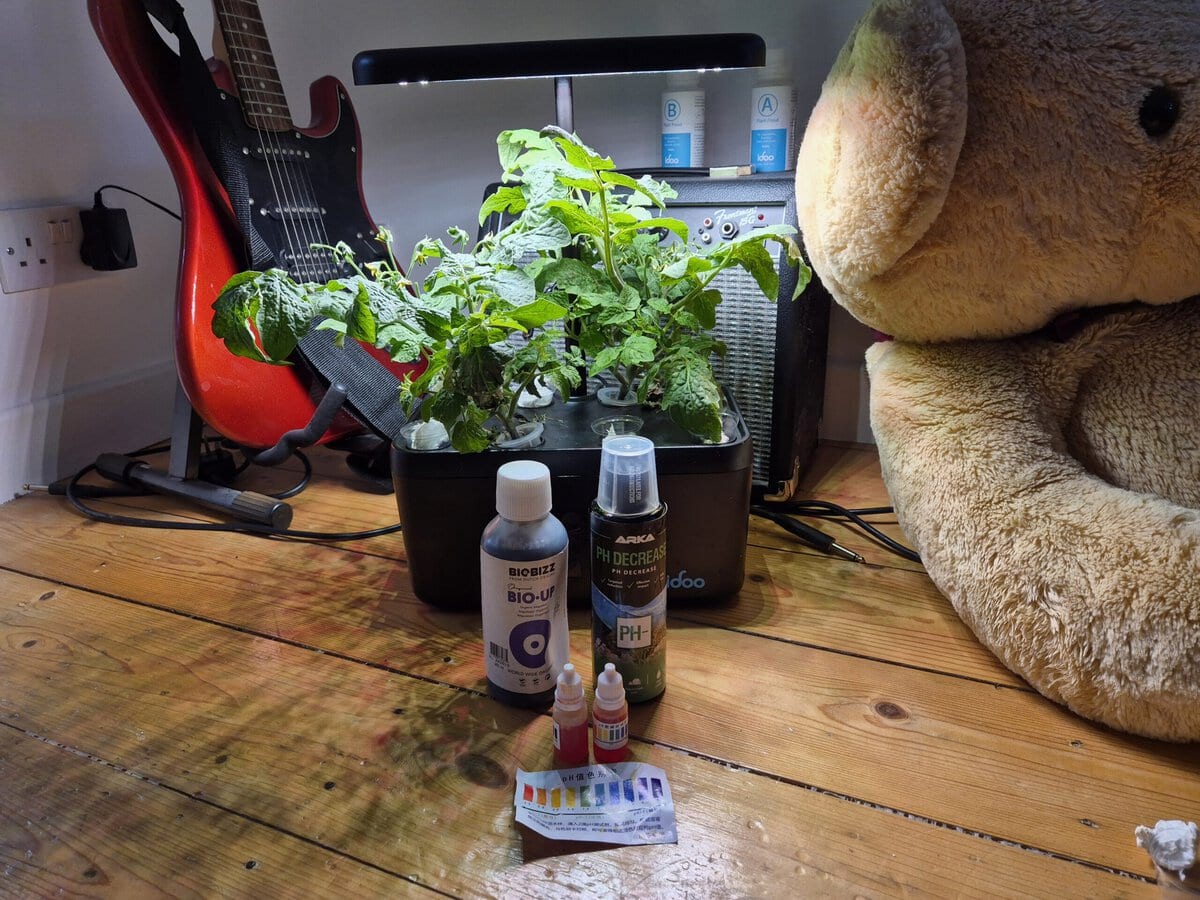
This hydroponic pH guide for beginners covers one of those small jobs that makes hydroponics so much easier once you’ve got the hang of it. You can have great light, fresh water and decent nutrients, but if the pH drifts too far out of range, your plants can’t actually use most of what’s sitting in the reservoir.
The good news: it’s not complicated once you know the routine. For most beginner indoor systems, you’re aiming for a slightly acidic nutrient solution, checking it now and then, and making small corrections instead of chasing a perfect number every day.
I first paid more attention to pH after seeing yellowing in a small basil setup and realising it was not always a simple feeding issue. In hydroponics, the nutrients can be in the water but still not easy for the plant to use if the pH has drifted too far.
If you’re completely new to hydroponics, my main guide on how to grow with hydroponics ties together systems, nutrients, lighting and maintenance in one place.
What pH Means in Hydroponics
pH measures how acidic or alkaline your water is. 7 is neutral — below that is acidic, above it is alkaline.
In hydroponics, pH matters because it controls how easily roots can absorb nutrients. Get it too high or too low and some nutrients become locked out, even though they’re right there in the solution.
That’s the trap: a plant can look hungry even after you’ve fed it properly. Before adding more nutrient, check whether the pH has drifted outside the range where the plant can use what is already in the reservoir.
Hydroponic pH Guide: Best pH Range for Beginners
For most herbs, salad leaves and fruiting plants:
- 5.5–6.5 for general hydroponic growing
- 5.8–6.2 is the sweet spot most beginners should aim for
Don’t panic if it reads 5.7 one day and 6.3 the next — that kind of movement is normal, especially in small countertop systems. What you’re avoiding is the reservoir sitting way outside that range for days at a time.
Basil, lettuce, coriander, parsley, chillies and tomatoes all sit comfortably around 5.8–6.2, which makes that range a useful starting point for most beginner hydroponic crops.
Why pH Changes in a Hydroponic System
pH isn’t fixed once you mix your nutrients. It can move as plants drink water, take up different nutrients at different rates, and the balance of the reservoir changes over time.
In small home systems, pH can move faster because there is less water in the reservoir. Countertop kits are still easy to live with day to day, but once plants are growing well, it is worth checking pH once or twice a week.
Common causes of drift:
- plants drinking more water than nutrients
- some nutrients getting used up faster than others
- topping up with tap water
- the solution getting more concentrated as the water level drops
- old nutrient solution sitting too long
- hard or alkaline tap water in your area
UK tap water varies a lot by area — soft in some places, noticeably harder and more alkaline in others. Your tap water can make a big difference to how much adjustment is needed after mixing nutrients.
How to Test pH in Hydroponics
1. pH test strips
Cheap and simple — dip, wait, compare to the chart. They are fine for a rough check, but the colours can be hard to read accurately. Telling 6.0 from 6.5 on a damp strip under kitchen lighting is not always easy.
2. Liquid pH test kits
With a liquid pH test kit, you add a few drops of testing solution to a small water sample, wait for the colour to change, then compare it with the chart. For a small indoor hydroponic system, this is usually accurate enough to show whether the reservoir is broadly in the right range.
3. Digital pH meters
A digital pH meter gives you an actual number, which is useful if you are checking regularly. The catch is that meters can drift over time, so they need calibrating. Keep the probe wet, because letting it dry out is one of the quickest ways to damage a pH pen. If your readings start looking odd, check the calibration before trusting the number.
HomeGrower Pro Tip: Start with a Liquid pH Test Kit
For beginners, a liquid pH test kit is often the more reliable starting point. It will not give you a precise decimal reading, but it is simple, cheap and does not need calibration.
You add the drops, compare the colour, and get a broad idea of whether the reservoir is too acidic, too alkaline or roughly where it should be.
How Often Should You Check pH?
- New setup: test after mixing nutrients, then again the next day
- Small countertop systems: once or twice a week once the plants are growing steadily
- Fast-growing plants: more often as water use ramps up
- After topping up: test once the water and nutrients have mixed
You don’t need to test obsessively. You’re just trying to catch drift before it turns into a plant problem.
How to Lower pH in Hydroponics
If the pH is too high, use pH Down. Add a very small amount, mix the reservoir well, wait a few minutes, then test again. In a small countertop system, even a tiny amount can move the reading more than expected.
The safest approach is to adjust slowly. Follow the bottle instructions, but treat your first adjustment as a careful test rather than trying to hit the exact number in one go.
How to Raise pH in Hydroponics
If the pH is too low, use pH Up. Use the same process as pH Down: add a very small amount, mix the reservoir well, wait a few minutes, then test again.
Many beginners use pH Down more often than pH Up, especially in areas with harder tap water. Your own water and nutrient mix may behave differently, so always test before adjusting.
Should You Adjust pH Before or After Adding Nutrients?
Add the nutrients first, then check and adjust the pH. Hydroponic nutrients can change the pH of the water, so if you correct plain tap water first, you may only have to adjust it again after feeding.
- Fill the reservoir with water
- Add nutrients as per the instructions
- Mix well
- Test pH
- Adjust with pH Up or Down if needed
- Test again before putting plants back
What Happens If pH Is Too High?
Pale leaves, yellowing between the veins, slower growth and general weakness can all be signs that the plant is struggling to take up nutrients. High pH is common with harder tap water, so if your fresh mix keeps testing above 6.5, you may need to bring it down each time you refill.
What Happens If pH Is Too Low?
If the pH drops too low, roots can become stressed and growth may slow down. A reading around 5.5 is still usable for many hydroponic crops, but if it drops closer to 5.0 or below, it is worth correcting it back into range.
Do You Need Perfect pH Every Day?
No — and chasing an exact number daily tends to cause more problems than it solves. A stable range beats a perfect reading. If your system sits somewhere between 5.8 and 6.3, most beginner crops are happy. Act when it keeps drifting outside that range, or when the plants themselves start telling you something’s wrong.
Signs Your Hydroponic pH May Be Wrong
pH problems can look a lot like nutrient problems, so it is worth checking pH before reaching for more feed:
- yellowing leaves
- pale new growth
- brown spots or leaf edge damage
- slow growth despite good light
- stressed-looking roots
- plants that still look hungry after feeding
Other things can cause these too — weak light, old nutrient solution, overfeeding, root problems — but pH is the quickest thing to rule out first.
pH and Nutrients: Why They Work Together
Strength and pH aren’t separate issues — they work as a pair. The solution needs to be concentrated enough to feed the plant, but the pH needs to sit where those nutrients are actually available.
Adding more feed isn’t always the fix. If the pH’s off, more nutrient may make the reservoir harder to manage rather than solving the problem. If you’re still finding your feet with feeding schedules, my hydroponic nutrients for beginners guide covers the basics of NPK, trace elements and not overfeeding a small indoor system.
pH in Small Countertop Hydroponic Systems
Countertop kits are a great way to learn — everything’s contained and easy to check. The trade-off is a small reservoir moves faster than a big one.
Herbs and salad leaves are forgiving early on, but once plants fill out they can drink a surprising amount of water fast. As the water level drops, the nutrient solution becomes more concentrated, and the pH can shift with it.
A simple routine for small systems:
- check the water level every few days
- top up when needed
- check pH after topping up
- refresh the reservoir when growth slows, the water looks tired, or it’s just due a clean
I’ve gone into more detail on this in my guide on how often you should change hydroponic water, including when a top-up is enough versus when you actually need a full change.
Can You Use Vinegar or Lemon Juice to Lower pH?
Stick with proper hydroponic pH Down. Vinegar and lemon juice can lower the pH temporarily, but they are not ideal for a nutrient reservoir and the reading may drift back again.
A single bottle of pH Down lasts ages for home use, especially with small indoor systems, and it makes adjustments much easier to repeat.
Do You Need to pH Plain Water for Seedlings?
Young seedlings don’t need strong nutrients right away, but pH still matters once their roots reach into the system. Keep it gentle at first — plain water or a weak mix depending on the crop — then move to the normal range once they’re ready to feed properly.
If you’re starting from seed before moving into hydroponics, my guide to growing plants from seed covers that earlier stage before pH becomes the main thing to think about.
Simple Beginner pH Routine
- Mix water and nutrients in the reservoir
- Test the pH
- Aim for 5.8–6.2
- Adjust slowly with pH Down or Up if needed
- Check again after topping up
- Refresh the solution if it’s old, unbalanced or hard to correct
Do it a few times and it stops being a chore — it’s a two-minute check, not a project.
Common Hydroponic pH Mistakes
Adding too much pH adjuster at once
This is one of the easiest mistakes to make. In a small reservoir, a tiny amount of pH adjuster can move the number more than expected. Add less than you think you need, mix well, then test again.
Testing before nutrients are added
Nutrients shift the reading, so always test after they’re mixed in — not before.
Trusting a cheap meter without calibration
Digital meters only help if they’re accurate. If a reading looks off, check it against calibration solution before you trust it — and make sure the probe hasn’t dried out.
Trying to fix plant problems with more feed
If leaves go pale or growth stalls, check pH before adding more nutrient. The plant may already have enough feed in the reservoir, but the pH may be making it harder to use.
Ignoring pH after topping up
Topping up changes the balance of the whole reservoir. It’s a good moment to test, especially after a big top-up with fresh water.
Safety First
Many pH Down products are acid-based, and many pH Up products are alkaline concentrates, so treat them carefully. Wear gloves, avoid splashes, and keep the bottles well out of reach of children and pets.
Best Hydroponic Systems for Beginners
If you’re still choosing a setup, pH is one more reason to start small rather than going big straight away. Smaller kits are easier to learn on; larger systems give you more growing space but need closer monitoring.
My guide to the best hydroponic growing systems in the UK compares beginner-friendly indoor kits, including which ones make pH, nutrients and water changes easiest to manage at home. I’ve also reviewed the iDOO hydroponics growing system — a compact setup where quick water checks are genuinely quick.
Final Thoughts on Hydroponic pH
It sounds technical the first time you read about it, but in practice it’s just: mix, test, correct if needed, move on. Aim for 5.8–6.2, avoid big swings, and don’t stress over small daily wobbles.
I still get it slightly wrong every now and then — usually after a big top-up I forget to retest. It’s not about getting it perfect; it’s about not letting it drift for a week without noticing. Once you know how your own water and system behave, it stops being a “job” and just becomes part of checking on your plants.
The RHS hydroponics guide also gives a useful wider overview of hydroponic growing, including why pH and nutrient monitoring matter once you are growing without soil.