Portable solar generators — often called portable power stations — have become increasingly popular in the UK. They’re used for everything from emergency backup power during outages to running tools in garden sheds, charging devices while camping, and powering small greenhouse setups.
But whenever a device contains a large lithium battery, it’s reasonable to ask an important question:
How safe are solar generators?
The short answer is that solar generator safety is generally very high, especially when compared with traditional petrol generators. Because they store electricity rather than burning fuel, they avoid many of the risks associated with combustion engines.
However, like any electrical equipment, there are still a few things worth understanding before buying or using one. This guide explains the key safety considerations and how to use a solar generator responsibly in UK homes and gardens.
If you’re new to the topic, start with The HomeGrower Guide to Home Solar Generators, our complete guide explaining how these systems work, what size you might need, and how they can power sheds, greenhouses, and other garden setups.
⚡ Quick Safety Comparison
Many people considering portable power compare solar generators with traditional petrol generators. From a safety perspective, the difference is significant.
| Feature | Solar Generator (Portable Power Station) | Petrol Generator |
|---|---|---|
| Indoor Use | ✅ Safe (no fumes) | ❌ Dangerous (carbon monoxide risk) |
| Noise | 🤫 Very quiet (fan noise only) | 🔊 Loud engine noise |
| Emissions | 🌱 None | 🚫 Exhaust fumes |
| Maintenance | 🔋 Very low | 🔧 Requires fuel, oil, and servicing |
| Storage | 🧰 Clean and simple | ⛽ Fuel storage required |
Because they store electricity rather than burning fuel, solar generators eliminate several of the biggest hazards associated with traditional generators.
⚠️ Why Solar Generators Are Safer Than Petrol Generators
One of the biggest advantages of solar generators is that they don’t rely on combustion.
Traditional petrol generators create electricity using a small engine that burns fuel. This process produces carbon monoxide, a colourless and odourless gas that can be deadly in enclosed spaces. Every year there are serious accidents caused by petrol generators being used indoors or too close to buildings.
Solar generators work differently.
Instead of burning fuel, they store electricity inside a battery and release it through an inverter when needed. Because there is no combustion, they produce:
- No carbon monoxide
- No fumes or exhaust gases
- No fuel spills
- No engine heat
This makes them far safer to use around homes and gardens.
In fact, the absence of fumes is one of the main reasons portable power stations are commonly used inside the home during power cuts.
If you’re thinking about buying one, see our guide to the best solar generators in the UK, where we compare reliable models suitable for home backup, sheds, and garden use.
🛡️ Built-In Battery Safety Systems
Modern solar generators include electronic protection systems designed to keep the battery operating safely. These systems are usually referred to as a Battery Management System (BMS).
The BMS constantly monitors the battery and protects against issues such as:
- Over-charging
- Over-discharging
- Short circuits
- Excessive current draw
- Overheating
If something unusual is detected, the generator will usually reduce output or shut itself down automatically to prevent damage.
This built-in protection is one reason portable power stations are generally safer than DIY battery systems or homemade solar storage setups.
🏠 Can Solar Generators Be Used Indoors?
Yes — solar generators can usually be used safely indoors.
Unlike petrol or diesel generators, they do not burn fuel and therefore produce no carbon monoxide or exhaust gases.
This makes them suitable for use in places such as:
- Homes and flats
- Garages
- Workshops
- Garden sheds
- Utility rooms
- Greenhouses
However, basic electrical safety still applies.
When using a solar generator indoors:
- Place it on a stable surface
- Keep ventilation openings clear
- Avoid damp environments
- Do not cover the unit while operating
A simple rule helps illustrate the difference:
Petrol generators should never be used indoors — solar generators can be.
💧 Keep Solar Generators Away From Water
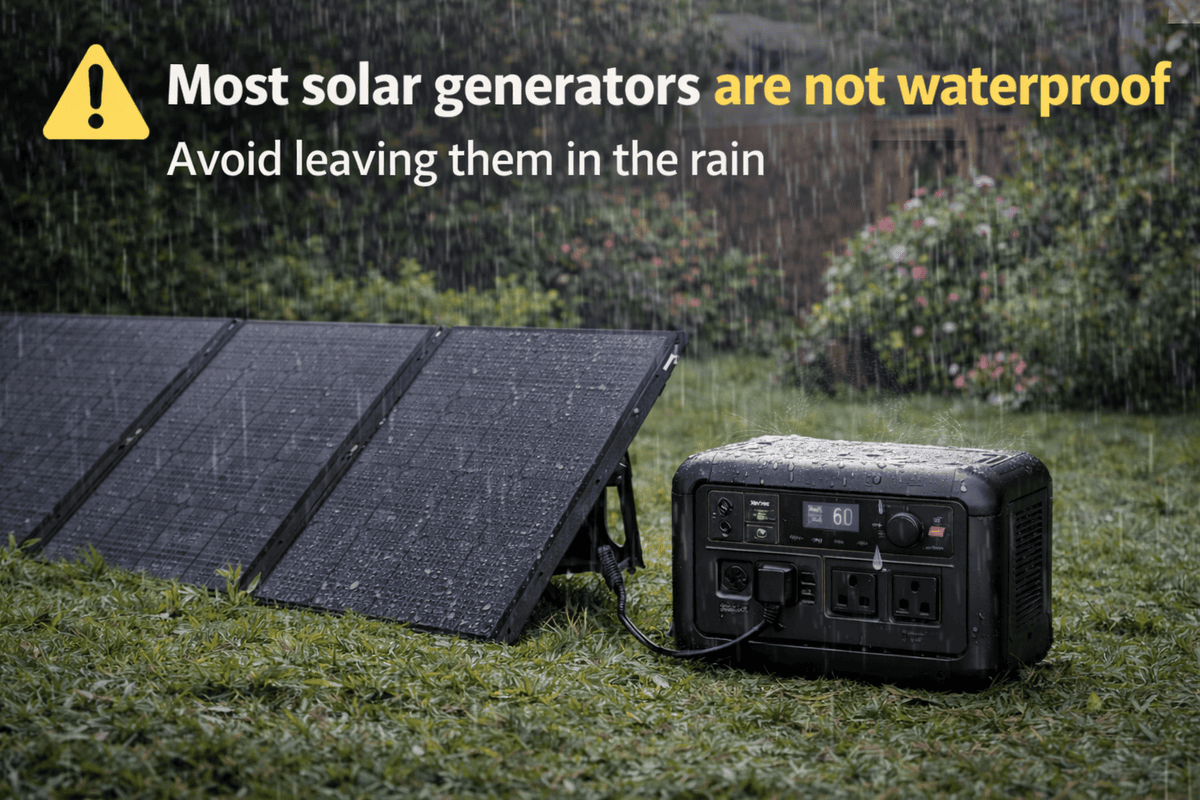
Most portable solar generators are not waterproof. In fact, many models are only rated IP20, which means they are protected from solid objects but not from water or rain.
Because of this, it’s important to avoid situations where liquid could reach the unit. For example:
- leaving the generator out in the rain
- placing it where water could drip onto it
- using it directly on wet ground
- placing kettles, watering cans, or drinks above the unit
If water enters the ventilation openings or power sockets, it could damage the electronics or cause a short circuit.
When using a solar generator outdoors in a garden or shed, it’s best to keep it under shelter or inside a dry space, while running solar panels outside where they can collect sunlight.
Think of a solar generator like a high-end laptop. You wouldn’t leave your laptop in a damp greenhouse overnight, and the same applies here. Keep the unit dry and elevated if you’re using it in sheds or garden buildings.
🔥 Lithium Battery Fire Safety
Solar generators use lithium batteries, which are widely used in modern technology ranging from phones to electric vehicles.
High-quality solar generators include several layers of safety protection designed to prevent battery problems. Serious incidents are very rare, especially with reputable brands.
⚠️ Safety Note
Lithium battery fires behave differently from traditional fires. Standard water or foam extinguishers are not designed specifically for lithium battery incidents. Specialised lithium-rated fire extinguishers are available, although failures in reputable solar generators are extremely uncommon.
The most effective prevention is simply:
- Buying quality equipment
- Using the manufacturer’s charger
- Avoiding damaged batteries
Fire services also warn about the risks of damaged or poorly manufactured lithium batteries. The London Fire Brigade has published guidance on lithium battery safety and proper charging practices.
🧪 LiFePO4 Batteries and Why They’re Safer
Many modern solar generators now use LiFePO4 (Lithium Iron Phosphate) batteries.
This battery chemistry offers several safety advantages:
- Higher thermal stability
- Lower risk of overheating
- Longer lifespan
- Better tolerance to repeated charging cycles
LiFePO4 batteries are widely considered one of the most stable lithium battery technologies available for consumer energy storage.
Some newer premium models include battery pre-heating systems, which warm the cells before charging in freezing conditions. However, most portable solar generators still require temperatures above 0 °C before charging safely.
❄️ Cold Weather Safety (Important for UK Sheds)
While LiFePO4 batteries are very safe, they do have one quirk that matters in the UK climate.
They should not be charged below 0°C.
Most modern solar generators include low-temperature protection, which automatically prevents charging if the battery is too cold.
This matters if your generator is stored in a:
- Garden shed
- Garage
- Workshop
- Greenhouse
during winter.
If the battery is frozen on a cold morning, bring the unit indoors to warm up before charging it. Once it reaches a safe temperature, charging can resume normally.
⚠️ Avoid Overloading the Generator
Most solar generators include standard UK three-pin sockets, but that doesn’t mean they can power every household appliance.
Each unit has a maximum continuous output, often between 500W and 1500W for mid-sized models.
High-power appliances such as the following can easily exceed this limit:
- Electric kettles
- Fan heaters
- Hair dryers
- Large power tools
It’s tempting to plug a multi-plug extension lead into a solar generator to power several devices at once. But remember that the generator still has a fixed power limit. If you plug in a kettle and a toaster at the same time, the inverter may trip and shut down. This doesn’t mean the generator is broken — it’s simply protecting itself from overload. Always check the combined wattage of everything plugged into the same lead.
☀️ Solar Panel Charging Safety
Charging a solar generator using solar panels is generally very safe.
Most generators include built-in charge controllers that regulate incoming power automatically.
However, it’s still important to stay within the unit’s recommended limits for:
- Maximum solar input voltage
- Maximum solar input current
Using compatible panels ensures the charging electronics operate safely.
In normal conditions, solar charging is a low-risk process compared with mains electricity.
⚡ Are Solar Generators Safe During Power Cuts?
Yes. Solar generators are commonly used as backup power during power outages.
They can safely power essential devices such as:
- Lights
- Internet routers
- Phones and laptops
- Medical devices
- Small appliances
Because they produce no fumes and operate quietly, they can run inside the home during a power cut, which is not possible with petrol generators.
However, most portable units are designed to power individual appliances rather than an entire house unless connected to a dedicated backup system.
📦 Long-Term Storage Safety
Many people only use solar generators occasionally — for example during camping trips, gardening projects, or emergencies.
If the generator will be stored for long periods, it’s best not to leave the battery completely full or completely empty.
Manufacturers typically recommend storing lithium batteries at around 40–60% charge.
Other useful storage tips include:
- Recharge every three to six months
- Avoid freezing conditions
- Store in a dry environment
These steps help preserve battery health and extend the lifespan of the unit.
♻️ End-of-Life Battery Disposal
Lithium batteries should never be placed in household waste.
When a solar generator eventually reaches the end of its lifespan, it should be taken to a local electrical recycling centre. In the UK this falls under WEEE (Waste Electrical and Electronic Equipment) regulations.
Most recycling centres accept portable batteries and electronic devices so materials can be processed safely.
🌱 Final Thoughts on Solar Generator Safety
Overall, solar generator safety is very high compared with traditional fuel-powered generators.
Because they store electricity rather than burning fuel, they avoid many of the biggest hazards associated with generators — including carbon monoxide poisoning, fuel spills, and engine noise.
When used responsibly and purchased from reputable manufacturers, a solar generator can be a safe, quiet, and convenient source of portable power for homes, gardens, and outdoor use.
If you’re considering one for emergency power or off-grid gardening, it’s worth exploring the different sizes and capacities available to find the right model for your needs.
📎 Related Articles
- The HomeGrower Guide to Home Solar Generators (UK)
A complete UK guide to home solar generators, explaining how portable power stations work, realistic use cases, sizing, limitations, safety, and how they fit into self-sufficient living. - Best Solar Generators UK
A practical guide to the best solar generators available in the UK, comparing reliable models for home backup power, sheds, and garden use. - Best EcoFlow Solar Generators UK
A focused breakdown of EcoFlow’s solar generator range, comparing Delta and River models to help UK homeowners choose the right system for backup power and off-grid use.