April is when the growing season properly opens up across most of the UK.
Longer days and rising temperatures mean soil begins to warm, early seedlings start putting on real growth, and more crops can be sown directly outdoors. Gardens that felt quiet in March quickly become busy again — with trays, beds, and borders all filling up at once.
That said, April is still a balancing act — which is why knowing what to plant in April in the UK can make a big difference.
Warm, bright days can be followed by cold nights, and a late frost can undo a lot of early progress if you’re not careful. Knowing what can safely go outside — and what still needs protection — is what separates a smooth April from a frustrating one.
Exactly what you can plant in April depends on:
- where you live in the UK
- whether you have a greenhouse or cold frame
- whether you are sowing indoors or directly outside
In this guide, we’ll look at what to plant in April in the UK, along with practical tips to help you push the season forward without getting caught out.
If you’re looking for a broader overview of how outdoor growing fits together through the year, see the HomeGrower Guide to Outdoor Growing.
🌱 What to Plant in April: Quick Guide
If you want a quick overview, these are some of the most common crops gardeners start or move forward in April.
Start Indoors (warm conditions)
- Tomatoes
- Chillies
- Peppers
- Basil
- Courgettes (late April)
- Cucumbers (late April)
Start Indoors or Greenhouse (cool conditions)
- Lettuce
- Cabbage
- Kale
- Parsley
Basil is much more sensitive than most herbs — if your greenhouse drops near 5°C in a cold snap, it can collapse overnight. It’s usually safest kept indoors until May.
Sow Outdoors
- Carrots
- Beetroot
- Spinach
- Radish
- Lettuce
- Peas
- Spring onions
- Potatoes (planting out)
📊 Where to Start Seeds in April: Indoors, Greenhouse, or Outdoors
April gives you more flexibility than March, but conditions still vary across the UK.
| Crop | Start Indoors | Greenhouse | Sow Outdoors |
|---|---|---|---|
| Tomatoes | ✔ | ✔ | ✘ |
| Lettuce | ✔ | ✔ | ✔ |
| Carrots | ✘ | ✔* | ✔ |
| Beetroot | ✘ | ✔* | ✔ |
| Courgettes | ✔ (late) | ✔ (late) | ✘ |
| Peas | ✔ | ✔ | ✔ |
| Spinach | ✘ | ✔ | ✔ |
* Greenhouse sowing for carrots and beetroot can give you an earlier crop, but most UK gardeners simply sow them outside — especially as greenhouse space is usually better saved for tomatoes and tender plants.
🌍 North vs South: Timing Still Matters
By April, southern areas of the UK are often well underway, while northern regions can still be a couple of weeks behind.
In the south, soil temperatures are often warm enough for reliable outdoor germination.
Further north — or in exposed gardens — cold nights can still slow things down significantly, and late frosts are not unusual.
A simple rule of thumb:
If you see the dreaded dandelions and nettles starting to take hold, the soil is awake. If the weeds are growing, your seeds probably will too.
Watching your own garden is usually more reliable than sticking rigidly to calendar dates.
🥕 Vegetables to Start Indoors in April
April is often the last good window to start certain crops indoors before the season shifts fully outdoors.
Good choices include:
- Tomatoes
- Chillies and peppers
- Courgettes (late April)
- Cucumbers (late April)
- Basil
Starting these now gives them time to establish before being moved into greenhouses or outdoors in May.
One thing to avoid is starting tender plants too early — courgettes and cucumbers in particular can quickly become large, leggy plants that outgrow their pots before conditions outside are ready.
🌱 Using a Greenhouse in April
April is where a greenhouse really starts to come into its own.
It gives you a buffer between indoor growing and planting outside — helping you move seedlings on without exposing them fully to unpredictable spring weather.
At this time of year, a greenhouse is useful for:
- Starting tender crops like tomatoes, courgettes, and cucumbers
- Hardening off young plants before planting out
- Protecting seedlings from late frost and cold winds
- Getting earlier sowings established more reliably
Even a small or unheated greenhouse can make a noticeable difference in April, especially in cooler parts of the UK.
If you’re planning what to grow under cover, see the greenhouse planting calendar for a month-by-month guide.
And if you’re looking for a simple setup, our guide to the best mini greenhouses for UK gardens covers compact options that work well for starting seedlings.
🌿 Vegetables You Can Sow Outdoors in April
April is one of the best months for direct sowing.
As soil warms up, germination becomes quicker and more reliable compared to March.
Common outdoor sowings include:
- Carrots
- Beetroot
- Spinach
- Radish
- Lettuce
- Peas
- Spring onions
This is also when many gardeners begin succession sowing — planting smaller amounts every couple of weeks to avoid everything maturing at once.
🥔 Planting Potatoes in April
April is the main planting window for potatoes across much of the UK.
Most gardeners plant:
- First earlies in early April
- Second earlies and maincrop through mid to late April
When your potato shoots reach around 10–15 cm tall, they are “earthed up” — covered with a mound of soil.
It feels counterintuitive to bury your plants, but this does two important things:
- protects shoots from late frost
- prevents developing potatoes turning green (and toxic) in sunlight
If frost is forecast, covering young shoots with soil or fleece can make a big difference.
🌧 Soil Conditions Improve — But Don’t Rush
By April, soil is usually easier to work than in March, but it’s still worth checking before planting.
If soil is:
- sticky and clumps together → still too wet
- crumbly and breaks apart easily → good to go
Working soil too early can still cause compaction, which affects root growth later in the season.
🌸 Flowers to Start in April
April is a strong month for starting flowers as light levels improve.
Popular choices include:
- Cosmos
- Sunflowers
- Nasturtiums
- Marigolds
- Zinnias
Many of these can now be sown directly outdoors in milder areas, or started in trays for transplanting later.
Sweet peas can still be planted out if started earlier in the year.
🐌 The Slug Explosion (April Reality Check)
April showers don’t just bring growth — they also bring slugs.
Tender young plants like lettuce, spinach, and newly emerged seedlings can disappear overnight if you’re not prepared.
If you’re planting out in April, it’s worth having some form of protection ready from day one:
- wool pellets
- copper barriers
- beer traps
- regular evening checks
Ignoring this early on is one of the quickest ways to lose momentum in the garden.
💡 Seedlings Grow Faster — and Need Managing
One noticeable change in April is how quickly seedlings begin to grow.
Compared to March:
- light levels are higher
- days are longer
- growth speeds up significantly
This often means:
- trays dry out faster
- plants outgrow modules sooner
- potting on becomes more frequent
If you’re growing indoors, rotating trays is still helpful, but stronger natural light means seedlings are usually sturdier.
Grow lights are still useful — especially for north-facing windows or early starts — but they become less essential as the month progresses.
❄️ Watch for Late Frosts
One of the biggest risks in April is a late frost catching you out.
Even after warm days, overnight temperatures can still drop below zero.
Tender plants such as:
- tomatoes
- courgettes
- cucumbers
should not be planted outside yet in most parts of the UK.
Keeping fleece, cloches, or a greenhouse available gives you a safety net when conditions suddenly turn.
🌿 A Note on Peat-Free Compost
Peat-free compost behaves differently — especially in April.
As temperatures rise, it can:
- dry out on the surface
- stay wet underneath
This can be misleading.
It’s always worth checking below the surface with your finger rather than relying on how the top looks.
Keeping compost evenly moist — not dry, not waterlogged — gives seedlings the best start.
🌿 What You Can Harvest in April
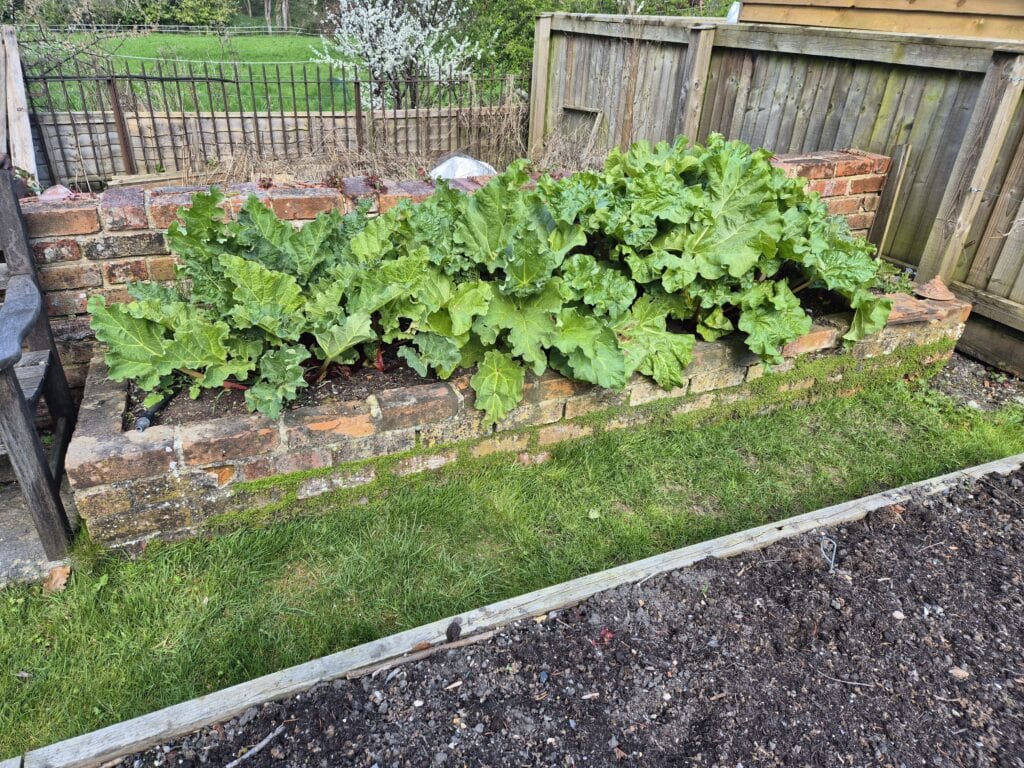
Rhubarb is one of the first reliable harvests of the year — this is the same plant I showed in March, just a few weeks after those first shoots appeared.
While April is mostly about planting, there are still a few early crops you can begin harvesting — especially if you’ve got established plants or overwintered growth.
One of the most reliable early harvests is rhubarb, which is often ready from April onwards once the stems are thick and well coloured. Harvesting regularly helps encourage new growth throughout spring.
Depending on what you planted earlier in the year, you may also be picking:
- Overwintered spinach
- Spring onions
- Early lettuce (from protected sowings)
- Herbs such as chives
April is usually the point where the garden shifts from waiting to producing — even if it’s just small, early harvests to start the season.
🌱 Final Thoughts
April is one of the most productive — and slightly unpredictable — months in the UK gardening calendar.
You can start sowing more confidently outdoors, move plants on quickly, and see real progress across the garden.
But it’s still a month where caution pays off.
Push things forward too aggressively and a late frost can set you back. Get the balance right, and April sets the foundation for everything that follows.
For general gardening advice and seasonal guidance, the Royal Horticultural Society is a useful reference for UK gardeners.
📎 Related Articles
❓ Frequently Asked Questions
What vegetables can you plant in April in the UK?
April is ideal for sowing carrots, beetroot, spinach, lettuce, radish, peas and spring onions outdoors. Tender crops like tomatoes and courgettes are usually started indoors.
Is April too late to start seeds?
No — April is one of the busiest sowing months. Warmer soil and longer daylight mean seeds often germinate faster and more reliably than earlier in spring.
Can you plant potatoes in April?
Yes, April is the main planting time for potatoes in the UK, including first earlies and maincrop varieties.
What should you avoid planting outside in April?
Tender plants such as tomatoes, cucumbers and courgettes are usually kept indoors or under cover until the risk of frost has passed.