
When you purchase through links on our site, we may earn an affiliate commission at no extra cost to you.
🏆 Best Bluetti Solar Generators UK – Our Top Picks
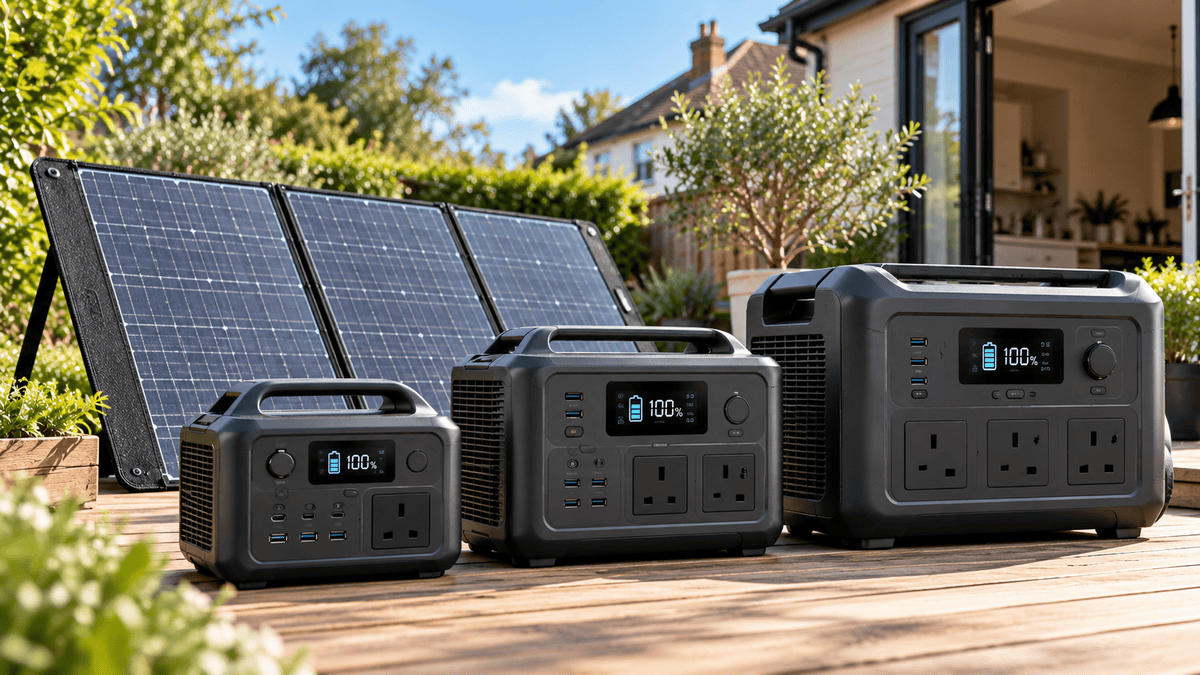
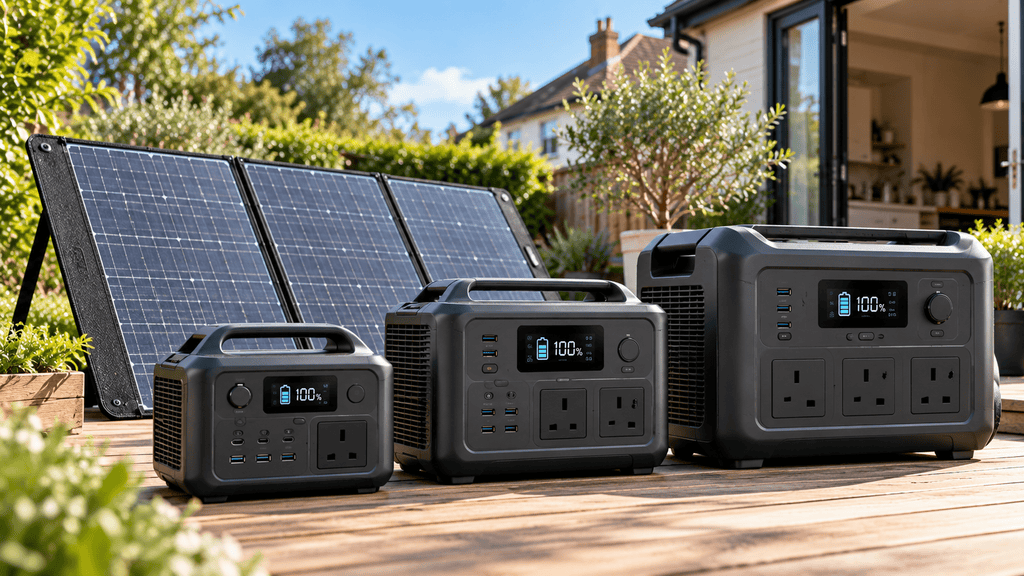
These are my top picks for the best Bluetti solar generators UK buyers should consider. Each Bluetti unit is a portable power station that can also be used as a solar generator when paired with compatible solar panels.
Bluetti is one of the biggest names in portable power stations and solar generators in the UK, with models ranging from small camping batteries to large systems designed for home backup and off-grid power.
The range has changed considerably in recent years. The newer Elite models now cover several different battery sizes, while the Apex range is aimed more towards high-powered, expandable backup systems. Older AC-series models such as the AC70, AC180 and AC200L are also still widely available, which can make choosing between them surprisingly confusing.
In this guide, I compare the main Bluetti portable power stations currently worth considering, looking at battery capacity, AC output, solar input, weight and expandability. I’ll also explain where some of the older Bluetti models can still make sense if you find them at a good price.
A note on testing: I haven’t yet tested these Bluetti power stations personally, so the comparisons below are based on manufacturer specifications, independent testing and my research into how the different models fit typical UK home-backup, camping and off-grid uses. Where I get hands-on experience with individual models, I’ll update this guide accordingly.
If you’re not set on Bluetti and want to compare it with EcoFlow, Jackery and other brands, see my Best Solar Generators UK guide.
Bluetti Portable Power Station Comparison
Bluetti’s current range covers everything from lightweight portable power for camping and travel to large home-backup systems with several kilowatt-hours of battery storage. The table below compares the main Bluetti portable power stations in this guide, so you can quickly see how their battery capacity, AC output, solar input and weight differ.


Which Bluetti Solar Generator Should You Choose?
The specifications only tell part of the story. A larger battery gives you more runtime, but it also adds weight and cost, while differences in solar input and expandability can make two similarly sized power stations better suited to very different setups.
Below, I take a closer look at the main Bluetti solar generators and portable power stations in the range, starting with the compact Elite 30 V2 and working up to the expandable Apex 300.
The Bluetti Elite 30 V2 is the model I would choose when portability matters most. It has a 288Wh LiFePO₄ battery, 600W continuous AC output and up to 200W of solar input, while weighing only around 4.3kg.
That makes it a very different proposition from Bluetti’s larger home-backup power stations. Rather than trying to provide hours of power for multiple household appliances, the Elite 30 V2 is designed around portability, charging electronics and providing a compact source of backup power.
Small Battery, Surprisingly Useful Output
A 288Wh battery is obviously limited compared with a 1kWh or 2kWh portable power station, but the 600W continuous inverter gives the Elite 30 V2 plenty of flexibility for its size.
Phones, laptops, cameras, lighting, routers and many smaller camping devices are realistic uses. Bluetti also provides a higher Power Lifting mode for suitable loads, although I would use the 600W continuous rating when deciding what equipment you can reliably run.
200W Solar Input
The Elite 30 V2 accepts up to 200W of solar input, which is well matched to its relatively small battery capacity. A compact portable solar panel can therefore make a meaningful contribution to recharging it during a camping trip or when using it away from mains power.
You don’t need a large solar array to make solar charging worthwhile at this scale, which is another reason the Elite 30 V2 makes more sense for portable use than as a household backup system.
Easy to Carry
At around 4.3kg, this is genuinely portable rather than merely movable. Carrying it between the house, car, campsite, garden or shed should be relatively easy, and that becomes an increasingly important distinction as you move up Bluetti’s range.
For comparison, the Elite 100 V2 weighs more than twice as much, while Bluetti’s larger 2kWh and 3kWh models are better thought of as power stations you can move when necessary rather than equipment you would regularly carry around.
Who Is the Bluetti Elite 30 V2 Best For?
I think the Elite 30 V2 makes most sense for camping, travel, laptops, photography equipment, charging devices and light emergency backup. Its combination of low weight and useful inverter output is more important here than having a large battery.
If you want meaningful home backup or need to run equipment for much longer, I would step up to the Elite 100 V2. But if low weight and easy portability are the priorities, the Elite 30 V2 is the more practical choice.
Verdict: The Bluetti Elite 30 V2 is my portable pick in the range. Its 288Wh battery keeps the unit small and light, while the 600W output and 200W solar input make it considerably more useful than its compact size might suggest.
The Bluetti Elite 100 V2 is the model I think offers the best balance in the current range. It combines a 1,024Wh LiFePO₄ battery with 1,800W continuous AC output, while weighing around 11.5kg.
That puts it in a particularly useful size for someone who wants a portable power station capable of doing considerably more than charging electronics, without moving up to the weight and cost of a 2kWh or 3kWh system.
1,000W Solar Input Is the Standout Feature
The specification that really separates the Elite 100 V2 from many other 1kWh portable power stations is its maximum 1,000W solar input.
That is a remarkably high charging ceiling relative to a 1,024Wh battery. With enough compatible solar capacity and good conditions, there is the potential to put a substantial amount of energy back into the battery relatively quickly.
For UK users, of course, the headline figure needs some context. A 1,000W solar array will not continuously produce 1,000W through a typical British day, particularly in winter. But having such a high input ceiling gives you considerably more flexibility than a power station limited to a few hundred watts of solar.
1,800W Output Makes It Much More Versatile
The 1,800W continuous AC output also moves the Elite 100 V2 firmly beyond light-duty portable power. It gives you enough inverter capacity for a wide range of household, garden, camping and campervan equipment, although individual appliance running and startup requirements should always be checked.
Bluetti also provides a higher Power Lifting mode for suitable loads, but I would use the 1,800W continuous rating as the important figure when comparing it with other portable power stations.
Fast Mains Charging
The Elite 100 V2 can also charge quickly from the mains. Bluetti quotes up to 1,200W AC charging and around 45 minutes to reach 80% under suitable conditions.
That could be particularly useful for intermittent power cuts, where you may have a limited opportunity to recharge, as well as for topping the unit up quickly before a camping or campervan trip.
Still Reasonably Portable
At around 11.5kg, the Elite 100 V2 is not particularly light, but it is still a power station I would consider genuinely movable. Carrying it into a campervan, between rooms or out into the garden is much more realistic than doing the same regularly with a 24kg or 30kg unit.
That balance between capacity and weight is a big part of its appeal. You get around 1kWh of storage and useful household-level output without turning the power station into something that effectively needs a permanent home.
Who Is the Elite 100 V2 Best For?
I think this is the strongest choice for someone wanting one Bluetti for home backup, campervan use, camping, sheds, garden offices and solar charging.
If your main priority is charging phones, laptops and other small electronics, the Elite 30 V2 is considerably lighter and may be all you need. If runtime is more important than portability, the Elite 200 V2 gives you roughly twice the battery capacity.
Verdict: The Bluetti Elite 100 V2 is my best overall pick because it hits a particularly useful middle ground. The 1,024Wh battery, 1,800W output and manageable 11.5kg weight are already a strong combination, but the unusually high 1,000W solar input is what makes this model particularly interesting.
The Bluetti Elite 200 V2 is the model I would move up to when battery capacity and runtime matter more than easy portability. It has a 2,073.6Wh LiFePO₄ battery and 2,600W continuous AC output, giving it roughly twice the stored energy of the Elite 100 V2.
That makes it much better suited to longer periods of home backup, larger appliances and off-grid setups where a 1kWh battery may simply run down too quickly.
More Than 2kWh of Battery Storage
The biggest reason to choose the Elite 200 V2 is its 2,073.6Wh battery. In simple terms, it gives you roughly twice the potential runtime of a 1kWh power station when powering the same equipment.
Real-world runtime will always be lower than the headline battery capacity once inverter losses and the power station’s own consumption are taken into account, but 2kWh is a useful step up for emergency home power. It gives you much more scope for keeping essentials such as a fridge, freezer, broadband equipment, lighting and other devices running during an outage.
2,600W Output for Larger Appliances
The 2,600W continuous AC output also gives the Elite 200 V2 considerably more headroom than the smaller models. Bluetti quotes a higher Power Lifting figure for suitable resistive loads, but again I would concentrate on the continuous output when deciding what you can realistically power.
For home backup, that extra inverter capacity is useful because it allows you to run higher-powered equipment and potentially several lower-powered devices at the same time, provided their combined demand remains within the unit’s limits.
Up to 1,000W Solar Charging
Solar input is rated at up to 1,000W. That’s the same maximum as the Elite 100 V2 despite the larger battery, but it is still enough to build a substantial portable solar setup around the power station.
As with all solar generators, actual charging performance will depend heavily on the panels, their positioning and the weather. That’s particularly relevant in the UK, where winter solar production can be dramatically lower than the panel array’s headline rating.
Portable, But Only Just
The compromise is weight. At around 24.2kg, the Elite 200 V2 is more than twice the weight of the Elite 100 V2. You can still move it when required, but I wouldn’t choose it if I expected to carry the power station around regularly.
For me, this is where the meaning of “portable power station” starts to change. The Elite 200 V2 is portable enough to move between the house, car or campervan, but its main advantage is having a large amount of battery storage in a single self-contained unit.
Who Is the Elite 200 V2 Best For?
I think the Elite 200 V2 makes most sense for home backup, larger campervans, longer off-grid stays and anyone who finds a 1kWh battery too restrictive. You get significantly more runtime while retaining a reasonably manageable all-in-one design.
If you only need occasional portable power, the Elite 100 V2 is much easier to move around. If you are building a much larger home-backup system and want additional batteries later, I would instead look towards the expandable Apex 300.
Verdict: The Bluetti Elite 200 V2 is my choice for larger home backup where around 2kWh of built-in storage is more useful than maximum portability. Its combination of a 2,073.6Wh battery, 2,600W output and 1,000W solar input gives it considerably more capability than the smaller Elite models without moving into Bluetti’s largest systems.
The Bluetti Elite 300 is the model I would consider if you want a large amount of battery storage in a single unit. Its 3,014.4Wh LiFePO₄ battery gives it almost three times the capacity of the Elite 100 V2, making it much more suited to extended home backup and off-grid use.
Interestingly, the Elite 300 isn’t simply an Elite 200 V2 with everything increased. Its 2,400W continuous AC output is actually slightly lower than the Elite 200 V2’s 2,600W, while the emphasis here is more clearly on additional battery capacity and longer runtime.
More Than 3kWh in a Single Power Station
The main attraction is the 3,014.4Wh battery. That’s a substantial amount of energy to have available without connecting additional expansion batteries, and it could make a big difference during a longer power cut.
It also gives you more flexibility when running equipment continuously. Refrigeration, broadband equipment, lighting, an aquarium or other relatively modest loads can consume a surprising amount of energy when they need to stay on for many hours, so battery capacity can matter just as much as maximum inverter output.
2,400W Continuous Output
The 2,400W continuous AC output is still enough for a wide range of household appliances and equipment. As always, you’ll need to consider both the running power of individual appliances and the combined load if several devices are connected at once.
If your priority is simply powering the highest-demand appliances possible, the model numbers can be slightly misleading here. The smaller Elite 200 V2 actually has a higher continuous output, while the Elite 300’s advantage is primarily its larger battery.
Up to 1,200W Solar Input
The Elite 300 accepts up to 1,200W of solar input, giving it a higher solar ceiling than the Elite 200 V2. That’s useful for a battery of this size, particularly if you plan to use the power station regularly away from mains electricity rather than keeping it primarily for emergencies.
A large solar array is obviously much less portable than a single folding panel, but the higher input gives you the option of building a more substantial off-grid setup around the Elite 300.
Large, But Still Relatively Manageable
Despite having just over 3kWh of storage, the Elite 300 weighs around 26.3kg. That’s only a little heavier than the 24.2kg Elite 200 V2, which makes the extra battery capacity particularly interesting.
I would still think of it as a power station that can be moved when necessary rather than something you would want to carry around frequently, but it remains a self-contained unit rather than a modular battery system.
Who Is the Elite 300 Best For?
I think the Elite 300 makes most sense for longer home backup, off-grid buildings and users who want around 3kWh of storage in one unit without needing separate expansion batteries.
If 2kWh is sufficient, the Elite 200 V2 is the smaller option. If you expect your backup requirements to grow significantly in the future, the Apex 300 is more interesting because it moves away from the fixed-capacity approach and into Bluetti’s expandable system.
Verdict: The Bluetti Elite 300 is primarily about battery capacity. More than 3kWh of built-in storage, 2,400W continuous output and 1,200W solar input make it a strong all-in-one option for longer backup and off-grid use, while the Apex 300 is the better direction to look if expandability is the priority.
The Bluetti Apex 300 is where the range moves from large portable power stations towards a more serious expandable home-backup system. It combines a 2,764.8Wh LiFePO₄ battery with 3,840W continuous AC output and up to 2,400W of solar input.
Interestingly, it actually has less built-in battery capacity than the Elite 300. The reason to choose the Apex 300 isn’t simply to get a bigger battery – it’s the much higher output, faster solar charging potential and, most importantly, the ability to expand the system with additional batteries.
3,840W Output for Demanding Loads
The 3,840W continuous AC output is a substantial step up from the Elite models in this guide. That gives the Apex 300 much more scope for powering demanding household equipment and running several devices simultaneously, provided their combined requirements remain within the system’s limits.
This is particularly relevant for home backup. A large battery is useful, but you also need enough inverter capacity to cope when several appliances are operating at the same time.
Expandable Battery Capacity
The biggest difference is expandability. Rather than being limited to the battery capacity built into the power station, the Apex 300 can be connected to compatible Bluetti expansion batteries.
That makes it a much more flexible starting point if you’re building a larger backup system. You could begin with the Apex 300 itself and add more storage later rather than having to replace the entire power station when your requirements increase.
Up to 2,400W Solar Input
The Apex 300 also supports up to 2,400W of solar input, twice the maximum of the Elite 300. That’s a significant advantage if you’re planning a substantial off-grid or home-backup solar setup.
As always, the maximum input shouldn’t be confused with what you’ll actually generate from solar panels throughout the day. UK weather, the season, shading and panel orientation can all have a major effect on real-world production. But the high input ceiling means the power station itself is less likely to become the limiting factor in a larger solar array.
Much Less Portable
The trade-off is weight. At around 38kg, the Apex 300 stretches the definition of a portable power station. It’s movable, but this isn’t something I would choose for regularly carrying to a campsite or moving between the house and garden.
For me, it makes much more sense as a semi-permanent home or off-grid power system that can still be relocated when necessary.
Who Is the Apex 300 Best For?
I think the Apex 300 makes most sense for larger home-backup systems, serious off-grid setups and anyone who expects to add more battery storage in the future.
If you simply want around 3kWh of storage in one self-contained unit, the Elite 300 is arguably the simpler proposition and is considerably lighter. The Apex 300 becomes more interesting when its higher output, higher solar input and expandable design are features you’ll actually use.
Verdict: The Bluetti Apex 300 is my pick for expandable home backup. Its built-in 2,764.8Wh battery isn’t the largest in the range, but the combination of 3,840W output, 2,400W solar input and expandable storage makes it a fundamentally different proposition from the fixed-capacity Elite models.
Bluetti Elite vs Apex – What Is the Difference?
Bluetti’s naming can be confusing because the Elite and Apex ranges overlap in battery capacity. A higher model number does not necessarily mean a larger battery or a straightforward step up.
The simplest way to think about the ranges is that Elite models are primarily standalone portable power stations, while Apex models are designed more around expandable home and off-grid power systems.
For example, the Elite 300 actually has a larger built-in battery than the Apex 300: 3,014.4Wh compared with 2,764.8Wh. But the Apex 300 has much higher continuous AC output, twice the maximum solar input and support for additional batteries.
For most buyers wanting a self-contained portable power station, I would start with the Elite range. If your eventual goal is a larger expandable home-backup system, the Apex range becomes much more interesting.
What About the Older Bluetti AC Models?
Bluetti’s older AC range is still widely available, and I wouldn’t automatically dismiss it just because the Elite range is newer. Models such as the AC70, AC180 and AC200L can still make sense if you find them at a good price.
Bluetti AC70
The AC70 sits in the smaller-to-mid-sized part of Bluetti’s range and can still be a useful option for camping, campervans and lighter backup use.
If you find one substantially cheaper than the newer Elite models, compare the actual battery capacity, output and solar input rather than assuming the newer model is automatically the better buy.
Bluetti AC180
The AC180 became one of Bluetti’s better-known mid-sized portable power stations and remains a useful option for camping and home backup.
However, the Elite 100 V2 now offers a particularly strong combination of 1,024Wh capacity, 1,800W output and 1,000W solar input. I would therefore want the AC180 to be meaningfully cheaper before choosing it instead.
Bluetti AC200L
The AC200L is particularly interesting because it shows why newer doesn’t always mean better in every specification.
It has a 2,048Wh battery, 2,400W AC output and up to 1,200W solar input. The newer Elite 200 V2 has slightly more battery capacity at 2,073.6Wh and higher 2,600W AC output, but its maximum solar input is lower at 1,000W.
So if you find an AC200L heavily discounted – particularly if solar charging matters to you – it can still be worth considering. Price and how you intend to use the power station matter more than simply choosing whichever model was released most recently.
Which Bluetti Size Do You Actually Need?
The easiest way to choose between Bluetti power stations is to separate battery capacity from inverter output.
Battery capacity, measured in watt-hours (Wh), largely determines how long your equipment can run. AC output, measured in watts (W), determines how much power the unit can supply at any one time.
For phones, laptops, cameras and lightweight camping use, the Elite 30 V2 may be all you need.
For general home backup, campervans and mixed portable use, I think the Elite 100 V2 is the most useful middle ground. Its 1kWh battery is large enough to be genuinely useful without making the unit excessively heavy.
The Elite 200 V2 makes more sense when you want substantially longer runtime and enough inverter power for heavier appliances, while the Elite 300 is primarily about getting roughly 3kWh of battery storage in one self-contained unit.
Finally, the Apex 300 is the one I would consider if expandability, very high AC output and large-scale solar charging are more important than portability.
How Much Does Solar Input Matter?
Bluetti is particularly interesting when it comes to solar charging because the maximum solar input does not increase neatly with battery size.
- Elite 30 V2: up to 200W
- Elite 100 V2: up to 1,000W
- Elite 200 V2: up to 1,000W
- Elite 300: up to 1,200W
- Apex 300: up to 2,400W
The standout for me is the Elite 100 V2. A 1,000W maximum solar input on a 1,024Wh battery is unusually generous and gives it the potential to recharge very quickly when paired with sufficient compatible solar capacity and good conditions.
The Apex 300 is at the other end of the scale. Its 2,400W maximum input is aimed much more towards substantial solar arrays and larger off-grid or home-backup systems.
UK conditions matter, though. A solar array rated at 1,000W will not continuously produce 1,000W throughout a typical British day, particularly during winter. Maximum solar input tells you how much solar power the station can accept – not how much electricity your panels will actually generate.
Bluetti Portable Power Station or Solar Generator?
The terminology is simpler than it initially sounds. The Bluetti unit itself is a portable power station: it contains the battery, inverter, charging electronics and output sockets.
When you connect suitable solar panels, the complete setup is commonly described as a solar generator.
You therefore don’t need solar panels to use a Bluetti power station. It can be charged from the mains and kept ready for camping, campervan trips or emergency backup. Solar simply gives you another way to recharge it when mains electricity isn’t available.
Are Bluetti Solar Panels Worth Buying?
Bluetti sells its own portable solar panels designed to work with its power stations. Using a matching Bluetti panel is usually the simplest option because the connectors and electrical requirements are easier to understand.
However, you are not necessarily restricted to Bluetti-branded panels. Third-party solar panels can also be suitable provided their electrical specifications and connectors are compatible with the power station.
Before connecting any solar panel, check:
- open-circuit voltage (Voc)
- operating voltage
- maximum current
- connector type
- maximum solar input of the power station
Don’t choose a panel solely because its advertised wattage looks suitable. Voltage and current compatibility matter just as much as the headline wattage.
This also means compatible third-party panels can be worth considering if you already own them or find a good deal, rather than assuming you always need to buy Bluetti-branded solar panels.
Final Thoughts
For most buyers, I think the Bluetti Elite 100 V2 is the strongest all-round choice. Its 1,024Wh battery and 1,800W inverter put it in a very useful capacity class, while the 11.5kg weight keeps it reasonably portable. The particularly strong 1,000W maximum solar input is another major advantage if solar charging is important to you.
The Elite 30 V2 is my choice for genuinely lightweight portable use, while the Elite 200 V2 is the logical step up when you want substantially more runtime and appliance power.
If battery capacity is the priority, the Elite 300 puts just over 3kWh into a single self-contained unit. For a more serious expandable system, the Apex 300 is the more interesting option, combining high AC output and solar input with the ability to add additional battery storage.
I also wouldn’t ignore Bluetti’s older AC models. The AC70, AC180 and AC200L can still make sense at the right price, particularly when heavily discounted.
Ultimately, the right Bluetti isn’t necessarily the newest or largest one. It is the model whose battery capacity, inverter output, solar input, weight and expandability best match how you will actually use it.