
When you purchase through links on our site, we may earn an affiliate commission at no extra cost to you.
Best Hydroponic Growing Systems UK – Our Top Picks
These are my top picks for the best hydroponic growing systems UK buyers should consider. From beginner-friendly countertop gardens to larger DWC and recirculating systems, each offers a different approach to growing fresh food indoors.
Choosing the best hydroponic growing system UK gardeners can buy depends on what you want to grow, your available space and your budget.
In this guide, we’ll look at everything from beginner-friendly countertop kits that make great gifts to serious DWC and RDWC systems for growing tomatoes, peppers and other crops. We’ll explain the differences, what each setup requires and which type is right for you.
If you’d love to grow herbs, salad greens or even tomatoes indoors without dealing with soil,
a hydroponic growing system could be your ideal solution. Hydroponics grows plants using nutrient-rich water instead of compost, helping them develop faster, cleaner and with far less mess — perfect for UK homes and flats.
Best Hydroponic Growing Systems – Quick Comparison


How We Selected These Hydroponic Systems
Rather than recommending several similar products, we’ve selected five hydroponic systems covering different growing methods, budgets and experience levels — from beginner-friendly countertop gardens to more advanced DWC and RDWC setups.
Our choices consider growing capacity, lighting, build quality, ease of use, UK availability and value for money. We’ve also drawn on our hands-on experience with the iDOO hydroponic garden, alongside product specifications and customer feedback. Our Spider Farmer DWC system has been ordered for further testing.
Best Hydroponic Growing Systems UK – In-Depth Reviews
Below, we take a closer look at each of our five recommended hydroponic systems, including their main features, strengths and limitations. From compact kitchen gardens to larger DWC and RDWC setups, we’ll explain which type of growing each system is best suited to.

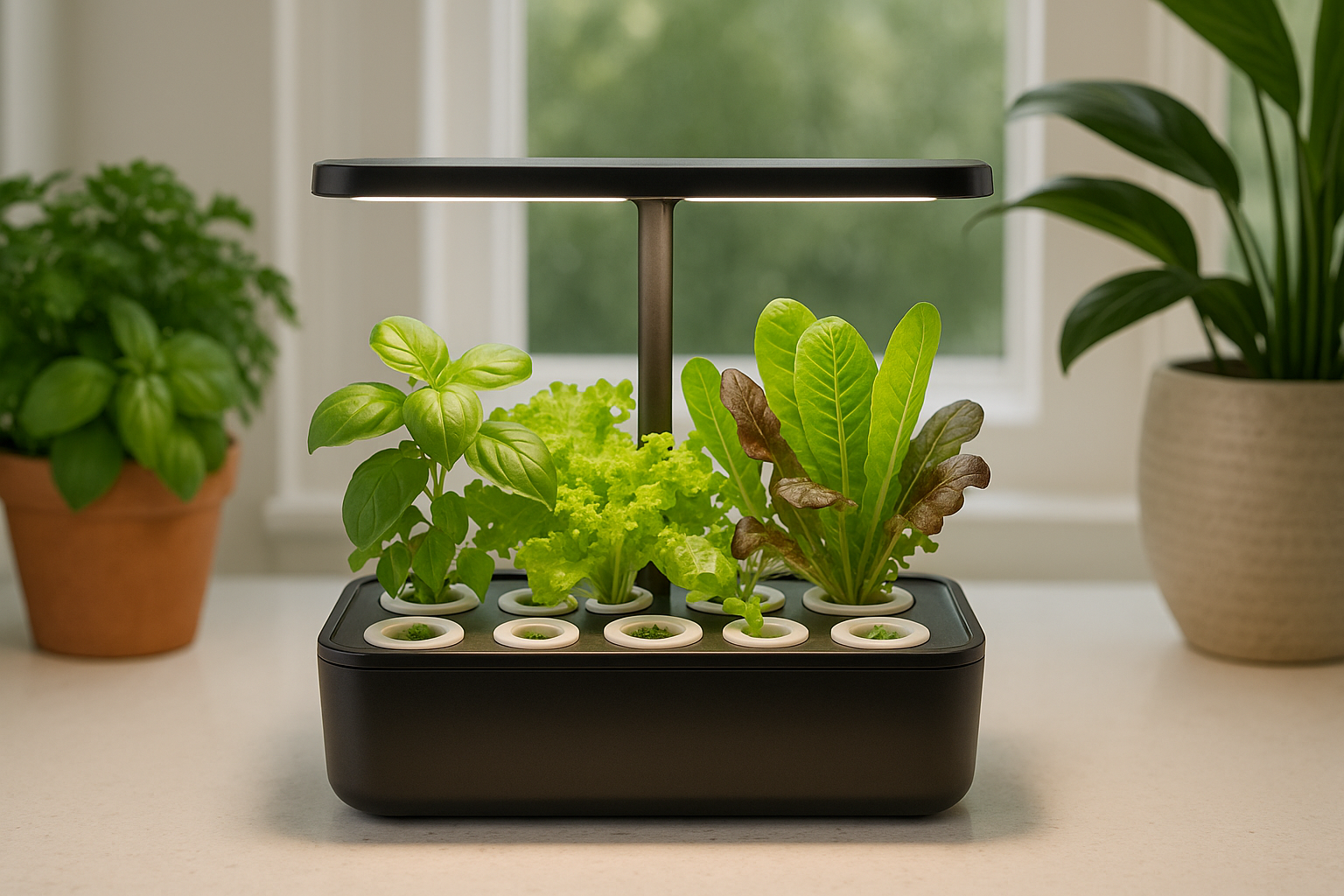
The iDOO 12-Pod Hydroponic Growing System is an affordable, beginner-friendly way to grow herbs and salad leaves indoors. With integrated LED lighting, automatic water circulation and straightforward controls, it takes much of the guesswork out of getting started with hydroponics.
I’ve used the smaller 8-pod iDOO system to grow basil at home, and found it surprisingly low-maintenance. The plants continued growing well even when I left them largely unattended for a week or two. You can see my growing results, photographs and practical observations in my hands-on iDOO hydroponics review.
The 12-pod version offers more planting positions, although that doesn’t necessarily mean twelve fully grown plants will fit comfortably. As with most countertop systems, growing height and available space become limiting factors as plants mature. It’s best suited to basil, parsley, lettuce and other compact greens rather than large tomatoes or peppers.
What We Like
- Simple setup and automatic lighting and water circulation
- Low-maintenance growing, supported by our experience with the 8-pod model
- Compact enough for kitchens and smaller living spaces
- Affordable introduction to hydroponics and a practical gift idea
Things to Consider
- Limited growing height and space between mature plants
- No app control or extensive lighting adjustments
- Not designed for larger, demanding fruiting crops
Our Verdict: For beginners who want fresh herbs and salad leaves without investing in separate lighting, pumps and growing equipment, the iDOO is an excellent starting point. It’s simple, relatively inexpensive and easy to maintain, making it our preferred entry-level hydroponic system.
The LETPOT 12-Pod Smart Hydroponic System is designed for growers who want the convenience of a countertop garden with greater control over their growing conditions. Like the iDOO, it combines lighting and water circulation in one compact unit, but adds Wi-Fi connectivity and app-based controls.
Its main advantage is the ability to manage lighting schedules through the LETPOT app rather than relying entirely on preset programmes. The 24W full-spectrum LED grow light is height-adjustable, while the 5.5L water reservoir provides space for developing roots and reduces the frequency of top-ups. These features make it a good option for busy households or anyone who prefers a more automated setup.
Despite the smart features, this remains a countertop hydroponic garden rather than a system for large crops. The 12 planting positions are particularly useful for herbs, lettuce and compact leafy greens, although mature plants may need thinning or harvesting regularly to avoid overcrowding.
What We Like
- App-controlled lighting schedules offer greater flexibility
- 24W full-spectrum LED grow light with adjustable height
- 5.5L water reservoir and automatic circulation pump
- Attractive, compact design suitable for modern kitchens
Things to Consider
- Costs more than basic countertop hydroponic kits at typical prices
- App connectivity adds convenience but isn’t essential for plant growth
- Limited growing height and root space for larger crops
Our Verdict: The LETPOT is a good choice if you want a smart, self-contained hydroponic garden with more control than a basic beginner kit. For straightforward herb growing, the iDOO remains our preferred budget-friendly option, but the LETPOT offers worthwhile convenience for growers who value app-controlled lighting and automation.
The Growell 32-Pod Shelf Hydroponic System offers a substantial increase in growing capacity compared with compact countertop gardens. Its two-tier design provides 32 planting positions, making it particularly appealing for households wanting regular harvests of salad leaves, herbs and other vegetables indoors.
One of its biggest advantages is the larger 3-inch growing baskets, which provide more room for developing plants than the smaller pods found in most kitchen hydroponic gardens. The system also includes a 32-litre total water capacity, automatic circulation and adjustable LED lighting on both levels, so there’s no need to purchase separate grow lights for basic use.
Growell includes lighting modes for both leafy vegetables and flowering or fruiting plants. Compact tomatoes, chillies and strawberries are therefore possibilities, although the relatively modest built-in lighting means expectations should be realistic. For substantial harvests of larger fruiting crops, a dedicated DWC system with a more powerful grow light would be a better choice.
What We Like
- 32 planting positions across two space-efficient growing tiers
- Larger 3-inch baskets accommodate more developed root systems
- Integrated adjustable LED lighting with separate controls for each tier
- Generous 32L total water capacity and automatic circulation
- Suitable for growing multiple varieties of herbs, salads and compact vegetables
Things to Consider
- Requires considerably more space than a countertop garden
- Built-in lighting may limit yields from demanding fruiting crops
- Higher purchase price than smaller hydroponic systems
- Check UK delivery costs, warranty arrangements and replacement-part availability before ordering
Our Verdict: The Growell is an interesting middle ground between small kitchen hydroponic gardens and more serious DWC growing systems. Its combination of planting capacity, integrated lighting and vertical design makes it particularly attractive for producing larger quantities of leafy vegetables indoors. However, growers primarily interested in substantial tomato or pepper harvests may be better served by a dedicated system with stronger lighting.
The Spider Farmer 4-Bucket DWC Hydroponic System is a substantial step up from countertop growing kits. Instead of squeezing numerous small plants into a shared reservoir, it provides four individual growing buckets with enough root space for larger crops such as tomatoes, peppers, chillies and cucumbers.
Each bucket has a 7-gallon reservoir, a 6-inch net pot and an adjustable top-drip ring. The included air pump supplies air stones in each bucket, helping oxygenate the nutrient solution around the roots. This combination makes the system particularly interesting for growers wanting to move beyond herbs and salads towards more productive indoor vegetable growing.
Unlike the smaller hydroponic gardens in this guide, the Spider Farmer doesn’t include grow lighting. You’ll need a suitable LED grow light and enough space for the plants to develop, particularly if growing tomatoes or other vigorous crops. You’ll also need to monitor nutrient strength, pH and water levels rather than relying on a largely automated countertop setup.
Our upcoming hands-on test: I’ve ordered the four-bucket Spider Farmer system and plan to use it alongside my Lumatek ATS 300W Pro LED grow light. I’ll update this guide with original photographs, growing results and practical observations once the system has been tested.
What We Like
- Four spacious 7-gallon buckets suitable for larger plants
- Included air pump, air stones and adjustable top-drip irrigation
- Separate reservoirs allow different plants to receive individual nutrient solutions
- A practical introduction to more serious DWC growing
- Supplied with net pots and growing media to help get started
Things to Consider
- Separate LED grow lighting is required
- Each bucket needs its own water and nutrient management
- Four-bucket system isn’t designed for modular expansion
- Requires more space and maintenance than countertop hydroponic gardens
Our Verdict: The Spider Farmer is a promising choice for growers ready to produce larger fruiting crops using deep water culture. Its generous bucket capacity, root oxygenation and top-drip system provide a more capable setup than typical hobby hydroponic gardens, without the additional plumbing complexity of RDWC. It’s our preferred DWC option on paper, with hands-on testing planned to assess its real-world performance.
The ALIEN 4-Pot 36L RDWC Hydroponic System is designed for growers who want a more substantial, expandable approach to indoor food production. Unlike traditional DWC buckets, which have separate nutrient reservoirs, this recirculating system connects four large 36L growing pots through shared pipework and a circulating nutrient solution.
Its biggest advantage is centralised nutrient management. Water circulates between the pots, helping maintain consistent pH and nutrient strength throughout the system. Rather than checking and adjusting four separate buckets, growers can manage the shared solution from one place. The included 950L/hour circulation pump and 32mm pipework support continuous water movement between the pots.
With 36L growing pots, the ALIEN provides substantial space for developing root systems, making it particularly suited to larger fruiting crops such as tomatoes, peppers and cucumbers. You’ll need separate LED grow lighting and an appropriately sized air pump for root oxygenation. The manufacturer’s standard system does not include an air pump, so check the contents of your chosen retailer’s package before purchasing.
Expandability is another important advantage. ALIEN offers its 36L Black Series in configurations of up to 48 pots, making it an option for growers who may want to increase production over time. However, expanding an existing four-pot system can require additional pipework, growing pots, reservoir capacity and upgraded pumping equipment.
What We Like
- Four spacious 36L pots suitable for larger fruiting plants
- Centralised nutrient management across connected growing pots
- Continuous water circulation helps maintain consistent growing conditions
- Heavy-duty 32mm pipework and a 950L/hour circulation pump
- Potential to expand into a substantially larger growing system
Things to Consider
- Higher purchase price than standalone DWC bucket systems
- Separate grow lighting and an air pump are required
- More pipework and connections mean a more involved setup
- All connected plants share the same nutrient solution, so problems can affect the entire system
- Requires sufficient floor space and regular monitoring of pH, EC and water temperature
My Verdict: The ALIEN RDWC is a strong choice for growers planning a serious indoor hydroponic setup with several large, productive plants. Its centralised nutrient circulation, generous root space and expansion options make it particularly appealing for long-term growing projects. However, if you’re moving into DWC for the first time, the simpler Spider Farmer bucket system may offer a more affordable and manageable starting point.
What Is a Hydroponic Growing System?
A hydroponic growing system allows plants to grow without soil, supplying water and dissolved nutrients directly to their roots. Depending on the system, roots may sit in oxygenated water, receive a flowing nutrient solution or grow in a moist medium.
Hydroponics can be as simple as a small countertop herb garden or as involved as a multi-pot growing system with separate LED lighting and nutrient controls. The right setup depends largely on what you want to grow and how much maintenance you’re comfortable with.
For a step-by-step introduction, see our complete guide to growing with hydroponics.
Which Type of Hydroponic System Is Best?
The biggest decision isn’t necessarily which brand to buy, but which growing method suits your needs. The systems we’ve recommended fall into four main categories.
Countertop Hydroponic Gardens
Compact systems such as iDOO and LETPOT combine a water reservoir, growing pods, LED lighting and automatic circulation in one unit. They’re ideal for growing kitchen herbs and small salad crops, particularly if you’re new to hydroponics or looking for a practical gift.
The main limitations are growing height, root space and lighting power. Although some kits advertise 12 or more planting positions, you’ll often need to thin plants or harvest regularly as they mature.
Shelf and Multi-Tier Hydroponic Systems
Shelf systems such as the Growell 32-Pod offer significantly more planting positions across two or more growing levels. They make better use of vertical space and can be particularly useful for households wanting regular harvests of lettuce, herbs and leafy vegetables.
Many include their own lighting and water circulation, although it’s worth checking the actual LED power before choosing one for fruiting crops. A large number of planting positions doesn’t automatically mean the system can support that many mature tomatoes or peppers.
Deep Water Culture (DWC)
Deep Water Culture suspends plant roots in a nutrient solution supplied with oxygen, usually through an air pump and air stones. Bucket systems such as the Spider Farmer provide substantially more room for root development than countertop gardens.
DWC is especially useful for larger plants, including tomatoes, peppers and cucumbers. However, these setups generally need separate grow lighting, nutrient monitoring and more space. With individual buckets, each reservoir also needs checking and maintaining.
Recirculating Deep Water Culture (RDWC)
Recirculating Deep Water Culture takes the DWC approach further by connecting multiple growing pots to a shared circulating nutrient solution.
Systems such as the ALIEN RDWC make it possible to manage water and nutrients across several plants from a central reservoir. This can be convenient for larger growing setups, particularly where all plants have similar nutrient requirements.
The trade-offs are higher initial costs, more plumbing and greater setup complexity. Because the plants share one nutrient solution, problems with water quality can also affect the entire system.
How to Choose the Best Hydroponic Growing System
Before choosing a system, consider these five factors. They’ll usually make more difference to your growing experience than additional smart features or the number of advertised planting positions.
1. What Do You Want to Grow?
For basil, parsley, coriander and small salad greens, a countertop hydroponic garden is often all you need. If you want regular harvests for a household, a larger shelf system may be more practical.
For demanding fruiting crops such as tomatoes, peppers and cucumbers, consider DWC or RDWC with suitably powerful lighting and enough room for mature plants.
2. Growing Space and Plant Size
Check the overall dimensions, but also consider how tall and wide the plants will become. Twelve pods don’t necessarily mean twelve mature plants can grow comfortably together.
Larger DWC and RDWC systems need space for buckets, reservoirs, lighting and access for maintenance. If you’re planning to use a grow tent, check its dimensions before buying the hydroponic kit.
3. Grow Lighting
Most countertop and shelf systems include LED lighting, while bucket-based systems generally require a separate grow light.
Leafy greens usually need less intense lighting than fruiting vegetables. Check the light manufacturer’s recommended coverage, power and hanging height rather than assuming one setting will work for every crop.
Our best LED grow lights UK guide covers suitable lighting options for different indoor growing spaces.
4. Maintenance and Nutrient Management
Even automated hydroponic systems require regular attention. You’ll need to check water levels, replenish nutrients and clean the equipment periodically.
Basic countertop gardens minimise the amount of adjustment required. Larger DWC and RDWC systems benefit from pH and electrical conductivity (EC) testing, allowing you to manage nutrient concentration and water conditions more precisely.
5. Total Setup Cost
Don’t compare hydroponic systems on purchase price alone. Countertop gardens generally include lighting, pumps and growing containers, while more advanced systems may require additional equipment.
For a DWC or RDWC setup, budget for LED lighting, hydroponic nutrients, growing media, pH and EC testing equipment, and any pumps or accessories not supplied with the kit.
The cheapest hydroponic system isn’t necessarily the best value if it doesn’t have enough space or lighting for the crops you want to grow.
How Much Does a Hydroponic System Cost to Run in the UK?
The running costs of hydroponic systems vary considerably depending on their size, lighting requirements and equipment. Small countertop gardens have low-powered integrated LEDs and circulation pumps, while larger DWC and RDWC setups usually require separate grow lights, air pumps and sometimes additional ventilation.
Grow lighting is typically the biggest electricity expense, but costs depend on the actual wattage used and how many hours the lights operate each day. For example, a 300W LED grow light running at full power for 16 hours daily would cost around £36 per month at an illustrative electricity rate of 25p/kWh. Running the same light for 12 hours daily would cost approximately £27 per month.
Air and circulation pumps also need to be considered. Unlike grow lights, these may operate continuously. For example, a combined 36W of pump power running 24 hours a day would add approximately £6.48 per month.
Calculate your own costs: Use our free Grow Light Running Cost Calculator UK to estimate electricity consumption for your grow lights, pumps, fans and other equipment. Enter the wattage, daily operating hours and your electricity tariff to calculate each component separately.
Figures are illustrative and assume 30 days per month. Actual electricity consumption varies according to equipment, dimming settings, operating schedules and tariff. Nutrients, water and equipment purchase costs are additional.
Five Tips for Successful Hydroponic Growing
1. Start with Suitable Plants
If you’re new to hydroponics, start with fast-growing crops such as lettuce or basil. These are generally easier to manage than large fruiting plants and allow you to learn how the system works before attempting more demanding crops.
2. Monitor pH and Nutrient Strength
Most common hydroponic crops grow well with a nutrient solution around pH 5.5–6.5, although requirements vary. Larger systems particularly benefit from checking EC as well as pH, since nutrient strength can change as plants absorb water and minerals.
Use nutrients designed for hydroponics and follow the manufacturer’s instructions, adjusting concentrations for your crop and its growth stage.
3. Pay Attention to Water Quality and Temperature
Very hard tap water can make nutrient management more difficult because it already contains dissolved minerals. If your water is particularly hard, you may need to account for its mineral content when preparing nutrients.
Keep the nutrient solution reasonably cool and avoid placing reservoirs where strong sunlight or grow lights can heat them excessively. Warmer water holds less dissolved oxygen and can increase the risk of root problems.
4. Prevent Algae and Keep Equipment Clean
Light entering a nutrient reservoir encourages algae growth. Cover unused planting holes and keep reservoirs as lightproof as possible.
Inspect pumps, tubing and roots regularly, removing debris that could obstruct water flow. Clean reservoirs and equipment between crops, following the manufacturer’s recommendations.
5. Give Plants Enough Room to Mature
One of the most common mistakes is planting every available pod without considering mature plant size. Crowding reduces light penetration and airflow, making harvesting and maintenance more difficult.
Start with fewer plants if necessary, particularly when growing large lettuce varieties, basil or fruiting vegetables.
Final Thoughts: Which Hydroponic System Should You Choose?
For most beginners, a compact hydroponic garden such as the iDOO 12-Pod is a straightforward and affordable starting point. The LETPOT adds smart controls, while the larger Growell shelf system offers considerably more growing space for herbs and vegetables.
If you’re looking to grow larger, more demanding crops, the Spider Farmer DWC provides a practical step into bucket hydroponics. For growers wanting a connected multi-plant system with centralised nutrient circulation, the ALIEN RDWC offers a more advanced alternative.
Ultimately, the best choice depends on the crops you want to grow, the space available and how much time and money you’re prepared to invest.
Related Hydroponics and Indoor Growing Guides
- The Complete Guide to Indoor Growing in the UK – Planning an indoor growing space, choosing crops and understanding lighting requirements.
- How to Grow with Hydroponics – A step-by-step introduction to nutrients, water management and growing techniques.
- Hydroponics vs Soil Growing – Comparing costs, maintenance and the advantages of each method.
- iDOO Hydroponics Growing System Review – Our hands-on experience growing basil using the 8-pod model.
- Best LED Grow Lights UK – Choosing suitable lighting for indoor vegetables, hydroponics and grow tents.
Best Hydroponic Growing Systems UK – FAQs
Are hydroponic systems suitable for beginners?
Yes. Countertop hydroponic gardens with integrated lighting and automatic water circulation are particularly beginner-friendly. Larger DWC and RDWC systems require more setup and closer nutrient management, but can also be learned by beginners willing to invest some time.
Can you grow tomatoes and peppers in hydroponics?
Yes. Tomatoes, peppers and chillies can grow very well hydroponically, provided they have sufficient root space, suitable nutrients and adequate lighting. Larger DWC and RDWC systems are generally better suited to substantial fruiting plants than compact countertop gardens.
Do hydroponic systems need grow lights?
Not always. Hydroponic plants can grow using natural daylight if it is sufficient for the crop and season. However, supplementary LED lighting is often necessary for reliable year-round indoor growing in the UK, particularly during winter.
Is DWC or RDWC better?
Neither is automatically better. DWC offers a relatively simple setup with independently managed reservoirs, while RDWC connects multiple growing pots to a shared nutrient solution. RDWC can simplify centralised management but involves more equipment and plumbing.
How often should you change hydroponic water?
It depends on the system, reservoir size and crop. Many small systems recommend periodic solution replacement, often around every one to two weeks. Larger systems may operate with monitored top-ups and less frequent complete changes. Follow the manufacturer’s guidance and watch nutrient strength, pH and water condition.
Are hydroponic systems worth the money?
They can be worthwhile for year-round growing, convenience and making efficient use of indoor space. However, hydroponics doesn’t necessarily produce cheaper food once electricity, equipment and nutrients are included. Its value depends on what you grow, how often you harvest and whether you enjoy the process.