When you purchase through links on our site, we may earn an affiliate commission at no extra cost to you.
Last updated: April 2026
If you’ve been comparing the Spider Farmer SF1000 vs Mars Hydro TS1000, you’re not alone.
They’re two of the most popular mid-range LED grow lights in the UK — and on paper, they look very similar.
But there are a few things most comparisons miss.
👉 Prices change constantly
👉 Specs don’t tell the full story
👉 And there’s a third option worth considering: the ViparSpectra XS1500 Pro
This guide breaks it down based on real use, UK conditions, and what actually matters day to day.
If you’re new to indoor growing, you can also read the HomeGrower Guide to Grow Lights to understand how they work and what to look for.
Spider Farmer SF1000 vs Mars Hydro TS1000 – Quick Verdict
If you just want a quick answer:
- Best efficiency & lowest heat → Spider Farmer SF1000
- Best raw output (especially on sale) → Mars Hydro TS1000
- Balanced alternative → ViparSpectra XS1500 Pro
👉 There’s no single winner — it depends on your setup.
Comparison Table
| Grow Light | True Power | Coverage (Real Use) | Dimmable | Heat Output | Best For |
|---|---|---|---|---|---|
| Spider Farmer SF1000 | ~100W | Small setups, usually 1–2 plants | Yes | Low | Efficiency, lower heat, smaller spaces |
| Mars Hydro TS1000 | ~150W | Medium setups, usually 2–4 plants | Yes | Moderate to fairly warm | More output, faster growth, fruiting plants |
| ViparSpectra XS1500 Pro | ~150W | Medium setups, usually 2–4 plants | Yes | Moderate but manageable | Balanced option, mixed crops, even spread |
Spider Farmer SF1000
Mars Hydro TS1000
ViparSpectra XS1500 Pro
The Price Reality (Don’t Overthink It)
Typical pricing (but this changes regularly):
- SF1000 → ~£149.99
- TS1000 → ~£89.99
- XS1500 Pro → ~£169.99
👉 These lights frequently go on sale, and prices can swing £40–£80.
HomeGrower insight:
Don’t base your decision purely on price. Over time, these often overlap — so it’s better to choose the light that fits your space and plants rather than chasing a temporary deal.
Real-World Breakdown
In this Spider Farmer SF1000 vs Mars Hydro TS1000 comparison, the real differences become clear when you move beyond specs and look at how each light performs in a real indoor setup.
Spider Farmer SF1000 – Efficient, Cooler, but Limited
If you want a cooler-running, efficient option that’s easy to manage day to day, check the SF1000 here:


I’ve tested the SF1000 separately in my own setup, so this comparison is based partly on hands-on use rather than specifications alone. You can read the full Spider Farmer SF1000 Grow Light Review for more detail on coverage, setup, hanging distance and real-world performance.
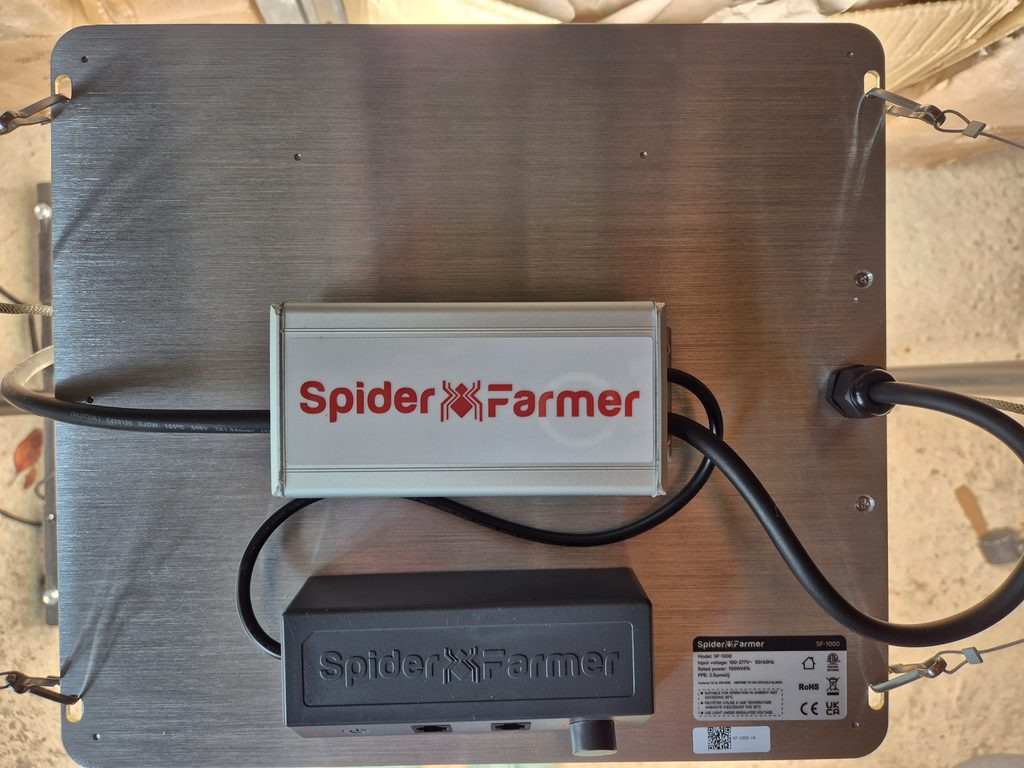
The SF1000 is a compact 100W full-spectrum LED grow light aimed at relatively small indoor growing spaces. Its main strengths are simplicity, low power consumption, dimming and silent fanless operation.
In practical use, I think its 2 × 2 ft flowering coverage is realistic. It works best when the plants are kept fairly close together beneath the panel rather than trying to spread 100W across a much wider canopy.
The main limitation is simply power and physical size. Compared with a larger 150W light, the SF1000 needs to be positioned closer to the plants and has a smaller usable footprint. In my own setup, I would be comfortable using it for around one or two mature fruiting plants, whereas a larger 150W panel gives noticeably more flexibility.
Build quality is decent for the price. It does feel more budget than some mid-range grow lights, but the panel is lightweight, the dimmer is easy to use and the fanless design means there is no cooling noise. The board becomes warm during use, but I have not found it excessively hot in my setup.
Overall, the SF1000 makes most sense if you want a straightforward 100W light for a compact grow rather than maximum coverage. Its lower power is an advantage for heat, electricity use and smaller spaces, but the TS1000 has the edge if you want more output and a larger usable growing area.
Best for: growers who want a cooler-running, efficient light for smaller indoor setups where space and heat management matter more than maximum output.
Mars Hydro TS1000 – More Power, More Heat
If you want more output for faster growth and don’t mind a bit more heat, check the TS1000 here:

The TS1000 takes a different approach to the SF1000. Instead of focusing on maximum efficiency, it pushes more total light output — and that’s what makes it noticeably stronger once plants move beyond early growth.
At around 150W actual power, it delivers significantly more light than ~100W panels like the SF1000. That extra wattage is the biggest factor in how it performs. It uses a dense LED board (around 300+ diodes) combined with a reflective hood design, which helps spread light more evenly across the canopy and reduce wasted output around the edges.
The diodes themselves aren’t as efficient as Samsung LM301-series chips, but the higher overall output compensates for that. In simple terms, this light trades efficiency for intensity — and in many real setups, that’s exactly what you want.
In practice, the difference shows up once plants start demanding more light. The TS1000 can push faster growth and higher potential yields, especially in medium-sized setups where intensity becomes the limiting factor. You get stronger penetration into the canopy and more consistent coverage across a wider area compared to lower-powered panels.
The reflector design also helps here, directing more usable light down onto the plants rather than losing it to the sides.
That extra output does come with a trade-off. The TS1000 runs noticeably warmer than more efficient lights, particularly in smaller indoor spaces. In a typical UK setup, this isn’t usually a problem in winter — it can actually help — but it becomes more noticeable in summer or in rooms with limited ventilation. It’s still fanless and silent, but you’ll need to be a bit more aware of distance and airflow.
In terms of usability, it’s straightforward. You get a dimming knob (0–100%), daisy chain capability, and a simple plug-and-play setup. It’s also more scalable if you decide to expand later.
The spectrum is full-cycle, combining 3000K and 5000K white light with 660nm red and 760nm IR, so it works from veg through to flowering without needing to change anything.
Overall, the TS1000 is the more aggressive option. It gives you more output and more growth potential, but at the cost of higher heat and slightly lower efficiency.
One thing worth noting is that the TS1000 has been around for years and is widely used, so there’s a huge amount of real-world guidance available — grow diaries, YouTube setups, and proven settings. If you prefer following established setups rather than figuring things out yourself, this makes it a very safe choice.
Best for: growers who want more output and faster growth in a medium indoor setup.
If you’re running grow lights indoors, it’s worth following basic electrical safety advice, especially in enclosed spaces — see guidance from Electrical Safety First.
ViparSpectra XS1500 Pro – Balanced Output with Better Coverage
If you want something between the two with more even coverage, this is worth a look:

The XS1500 Pro sits between the SF1000 and TS1000 in terms of raw power, but it takes a slightly different approach. Instead of focusing purely on efficiency or brute output, it’s designed to deliver more even light distribution across the canopy, which makes a noticeable difference in real-world growing.
At around 150W actual power, it’s in the same class as the TS1000 in terms of total output. The key difference is the lens-based LED design, which concentrates and directs light more effectively. Rather than relying purely on board spread or reflectors, each LED is paired with an optical lens that helps reduce light loss and improve uniformity.
In practice, this shows up as a more even PPFD map across your grow space. Instead of strong hotspots in the centre and weaker edges, the XS1500 Pro spreads usable light more consistently — which means plants at the edges perform closer to those directly underneath the light.
That consistency becomes more noticeable as your setup grows. In a typical 2×2 ft or small indoor setup, it allows you to make better use of the full space rather than just the centre area.
Like the TS1000, it has enough output to support full-cycle growth, including fruiting plants. The difference is how that light is delivered — slightly less “intense hotspot” and more balanced canopy coverage, which can lead to more uniform plant development.
Heat is well managed for a 150W light. The large aluminium heat sink and fanless design keep it quiet and relatively controlled, sitting somewhere between the cooler-running SF1000 and the warmer TS1000. In a UK home setup, it’s generally manageable year-round with basic ventilation.
Usability is straightforward. You get a dimming knob (0–100%), daisy chain capability (up to multiple units), and simple plug-and-play setup. Like the others, it’s easy to scale if you expand later.
The spectrum is full-cycle, combining 3000K and 5000K white light with 660nm red and 730nm IR, giving plants everything they need from vegetative growth through to flowering. The addition of IR helps during flowering, while the white spectrum keeps growth compact and natural.
Overall, the XS1500 Pro is a more balanced option. It delivers similar output to the TS1000, but with a more controlled and even spread, which makes it easier to manage across a full canopy rather than just maximising intensity in one area.
Best for: growers who want strong output with more even coverage, especially in small-to-medium indoor setups where consistency across the canopy matters.
For more detail on how this light performs in a real-world setup, you can read my full ViparSpectra XS1500 Pro Review.
🇬🇧 Why UK Conditions Matter (More Than Specs)
Most reviews don’t factor this in — but it makes a big difference.
Winter:
- Rooms are colder
- Extra heat from TS1000 / XS1500 can actually help
Summer:
- Heat builds up quickly
- Cooler-running lights are easier to manage
Typical UK homes:
- Smaller rooms
- Limited ventilation
- Lower ceilings
👉 This is why real-world performance matters more than spec sheets.
🧠 What Actually Matters (Simple Decision Logic)
Instead of overthinking specs:
- Small space or want low heat? → Spider Farmer SF1000
- Want maximum output for growth? → Mars Hydro TS1000
- Want a balanced, no-fuss setup? → ViparSpectra XS1500 Pro
👉 All three work — it’s about matching the light to your setup.
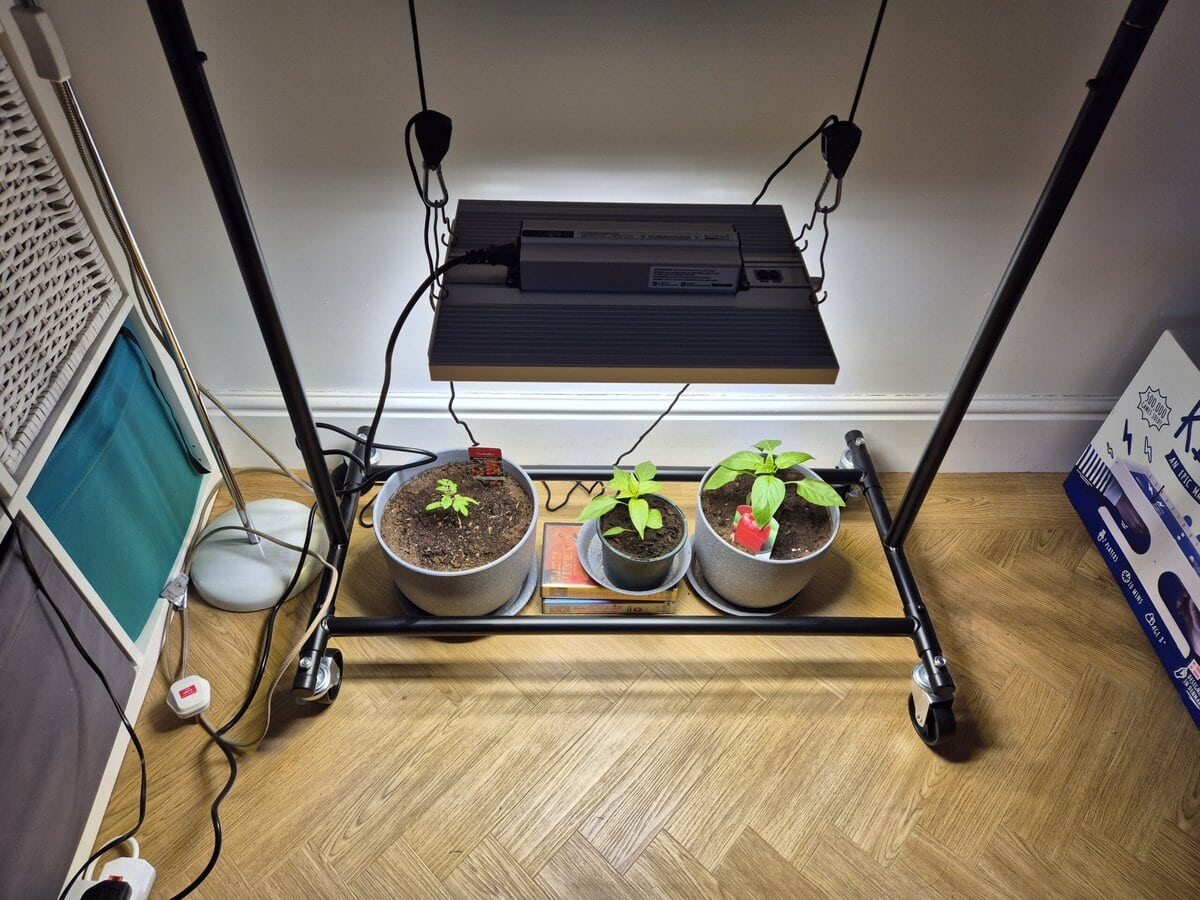
🌿 My Setup (Why I Lean Toward ViparSpectra)
I’ve been using the ViparSpectra XS1500 Pro with:
- 1 chilli plant
- 1 pepper
- 1 tomato
What stands out:
- Plants stay compact and sturdy
- No stretching issues
- Heat is manageable in a normal room
👉 It’s been easy to run day-to-day without needing constant adjustment.
🏁 Final Verdict
There isn’t a single “best” light here.
In this Spider Farmer SF1000 vs Mars Hydro TS1000 comparison, each one suits a slightly different setup:
- SF1000 → efficient, cooler-running option for smaller spaces
- TS1000 → higher output for faster growth where heat isn’t a major issue
- XS1500 Pro → balanced option with more even coverage across the canopy
👉 Choose based on your space, plant size, and how much intensity you actually need — not just specs or price.
📎 Related Guides
If you want to understand grow lights in more detail or compare other options, these guides will help:
- Grow Lights Explained
A simple guide to how grow lights work, what specs matter, and what to look for before you buy. - Best LED Grow Lights UK
My main buying guide comparing the best LED grow lights for indoor growing in the UK. - ViparSpectra XS1500 Pro Review
A closer look at the XS1500 Pro in a real indoor setup, including how it performs day to day.