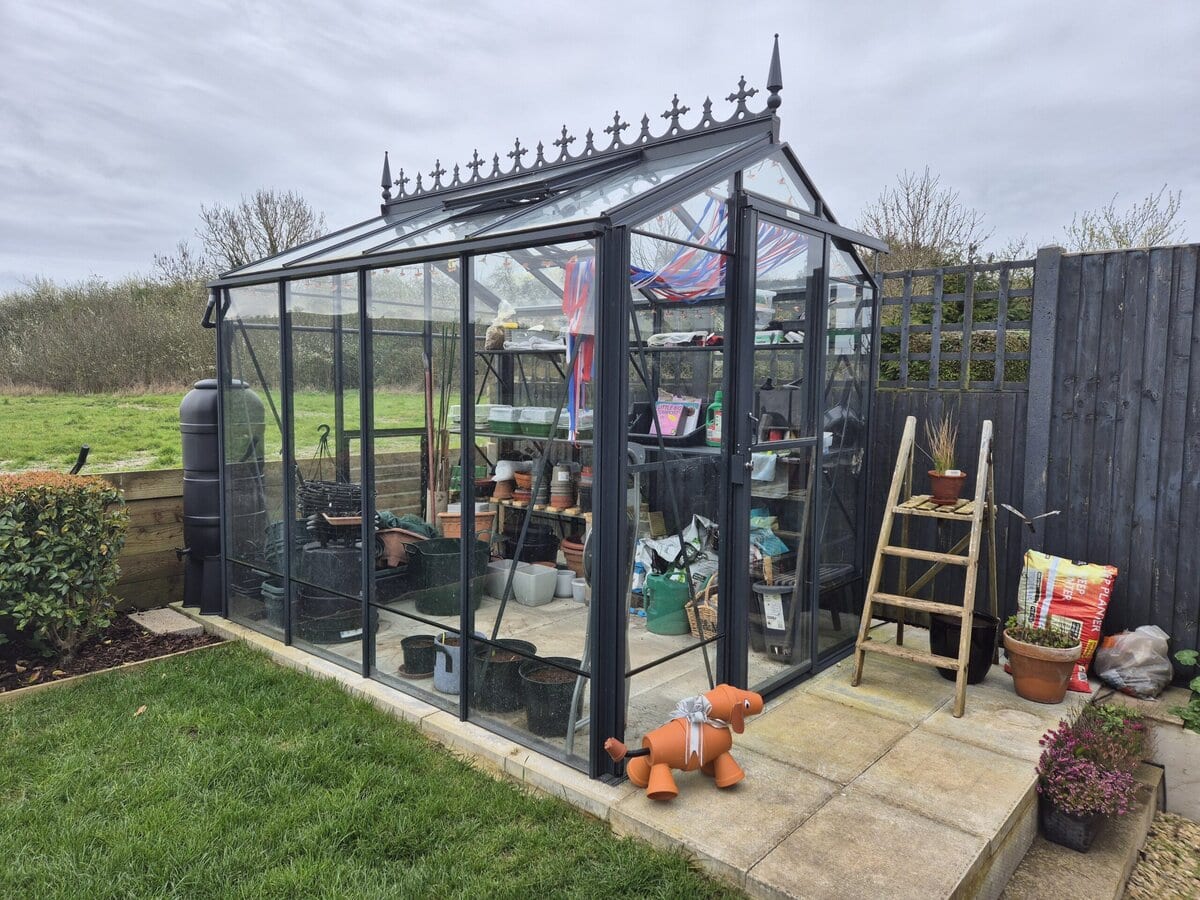
Most gardeners don’t get their greenhouse size wrong because they choose badly — they get it wrong because they underestimate how quickly growing your own takes over.
If you’re wondering what size greenhouse you actually need, it rarely comes down to what looks right on paper.
In March, a 6×4 feels like plenty. By mid-April, when the windowsills are full and your tomato seedlings are starting to stretch, that extra two feet of space suddenly feels priceless.
I’ve spent enough time shuffling seed trays around like a game of Tetris to know that size matters more than the brochure suggests. In this guide, I’ll help you choose the right footprint for your garden, explain why eaves height matters just as much as floor space, and help you avoid the one mistake almost every UK grower makes: buying too small.
Most people don’t regret buying a greenhouse — they regret buying one that’s slightly too small.
If you want a broader overview of greenhouse types, setups, and how everything fits together, see the HomeGrower Guide to Greenhouses and Polytunnels.
What Size Greenhouse Do I Need? (Quick Answer)
| Greenhouse Size | Best For | Space Needed | HomeGrower Verdict |
|---|---|---|---|
| Mini / Tiered | Seedlings & patios | < 1m² | Great for starts, not full growing |
| 6×4 | Herbs, salads, 2–3 tomatoes | Small garden corner | The “standard” starter – fills fast |
| 8×6 | Mixed veg, 6+ tomatoes | Average suburban garden | The sweet spot for most people |
| 10×8+ / Polytunnel | High yield growing | Larger garden or allotment | A true growing workspace |
👉 If you can stretch to it, go one size bigger than you think you need.
What Actually Determines the Size You Need
1. What You Want to Grow (The Biggest Factor)
- Seedlings only → Mini greenhouse or shelving
- Herbs and salads → 6×4 works
- Tomatoes, cucumbers, peppers → 8×6 minimum
- Mixed growing (real use) → 8×6 or larger
- High yield / self-sufficiency → Large greenhouse or polytunnel
Most people start thinking “a few plants”… and end up trying to fit everything in.
That’s where size starts to matter — but it’s not the only factor.
What you can grow isn’t just about space, it’s about setup. A well-positioned mini greenhouse against a sunny wall can grow tomatoes successfully, especially if airflow and watering are managed carefully.
The difference is space and ease. Smaller setups can work surprisingly well, but they require more attention, and you’ll run out of room much faster as plants mature.
2. The “Shoulder Room” Reality (Most Guides Miss This)
On paper, a 6×4 sounds reasonable. In reality, it’s tight.
When you add staging (shelves) on both sides, you’re left with a narrow path down the middle.
In a 6ft-wide greenhouse:
- Shelving both sides = very tight corridor
- Turning, watering, working = awkward
If you like a bit of space — or the idea of sitting in there with a coffee — the jump to 8ft width is genuinely life-changing. It’s the difference between squeezing in to water plants and actually enjoying being in the space.
3. Staging Space (How Fast It Fills Up)
This is where beginners get caught out.
In a 6×4 greenhouse:
- You can fit around 12–15 standard seed trays
- It sounds like plenty at first
But once those are potted into 9cm pots:
- That becomes roughly 40–50 plants
In April, that space disappears very quickly.
This is usually the point where everything is growing well — and you suddenly realise you’ve run out of room just when you need it most. This is the point where many setups stop working comfortably, even though everything looked manageable just a few weeks earlier.
4. Don’t Ignore Height (The “Vertical Gap”)
Most people focus on footprint. The real limiter is often height.
Don’t just look at the ridge height (the very top). Look at the eaves height — the height of the side walls before the roof starts to slope.
Look at:
- Eaves height (side wall height)
- Not just ridge height
In many budget 6×4 models:
- Low eaves = plants hit the glass early
- Tomatoes and cucumbers end up bending or crowding
If the eaves are low, climbing tomatoes will run out of vertical space much sooner than you expect, especially once they’re fully established.
A taller model or higher eaves is often more valuable than extra width.
In practical terms, even an extra 20–30cm of eaves height can make the difference between comfortably training tomato plants and constantly bending them away from the glass.
5. Your Garden Layout (Not Just Size — Shape)
A greenhouse doesn’t exist in isolation.
You need space for:
- Door opening
- Walking in and out
- Airflow around it
A greenhouse squeezed into a corner can feel much smaller than expected.
It also makes everyday use harder — watering, moving trays, and working around plants all become more awkward when access is tight.
Always think in terms of usable space, not just footprint.
6. Orientation (Light vs Heat — Both Matter in the UK)
Light is critical — but so is temperature.
Ideal:
- Long side facing south
- Clear of trees, fences, sheds
But here’s the reality:
A small greenhouse in full sun can overheat fast.
A 6×4 in full south-facing sun can hit 40°C by mid-morning in summer.
If you go small and sunny:
- You need to add ventilation
An automatic roof vent opener is one of the most useful upgrades you can make.
As the RHS highlights, good ventilation is essential to prevent overheating and disease in greenhouses.
If you want to get positioning right from the start, this guide on greenhouse orientation and positioning explains what actually matters in a real UK garden.
7. Freestanding vs Lean-To
Freestanding
- Better airflow
- More even light
- Easier to work in
Lean-to (against a wall)
- Saves space
- Can retain heat
- Usually less access
Lean-tos often feel smaller than their footprint suggests.
Access is usually limited to one side, which makes watering, moving plants, and working inside more awkward once things are growing properly.
If you’re considering this style, our guide to the best lean-to greenhouses in the UK explains when they work well — and when they don’t.
8. Roof Type: Apex vs Pent
Apex (traditional peaked roof)
- More headroom
- Better for tall crops
- Feels more spacious
Pent / Lean-to (sloped roof)
- Space-saving
- Slightly reduced growing height
- Best for smaller setups
Greenhouse Size Breakdown (Real Use Cases)
Mini Greenhouse
Best for:
- Seed starting
- Patios and balconies
Mini greenhouses work well as a starting point or as extra growing space alongside a larger setup, especially in smaller gardens.
They can be surprisingly effective when positioned well, but they’re limited once plants begin to mature.
If you’re considering one, our guide to the best mini greenhouses in the UK compares the most practical options and what to look for.
6×4 Greenhouse
Best for:
- Beginners
- Herbs, salads, a few crops
Reality:
- Works well at first
- Gets cramped quickly
In practice, a 6×4 greenhouse is often just enough to get started — but not enough to grow comfortably. Once you add staging, pots, and a few taller plants, space disappears fast.
This is usually the point where people realise they’ve run out of room just as plants start to take off.
If you’re considering this size, our guide to the best 6×4 greenhouses in the UK compares the most practical options and what to look for.
8×6 Greenhouse (The Sweet Spot is Space Allows)
Best for:
- Most UK gardens
- Mixed growing
Why it works:
- Enough room to move
- Handles vertical crops
- Flexible layout
In practice, an 8×6 greenhouse gives you enough space to grow properly without constantly working around limitations. You can combine seedlings, larger plants, and staging without everything competing for the same space.
This is the size most people wish they had bought first.
If you’re considering this size, our guide to the best 8×6 greenhouses in the UK compares the most practical options and what actually works in a real garden.
Large Greenhouses (10×8 and above)
Best for:
- Serious growers
- High yields
A larger greenhouse gives you the space to grow multiple crops at once without everything competing for light and room.
It starts to feel more like a working space than something you’re constantly adjusting around.
Polytunnels
Best for:
- Maximum growing space
- Best value per m²
Polytunnels offer significantly more space for the cost, making them a popular choice for allotments and more productive setups.
They’re less decorative than a greenhouse, but much more efficient if your focus is on growing as much as possible.
If you’re considering one, our guide to the best polytunnels in the UK compares sizes, materials, and what actually works in real conditions.
Common Mistakes
- Choosing based on price, not use
- Ignoring how much space you need inside
- Underestimating plant growth
- Forgetting height
- Ignoring ventilation and overheating
Budget Guide (What Different Greenhouse Sizes Cost)
Budget plays a big role in what size greenhouse you end up choosing. Prices vary widely depending on materials, build quality, and brand, but these rough ranges give a realistic idea of what to expect in the UK.
| Size / Type | Typical Price Range | What to Expect |
|---|---|---|
| Mini greenhouse | £30 – £120 | Basic shelving units, great for seedlings but limited long-term use |
| 6×4 polycarbonate | £250 – £600 | Affordable starter option, lighter panels, less durable |
| 6×4 glass | £500 – £1,200+ | Better light and durability, but still limited space |
| 8×6 polycarbonate | £400 – £900 | Good balance of price and usability for most gardens |
| 8×6 glass | £800 – £2,500+ | Strong, long-term option with excellent light and space |
| Large greenhouse (10×8+) | £1,200 – £4,000+ | Serious growing space with higher build quality |
| Polytunnel | £40 – £1,500+ | From small covered frames to full tunnels, offering excellent value per m² |
Prices vary depending on frame quality, glazing, and brand, but this gives a realistic starting point when deciding what size greenhouse you need. Polytunnels in particular cover a wide range, from small protective covers to full growing tunnels, which is why the price range is broader than standard greenhouses.
Final Thought (The Rule Everyone Learns Too Late)
Ask 100 gardeners if they wish they’d bought a smaller greenhouse.
None will say yes.
Ask the same group if they wish they’d bought a bigger one…
Most will say “absolutely.”
If your space and budget can stretch even slightly, it’s worth going up a size.
You won’t regret the extra room.
But you will regret the squeeze.
📎 Related Guides
- The HomeGrower Guide to Greenhouses and Polytunnels
A complete overview of greenhouse and polytunnel setups, helping you understand the bigger picture before choosing size, type, and layout. - Best Mini Greenhouses in the UK
A practical buying guide to compact greenhouses for patios, balconies, seed starting, and small-space growing. - Best 8×6 Greenhouses in the UK
A detailed buying guide to one of the most practical greenhouse sizes for UK gardens, with real-world pros, cons, and recommendations.
FAQs: What Size Greenhouse Do I Need?
What size greenhouse do I need for a small garden?
For most small UK gardens, a 6×4 greenhouse is a common starting point. It’s enough for seedlings, herbs, and a few crops, but space fills quickly once plants grow. If you can fit one, an 8×6 is usually much easier to work in day to day.
Is a 6×4 greenhouse big enough?
A 6×4 greenhouse can work well for beginners, but it often becomes cramped once you add staging and larger plants. Many gardeners find it’s enough to get started, but not enough to grow comfortably through the full season.
Is an 8×6 greenhouse the ideal size?
If you’re deciding what size greenhouse you need for a typical UK garden, an 8×6 is often the most practical choice. It gives you enough space to grow a mix of crops, move around comfortably, and avoid the limitations that come with smaller setups.