

When you purchase through links on our site, we may earn an affiliate commission at no extra cost to you.

Our Top Picks
Here are my top picks for the best complete grow tent setups UK buyers should consider, covering budget, all-round and premium options for different room sizes and growing needs.
The best grow tent kits give you a properly matched indoor growing setup without having to choose the tent, LED grow light, ventilation and controls separately. The important thing is not simply buying the most powerful kit, but choosing one where the lighting, airflow and tent size are well balanced for the space you have available.
In this guide, I compare complete grow tent kits for UK homes, from compact beginner-friendly setups through to larger systems with stronger lighting, quieter EC fans and more advanced environmental controls. The main things to consider are tent size, light output, ventilation, noise, running costs and whether you want a straightforward manual setup or a more integrated smart system.
Below, I compare the main kits side by side before looking at what each setup offers, where its limitations are and which size of indoor growing space it is best suited to.
Best Grow Tent Kits (Quick Comparison)


How to Choose the Best Grow Tent Kits (UK Guide)
Now you’ve seen the top grow tent kits side by side, the next step is choosing the setup that actually fits your space and how you want to grow.
For most UK homes, the key trade-offs are size, noise, and power. A 90×90 cm (3×3 ft) setup is often the easiest place to start — large enough to grow a few productive plants, but still manageable in a spare room without excessive heat or noise.
Smaller kits (like 70×70 cm) are ideal for herbs, seedlings, or compact grows, while larger 120×120 cm and 150×150 cm setups give you more yield potential but need more space, stronger ventilation, and a bit more planning.
The biggest difference between budget and premium kits isn’t just power — it’s how well everything works together. Better systems run quieter, manage airflow more effectively, and don’t need immediate upgrades to fix weak fans or unbalanced lighting.
Below, we break down each of the top grow tent kits in more detail, including real-world pros, limitations, and who each setup is best suited for.
Tip: If you’re unsure, a 90×90 cm (3×3 ft) setup is the safest and most versatile starting point for most UK growers.
Grow Tent Kit Reviews
Below is a closer look at each grow tent kit from the comparison above, focusing on how they perform in real UK homes.
Instead of listing specs, we highlight what each setup is like to live with — including noise levels, space requirements, ease of setup, and where each kit makes the most sense.

Best for: compact home grows, small fruiting canopies and growers who want a well-integrated setup with quieter ventilation and stronger environmental control.
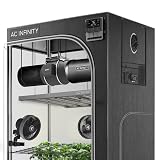
The AC Infinity 3×3 kit stands out because the main components are designed to work together as a system rather than simply being bundled into one box. You get the tent, LED grow light, ventilation and controller in a setup that is intended to be balanced from the start.
The 90×90 cm footprint is a practical size for many UK homes. It gives you enough room for a compact fruiting canopy without taking over a spare room, while still being large enough to justify proper ventilation and environmental control.
One of the main advantages is the ventilation setup. AC Infinity is known for its EC fans and integrated controllers, which can make the system quieter and easier to manage than more basic grow tent kits. That matters if the tent is being used inside the home rather than in a detached outbuilding.
The controller is also a useful part of the package because it allows you to manage airflow and environmental conditions more precisely instead of relying on basic on/off timers and fixed-speed fans.
What we like
- Well-matched tent, lighting and ventilation system
- Quiet EC fan setup compared with many basic kits
- Integrated controller for easier environmental management
- Practical 90×90 cm footprint for a compact home grow
- Good option for growers who want fewer immediate upgrades
Things to be aware of
- Higher upfront cost than simpler starter kits
- More advanced than necessary for seedlings or a very small herb setup
- Still requires enough room around the tent for ventilation and access
Bottom line: The AC Infinity 3×3 kit is a strong all-round option for a compact indoor grow where noise, airflow and ease of control matter. It costs more than a basic starter kit, but the better-matched components and integrated controls make it easier to live with and reduce the need for early upgrades.
If you want a broader look at the brand, including its grow lights, ventilation systems and smart-control ecosystem, see my AC Infinity UK review .
Best for: small indoor grows, herbs, seedlings and compact fruiting plants where keeping the overall setup affordable and easy to manage matters most.
The Spider Farmer SF1000 complete grow tent kit is the budget-friendly option in this guide. It combines a compact tent with a 100W-class LED grow light and basic ventilation, giving beginners most of the core equipment needed to start growing indoors without buying every component separately.
Its smaller footprint makes it easier to fit into a spare room, corner or other limited indoor space. That also means there is less air volume to control, so heat and humidity are generally easier to manage than they would be in a much larger tent.
The included SF1000 grow light is well suited to this type of compact setup. It keeps power use relatively low while still providing enough output for herbs, seedlings and smaller fruiting plants when the canopy is kept within a sensible area.
Compared with more premium kits, the main compromise is refinement. The ventilation and overall system integration are more basic, so you are more likely to notice fan noise and may eventually want to upgrade individual components as your setup develops.
What we like
- Lower-cost entry point into a complete grow tent setup
- Compact footprint for smaller UK homes
- Efficient 100W-class LED grow light
- Simple setup that should suit beginners
- Lower running costs than larger tent kits
Things to be aware of
- Limited growing area compared with larger 3×3 ft and 4×4 ft tents
- Less room for wide or mature fruiting canopies
- Ventilation and noise control are more basic than premium systems
- Less headroom for future expansion
Bottom line: The Spider Farmer SF1000 kit is a practical choice if you want a compact, lower-cost way into indoor growing. It is best suited to smaller canopies and lighter-duty growing rather than large plants or ambitious yields, but it gives beginners a straightforward setup without the cost or complexity of a larger system.
Best for: medium-sized indoor grows, larger fruiting plants and wider canopies where a smaller 100W-class kit would not provide enough light or growing space.
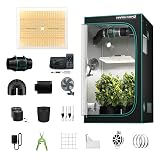
The Mars Hydro TSW2000 grow tent kit is a clear step up from compact starter setups. Its larger 120×120 cm footprint gives plants more room to spread, while the stronger LED output is better suited to broader canopies and more demanding fruiting crops.
This extra space makes the kit more suitable for growers who want to move beyond a very small tent without jumping straight to a large premium system. It gives you more flexibility with plant spacing and canopy development, but it also requires more room in the house and more attention to ventilation.
The included TSW2000 light provides around 300W of LED power, which is a substantial increase over the compact kits earlier in this guide. That makes it better suited to tomatoes, chillies, peppers and other plants that need stronger light as they mature and begin flowering or fruiting.
The trade-off is that a larger, more powerful setup is harder to manage quietly. Compared with the AC Infinity systems, the ventilation and overall control are more functional than refined, so this kit makes more sense in a spare room, utility space or dedicated growing area than somewhere where noise is a major concern.
What we like
- Much more growing space than compact starter kits
- Stronger LED output for wider and more demanding canopies
- Better suited to fruiting plants than low-powered small-tent setups
- Good step up for growers who have outgrown a compact kit
- Offers more room without moving into a very large 5×5 ft system
Things to be aware of
- Requires substantially more floor space than a small starter tent
- Higher power use than compact 100W-class systems
- More heat to manage as light output increases
- Ventilation and noise control are less refined than premium systems
- Works best where you have a dedicated indoor growing area
Bottom line: The Mars Hydro TSW2000 kit is a good choice if you want more growing area and stronger light than a compact starter setup can provide. It is better suited to wider canopies and fruiting plants, but the larger footprint, higher power use and more noticeable ventilation mean it is best used where space and noise are less restrictive.
Best for: large indoor growing areas, broad canopies and growers who want a more advanced system with integrated environmental control.
The AC Infinity PRO Grow Tent System is the premium large-format option in this guide. With a 150×150 cm footprint, it provides substantially more growing space than the smaller kits, making it better suited to wide canopies and growers who want room to scale up.
The main appeal is not just size or power, but how the components work together. AC Infinity’s system is built around coordinated lighting, ventilation and environmental control, which becomes increasingly useful as tent size increases and temperature, humidity and airflow become harder to manage manually.
The integrated controller allows you to manage the grow environment more precisely than with a basic timer-and-fan setup. That can help keep conditions more stable and reduce the amount of manual adjustment needed during a grow.
The larger tent also gives you more freedom with plant spacing and canopy shape, but it needs significantly more floor space and will consume more electricity than a compact system. At this size, good ventilation and sensible placement become essential rather than optional.
What we like
- Large growing area for broad canopies and bigger indoor setups
- Integrated control of lighting, airflow and environmental conditions
- High-quality ventilation system designed for quieter operation
- Well-matched components that reduce the need for immediate upgrades
- Good option for growers who want a more automated setup
Things to be aware of
- Requires a substantial amount of indoor space
- Higher electricity use than smaller grow tent kits
- More heat and humidity to manage within the growing area
- More expensive and more advanced than most beginners need
- Best suited to a dedicated growing room or similar space
Bottom line: The AC Infinity PRO 5×5 system is best suited to growers who genuinely need a large indoor growing area and want the convenience of integrated environmental control. It is more expensive and demanding than a compact setup, but the combination of space, quieter ventilation and coordinated controls makes it a strong premium option for a larger home grow.
What You Actually Need in a Grow Tent Kit
A good grow tent setup isn’t about brand names — it’s about having the right components working together.
- Grow tent: reflective, lightproof, and sized for your space
- LED grow light: efficient and matched to the tent size
- Ventilation: inline fan to control heat and airflow
- Air circulation: small fans to keep air moving inside
- Basic controls: timer and thermometer/hygrometer
Most beginner issues come from mismatched setups — especially lights or fans that are underpowered for the tent.
Running Costs & Energy Use (UK Homes)
Electricity is the main ongoing cost of any grow tent setup. What matters isn’t just wattage, but how long your system runs each day.
- Grow lights: typically 100–500W depending on setup
- Fans: around 20–50W combined
Most UK home setups cost roughly £40–£70 per month to run, depending on size and usage.
For a more accurate estimate, you can use our grow light running cost calculator and add up your total wattage.
Avoid These Common Mistakes
- Oversizing your tent “just in case” — harder to control and run
- Running fans at full speed constantly instead of adjusting
- Ignoring airflow inside the tent (circulation matters)
- Leaving vents fully open rather than controlling airflow
- Using basic ducting instead of insulated acoustic ducting
Most successful setups aren’t the most powerful — they’re the most balanced.
Soil vs Hydroponics in a Grow Tent
Both approaches work well indoors, but suit different growers:
- Soil: simpler, more forgiving, better for beginners
- Hydroponics: faster growth and higher yields, but more setup and monitoring
If you’re starting out, soil is usually the easier option.
Final Thoughts
The best grow tent kit isn’t the biggest or most expensive — it’s the one that fits your space and runs reliably day to day.
A well-matched setup with good airflow, efficient lighting, and manageable noise will always outperform a more powerful but poorly balanced system.
📎 Related Articles
Frequently Asked Questions
What do you get in a complete grow tent kit?
Most grow tent kits include the tent, LED grow light, inline fan, ducting, and basic accessories. Higher-end kits also include better fans, controllers, and more balanced components that work together more effectively.
What size grow tent should I choose?
For most UK homes, a 90×90 cm (3×3 ft) grow tent is the best starting point. It offers enough space for productive plants while remaining manageable for heat, noise, and running costs.
Are grow tent kits worth it for beginners?
Yes. Complete kits are usually the easiest way to get started, as the components are matched to work together. This avoids common problems with airflow, heat, and incompatible equipment.
How much does it cost to run a grow tent in the UK?
Most home setups cost around £40–£70 per month to run, depending on light wattage, tent size, and how many hours the system runs each day.
How do I keep a grow tent quiet?
Use efficient EC fans, avoid oversizing your setup, and run fans at lower speeds where possible. Switching to insulated acoustic ducting is often the most effective way to reduce noise.