When you purchase through links on our site, we may earn an affiliate commission at no extra cost to you.
If you’re growing in a spare room, flat, loft, or garage, your extraction fan matters more than almost any other piece of kit.
Not because it’s exciting — but because it quietly controls heat, humidity, smells, and overall comfort, all at once.
Many UK home growers run into trouble here. Some buy fans that are far too powerful, assuming “bigger must be better”. Others end up with a constant hum that carries through walls, floors, and ducting — fine in a shed, much less so in a terraced house or flat with neighbours close by.
The truth is, the best grow tent extraction fans for UK homes don’t need extreme airflow. What they need is steady, well-matched ventilation that runs quietly, efficiently, and continuously, without drawing attention or wasting electricity.
If you’re not yet clear on why ventilation matters or how airflow should be arranged in a home environment, it’s worth reading our Grow Tent Ventilation: UK Setup & Stealth Airflow guide first. This page is designed to come after that — once you know you need an extraction fan, and want to choose the right one with confidence for a UK home.
This buying guide is part of The HomeGrower Guide to Grow Tents, where we cover the full setup in detail — from choosing the right tent to managing heat, humidity, and airflow as a complete system
🏆 Our #1 Pick for Most UK Home Growers
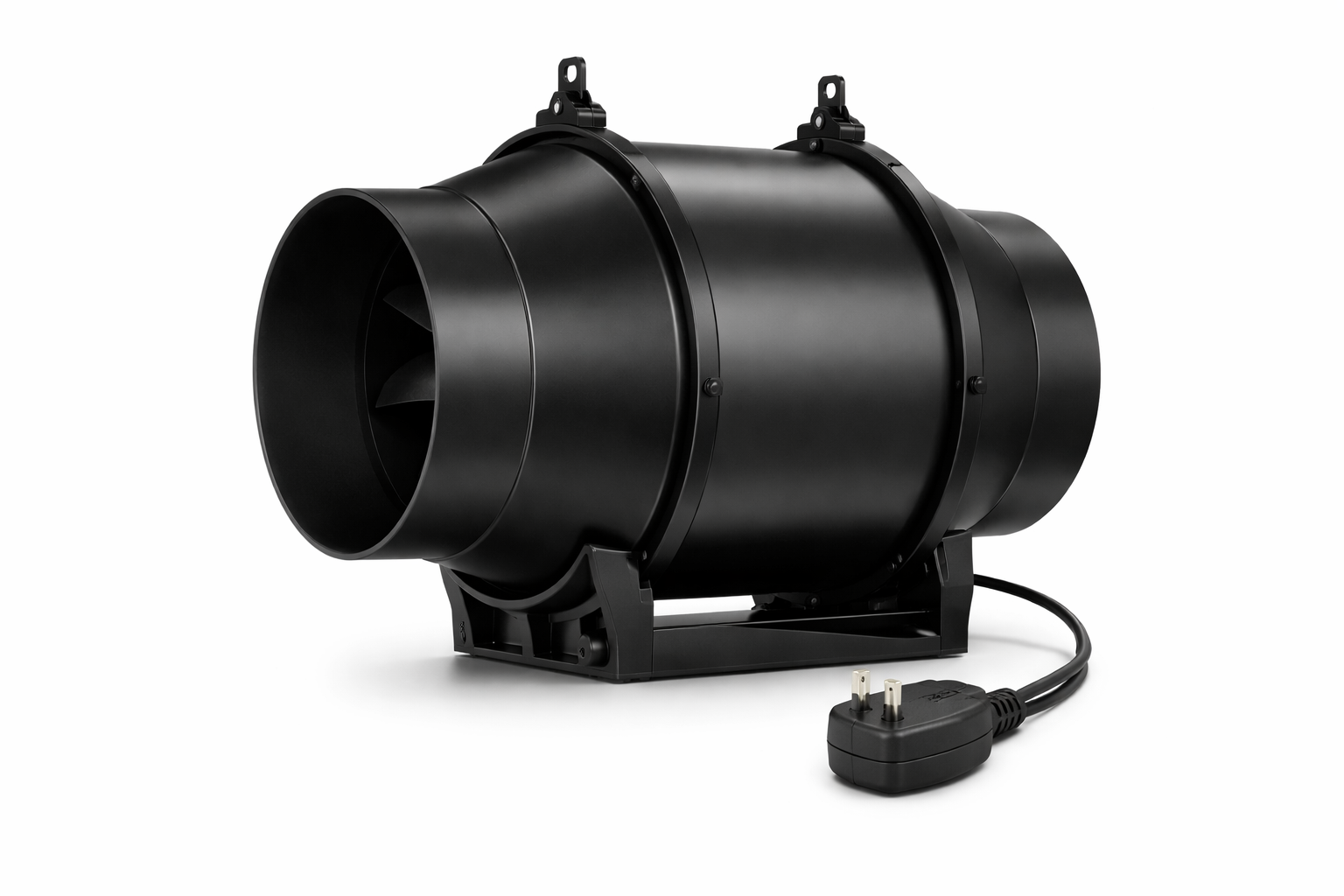
If you want a quiet, reliable extraction fan that actually works in a spare room, flat, or terraced house, the AC Infinity CLOUDLINE PRO T4 is the best all-round choice for most UK grow tents. It delivers smooth, efficient airflow with excellent noise control and makes it much easier to keep heat and humidity under control without constant manual adjustment.
- 4-inch EC motor fan – ideal for most small to medium UK grow tents
- Very quiet operation compared to basic inline extractor fans
- Smart controller automatically adjusts fan speed as conditions change
- Energy-efficient design for long run times and lower electricity costs
- Handles carbon filter resistance without excessive noise or strain
Best for: spare rooms, flats, terraced houses, and growers who want effective ventilation that stays quiet and “just works” once set up.
See the AC Infinity CLOUDLINE PRO T4 on Amazon UK
Grow Tent Extraction Fan Comparison (UK Homes)
The table below compares the most reliable grow tent extraction fans for UK homes, based on airflow size, noise levels, and whether a speed controller is included. It’s designed to help you quickly see which model suits your space without wading through specifications.
It’s tempting to use a cheap bathroom extractor fan for a grow tent. Don’t. These fans aren’t designed to handle the resistance of a carbon filter, so airflow drops dramatically or the motor overheats. The result is poor ventilation, lingering smells, and more noise — not less.
Individual Grow Tent Extraction Fan Reviews
Below you’ll find our individual reviews of each grow tent extraction fan in the comparison table above. These are written from a UK home-growing perspective, focusing on real-world noise, control options, and how suitable each fan is for use in living spaces rather than sheds or outbuildings.
Where relevant, we also consider running costs — if you want to estimate electricity use for your setup, you can use our grow light running cost calculator to get a realistic idea of monthly costs. Although designed for grow tents it can be used for any devices to which you know the wattage.

The AC Infinity Cloudline T4 Pro is designed for growers who want effective extraction without adding noticeable noise to a UK home. It’s a 4-inch inline fan aimed squarely at small to medium grow tents, spare rooms, and cupboards where sound levels and control matter just as much as airflow.
In a quiet terraced house, fan noise isn’t something you notice at 4 pm — you notice it at 2 am when everything else is silent, and that’s where the T4’s low-speed control really matters.
What sets the T4 Pro apart from cheaper inline fans is the smart controller and efficient EC motor. Instead of running flat-out all the time, it can automatically adjust speed based on temperature and humidity, keeping conditions stable while avoiding unnecessary noise or power use.
At 21 watts, it’s also economical to run compared to many traditional AC fans, especially when operating continuously. With UK electricity prices still high, that difference isn’t theoretical — running a lower-wattage EC fan continuously can noticeably reduce long-term running costs compared to older AC designs.
Why we like it
- Very low power draw (21W) for a smart, EC-motor inline fan
- Quiet operation (28 dBA), well suited to indoor and shared living spaces
- Temperature & humidity control via app, with programmable triggers and schedules
- Smooth speed control avoids the on/off cycling common with basic fans
- Strong airflow for its size (205 CFM), ideal for 60×60cm to 80×80cm tents
- At lower speeds, noise is closer to a modern laptop fan than a traditional extractor.
Good to know
It costs more than basic 4-inch inline fans, but the combination of noise control, automation, and lower running costs makes it a better long-term choice for indoor growing.
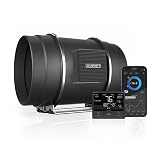

This uses the same AC Infinity CLOUDLINE PRO system as the T4 reviewed above, making it a smart inline fan designed for growers who need more airflow without sacrificing noise control or automation. It’s aimed at larger grow tents and setups where heat output or ducting length pushes smaller fans toward their limits.
What changes here isn’t functionality but capacity. The higher airflow allows the fan to maintain stable temperatures and humidity without needing to run at maximum speed as often, which helps keep operation quieter and more efficient in real-world use.
If the T4 suits your setup but feels close to its upper limit, this model offers extra headroom while retaining the same app-based control, automation, and low-noise performance.
Why we like it
- Same smart controller and automation features as the T4
- Higher airflow for larger tents or higher-wattage lighting
- Can run at lower speeds more often, helping reduce noise
- Well suited to longer or more restrictive ducting runs
Good to know
It costs more and draws more power than the smaller model, so it only makes sense if your setup genuinely needs the extra airflow. For small tents, the T4 is usually the better-matched option.
No products found.
This 200 mm inline fan is designed for growers who want strong, reliable extraction without the complexity or cost of smart controls. It’s aimed at medium to large grow tents, utility spaces, or sheds where airflow capacity matters more than automation.
What sets this fan apart from premium inline models is its simplicity. There are no sensors, apps, or programmed triggers — just straightforward push-button speed control. Once set, it runs consistently, making it a good fit for growers who prefer to manage temperature and humidity manually or who already use external timers and monitors.
At 70 watts, it draws more power than smaller EC-motor fans, but that’s the trade-off for higher airflow. In practical terms, it’s best suited to setups where the fan isn’t running flat-out all the time, or where electricity cost is less of a concern than moving enough air.
Why we like it
- Strong airflow (550 CFM), suitable for larger tents and higher heat loads
- Simple manual speed control with no setup or configuration required
- Effective at clearing heat and humidity in straightforward duct runs
- Good option for growers upgrading from undersized or noisy bathroom-style fans
- Lower upfront cost than smart or app-controlled alternatives
Good to know
It’s louder and less energy-efficient than EC-motor smart fans, and it won’t adjust automatically as conditions change. If you’re happy checking temperatures yourself and want maximum airflow for the money, it does the job well — but it’s not designed for silent or fully automated indoor setups.

This VIVOSUN system is designed for growers who want a complete, ready-to-install ventilation setup rather than sourcing individual components. It combines a 6-inch inline fan with smart climate control, carbon filter, ducting and mounting hardware, making it well suited to first-time tent builds or upgrades where convenience matters.
What sets this kit apart from basic inline fans is the GrowHub controller, which allows the fan to respond automatically to temperature, humidity and VPD. Instead of running at a fixed speed, it can adjust output to maintain stable conditions, helping avoid unnecessary noise and constant manual tweaking.
With airflow rated at around 388 CFM, it has enough capacity for small to medium grow tents, particularly when paired with the included carbon filter for odour control. Noise levels are higher than the quietest EC-motor systems, but remain reasonable for most indoor setups, especially when the fan isn’t running at full speed.
Why we like it
- Complete ventilation kit including fan, controller, carbon filter and ducting
- Smart climate control with temperature, humidity and VPD automation
- Good airflow for typical 60×60 cm to 100×100 cm grow tents
- Saves time and guesswork compared to buying components separately
- Strong option for growers setting up a tent from scratch
Good to know
It’s not as quiet or as power-efficient as premium EC-motor systems like AC Infinity’s, and the bundled filter and ducting limit flexibility if you plan to customise later. That said, for growers who want a single-box solution with smart control, it offers good value and simplicity.
One practical thing to be aware of: the included ducting is fine for short runs, but if you’re venting out of a high window or across a room, budgeting for an extra length of insulated ducting can save frustration during setup.
How to choose the right inline fan size for your grow tent
Inline fan sizing is less about buying the most powerful model and more about matching airflow to your tent size, heat load and ducting.
As a rough guide for UK indoor growing:
- 4-inch (100 mm) fans suit small tents (around 60×60 cm to 80×80 cm) and low-wattage LED lighting.
- 6-inch (150 mm) fans are the most versatile option, working well for 80×80 cm to 100×100 cm tents.
- 8-inch (200 mm) fans are better for large tents, higher-wattage lights, or setups with long or restrictive duct runs.
If you’re using a carbon filter, running ducting through loft spaces, or exhausting air outside, it’s worth sizing slightly larger than the minimum. That allows the fan to run at lower speeds more often, which helps reduce noise and wear.
For a deeper explanation of airflow, heat and moisture management, see our guide on controlling heat and humidity in a grow tent.
Do you need a smart inline fan?
Smart inline fans aren’t essential — but they can make indoor growing much easier, especially in UK homes where temperature and humidity fluctuate.
A basic inline fan runs at a fixed speed until you change it manually. This works well if:
- Your room temperature is fairly stable
- You’re happy adjusting settings yourself
- Noise isn’t a major concern
A smart inline fan, by contrast, can automatically adjust speed based on:
- Temperature
- Humidity
- VPD (vapour pressure deficit)
This means the fan only works as hard as it needs to, helping:
- Keep noise levels lower
- Avoid constant on/off cycling
- Maintain more stable growing conditions
If your tent is in a spare room, cupboard or shared living space, smart control is often worth the extra cost for comfort alone.
Noise, power use and running costs (UK context)
Noise and electricity use vary significantly between fan types.
Fans with EC motors (common in smart models) are generally:
- Quieter at lower speeds
- More energy efficient
- Smoother in operation
Basic AC inline fans tend to:
- Use more power at comparable airflow
- Be louder when running continuously
- Rely on manual speed selection
In terms of running costs, even smart inline fans are inexpensive compared to grow lights. Most draw between 20–70 watts, meaning they cost only a few pounds per month to run continuously at UK electricity rates.
If noise matters, choosing a fan with more airflow than you strictly need can help, as it won’t need to run at full speed as often.
Final Thoughts
Choosing the right inline fan comes down to matching airflow, noise levels and control to your space, rather than buying the most powerful option available. Smart fans make life easier in shared UK homes, while basic models still work well where simplicity and airflow matter most. If you size your fan sensibly and allow some headroom, you’ll get quieter operation, more stable conditions and fewer issues long-term.
❓ Frequently Asked Questions
What are the best grow tent extraction fans for UK homes?
The best grow tent extraction fans for UK homes are those that balance airflow, noise, and control. Smart inline fans with EC motors are usually quieter and more energy efficient, making them better suited to spare rooms, flats, and shared living spaces.
What size extraction fan do I need for my grow tent?
Fan size depends on your tent size, heat output, and ducting. As a general guide, 4-inch fans suit small tents, 6-inch fans work well for most medium setups, and 8-inch fans are better for larger tents or higher heat loads, especially when using a carbon filter.
Are grow tent extraction fans noisy?
Noise levels vary more by fan quality and speed than size. Many of the best grow tent extraction fans are quiet when run at lower speeds, particularly smart models that automatically adjust airflow instead of running flat out.
Do I need a carbon filter with an extraction fan?
If odour control matters, a carbon filter is strongly recommended. It connects directly to the extraction fan and removes smells before air is exhausted. Using a filter slightly reduces airflow, which is why correct fan sizing is important.
Can I run a grow tent extraction fan 24/7?
Yes. Grow tent extraction fans are designed for continuous operation. Many growers run them 24/7 to keep temperatures and humidity stable, especially when using LED grow lights that run for long periods.