Greenhouse ventilation is one of the most overlooked parts of growing under cover — yet it’s often the reason plants struggle.
Many new growers focus on heating, insulation, or structure, but poor airflow causes far more problems in UK greenhouses than cold ever does. Overheating, condensation, mould, weak growth, and bolting crops are all classic signs that air isn’t moving properly.
If you’re new to greenhouses, it’s worth starting with the HomeGrower Guide to Greenhouses and Polytunnels, which explains the different types, sizes, and setups before diving into individual topics like ventilation.
This guide focuses specifically on:
- Why ventilation matters so much
- How greenhouse airflow actually works
- The types of vents available
- How much ventilation you really need
- Common mistakes to avoid in UK conditions
Why Greenhouse Ventilation Matters
A greenhouse traps heat and moisture by design. Without ventilation, that environment quickly becomes hostile to plants.
Good ventilation helps to:
- Control temperature on sunny days
- Reduce humidity and condensation
- Prevent mould, mildew, and fungal disease
- Strengthen plants through gentle air movement
- Discourage pests like aphids and whitefly
In many cases, better ventilation solves problems that are mistakenly blamed on soil, watering, or nutrients.
How Greenhouse Ventilation Works (The Simple Version)
Ventilation relies on a basic physical principle:
Hot air rises. Cool air sinks.
Inside a greenhouse:
- Warm air collects near the roof
- Roof vents allow that hot air to escape
- Cooler outside air is drawn in through lower openings
This natural movement is known as stack ventilation, and it works extremely well when vents are positioned correctly.
You don’t need powered systems for most home greenhouses — passive airflow does the job.
Types of Greenhouse Ventilation
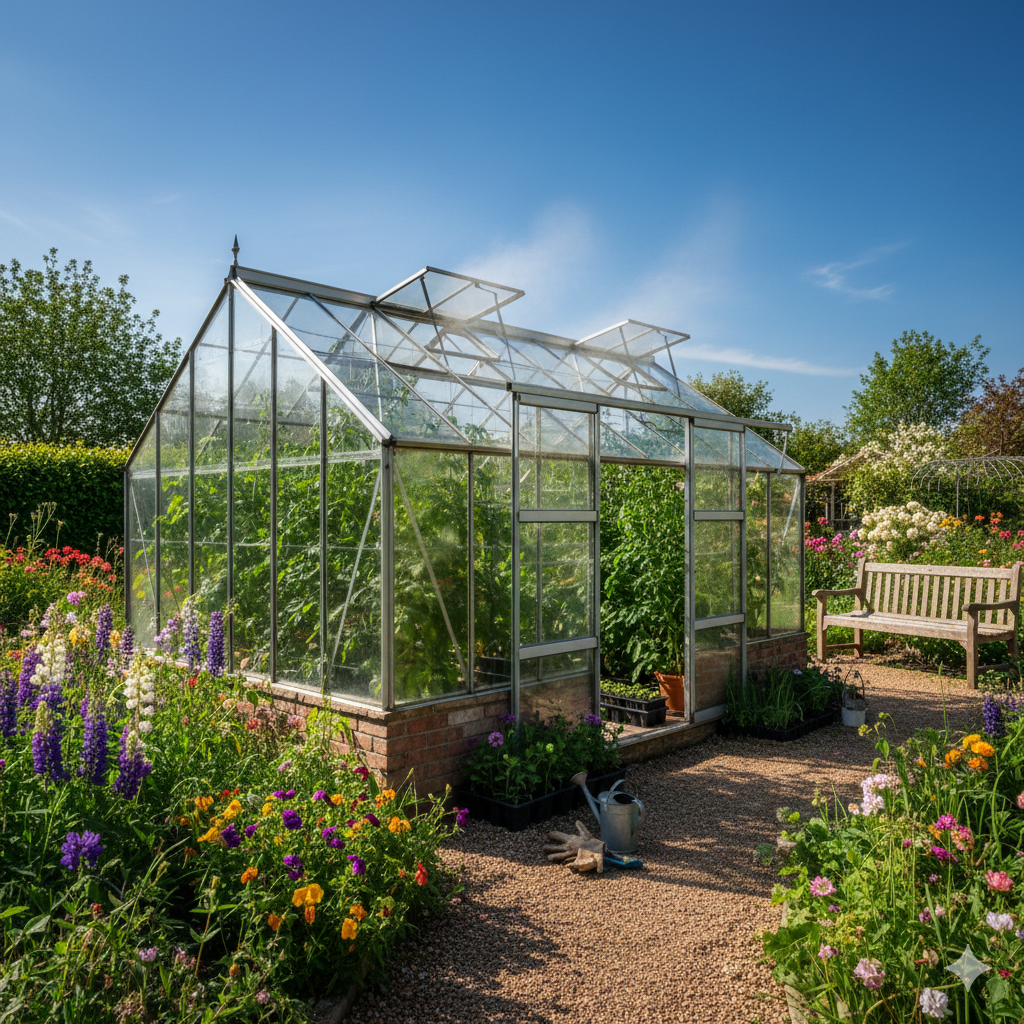
Roof Vents (The Most Important Feature)
Roof vents are the single most effective way to control greenhouse temperature.
They:
- Release trapped hot air quickly
- Reduce heat stress on plants
- Work even when doors are closed
As a general rule, a greenhouse should have at least one roof vent for every 2 metres of length. Larger structures benefit from multiple vents spaced along the roof.
If you’re comparing greenhouse designs, roof vent availability is just as important as size or glazing — something also covered in What Is the Best Type of Greenhouse?.
Side Vents and Louvered Panels
Side vents sit lower down and allow cooler air to enter, supporting cross-ventilation.
They’re especially useful for:
- Larger greenhouses
- Warm summer conditions
- Managing humidity without large temperature drops
Louvered vents are helpful because they can be left partially open, allowing controlled airflow throughout the day.
Doors as Ventilation (Useful, but Limited)
Opening the greenhouse door does help — but it shouldn’t be your only strategy.
- Doors allow fresh air in at ground level
- Double doors improve airflow
- Doors alone are rarely enough in summer
Think of doors as supporting ventilation, not the main solution.
Automatic Vent Openers (Highly Recommended)
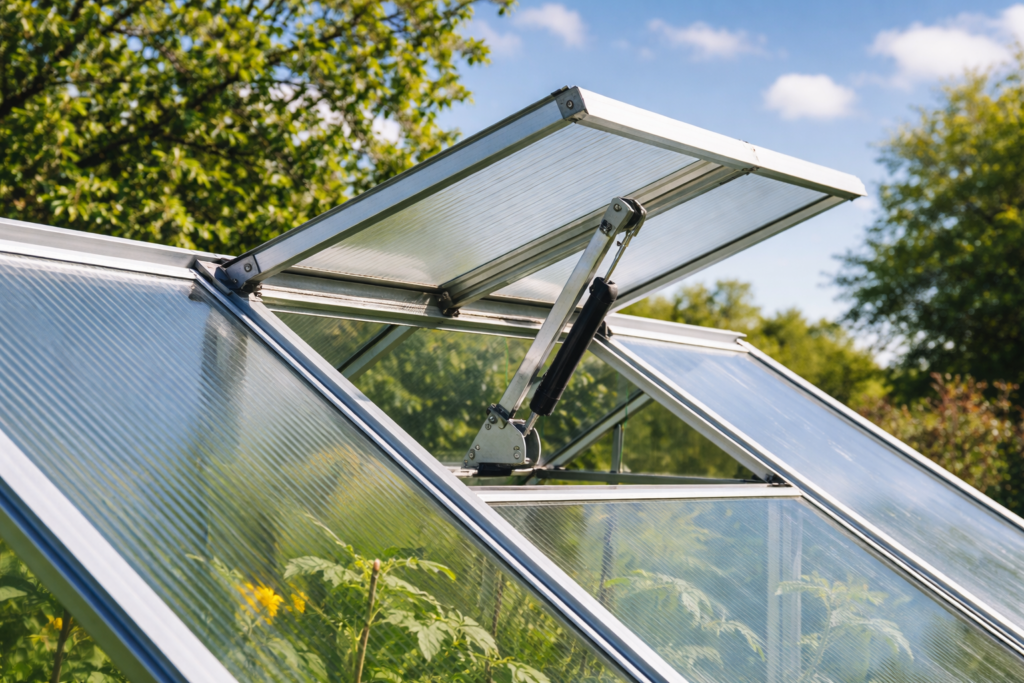
Automatic vent openers are one of the best upgrades you can make to a greenhouse.
They use a temperature-sensitive wax cylinder that expands as it warms, gently opening the vent. As temperatures fall, the vent closes again — no electricity required.
They’re particularly useful if:
- You’re not home during the day
- Temperatures change quickly
- You want consistent, hands-off ventilation
Buyer tip:
When choosing an automatic vent opener, look for:
- Aluminium or stainless steel construction
- Adjustable opening temperature
- A lifting capacity suitable for glass or polycarbonate vents
Well-established brands such as Bayliss and Univent are often used as quality benchmarks. Cheaper openers can work, but weaker pistons may struggle with heavier vents or fail sooner.
Fans and Powered Ventilation (Usually Optional)
Electric fans can improve air circulation in:
- Large greenhouses
- Commercial setups
- Heated or tightly sealed structures
For most UK home gardeners, passive ventilation using roof and side vents is more than sufficient.
How Much Ventilation Does a Greenhouse Need?
A widely accepted guideline is the 20% rule:
The total vent opening area should equal around 15–25% of the greenhouse floor area.
For example:
- A greenhouse with a 5 m² floor area should have roughly 0.75–1.25 m² of vent opening
This usually comes from a combination of:
- Roof vents
- Side vents
- Door openings
If in doubt, more ventilation is almost always safer than too little.
This guidance aligns with advice from the Royal Horticultural Society on greenhouse ventilation and shading, which explains how airflow helps regulate temperature and reduce plant stress.
Seasonal Ventilation Tips (UK Conditions)
Spring
- Start ventilating earlier than expected
- Brief midday opening prevents overheating
- Close vents later in the afternoon
Summer
- Roof vents open most days
- Doors open early
- Ventilation works best alongside shading
Autumn
- Reduce vent opening gradually
- Focus on controlling humidity
- Avoid sealing the greenhouse too early
Winter
- Vent on dry, sunny days
- Short openings reduce condensation
- Never seal a greenhouse completely
Cold air is less damaging than stagnant, damp air — something that also ties closely into How to Heat a Greenhouse.
Common Greenhouse Ventilation Mistakes
- Relying on doors alone
- Having no roof vents at all
- Closing vents too early in spring
- Ignoring condensation and humidity
- Assuming UK weather doesn’t get hot enough
Even on a 10°C day, a greenhouse can exceed 30°C in direct sun.
Practical Greenhouse Ventilation Tips (From Real-World Use)
Even with the right vents, real life gets in the way. These practical tips cover common situations that don’t always get mentioned in guides.
Going Away Without Automatic Roof Vents?
If your greenhouse doesn’t have automatic vent openers and you’re heading away for a few days, it’s usually safer to leave roof vents partially open rather than closed.
In the UK, the risk of overheating on a sunny day is often greater than the risk of brief cooler temperatures. A cracked vent allows heat to escape and can prevent plants from scorching while you’re away.
If security or pets are a concern, open vents to their minimum safe position rather than fully closed.
Spring Days Catch People Out
Many greenhouse losses happen in spring, not summer.
A cool morning can turn into a surprisingly hot afternoon, especially in March and April. If in doubt, ventilate early — plants cope far better with slightly cooler air than with sudden heat spikes.
Don’t Chase a “Perfect” Temperature
It’s tempting to open and close vents constantly trying to hold a steady temperature.
In reality, gradual airflow is better than rapid swings. Leaving vents partially open for longer periods often produces healthier growth than short bursts of full ventilation.
Condensation Is a Ventilation Warning Sign
If you regularly see water droplets on the inside of the glazing, your greenhouse needs more airflow.
Opening vents briefly on dry days — even in winter — helps reduce damp, which is a major cause of mould and fungal disease.
Tip: To help keep humidity down, try watering plants in the morning rather than the evening. This gives the soil surface time to dry before vents are closed overnight.
Wind Matters More Than You Think
On windy days, a small vent opening can create far more airflow than expected.
If your greenhouse faces prevailing winds, adjust vent openings accordingly and avoid opening everything fully at once to prevent sudden temperature drops or plant stress.
If strong winds or storms are forecast, make sure automatic vents are disengaged or locked if possible, as a sudden gust can catch an open vent and twist the frame.
Do Small and Mini Greenhouses Still Need Ventilation?
Yes — often more so.
Small greenhouses and mini structures:
- Heat up faster
- Trap humidity easily
- Have less air volume
Mini greenhouses don’t use roof or side vents. Instead, ventilation is managed by manually opening the front panel — usually by unzipping or rolling it up during the day.
Because they heat up very quickly, especially in spring, they often need to be opened earlier and more frequently than rigid greenhouses. This is covered in more detail in Best Mini Greenhouses UK, including which designs are easiest to ventilate safely.
Final Thoughts: Ventilation Is Not Optional
Ventilation isn’t an upgrade or an extra — it’s fundamental to successful greenhouse growing.
If plants are bolting, scorching, or suffering from disease, poor airflow is often the underlying cause. Fortunately, it’s also one of the easiest issues to fix.
Good ventilation means:
- Healthier plants
- Stronger growth
- Fewer problems
- Less daily intervention
📎 Continue Your Greenhouse Journey
If you’re planning your setup or deciding how best to manage a greenhouse in UK conditions, these guides will help you choose the right structure and use it effectively.
- Greenhouses & Polytunnels: The Complete HomeGrower Guide
A full overview of greenhouse and polytunnel types, uses, and setup advice for UK gardens. - How to Use a Greenhouse (or Polytunnel)
A practical beginner’s guide covering ventilation, seasonal use, and day-to-day greenhouse management. - Greenhouse vs Polytunnel – Which Is Best?
A clear comparison to help you decide which structure suits your space, budget, and growing goals.