
When you purchase through links on our site, we may earn an affiliate commission at no extra cost to you.
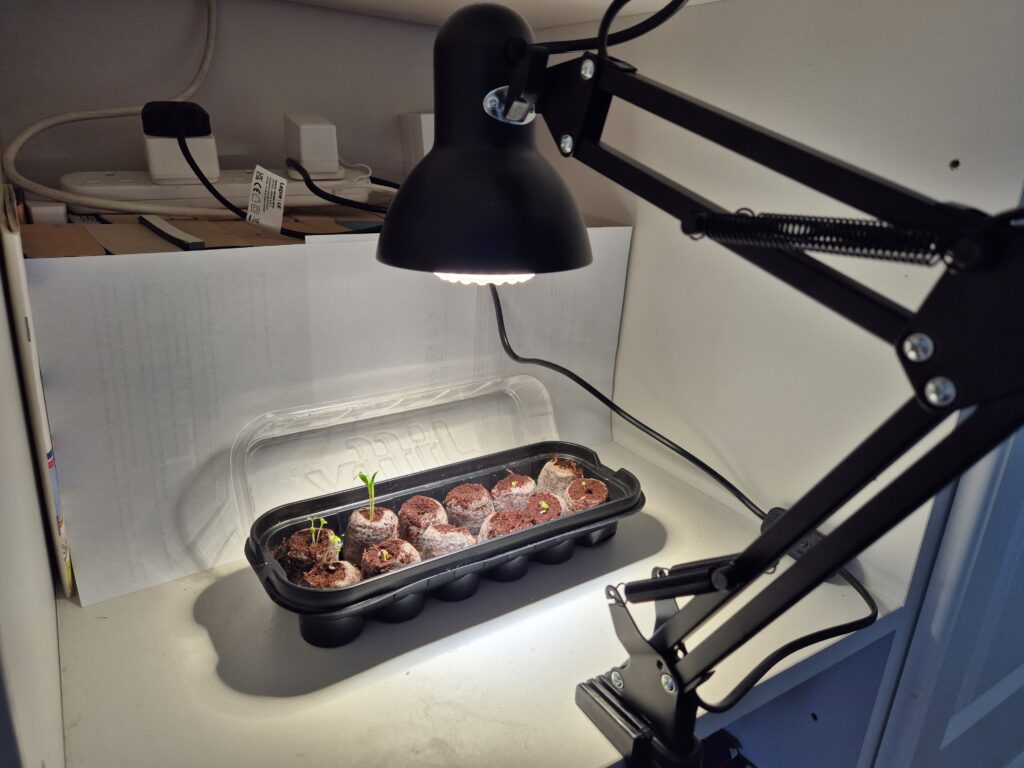
Most people searching for the best beginner grow lights in the UK start in exactly the same place — a windowsill that works fine in summer but becomes too dark by autumn.
That’s when things get confusing.
You don’t need a complicated indoor setup or specialist equipment.
You just need to replace natural light for around 14 hours a day.
If you’re completely new to indoor growing, keep it simple:
- 1–2 plants (herbs or small pots): use a normal lamp with a grow bulb
- Small shelf or windowsill: use a clip-on grow light
- Multiple plants or faster growth: use a small LED panel
That’s it. No tents, no hanging systems, no overthinking.
If you want a deeper understanding of how indoor lighting works and how to scale beyond a simple setup, see our HomeGrower Guide to Grow Lights.
Our Top Beginner Grow Light Setups
Choosing the best beginner grow lights in the UK is mostly about keeping things simple. You need enough light to replace a dark windowsill — without adding a complicated setup you won’t stick with.
Most beginners don’t need hanging systems, grow tents, or complicated equipment. A simple, well-positioned light will outperform an overpowered setup that’s awkward to use.
The options below are the most reliable beginner-friendly setups, based on real use in UK homes — from the simplest “use your own lamp” approach through to a small LED panel for faster growth.
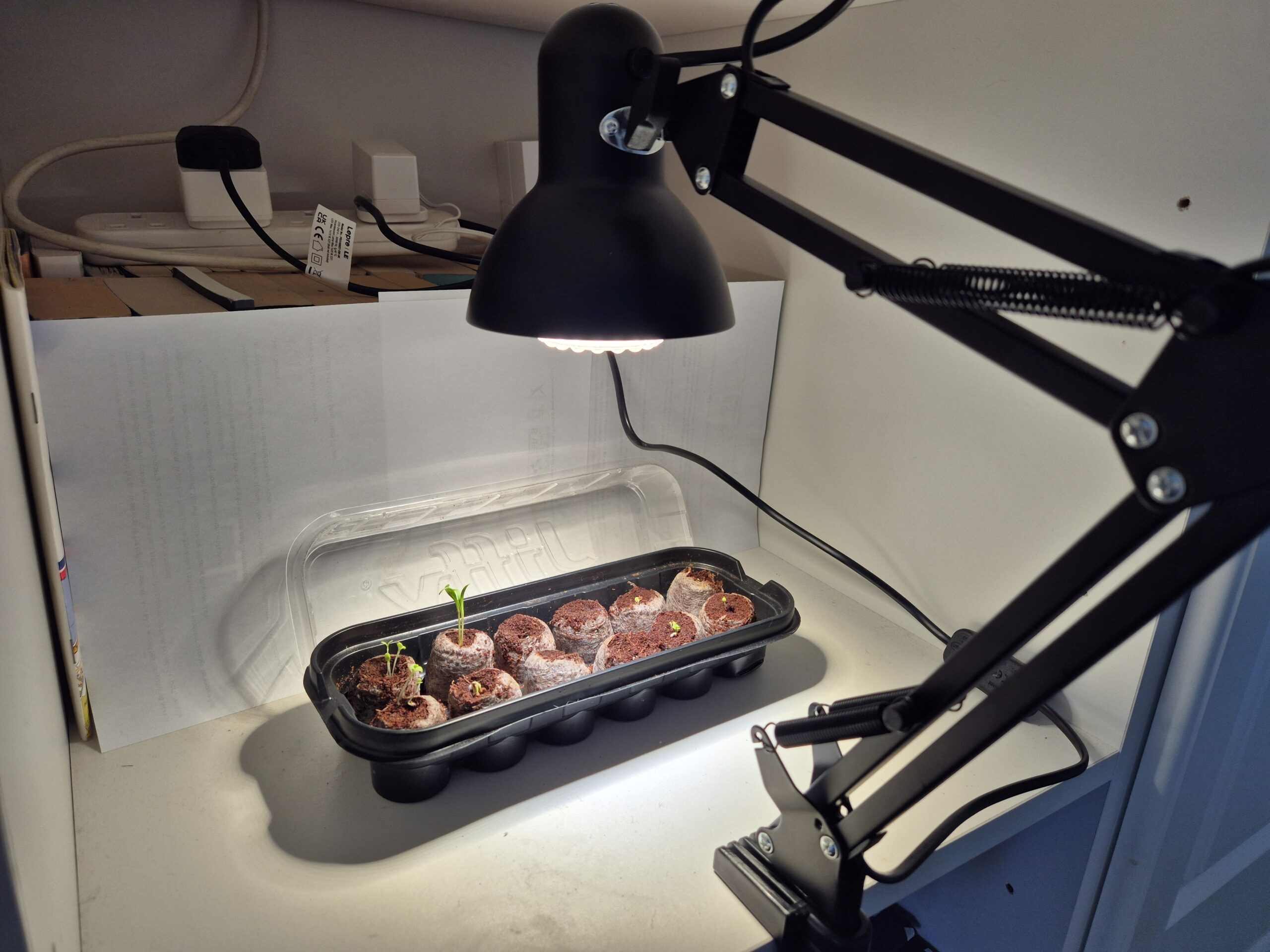
Simplest Setup (Use a Lamp You Already Own)

- Screws into a normal household lamp (no setup required)
- Full-spectrum white light (looks natural indoors)
- Ideal for herbs, seedlings, and small houseplants
- Quiet, low heat, very low running cost
Best for: kitchens, desks, windowsills, renters, complete beginners
👉 If you want the easiest possible starting point, this is it.
HomeGrower tip: The 36W version is surprisingly heavy due to its heat sink. Avoid flimsy desk lamps — a sturdy metal lamp or fixed fitting works much better.
For lower-cost options and budget setups, see our Best Cheap Grow Lights UK guide.
Best for Flexible Positioning and Shelves

- Clips onto shelves, desks, or plant pots
- Flexible arms cover multiple plants
- Built-in timer (no extra plug needed)
- Great for herbs, salads, seedlings
Best for: 2–4 plants, windowsills, small shelves
👉 The easiest upgrade from a windowsill.
Best Step-Up Option (More Growth, More Coverage)

- Proper grow light with much higher output
- Covers multiple plants evenly
- Dimmable and efficient
- Ideal for shelves, cupboards, or small grow spaces
Best for: faster growth, leafy greens, chillies, small indoor gardens
👉 When you want noticeably better results without going “full grow tent”.
If you want even more power, larger coverage, or a full indoor setup, see our Best LED Grow Lights UK guide for higher performance options.
The 3 Simple Beginner Setups (Explained)
1. Kitchen Counter / Lamp Setup
- Use: E27 grow bulb
- Distance: ~20–30 cm from plant
- Ideal for: basil, coriander, mint, seedlings
👉 No setup. No mounting. Just use a lamp you already own.
2. Windowsill or Shelf Setup
- Use: clip-on grow light
- Distance: ~15–30 cm above plants
- Ideal for: multiple herbs, salad leaves, small pots
👉 Better coverage than a bulb and perfect for small indoor growing.
3. Small Indoor Growing Area
- Use: LED panel
- Distance: ~25–35 cm above canopy
- Ideal for: 3–6 plants, microgreens, chillies
👉 This is where indoor growing starts to feel “proper”.
⚙️ Beginner Rules That Actually Matter
Forget PAR charts and technical specs — focus on these:
1. Distance matters more than power
Most beginners place lights too far away.
I \propto \frac{1}{d^2}
If you double the distance, your plants receive roughly one quarter of the light.
👉 That’s why plants become tall and “leggy” — they’re stretching for energy.
- Bulbs / clip-ons: 20–30 cm
- Panels: 25–35 cm
If you’re unsure about positioning, use our Grow Light Distance Chart for simple, plant-safe spacing guidelines.
2. Use a timer (non-negotiable)
Run lights:
- 14–16 hours per day
- Same time every day
Consistency matters more than power.
3. Expect faster growth = more watering
Plants under lights:
- Grow faster
- Dry out quicker
👉 Check soil more often than a normal windowsill setup.
4. Avoid the “Amazon Wattage Trap”
If a £25 light claims to be “1000W” — it isn’t.
Look for:
- Actual power draw (watts at the wall)
- Typical beginner range: 15W–100W
Anything claiming huge wattage at a low price is usually misleading.
🌤️ Right Now (UK Seasonal Tip)
If you’re reading this in spring:
Your tomato or chilli seedlings are probably starting to stretch on the windowsill.
👉 Moving them under a small LED panel like the ViparSpectra P600 for a few weeks will keep them compact and strong before they go outside or into a greenhouse.
🌿 Final Thoughts
The best grow lights for beginners aren’t the most powerful — they’re the ones you’ll actually use properly.
A simple bulb, clip-on, or small panel is more than enough to grow herbs, salads, and seedlings indoors in the UK.
Start simple, keep the light close, run it consistently, and improve from there.
If you want a deeper explanation of how indoor plant lighting works, the RHS guide to grow lights is a useful reference.
📎 Related Articles
What are the best grow lights for beginners in the UK?
The best grow lights for beginners are simple clip-on or plug-in LED lights that don’t require hanging equipment or complicated setup. Budget options like clip-on gooseneck lights work well for 1–2 herb pots, while small LED panels offer more even coverage for shelves or microgreens. For a full indoor garden, a small plug-and-play tent kit is the easiest step up.
How many hours should beginners run grow lights for herbs and vegetables?
Most beginners should run grow lights for 12–16 hours per day. Herbs such as basil, mint and coriander need long, bright light to stay compact and healthy. A plug-in timer is the simplest way to automate this. Consistent lighting is far more important than having a powerful light.
How far should beginner grow lights be from plants?
Most grow lights for beginners should sit 15–30 cm above the plants. If the light is too far away, plants grow tall and leggy; too close, and the leaves may curl upwards. A good rule of thumb is to start at 25 cm and adjust weekly. Our Grow Light Distance Chart provides simple height guidelines.
Can beginners use normal LED bulbs for growing plants?
Regular LED bulbs can keep plants alive, but they won’t grow as strongly as under a full-spectrum grow light. Beginner grow lights are designed to mimic natural sunlight, with a balanced white spectrum that supports healthy leaf growth and stronger root development.
What plants grow best under beginner-friendly grow lights?
Beginner grow lights are ideal for herbs (basil, coriander, parsley, mint), microgreens, lettuce, spinach, chilli seedlings and compact houseplants. These plants thrive under moderate light and respond quickly to consistent indoor lighting.
Do beginner grow lights use a lot of electricity?
No — most beginner grow lights use 10–40 watts, which typically costs just a few pounds per month to run, even at 14 hours per day. LED grow lights are highly efficient and generate very little heat, making them ideal for small UK homes.
Clip-on vs panel grow lights: which is better for beginners?
Clip-on grow lights are best for 1–2 pots and for anyone who wants a simple, plug-in solution. LED panels are better for multiple plants, seed trays or shelves where even coverage matters. Both are beginner-friendly; the choice depends on your space.
Are full grow tent kits good for beginners?
Yes – modern grow tent kits are much easier than most people expect. They come with matched components (light, fan, filter, timer), so beginners don’t need to choose parts individually. They’re ideal for growing chillies, tomatoes, greens or hydroponic setups year-round.
How do I know if my grow light is strong enough?
Beginners don’t need PAR meters — simply watch your plants. If stems stretch upwards and leaves look pale, the light is too weak or too far away. If leaves curl or appear bleached, the light may be too close. Start with a 15–30 cm distance and adjust weekly.
What’s the easiest grow light setup for a complete beginner?
The easiest grow light setup for beginners is a basic clip-on gooseneck LED light positioned over a pot of herbs. It attaches to any table or shelf, plugs straight into the wall, and requires no tools or hanging kit. Pair it with a £7 timer and the light will run automatically each day with no effort at all.
For many people, this simple setup is the ideal first step before moving on to the best grow lights for beginners reviewed in this guide
Can I use a grow light bulb in a normal lamp?
Yes — most grow light bulbs fit standard E27 lamps, so beginners can simply screw a full-spectrum bulb into a desk lamp, clip lamp or bedside lamp. This is one of the easiest and cheapest ways to start growing herbs indoors. Just ensure your lamp can angle downward and is rated for the wattage of the bulb.