I’ve been tracking the EcoFlow Delta range for a while now, and one question keeps coming up in UK off-grid and garden-office groups: is the newer Delta 3 actually worth paying more for than the Delta 2, or is the difference mostly on paper?
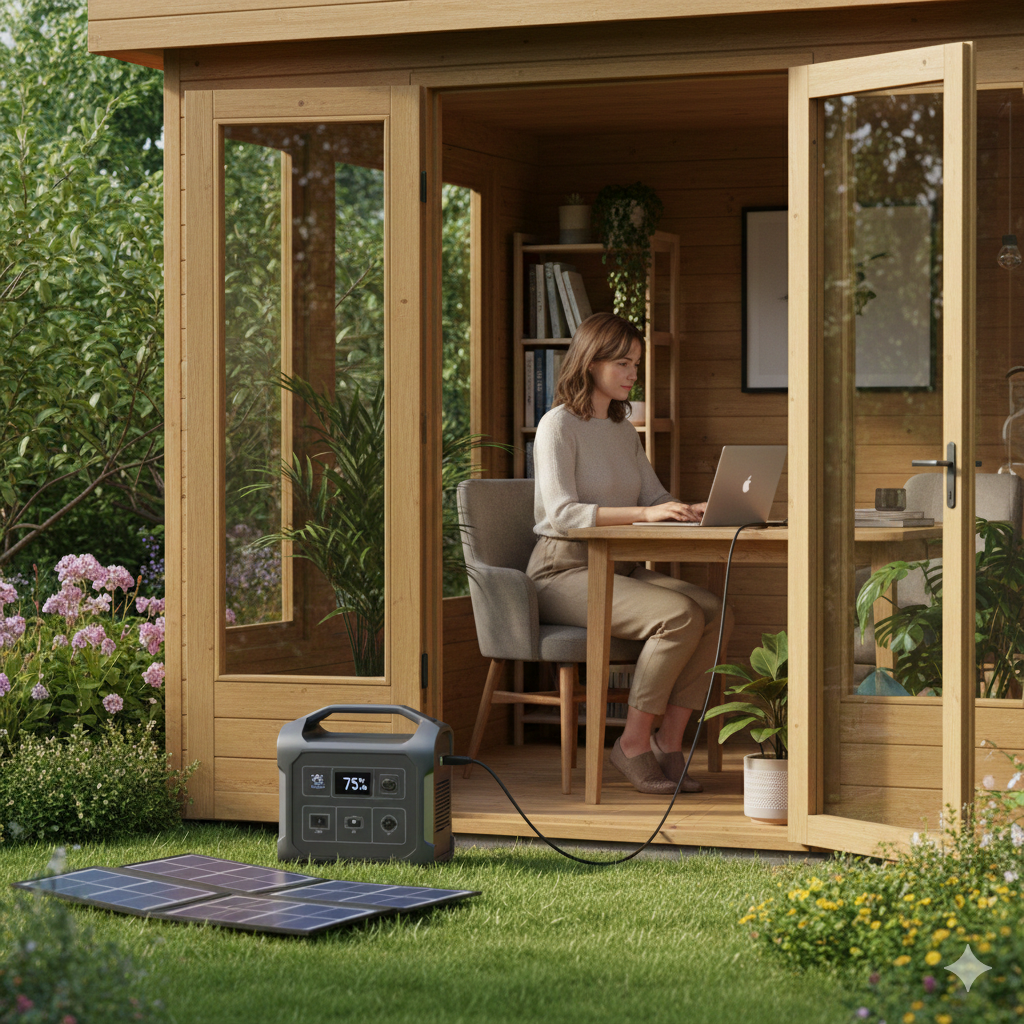
On the surface, EcoFlow Delta 2 vs Delta 3 looks like a straightforward upgrade comparison. In reality, the decision comes down to how you plan to use it day to day — whether it’s being moved in and out of a car boot for camping, living permanently in a garden office, or paired with solar panels through the darker UK months.
This guide compares the two models based on real UK use, including power output, battery lifespan, charging speed, solar performance and everyday practicality rather than just headline specs.
This article is part of our wider Self-Sufficiency UK – Complete Resource Hub , where we cover solar generators, backup power options and practical ways to reduce reliance on the grid.
If you’re still deciding whether a portable power station is right for your setup, our guide to Best Solar Generators UK – Top Portable Power Stations for Home, Camping & Emergencies explains how these systems are commonly used around the home, garden and outdoors.
Affiliate Disclosure: This article contains affiliate links. If you buy through these links, HomeGrower.co.uk may earn a small commission at no extra cost to you. This helps support our site and allows us to continue creating free, independent guides.
EcoFlow Delta 2 vs Delta 3 – Check current availability
If you’d like to check current pricing or availability while reading this guide, the links below take you to the official Amazon listings for each model.
Delta 2 vs Delta 3 – Key Differences
1. Battery Capacity & Usable Power
- Delta 2: 1024Wh — suitable for laptops, monitors, routers, lighting and small appliances.
- Delta 3 (base model): 1024Wh — the same usable capacity as the Delta 2.
At first glance this surprises many buyers, as the Delta 3 name suggests a bigger battery. In reality, the base Delta 3 focuses more on output capability, charging behaviour and longevity, rather than raw capacity.
If you’re specifically looking for more stored energy, EcoFlow also offers higher-capacity options such as the Delta 3 Plus / 1500, Delta 2 Max, or the much larger EcoFlow Delta Pro, which sit in a different size and price category.
Quick verdict:
There is no capacity advantage between the Delta 2 and the base Delta 3 — the difference lies elsewhere.
2. Inverter Output (What You Can Run)
- Delta 2: ~1800W continuous.
- Delta 3: 2000W+ continuous with improved surge handling.
Quick verdict: If you use power tools or higher-draw appliances, the Delta 3 is the safer, more capable option.
3. Charging Speed – Mains & Solar
Mains Charging
- Delta 2: Around 1 hour
- Delta 3: Slightly faster
Both are among the fastest-charging portable power stations available in the UK.
Solar Charging (Realistic UK Estimates)
While the Delta 3 is the newer machine, its raw solar capacity is actually identical to the Delta 2. Both units feature a single XT60i input port capped at 500W.
The real difference isn’t in how much power they accept, but how they manage it. The Delta 3 features a slightly more efficient MPPT controller, meaning it can sometimes squeeze a few extra watts out of your panels on those frustratingly dim, overcast UK mornings.
What this looks like in the UK: Both units pair perfectly with a 220W or 400W solar panel. Here is what you can realistically expect:
- Summer (Clear Skies): Both will fully recharge in 3–5 hours.
- Spring/Autumn (Mixed): Expect 6–10 hours. You’ll likely need two days to hit 100% if the clouds roll in.
- Winter (Grey/Short Days): In December and January, 500W of input is rarely enough to fully charge either unit in a single day. You will likely use solar to “top up” while relying on the mains for the bulk of your power.
Quick verdict: There is no significant solar “speed” advantage with the base Delta 3. Both are excellent for off-grid summer use, but both will struggle during a dark UK winter without supplemental charging.
Need even more solar power?
If you are planning a full off-grid shed conversion or a serious home backup system, you may find the 500W limit of these portable units too restrictive for UK winters.
In that case, the EcoFlow Delta 3 Pro is the next step up. Unlike the portable Delta 3, the Pro version supports a massive 2600W of solar input. This allows you to connect large, residential-grade roof panels that can generate significant power even on low-light days.
I will be covering the Delta 3 Pro’s full capabilities and how it integrates with home circuits in an upcoming deep-dive review.
4. Battery Chemistry & Lifespan
Both use long-life LFP (LiFePO₄) cells:
- Delta 2: 3000+ cycles
- Delta 3: 4000–5000+ cycles
Quick verdict: Delta 3 is the more future-proof choice for daily cycling or solar-heavy setups.
5. Portability: Size & Weight
- Delta 2: ~12kg — Lighter and easier to move between house, garden, and campsite.
- Delta 3: ~12.5kg — Slightly heavier due to higher output components and internal hardware.
Quick verdict: Delta 2 wins for pure portability; Delta 3 is better for semi-fixed setups like garden offices.
One practical difference that doesn’t show up clearly on spec sheets is how these units feel to live with. If you’re lifting the power station in and out of a car boot for weekend camping trips, or moving it between the house and garden, even that extra 0.5kg in the Delta 3 becomes noticeable after a long day.
However, the Delta 3 has a hidden design advantage: Rear-facing ports. While the Delta 2 has ports on the side that can result in cables sticking out into your legroom, the Delta 3’s connections are tucked neatly at the back. This makes the Delta 3 feel much “smaller” on a desk, even if it is technically half a kilo heavier.
6. Noise Levels & Fan Design
The way these units manage heat is one of the most significant “quality of life” differences between the two generations.
- Delta 2: Uses a side-to-side airflow system. The fans are known to be “vocal,” often kicking in even under moderate loads. If you are working in a quiet garden office, the sudden whirring can be distracting.
- Delta 3: Features a redesigned front-to-back airflow path. This isn’t just about noise; it’s about practicality. Because the vents are protected under the handles, you are less likely to accidentally block them with a bag or a cushion.
- Quiet Mode: The Delta 3 is notably quieter during fast charging, operating at approximately 30dB (about the same as a quiet library) when under a 600W load.
Quick verdict: If the power station will be sitting on your desk or near your bed, the Delta 3 is the clear winner for a peaceful environment.
7. UPS Performance (Critical for Garden Offices)
If you plan to use your EcoFlow as a “safety net” for a desktop PC, iMac, or NAS drive, the switchover speed is the most important spec you’ll never see on the box.
- Delta 2 (EPS Mode): Has a switchover speed of ~30ms. While this is fine for a fridge or a lamp, it is often just slow enough to cause a desktop computer to reboot or a sensitive Wi-Fi router to drop the connection during a power cut.
- Delta 3 (True UPS Mode): Upgraded to a <10ms switchover. This is the gold standard for electronics. It ensures that your PC or server doesn’t even “notice” the grid has failed, keeping your work safe and your meetings online.
Quick verdict: For home office and IT equipment, the Delta 3’s 10ms UPS speed makes it a far superior insurance policy against UK power cuts.
8. UK Pricing & The “Plus” Factor
As of late 2025, the pricing for these units has settled into two very distinct categories. Your choice should depend on whether you are looking for the lowest entry price or the best technical specs for a permanent setup.
- Delta 2 (The Value King): Now that it is the older model, the Delta 2 is frequently discounted. In the UK, it often sits around £399–£450. At this price, it is the undisputed “pounds-per-watt” champion. If you just need reliable backup power for the lowest possible cost, this remains the sensible default.
- Delta 3 (The New Standard): Expect to pay a premium for the newer tech, with prices typically starting from £549. For the extra ~£100, you are essentially paying for the 10ms UPS speed, the silent fan design, and the longer battery lifespan.
What about the Delta 3 “Plus”?
You will likely see the Delta 3 Plus listed alongside the base model. While it has the same 1024Wh capacity, it adds one critical feature for UK users: Dual Solar Inputs (1000W total).
Expert Advice: If you are building a dedicated garden office and plan to mount solar panels on the roof, the Delta 3 Plus is worth the extra investment (usually around £699). Its ability to take 1000W of solar means you can actually keep the battery topped up during those short, grey UK winter days where a 500W limit just isn’t enough.
For a wider look at the EcoFlow range beyond just the Delta models, see our full comparison: Best EcoFlow Solar Generators UK – Delta, River & Pro Models Compared .
Real-World Usage Examples (What You Can Actually Run)
Because the EcoFlow Delta 2 and the base Delta 3 both use a 1024Wh battery, estimated runtimes for low-draw devices are broadly similar. Where the Delta 3 pulls ahead is in handling higher loads more comfortably, with fewer power limits and less strain on the inverter.
The examples I’ve given below will help you to estimate real runtime for common UK appliances.
Can it run a kettle? (≈3kW)
A kettle draws very high power but only for 2–3 minutes.
- Delta 2: Handles occasional boils using surge capacity
- Delta 3: Handles short, high-draw loads more comfortably
Both can boil water occasionally, but neither is suitable for repeated kettle use when off-grid, as it drains the battery very quickly.
How long can it run a laptop?
(40–70W typical draw)
- Delta 2: ~12–20 hours
- Delta 3: ~12–20 hours
Ideal for garden offices, remote working, and mobile setups.
How many mobile phone charges?
(Modern phone ≈12Wh)
- Delta 2: ~70–80 charges
- Delta 3: ~70–80 charges
With identical battery capacity, real-world phone charging is effectively the same.
Can it run a fridge or fridge-freezer?
Both units can handle compressor start-up surges.
Delta 2
- Fridge: ~8–12 hours
- Fridge-freezer: ~6–10 hours
Delta 3
- Fridge: ~8–12 hours
- Fridge-freezer: ~6–10 hours
Runtime varies with ambient temperature and door use. The Delta 3 tends to cope better with repeated compressor cycling.
Power tools (DIY & workshop use)
Typical tool draws:
- Drill: 500–800W
- Circular saw: 1200–1800W
- Heat gun: 1000–2000W
Delta 2
- Suitable for most DIY tools
- Closer to its upper limits with heavier tools
Delta 3
- Handles high-draw tools with more headroom
- Lower risk of overload or shutdown under sustained load
This is where the Delta 3’s higher output capability becomes noticeable.
Wi-Fi router + laptop (garden office setup)
(≈55–90W combined)
- Delta 2: ~10–15 hours
- Delta 3: ~10–15 hours
Easily covers a full working day with capacity to spare.
CPAP machines
(30–60W typical)
- Delta 2: ~12–20 hours
- Delta 3: ~12–20 hours
Both are well suited for overnight medical device use, with quiet operation.
Key takeaway from real-world use
With identical battery capacity, runtime alone should not drive the decision between Delta 2 and Delta 3. The Delta 3’s advantage lies in output stability, surge handling and long-term durability, especially when running higher-draw appliances or using solar charging regularly.
EcoFlow Delta 2 vs Delta 3 – Comparison Table
| Feature | EcoFlow Delta 2 | EcoFlow Delta 3 (Base) |
|---|---|---|
| Capacity | 1024Wh | 1024Wh |
| AC Output | 1800W (2700W Surge) | 2000W (Up to 4000W with X-Boost) |
| Lifespan | 3000 cycles to 80% | 4000 cycles to 80% |
| UPS / EPS Speed | ~30ms (EPS Grade) | <10ms (True UPS) |
| Solar Input | 500W Max | 500W Max (Higher Efficiency MPPT) |
| Fan Noise | Vocal (Side-to-Side Airflow) | Ultra-Quiet (Front-to-Back Airflow) |
| Weight | ~12kg | ~12.5kg |
Note: The EcoFlow Delta 3 compared here refers to the base model (1024Wh). EcoFlow also offers higher-capacity variants such as the Delta 3 Plus / Delta 3 1500 (regional naming may vary), as well as larger systems like the Delta 2 Max and Delta Pro, which provide significantly more storage but sit in a higher size and price category.
Which Should You Buy? (Simple Guidance)
✅ Choose the EcoFlow Delta 2 if:
- You want the best value for everyday UK use
- You need something portable for camping or outdoor DIY
- You want reliable garden-office power without overspending
✅ Choose the EcoFlow Delta 3 if:
- You want more output headroom and stronger all-round performance
- You plan to use solar panels regularly in a garden, shed or allotment
- You run higher-draw tools or appliances
- You want the longest possible lifespan for daily use
Simple rule:
Delta 2 = best value & portability.
Delta 3 = best performance & future-proofing.
If you’re weighing up portable power stations against other options, this guide may also help: What is the Best Type of Backup Generator for Home Use?
Ready to buy?
Now that you’ve read our guide, if you’re ready to buy or want to check current pricing and availability, the links below take you to the official Amazon listings for each model.
Final Thoughts on EcoFlow Delta 2 vs Delta 3
When comparing EcoFlow Delta 2 vs Delta 3, there isn’t a “better” option in isolation — it really comes down to how you plan to use portable power day to day.
The Delta 2 remains an excellent all-round choice for most UK users. With the same 1024Wh capacity as the base Delta 3, it delivers very similar runtime for everyday devices while being lighter, easier to move and usually better value. For garden offices, camping, occasional DIY and general backup use, it already does everything most people need.
The Delta 3 doesn’t add more stored energy, but it does refine how that energy is delivered. Its higher continuous output, improved surge handling and longer battery lifespan make it better suited to regular solar charging, heavier tools and setups where the unit is used frequently or left in place, such as a fixed garden office or workshop.
In simple terms:
If portability, price and flexibility matter most, the Delta 2 is still the sensible default — and personally, it’s the one I’d lean towards when it’s noticeably cheaper. With the same battery capacity and very similar everyday runtime, it simply offers better value for most UK setups.
That said, prices vary a lot. When the Delta 3 drops to a similar price, the balance shifts. In that situation, its higher output headroom, smoother handling of demanding loads and longer battery lifespan make it the better long-term buy — especially for fixed garden offices, workshops or regular solar use.
Related Articles
Existing articles:
- Self-Sufficiency UK – Complete Resource Hub
- What is the Best Type of Backup Generator for Home Use?
- Best Solar Generators UK – Top Portable Power Stations for Home, Camping & Emergencies
Coming soon:
- Best Jackery Solar Generators UK
- Best Bluetti Solar Generators UK
- EcoFlow Delta 2 vs Delta 2 Max – Which Should You Buy?
EcoFlow Delta 2 vs Delta 3 – FAQs
What is the main difference between EcoFlow Delta 2 and Delta 3?
The main difference between EcoFlow Delta 2 and Delta 3 is how power is delivered, not how much energy is stored. Both the Delta 2 and the base Delta 3 have the same 1024Wh battery capacity, so runtime for low-draw devices is very similar. The Delta 3 stands out with higher continuous output, better handling of high-draw appliances and a longer battery lifespan, while the Delta 2 focuses on lighter weight, portability and overall value.
Is EcoFlow Delta 3 worth upgrading from Delta 2?
Upgrading from the Delta 2 to the Delta 3 makes sense if you regularly run higher-draw tools or appliances, plan to use solar panels frequently, or want a unit designed for heavier, long-term use. If your setup involves lighter loads such as camping, working from a garden office or occasional backup power, the Delta 2 already offers very similar runtime and is often the more practical choice.
Can EcoFlow Delta 2 and Delta 3 run household appliances?
Yes. Both models can run common household appliances such as laptops, routers, TVs, fridges and power tools. Short-duration high-draw devices like kettles can also be used occasionally, although they will drain the battery quickly.
Can I use solar panels with both Delta 2 and Delta 3?
Yes. Both support solar charging, but the Delta 3 accepts higher solar input and performs better in mixed UK weather. This makes it a better option for garden solar setups, shed roofs or regular off-grid use.
How long do the batteries last?
Both use long-life LFP (LiFePO₄) batteries. The Delta 2 is rated for over 3,000 charge cycles, while the Delta 3 is rated for approximately 4,000–5,000 cycles before noticeable capacity loss, making the Delta 3 the longer-lasting option.
Are EcoFlow Delta power stations safe to use indoors?
Yes. EcoFlow Delta units are battery-powered and produce no fumes, making them safe for indoor use. They are commonly used in garden offices, spare rooms and workshops. As with any electrical device, adequate ventilation around the unit is recommended.
Does EcoFlow publish official specifications and manuals?
Yes. EcoFlow publishes full technical specifications, user manuals and safety information on their official website, which can be useful if you want to check exact input limits or compatibility details.
Which is better for UK buyers: Delta 2 or Delta 3?
For most UK buyers, the EcoFlow Delta 2 offers the best balance of price, portability and everyday performance. With the same 1024Wh capacity as the base Delta 3, it delivers very similar runtime for common devices while being lighter and easier to move between the house, garden and car.
The Delta 3 is better suited to users who regularly run higher-draw appliances, plan to rely on solar charging, or want a unit designed for frequent, long-term use. Its higher output capability and longer battery lifespan make it a stronger choice for fixed setups such as garden offices or workshops, rather than mobile use.
Explore More HomeGrower Hubs
Dive deeper into our core growing and self-sufficiency guides:
- Indoor Growing UK
Everything you need to grow herbs, vegetables and microgreens indoors all year round. - Grow Lights UK
Compare LED, fluorescent and full-spectrum grow lights for home growers. - Grow Tents UK
Reviews, setup guides and ideal tent sizes for beginners and experienced growers. - Outdoor Growing UK
Advice on raised beds, irrigation, composting and year-round food production. - Greenhouses & Polytunnels UK
Expert guidance for choosing, installing and using protected growing structures. - Garden Sheds UK
Buying guides, comparisons and storage advice for every UK garden. - Garden Tools & Equipment UK
Essential tools, equipment reviews and buying guides for efficient gardening. - Food Preservation UK
Learn dehydration, fermentation, freezing and long-term storage of home-grown produce. - Self-Sufficiency UK
Guides to home solar, emergency power, rainwater collection, off-grid watering and low-energy systems for more resilient living.
Or return to the HomeGrower homepage to browse all our latest guides and reviews.