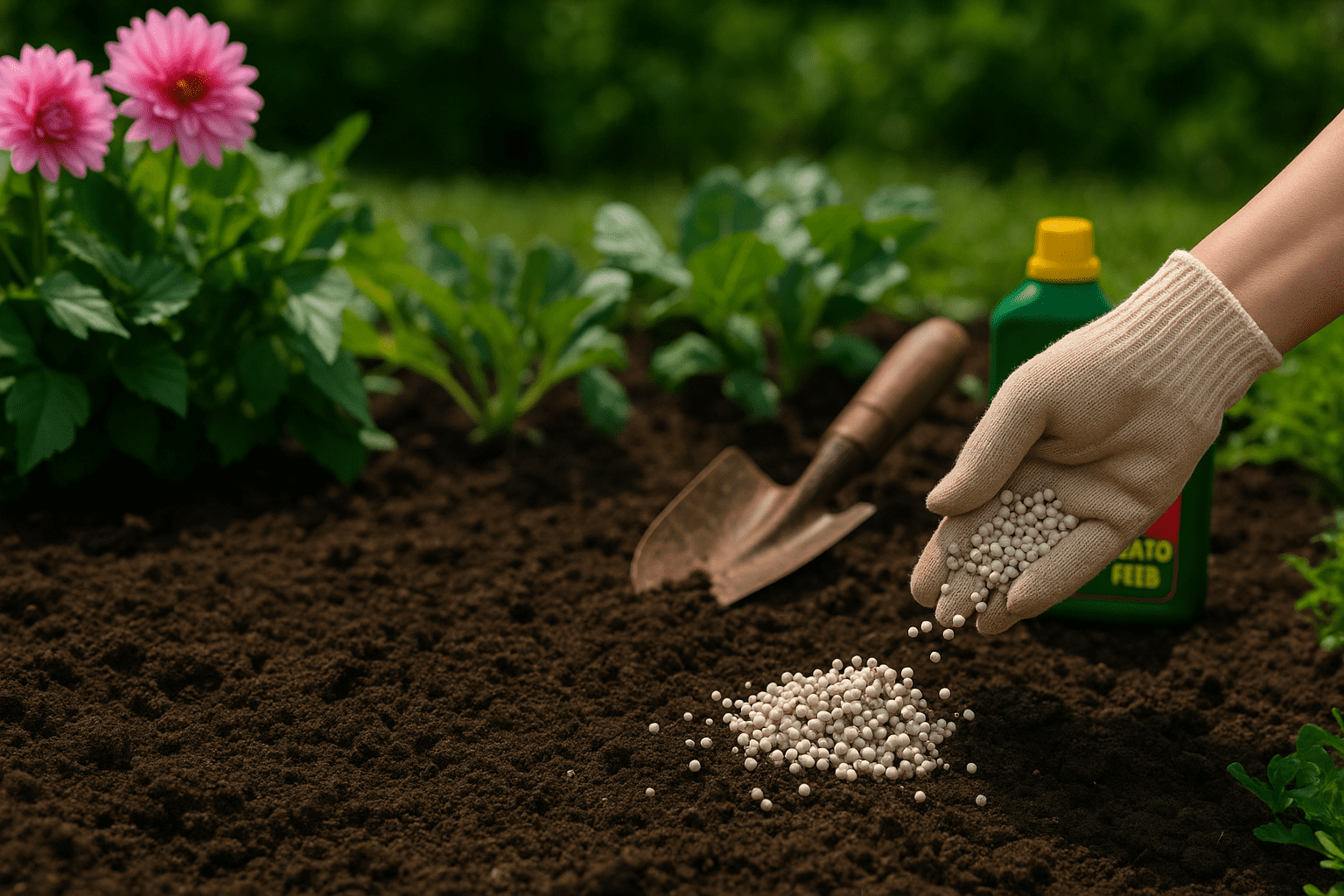

Fertiliser is the secret to healthy plants, bigger harvests, and stronger roots — whether you’re feeding tomatoes, lawns or houseplants.
But with so many products claiming to be “the best,” it’s hard to know where to start.
This guide explores the best fertiliser UK gardeners can buy, showing when and how to use each type — and helping you choose the right feed for every plant and season.
Affiliate disclosure: Some links below are affiliate links. As an Amazon Associate, HomeGrower earns from qualifying purchases. This helps support the site at no extra cost to you.
- Fertilisers are concentrated sources of plant nutrients used to boost growth and yields.
- They come in liquid, granular, pellet and powder forms.
- Organic fertilisers are derived from plants or animals, while inorganic types are chemically manufactured or mined minerals.
- Use sparingly — most UK soils already contain moderate nutrients, and overuse can harm soil microbes.
🧾 Quick Comparison: Best Fertiliser UK
The comparison below highlights the best fertiliser UK gardeners can buy, covering all-purpose, organic, seaweed, slow-release, and lawn feeds for every type of plant.
| Product | Type | Best For | Buy |
|---|---|---|---|
| Miracle-Gro All Purpose Soluble Plant Food | Balanced NPK (24-8-16) | Flowers, shrubs, and vegetables | View on Amazon |
| Westland Growmore All Purpose Fertiliser | Granular NPK 7-7-7 | General garden use and soil enrichment | View on Amazon |
| Westland Seaweed Enhanced Plant Feed | Liquid organic seaweed feed | Root development and plant stress recovery | View on Amazon |
| Pro-Kleen Organic Liquid Seaweed Fertiliser | Premium organic liquid | Vegetables, fruit crops, and soil health | View on Amazon |
| Fish, Blood and Bone Fertiliser | Natural slow-release organic feed | General soil improvement and balanced growth | View on Amazon |
| Tomorite Tomato Food | Liquid high-potassium fertiliser | Tomatoes, peppers, and fruiting crops | View on Amazon |
| Miracle-Gro Performance Organics Fruit & Veg Plant Food | Liquid high-potassium fertiliser | Fruiting and flowering plants | View on Amazon |
| Miracle-Gro Continuous Release Plant Food | Slow-release granules | Containers, hanging baskets, and borders | View on Amazon |
| EverGreen Complete 4-in-1 Lawn Feed | Granular lawn fertiliser | Greener, thicker lawns and weed control | View on Amazon |
| Westland SafeLawn Natural Lawn Feed | Liquid lawn feed | Organic, child- and pet-safe lawn care | View on Amazon |
🌱 What Is Fertiliser and Why It Matters
Plants draw nutrients from soil, but those nutrients deplete fast — especially after rain or heavy cropping.
Fertilisers replace what’s lost, providing the three essential macronutrients:
- Nitrogen (N) – leafy growth
- Phosphorus (P) – roots and flowers
- Potassium (K) – fruiting, resistance and strength
You’ll also see micronutrients like magnesium, calcium and trace minerals for overall vitality.
Organic fertilisers (such as seaweed or composted manure) work slowly and enrich soil life, while synthetic options give fast, measurable results.
Organic vs Inorganic Fertilisers
| Type | Source | Speed | Environmental Impact |
|---|---|---|---|
| Organic | Plant or animal materials (e.g. seaweed, chicken manure, fish, blood & bone) | Slow-release | Lower carbon footprint, improves soil health |
| Inorganic | Chemically manufactured or mined minerals (e.g. Growmore, sulphate of potash) | Fast-acting | Higher energy use, may affect soil microbes if overused |
🌾 Best Fertilisers by Type
🧡 1. All-Purpose (Balanced NPK)
Ideal for general use throughout the growing season.
Examples:
- Westland Growmore (All‑Purpose) — A UK-classic granular all-purpose feed (NPK ~7-7-7) great for soils and mixed plantings.
- Miracle‑Gro All Purpose Soluble Plant Food — A go-to soluble feed, strong brand, good for many garden plants.
🌿 2. Organic & Seaweed-Based
Natural feeds that improve soil structure and microbial activity.
Examples:
- Westland Seaweed Enhanced Plant Feed – Liquid feed incorporating seaweed extract, good for root development, stress tolerance.
- Pro-Kleen Organic Liquid Seaweed Fertiliser – More premium/organic-oriented option; good upsell affiliate opportunity.
🌼 3. Bloom Boosters (High Potassium)
For fruiting or flowering plants like tomatoes, peppers and strawberries.
Examples:
- Miracle-Gro Performance Organics Fruit and Veg Plant Food – rich in potassium for tomatoes, peppers and fruiting plants.
- Tomorite Tomato Food – a trusted liquid fertiliser that promotes strong roots and heavy cropping.
- Fish, Blood and Bone Fertiliser – a slow-release organic option that supports balanced growth and soil health.
🌱 4. Slow-Release Granules
Perfect for containers or busy gardeners.
Feed once every few months and nutrients release gradually.
Example:
- Miracle-Gro Continuous Release Plant Food – Granular feed that releases nutrients over time; ideal for less frequent feeding.
🌳 5. Lawn & Grass Feeds
Help turf stay lush, green and moss-free.
Examples:
- Miracle-Gro EverGreen Complete 4-in-1 – feeds, kills weeds and greens grass quickly.
- Westland Garden Health SafeLawn Liquid Lawn feed – Liquid version; good for lawn care upsell and cross-linking with spreader gear.
🧠 How to Choose the Right Fertiliser
| Plant Type | Ideal NPK | Best Time to Feed |
|---|---|---|
| Leafy greens, lawns | High nitrogen | Spring–summer |
| Root crops, seedlings | Balanced or low nitrogen | Spring |
| Flowering & fruiting | High potassium | Spring–autumn |
| Houseplants | Balanced liquid feed | Every 2–4 weeks |
Tips:
- Match fertiliser to soil type (clay holds nutrients longer than sandy soil).
- Use slow-release feeds for pots and baskets.
- Always follow dilution instructions — overfeeding can burn roots.
💧 Application Tips
- Apply granular fertilisers on moist soil, not dry ground.
- Water liquid feeds directly onto roots for fast uptake.
- Avoid feeding during drought or frost.
- Rinse fertiliser off leaves to prevent scorch.
- For even coverage, use a fertiliser spreader.
🗓️ When to Apply Fertiliser
Timing makes a big difference to results. Most fertilisers work best when plants are actively growing and the soil is moist.
| Season | Best Fertiliser Type | Notes |
|---|---|---|
| Spring (Feb–Apr) | Organic slow-release feeds such as chicken manure, fish blood & bone | Feed early as soil warms; nutrients release gradually. |
| Summer (May–Aug) | Liquid fertilisers, Growmore or tomato feeds | Use during active growth and flowering; water in well. |
| Autumn (Sep–Oct) | Autumn lawn feed, seaweed fertiliser | Builds root strength and winter resilience. |
| Winter (Nov–Jan) | — | Most plants rest; avoid feeding until growth resumes. |
Tip: Feed only when plants are growing. Overfeeding in cold or dormant periods wastes nutrients and can harm soil microbes.
🌱 Eco-Friendly Feeding Tips
- Use compost, leaf mould or worm castings before turning to synthetic fertilisers.
- Choose pelleted or powdered products with minimal plastic packaging.
- Feed only when needed — overuse wastes nutrients and can harm waterways.
- Rotate feeds through the season instead of using the same high-nitrogen formula year-round.
🧾 Final Thoughts – Choosing the Best Fertiliser UK Gardeners Can Trust
Finding the best fertiliser UK gardeners rely on means balancing plant needs, soil health, and sustainability.
For quick green-ups and heavy feeders, balanced NPK products like Growmore or Miracle-Gro perform brilliantly.
For long-term soil improvement, choose organic options such as seaweed or chicken manure pellets.
And if convenience matters, slow-release fertiliser granules keep pots and borders thriving for months.
Whatever your setup — vegetable patch, lawn, or houseplants — use fertiliser sparingly, follow the label, and feed only when growth demands it. The result? Stronger roots, healthier soil, and a garden that rewards you all year round. 🌿
🌱 Related Articles
Improve Plant Growth and Nutrition
- How to Grow Plants from Seed (UK Guide) – Learn how to nurture healthy seedlings and give them the nutrients they need from day one.
- Best Soil for Growing Food Indoors in the UK – Discover the top peat-free composts and organic mixes that work perfectly with your chosen fertiliser.
Master Watering and Feeding Systems
- Drip Irrigation System UK Guide – See how to automate watering and feeding for consistent growth and less waste.
- Best Hydroponic Growing Systems UK – Explore complete hydroponic setups for precise nutrient control and faster yields.
Compare Growing Methods
- Hydroponics vs Soil Growing UK – Compare hydroponic feeding with traditional soil fertilisers to find what’s best for your setup.
🪴 Best Fertiliser UK – Frequently Asked Questions
What is the best fertiliser UK gardeners can buy for general use?
For all-round feeding, balanced products such as Growmore or Miracle-Gro All Purpose are among the best fertiliser UK options. They supply nitrogen, phosphorus and potassium in equal measure, keeping lawns, flowers and vegetables healthy throughout the growing season.
What is the best fertiliser for vegetables and fruit in the UK?
Organic feeds like seaweed fertiliser, fish, blood and bone, or Tomorite are ideal for fruiting plants. They’re rich in potassium, helping tomatoes, peppers and strawberries produce bigger crops. Many gardeners consider seaweed-based products the best fertiliser UK growers can use for long-term soil improvement.
Which fertiliser is best for lawns in the UK climate?
For lawns, use a dedicated lawn fertiliser such as EverGreen Complete 4-in-1 or Westland SafeLawn. These are specially blended for UK grass conditions and rank among the best fertiliser UK options for lush, green turf. Apply in spring and again in early autumn when soil is moist.
How often should I apply fertiliser in the UK?
Most gardens only need feeding once every 4–6 weeks during active growth (spring to late summer). Avoid winter applications when plants are dormant. Consistent, light feeding with the best fertiliser UK brands will maintain soil nutrients without overloading your plants.
Is organic fertiliser better than chemical fertiliser?
Organic fertilisers improve soil health over time, while chemical fertilisers give faster visible results. A mix of both can be ideal — start with compost or seaweed feed, then top up with a balanced NPK fertiliser when needed. Many of the best fertiliser UK products blend both approaches for reliable performance.
Can I make my own garden fertiliser at home?
Yes — compost tea, nettle or comfrey feed are great homemade alternatives. They’re nutrient-rich, low-cost and reduce packaging waste. However, for precise NPK balance, shop-bought feeds still tend to deliver more predictable results, especially the best fertiliser UK options tested for performance and safety.