Using a wind turbine with a solar generator can be an effective way to generate power year-round — especially in windy UK locations where solar output drops in winter.
For many people exploring off-grid resilience, backup power, or broader self-reliance, wind and solar are often considered together as part of a wider approach to home energy independence — something we cover more broadly in our Self-Sufficiency UK complete resource hub.
However, wind power behaves very differently to solar. To avoid damaging expensive equipment, it’s important to connect everything in the correct order.
This guide explains:
- Whether wind turbines work with solar generators
- Why a battery is usually required
- How power flows through the system in real use
- What happens when the battery is full
- Common mistakes to avoid
Do Wind Turbines Work With Solar Generators?
Yes — but not directly in most cases.
Wind turbines produce highly variable power depending on wind speed and gusts. Solar generators, on the other hand, are designed to accept stable, regulated input from:
- Solar panels (DC)
- The mains (AC)
- Portable generators (AC)
This is one reason solar generators are often misunderstood. They serve a very different role to petrol or diesel generators — a distinction explained in more detail in our guide to the best type of backup generator for home use.
Because of this mismatch, wind power is normally stored in a battery first, then transferred to the solar generator in a controlled way.
Why Wind Can’t Usually Connect Directly
Unlike solar panels, wind turbines:
- Produce fluctuating voltage
- Can spike suddenly in strong winds
- Require a dump load to absorb excess power
- Cannot simply be “switched off”
Most solar generators:
- Expect predictable voltage ranges
- Do not support dump loads
- Will shut down or fault if input is unstable
Connecting a wind turbine directly risks:
- Tripping protection circuits
- Controller failure
- Permanent damage to the generator
The Correct Way to Use Wind With a Solar Generator
✅ Recommended setup
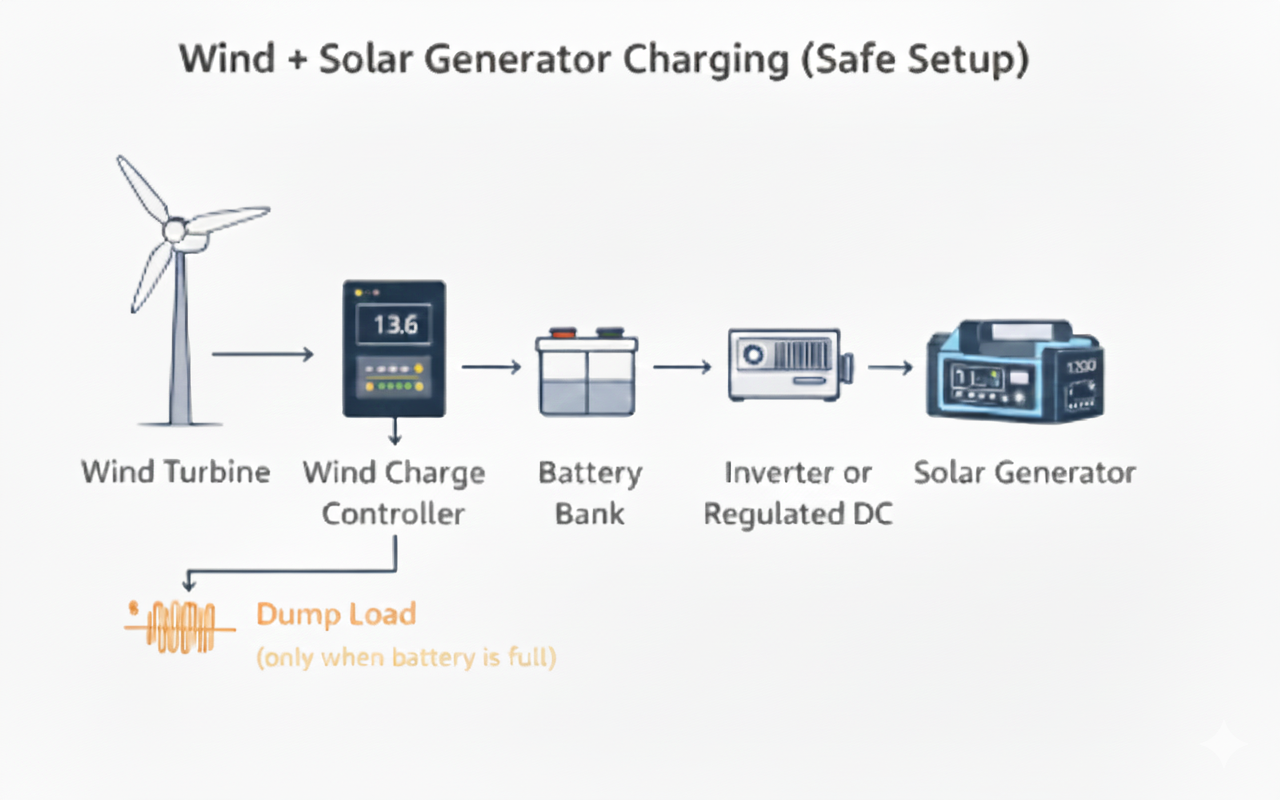
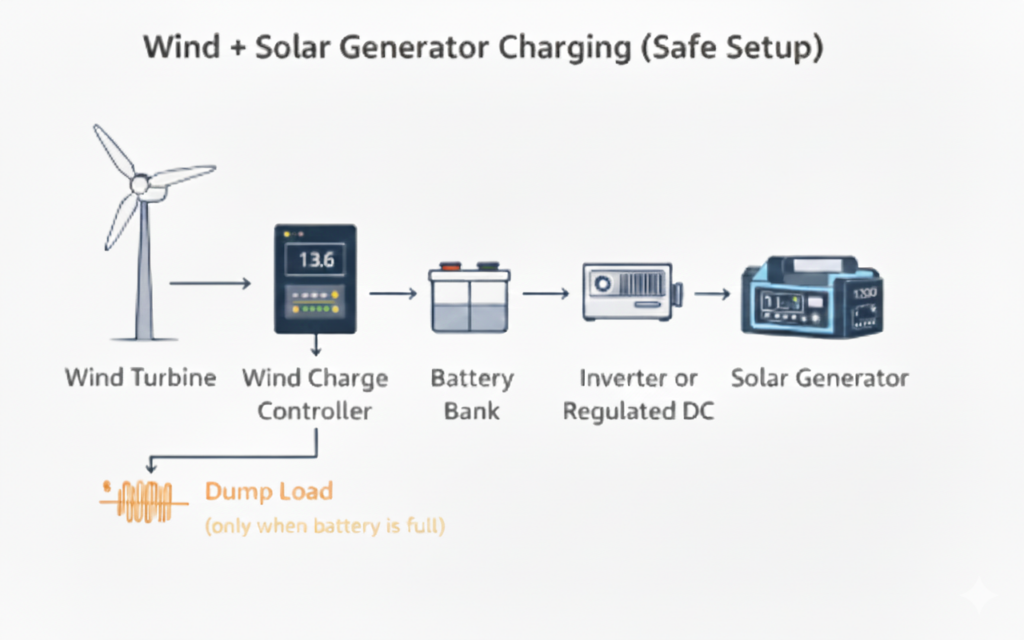
Wind Turbine → Wind Charge Controller → Battery → Inverter / Regulated DC → Solar Generator
Note: In real wind systems, the wind charge controller also manages a dump load. When the battery is full, the controller diverts excess wind power to the dump load to safely dissipate energy. The dump load is controlled by the wind charge controller and is not connected to the solar generator.
The battery acts as a buffer, protecting the solar generator from erratic wind input and smoothing out sudden changes in power.
Step-by-Step: Wind + Solar Generator Setup
1️⃣ Wind Turbine
The turbine converts wind into electrical power. Small residential turbines typically output:
- 12V, 24V or 48V DC
- Or wild AC that must be rectified
Output varies constantly with wind speed.
2️⃣ Wind Charge Controller (Essential)
The turbine feeds into a wind charge controller, which:
- Regulates incoming voltage
- Prevents battery over-charging
- Activates a dump load when needed
⚠️ A solar charge controller is not suitable for wind turbines.
3️⃣ Battery Bank (The Buffer)
The controller charges a dedicated battery bank, which:
- Smooths wind gusts and voltage spikes
- Stores energy safely
- Supplies steady power downstream
Common options:
- 12V leisure batteries
- LiFePO₄ batteries (longer life, higher cost)
This battery is the key component that makes the system safe.
4️⃣ Power Transfer to the Solar Generator
From the battery, power is transferred to the solar generator in one of two ways:
Option A: Via AC (most common)
- Battery → inverter → AC socket
- Solar generator charges as if plugged into the mains
This method:
- Works with almost all solar generators
- Is manufacturer-safe
- Slightly less efficient
Higher-capacity power stations tend to handle this approach better, which becomes important when choosing between different models in the best solar generators available in the UK.
Option B: Via DC (model-specific)
- Battery → regulated DC output
- Voltage must match the generator’s DC input range
⚠️ Only use this if the manufacturer explicitly allows it.
Simple System Overview
Wind Turbine
   ↓
Wind Charge Controller (with dump load)
   ↓
Battery Bank
   ↓
Inverter or Regulated DC
   ↓
Solar Generator
Can the Battery Charge and Discharge at the Same Time?
Yes — and this is completely normal.
In a wind + solar generator system, the battery acts as a buffer, not a one-way storage tank. At any moment, energy can flow into the battery from the wind turbine while energy flows out to the solar generator.
What happens depends on the balance between the two:
- If wind input is greater than the generator draw, the battery charges
- If wind input is less than the draw, the battery discharges
- If they are roughly equal, the battery stays near the same level
Nothing switches on or off — this happens continuously and automatically.
This is exactly how off-grid battery systems are designed to work.
What Happens When the Battery Is Full? (Dump Loads Explained)
Wind turbines can’t simply be turned off when the battery is full. If the wind is blowing, the turbine will keep producing power — and that excess energy has to go somewhere.
This is where a dump load comes in.
What is a dump load?
A dump load is a safe, resistive load (often a resistor bank or heater) that absorbs excess energy when the battery can no longer accept charge. The energy is converted into heat.
How dumping works step by step
- The wind turbine generates power
- Power flows into the wind charge controller
- The controller monitors battery voltage
- When the battery reaches full charge:
- Charging to the battery is limited or stopped
- Excess power is diverted to the dump load
- The dump load stays active until:
- Wind output drops, or
- Battery voltage falls slightly
This protects:
- The battery (from over-charging)
- The controller
- Downstream equipment, including the solar generator
Why solar generators don’t do this
Most solar generators:
- Do not support dump loads
- Are not designed for uncontrolled wind input
- Expect clean, regulated power only
This is why wind power must be regulated before it reaches the solar generator.
Can You Skip the Battery?
In most cases, no.
Some specialist systems claim to feed wind directly into power stations, but they:
- Use proprietary controllers
- Are model-specific
- Are rarely supported by major brands
For DIY and home systems, the battery is not optional.
Common Beginner Mistakes 🚫
❌ Plugging a wind turbine directly into a solar generator
❌ Using a solar charge controller for wind
❌ Ignoring dump-load requirements
❌ Oversizing the turbine relative to battery capacity
❌ Assuming “DC is DC” — voltage stability matters
When a Wind + Solar Generator Setup Makes Sense
This hybrid approach works best when:
- You live in a windy location
- Solar output drops significantly in winter
- You want resilience rather than maximum efficiency
- You already own a solar generator
For many UK homes, wind complements solar rather than replacing it — a comparison explored further in our guide to home solar vs home wind for UK households.
Choosing the Right Solar Generator for Hybrid Use
Not all solar generators are equally suited to wind-assisted charging. Battery capacity, AC charging speed and inverter limits all matter.
For example, the practical differences between mid-range and higher-capacity models become clearer when comparing options like the EcoFlow Delta 2 vs EcoFlow Delta 3, especially in hybrid setups where charging and discharging may happen simultaneously.
If you’re focused specifically on that ecosystem, our breakdown of the best EcoFlow solar generators in the UK goes into more detail.
Final Thoughts
Wind turbines and solar generators can work together, but only when connected correctly.
In most home systems:
- Wind power is stored in a battery first
- The battery protects sensitive electronics
- Dump loads safely handle excess energy
- The solar generator provides clean, usable power
Treat the battery as a buffer rather than an inconvenience, and hybrid systems become safer, more flexible, and far longer-lasting.
For independent guidance on small-scale wind power and home renewable energy in the UK, the Energy Saving Trust provides clear, unbiased information on system suitability, costs, and limitations.
📎 Related Articles
❓ Wind Turbine & Solar Generator FAQs
Can you use a wind turbine with a solar generator?
Yes, you can use a wind turbine with a solar generator, but they should not be connected directly. In a safe setup, wind power is regulated by a wind charge controller and stored in a battery before the solar generator is charged from that battery.
How does a wind turbine with a solar generator work in practice?
A wind turbine with a solar generator works by using a wind charge controller to manage the variable output from the turbine. The controller monitors the battery level and either charges the battery or diverts excess power to a dump load, while the solar generator draws clean, regulated power from the battery.
Do you need a battery when using a wind turbine with a solar generator?
Yes. A battery is essential when using a wind turbine with a solar generator because wind power is unpredictable. The battery acts as a buffer, protecting the solar generator from voltage spikes and allowing steady charging even when wind conditions change.
Is a dump load required for a wind turbine with a solar generator?
In most systems, yes. A wind turbine with a solar generator typically requires a dump load so excess energy can be safely dissipated when the battery is full. The dump load is controlled by the wind charge controller, not the solar generator itself.
🏡 Explore More HomeGrower Hubs
Dive deeper into our core growing and self-sufficiency guides:
- Indoor Growing UK
Everything you need to grow herbs, vegetables and microgreens indoors all year round. - Grow Lights UK
Compare LED, fluorescent and full-spectrum grow lights for home growers. - Grow Tents UK
Reviews, setup guides and ideal tent sizes for beginners and experienced growers. - Outdoor Growing UK
Advice on raised beds, irrigation, composting and year-round food production. - Greenhouses & Polytunnels UK
Expert guidance for choosing, installing and using protected growing structures. - Garden Sheds UK
Buying guides, comparisons and storage advice for every UK garden. - Garden Tools & Equipment UK
Essential tools, equipment reviews and buying guides for efficient gardening. - Food Preservation UK
Learn dehydration, fermentation, freezing and long-term storage of home-grown produce. - Self-Sufficiency UK
Guides to home solar, emergency power, rainwater collection, off-grid watering and low-energy systems for more resilient living.
Or return to the HomeGrower homepage to browse all our latest guides and reviews.