
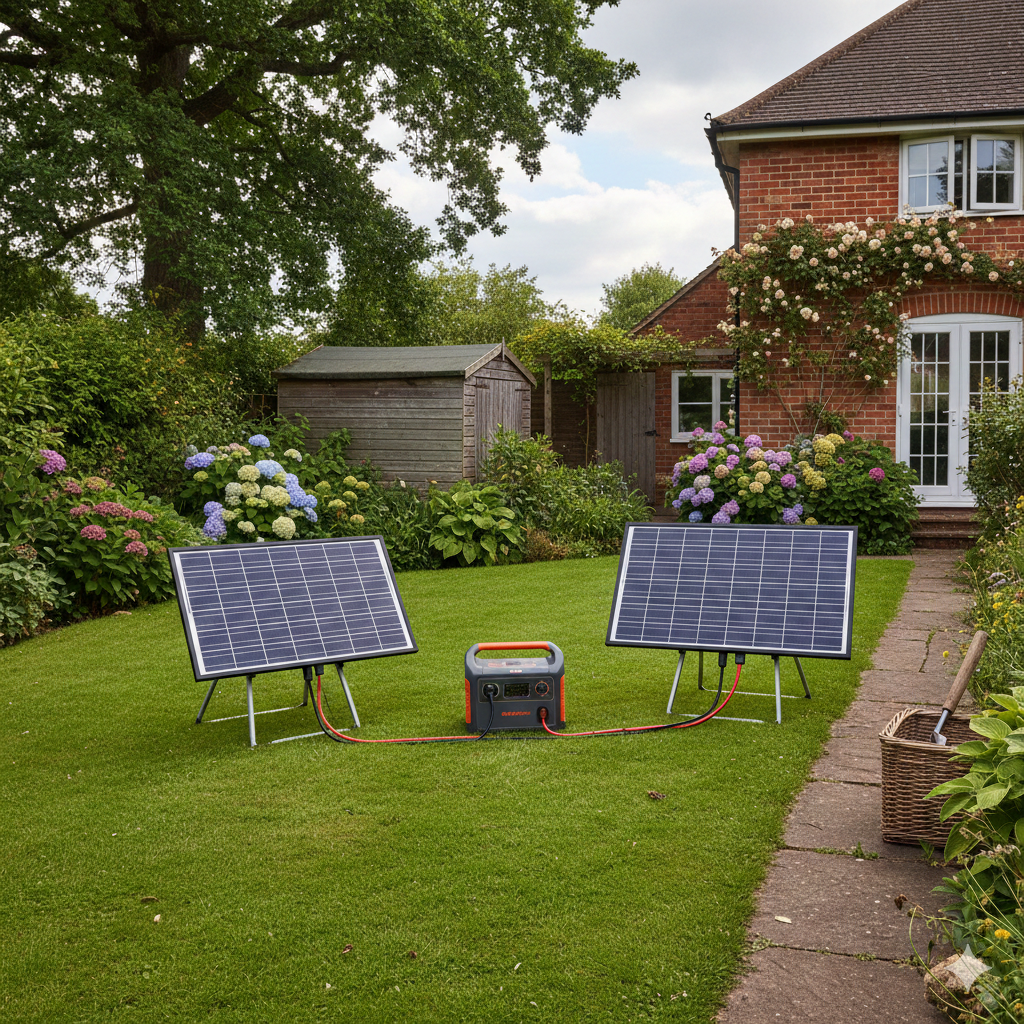
Home solar generators are becoming an increasingly popular way for UK households to add simple, flexible backup power — without the noise, fumes, or complexity of traditional petrol generators.
They’re often misunderstood, though. Some people expect them to behave like rooftop solar systems. Others assume they’ll power an entire house indefinitely. In reality, home solar generators sit somewhere in between — and when used correctly, they can be incredibly useful.
This complete guide to home solar generators explains what they are, how they’re used in real UK homes, what they can (and can’t) power, and when they genuinely make sense.
If you’re exploring practical ways to become more self-reliant at home, our Self-Sufficiency UK – Complete Resource Hub brings together related guides on backup power, renewable energy, and resilient living.
Table of Contents
🔌 What Is a Home Solar Generator?
Despite the name, a home solar generator doesn’t generate electricity on its own.
It’s best thought of as a portable battery system that stores electricity and then delivers it safely to household devices when you need it. The “solar” part simply refers to one of the ways it can be charged.
Most home solar generators combine:
- a rechargeable battery
- an inverter (to power normal household plugs)
- charging electronics
- safety systems
Unlike petrol generators, they:
- run silently
- can be used indoors
- require no fuel storage
- need almost no maintenance
This makes them particularly appealing for UK homes where noise, fumes, and storage space are real concerns.
🔋 What’s Inside a Home Solar Generator?
Understanding what’s inside a home solar generator helps set realistic expectations.
Battery
This is the energy storage part. Most modern home solar generators now use LiFePO₄ (lithium iron phosphate) batteries, which are:
- safer
- longer-lasting
- better suited to frequent use
Battery capacity is measured in watt-hours (Wh).
Inverter ⚡
The inverter converts stored DC battery power into AC electricity — the same type used by household appliances.
This is what determines what you can actually run, regardless of battery size.
Charge Controller
This manages power coming in from solar panels or the mains, protecting the battery from overcharging and inefficiency.
Ports & Outputs
Most units include:
- standard UK plug sockets
- USB ports
- 12V DC outputs
The mix matters more than many people realise.
⚠️ Solar Generator Safety
Solar generators are generally much safer than petrol generators because they produce no fumes and can be used indoors. However, they still contain lithium batteries and electrical components, so it’s important to understand a few basic safety principles.
For example, most portable power stations are not waterproof, should not be overloaded with high-wattage appliances, and need sensible storage during freezing winter conditions.
For a full breakdown of safe use, battery risks, rain exposure, and indoor operation, see our guide to solar generator safety.
☀️ How Home Solar Generators Are Charged
Home solar generators can usually be charged in three main ways:
1. Mains Electricity
This is the fastest and most reliable method in the UK. Many people keep their unit fully charged at home, ready for use during a power cut.
2. Solar Panels
Solar charging is slower and highly weather-dependent — especially in the UK.
A key point many beginners miss:
A “200W” solar panel rarely produces 200W in real conditions.
Cloud cover, low winter sun, panel angle, and short daylight hours all matter.
3. Vehicle Charging 🚐
Some home solar generators can charge from a car socket, though this is usually slow and best seen as a top-up option.
⏱️ Typical Charging Times for Home Solar Generators (UK)
Charging time is one of the most misunderstood aspects of home solar generators, particularly in the UK where sunlight levels vary significantly throughout the year.
Rather than exact promises, it’s more useful to think in realistic ranges.
Charging From the Mains 🔌
Mains charging is by far the fastest and most reliable method.
As a rough guide:
- 500Wh unit: around 1–2 hours
- 1,000Wh (1kWh) unit: around 1.5–3 hours
- 2,000Wh (2kWh) unit: around 2–5 hours
Faster charging models exist, but higher speeds can increase fan noise and heat. Many users choose slower overnight charging for convenience.
Charging With Solar Panels ☀️
Solar charging times depend on:
- panel wattage
- time of year
- cloud cover
- panel angle and placement
A common mistake is assuming a solar panel’s rated output reflects real-world performance.
In the UK:
- A 200W panel often produces 100–140W in good summer conditions
- In winter, output may fall below 50W for much of the day
Approximate solar charging times in good summer conditions:
- 500Wh battery + 200W panel: 4–6 hours
- 1,000Wh battery + 400W panels: 5–8 hours
- 2,000Wh battery + 600W panels: 6–10+ hours
In winter, charging may take multiple days, making solar better suited for topping up rather than full recharging.
As a general rule of thumb in the UK, solar panels often produce only around 10–20% of their summer output during December and January. If a setup generates around 500Wh on a good summer day, it may produce closer to 50–100Wh on a grey winter day.
This is why many UK users treat solar charging as a useful supplement rather than a guaranteed primary charging method in winter.
Charging From a Vehicle 🚗
Vehicle charging is usually slow and best used as a supplementary option.
Typical car socket charging may take:
- 8–12 hours for smaller units
- Much longer for larger home solar generators
This method is most useful while driving rather than when parked.
Why Charging Times Vary So Much
Two households with identical solar generators can see very different results due to:
- shading
- roof or garden space
- orientation toward the sun
- regional weather patterns
This variability is why home solar generators should be viewed as energy storage systems first, with solar charging as an added benefit rather than a guarantee.
A Realistic Way to Think About Charging 🧠
Most UK users:
- keep their unit charged from the mains
- use solar opportunistically when conditions allow
- rely on stored energy during outages
Seen this way, charging times become far less frustrating — and expectations stay realistic.
⚡ How Much Power Do Home Solar Generators Provide?
Two numbers matter:
Battery Capacity (Wh)
This determines how long you can run devices.
Inverter Power (W)
This determines what you can run at all.
A large battery with a weak inverter may still struggle with everyday appliances like kettles or microwaves.
These numbers also influence solar generator running costs, since larger batteries and higher inverter outputs affect how often a system needs to be recharged. See our guide to solar generator running costs in the UK for a breakdown of real-world electricity costs.
If you’re wondering what these numbers mean in practice, our guide to what a solar generator can power shows real-world examples of appliances these systems can run.
This is why comparisons matter — something explored in guides like EcoFlow Delta 2 vs Delta 3 Solar Generators, where inverter capability plays a major role.
🏠 What You Can (and Can’t) Run at Home
Home solar generators are excellent for:
- phones & tablets
- laptops and home office equipment
- broadband routers 📶
- TVs
- lighting
- fridges (short-term or intermittent)
- medical devices
They are not ideal for:
- electric heaters
- ovens
- electric showers
- whole-house supply
This doesn’t make them limited — it just means they’re designed for resilience, not replacement.
One factor that often catches people out is surge (or peak) power. Some appliances briefly draw much more power when they start than they do while running. For example, a fridge may use around 100–150W once running, but need several times that for a split second when the compressor starts.
When choosing a home solar generator, it’s important to check both the continuous output and the peak or surge rating, especially if you plan to run fridges, pumps, or power tools.
🔄 Home Solar Generators vs Other Backup Options
It helps to compare them with alternatives:
Petrol / Diesel Generators
Powerful, but:
- noisy
- unsuitable indoors
- require fuel storage
- higher maintenance
UPS Systems
A UPS (uninterruptible power supply) is a small battery-backed device designed to keep equipment running for a short time during a power cut.
Great for short outages and computers, but:
- limited capacity
- not flexible
- usually fixed in place
Power Banks
Portable, but:
- too small for meaningful home use
A home solar generator sits in the middle — flexible, quiet, and usable across many scenarios. This balance is explored further in Best Type of Backup Generator for Home Use.
Some home solar generators also support pass-through charging, sometimes described as EPS (Emergency Power Supply) mode. This allows the unit to remain plugged into the mains with devices such as a fridge or router plugged into the generator. If the grid power fails, the generator can take over automatically with minimal interruption.
Not all models support this feature, so it’s worth checking specifications if semi-permanent backup is important to you.
UK-Specific Considerations
Home solar generators make sense in the UK for reasons beyond sunshine:
- increasing grid instability
- rural power cuts
- storms and flooding
- home working reliance
- space and noise restrictions
Solar input should be seen as a bonus, not a guarantee — especially in winter.
Some UK users also explore hybrid setups, combining wind and solar charging, as discussed in How to Use a Wind Turbine With a Solar Generator.
In terms of running costs, charging a home solar generator from the mains is relatively inexpensive. As a rough guide, fully charging a 1kWh (1000Wh) battery typically costs around 25–30p based on current UK average electricity prices.
Compared to petrol generators, this makes home solar generators cheap to keep topped up and ready for occasional use.
❌ Common Beginner Mistakes
A few patterns crop up repeatedly:
- buying capacity without enough inverter power
- expecting winter solar charging to be fast
- assuming one unit powers everything
- focusing only on headline wattage
- underestimating charging time
Avoiding these mistakes saves money and frustration.
✅ When a Home Solar Generator Makes Sense
Home solar generators are a good fit if you want:
- quiet backup during power cuts
- safe indoor operation
- portable emergency power
- flexible energy storage
- low maintenance
They’re not about off-grid living — they’re about preparedness and resilience.
If you’re comparing models or capacities, guides like Best Solar Generators UK go into those differences in more detail.
Final Thoughts 🌱
Home solar generators aren’t magic boxes — but used realistically, they’re one of the most practical backup power options available to UK households today.
Understanding what they do well (and where they don’t) is the key to choosing wisely.
For broader UK guidance on home energy use and efficiency, organisations such as the Energy Saving Trust provide independent advice on solar power, battery storage, and realistic household expectations.
📎 Related Articles
❓ Frequently Asked Questions About Home Solar Generators
Are home solar generators worth it in the UK?
Home solar generators can be worthwhile in the UK when they’re used for backup power, resilience, or off-grid situations, rather than as a replacement for mains electricity. They’re particularly useful during power cuts, for home working, or in sheds, caravans, and gardens where running extension leads isn’t practical.
Can a home solar generator power a whole house?
No. Most home solar generators are designed to run essential devices, not an entire home. They work best for items like routers, lighting, phones, laptops, fridges, and medical equipment. High-demand appliances such as electric showers, ovens, or heating systems usually exceed their capabilities.
Do home solar generators work in winter?
Yes, but solar charging is much less effective in winter due to shorter daylight hours and lower sun angles. Many UK users rely on mains charging during winter months and use solar panels mainly as a supplementary or opportunistic charging method.
How long do home solar generator batteries last?
Most modern home solar generators use lithium batteries rated for thousands of charge cycles, which often translates to many years of typical home use. Lifespan depends on how often the unit is cycled, how deeply it’s discharged, and how it’s stored between uses.
Are home solar generators safe to use indoors?
Yes. Home solar generators are safe for indoor use because they produce no fumes, combustion gases, or carbon monoxide. This makes them suitable for living rooms, bedrooms, and home offices — unlike petrol or diesel generators.
How noisy are home solar generators?
Most home solar generators are very quiet, producing little more than a soft fan noise when charging or under load. This makes them well suited to overnight use, flats, and noise-sensitive environments.
Do I need solar panels to use a home solar generator?
No. Solar panels are optional. Many people use home solar generators primarily as portable battery systems, charging them from the mains and only using solar panels when conditions allow.
Can I leave a home solar generator plugged in all the time?
In most cases, yes. Quality home solar generators include built-in battery management systems that prevent overcharging. However, it’s still sensible to follow the manufacturer’s guidance and avoid storing the unit at full charge for long periods if it’s rarely used.
Are home solar generators better than UPS systems?
They serve different purposes. UPS systems are ideal for short, automatic backup for computers and network equipment, while home solar generators provide longer runtime and greater flexibility for powering multiple household devices during extended outages.
What size home solar generator do most UK households need?
For most UK homes, a unit in the 500Wh–2,000Wh range offers the best balance between portability, runtime, and cost. The right size depends on what you want to power and how long you need it to run.
Can home solar generators be combined with other renewable sources?
Yes. Some users combine home solar generators with small wind turbines or hybrid setups to improve charging consistency, particularly in areas where wind is more reliable than sunlight.