
Running grow lights on a consistent schedule matters more than most beginners realise. Plants don’t care if you forget to turn a light off — but your electricity bill certainly will. The same applies to home security, where predictable lighting patterns can work against you when you’re away.
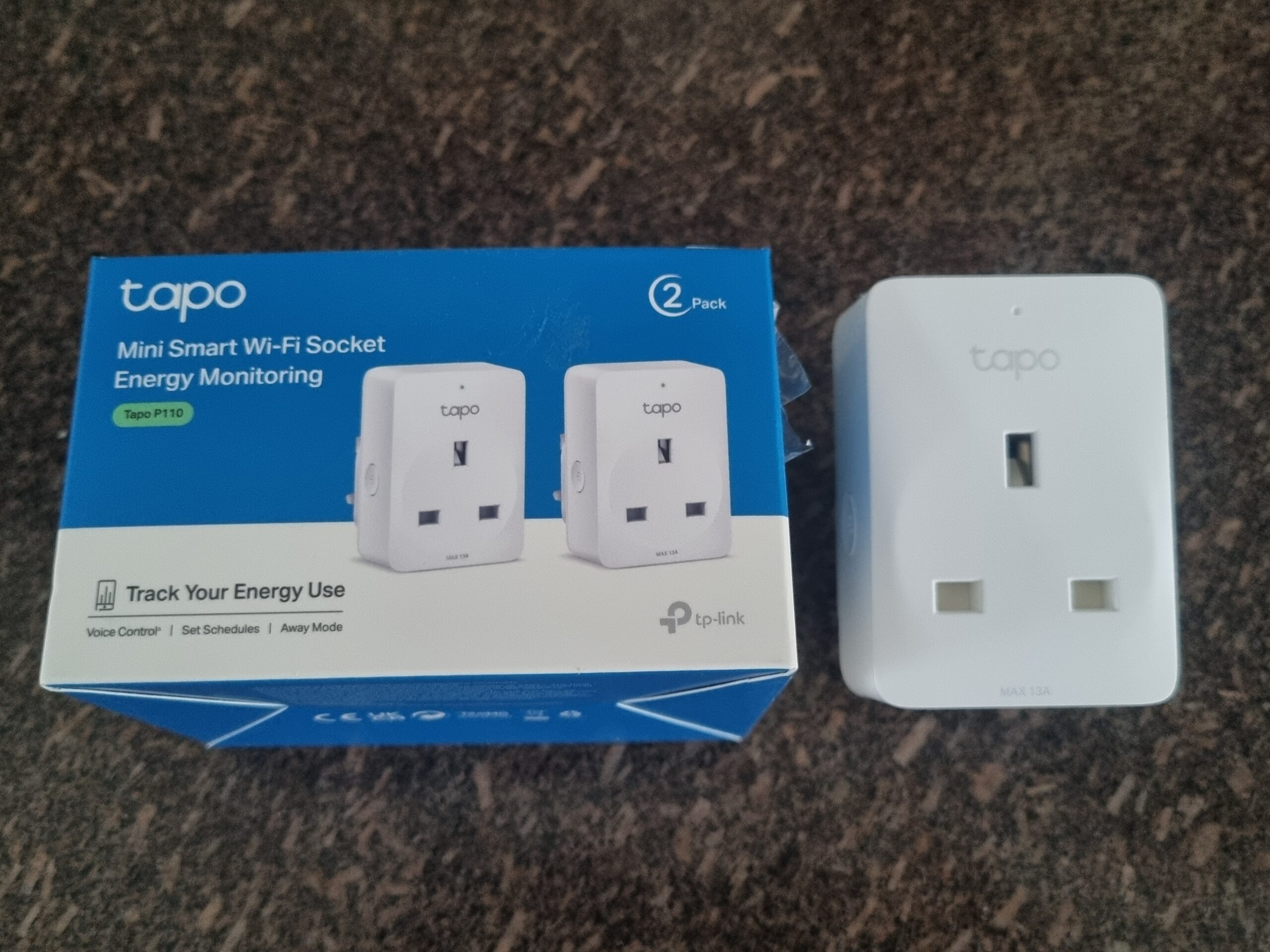
In this Tapo P110 smart plug review, I’m looking at how it performs for indoor growing and everyday home security, with a particular focus on energy monitoring and reliable automation. I’ve been using it to control one of my grow lights and track real-world running costs, rather than relying on manufacturer claims.
It’s a small upgrade from a basic timer plug, but in practice it turns a boring bit of plastic into a genuinely useful, money-saving tool — especially in a UK home where electricity costs matter.
Affiliate disclosure: This article contains affiliate links. If you buy through them, HomeGrower may earn a small commission at no extra cost to you. This helps support the site and keeps the content free.

Setup & First Impressions
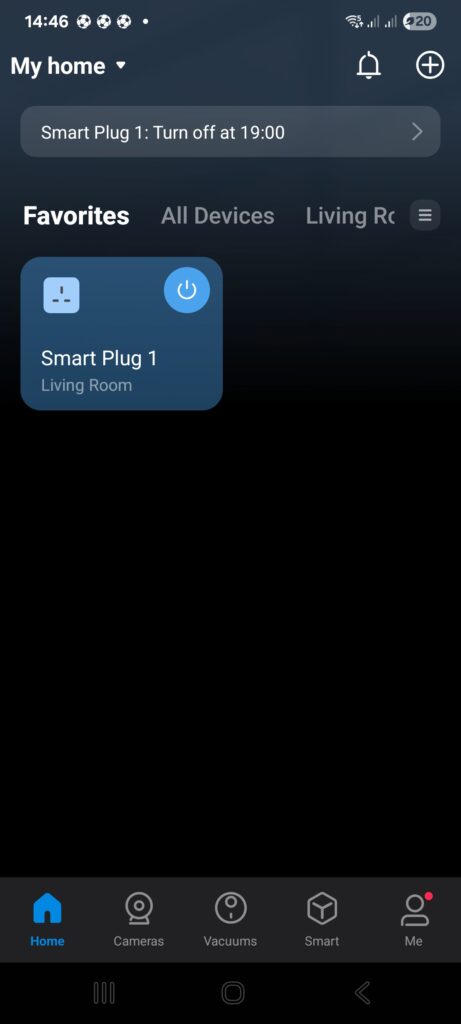
Setup was genuinely easy. I didn’t need to read the instructions at all.
You plug it in, open the Tapo app, connect it to Wi-Fi, and it’s ready to use in a couple of minutes. There’s no hub required.
One small thing did catch me out at first, though — and it’s worth knowing.
When setting schedules, you set the start time and press save, then set the end time and press save again. I’m used to central heating controls where you set both times and then hit save once, so I initially assumed the app worked the same way.
For the first couple of days, that meant my light stayed on longer than intended. Once I realised each time needs saving separately, it was obvious — but it’s a subtle difference that’s easy to miss.
Using It With a Grow Light
I’m currently using the plug with a SANSI 10W LED grow bulb in a small indoor setup. It’s a low-power bulb, which makes it ideal for testing both scheduling accuracy and real-world electricity use.
The plug has been completely reliable at switching the light on and off at the scheduled times. Once set, it just quietly does its job in the background.
This kind of setup works particularly well for:
- seedlings and young plants
- herbs on shelves or windowsills
- small indoor grow areas
- anyone who wants consistency without manual switching
I’ll be publishing a full review of the SANSI bulb separately, but as a simple, energy-efficient pairing, the combination works very well. As a starter kit, it’s hard to beat for cost versus control.
Energy Monitoring – Tapo P110 Smart Plug Review
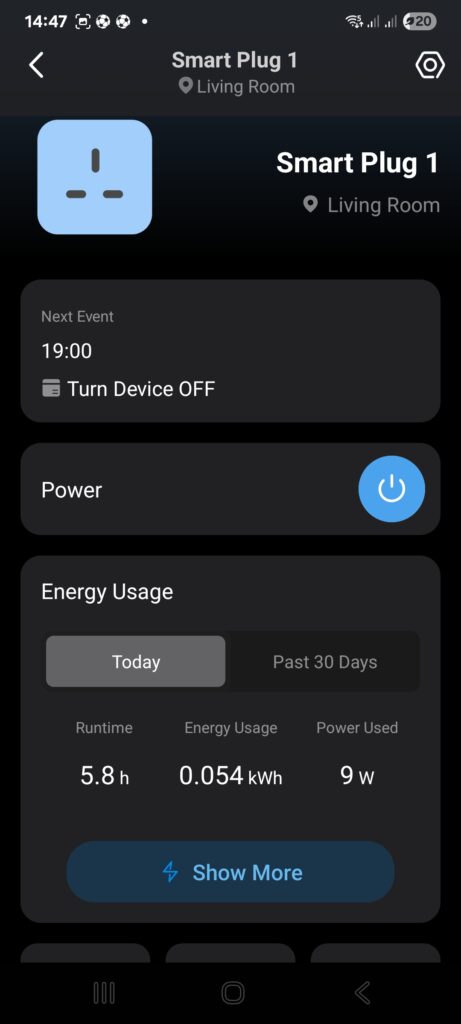
My energy usage recorded by the Tapo app while running a SANSI 10W LED grow light.
This is where the Tapo P110 really earns its place over a cheap timer plug.
The app shows:
- total runtime
- energy used (kWh)
- live power draw (watts)
In my case, the grow light is drawing around 9 watts, which lines up with what you’d expect from a bulb of this size. That’s far more useful than relying on marketing claims or rough estimates.
A quick note on “vampire power”
Yes — the plug itself uses a tiny amount of power just to stay connected to Wi-Fi (typically well under 1 watt). In practice, the electricity saved by accurately timing your lights far outweighs the plug’s own tiny appetite. For anyone tracking costs, it’s a non-issue.
App & Day-to-Day Use
The app is clean and straightforward once you understand how schedules are saved. You can:
- turn the plug on or off manually
- set repeating schedules
- check daily or 30-day energy usage
- see live power draw
One thing I was pleasantly surprised by is that the plug has local memory. Once a schedule is synced, it’s stored on the device itself.
That means if your Wi-Fi drops out — or your router decides to have a bad day — your grow light schedule keeps running. For indoor growing, that peace of mind matters more than you’d think.
The plug also works with Amazon Alexa and Google Assistant, so you can switch devices on or off with voice commands if you already use smart speakers at home.
🔒 Bonus Use: Home Security (Away Mode)
One unexpected benefit of using a smart plug like this is home security.
Unlike basic timer plugs that switch lights on and off at the same time every day, the Tapo app includes an Away Mode. When enabled, it automatically randomises on/off times within a set window, making lighting patterns look far more natural.
Instead of remembering to manually tweak schedules while you’re away, you just toggle Away Mode and forget about it. It’s the difference between a predictable timer and a convincing “someone’s home” vibe — with no extra effort.
P110 vs P110M (Matter Version)
There is also a P110M version available, which supports Matter, the newer smart-home standard.
If you use Apple HomeKit or want your devices to talk seamlessly across lots of different smart-home platforms, the P110M makes sense. For most people — especially those just running grow lights, fans, or heaters — the standard P110 is better value and does everything you actually need.
Limitations to Be Aware Of
A few honest limitations worth noting:
- On/off control only (no sunrise or sunset ramping)
- Requires 2.4 GHz Wi-Fi
- Not suitable for very high-wattage heaters
- It’s rated at 13A (up to 2990W), which is more than enough for grow lights, fans, and small heaters, but it’s not designed for EV charging or high-load motors.
For grow lights and small indoor equipment, none of these are deal-breakers.
Verdict: Is It Worth Using for Grow Lights?
For indoor growing, the Tapo P110 is a clear upgrade from a basic timer plug, and after using it day to day, I’ve been extremely pleased with how reliable and predictable it’s been.
You get:
- reliable automation
- accurate energy monitoring
- protection against Wi-Fi dropouts
- better security options than fixed timers
If you care about electricity costs — which most UK growers now do — this is a simple, affordable way to bring a bit of intelligence into your setup.
It’s one of those tools that quietly removes anxiety rather than adding complexity — and that’s exactly what indoor growing should be about.
If you’re new to indoor growing, our Grow Lights Explained: A Complete Guide for UK Home Growers covers light types, placement, timing, and how to choose the right setup for your space.