
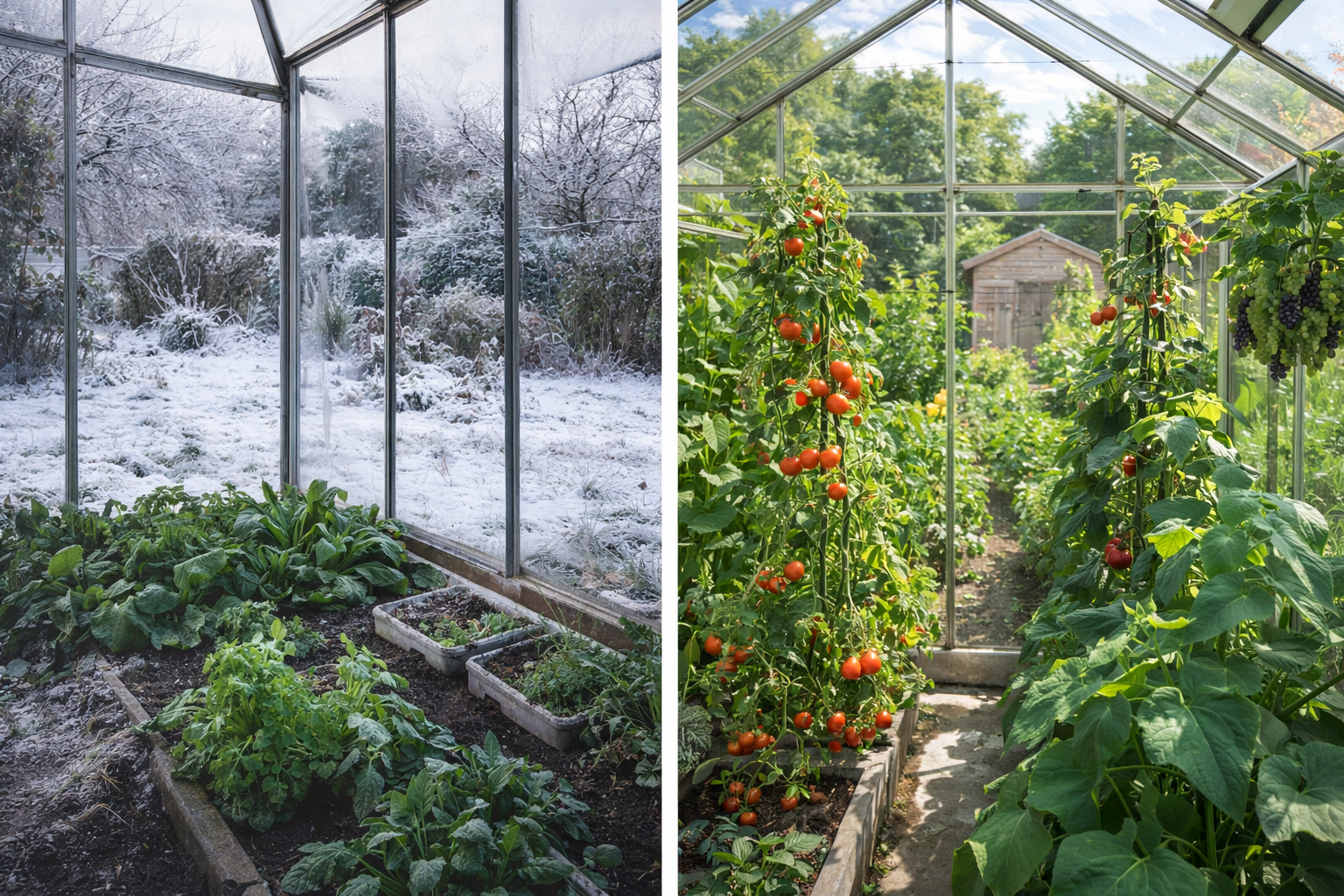
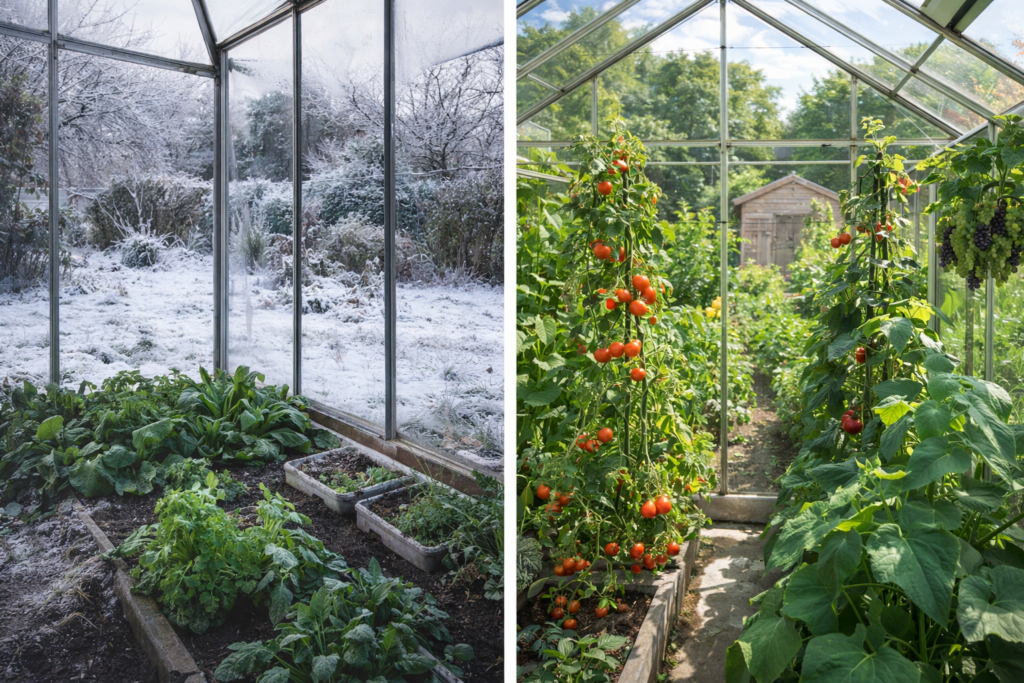
There is a particular kind of magic to stepping into a greenhouse in a UK winter, especially when following a greenhouse growing calendar.
While the rest of the garden is cold, wet, and lifeless, inside it’s calmer. The air is still. The soil smells damp rather than frozen. Even in January, it feels like something could grow.
That’s what a greenhouse really gives you in the UK: time.
Not just protection from frost, but the ability to stretch the growing season at both ends — even with a small, unheated setup.
This guide serves as your greenhouse growing calendar, showing what you can realistically grow in a UK greenhouse throughout the year, broken down by season, with practical notes on unheated vs heated greenhouses and where different greenhouse types fit best.
If you’d like a broader overview, see our HomeGrower guide to greenhouses and polytunnels . It explains how the different greenhouse and polytunnel options compare, how they’re typically used in UK gardens, and links out to our more detailed guides so you can explore specific topics in more depth when you’re ready.
❄️ Winter (December – February)
Survival, protection, and quiet preparation
Winter greenhouse growing in the UK is about protecting what you have, not forcing growth. This is where even a basic structure — such as a small greenhouse — proves its value by keeping plants dry, frost-free, and alive.
December – Rest & Maintenance
What’s realistic
- Harvesting winter salads
- Lamb’s lettuce, spinach, pak choi (slowly)
- Microgreens with some heat
Growth is minimal without heating, but December is ideal for:
- cleaning glazing
- checking seals
- planning next year’s layout
If you want to grow more than just hardy greens at this time of year, this is where learning how to heat a greenhouse safely and efficiently starts to matter.
January – Protection Over Progress
What you can maintain
- Established winter salads
- Spinach
- Parsley and chives (very slow)
January kills plants through cold, wet compost, not frost. Water sparingly and focus on insulation.
Grower insight:
In January, more greenhouse plants die from damp feet than from the cold. If compost stays soggy for days, roots simply give up. Only water on a bright morning so leaves and soil have time to dry before nightfall. If you’re gardening in a small or lean-to greenhouse, winter highlights just how effective sheltered, wall-backed structures can be for temperature stability.
February – The First Signs of Life
Light levels slowly improve, and optimism creeps in.
What you can sow
- Broad beans (in pots)
- Onions from seed
- Early lettuce
- Spinach
- Peas (to transplant later)
With even a small amount of heat:
- Chillies
- Peppers
- Aubergines
This is where mini greenhouses really shine — they warm quickly on bright days and are ideal for early sowing without heating a large space.
🌱 Spring (March – May)
The real growing season begins
Ventilation, frost awareness, and choosing the right type of greenhouse matter more now than at any other time of year.
March – The UK “Trap Month”
March looks like spring. It often isn’t.
What to sow
- Tomatoes
- Cucumbers
- Courgettes
- Lettuce and salad mixes
- Kale
- Basil (with warmth)
Warm afternoons followed by freezing nights are common. Keep fleece nearby and cover plants before sunset.
Grower insight:
March is when many growers realise why small and medium greenhouses are so popular — they’re large enough for trays and pots, but still easy to protect overnight.
April – Growth Accelerates
Days are longer, and plants respond quickly.
What thrives
- Tomatoes
- Cucumbers
- Peppers
- Aubergines
- Strawberries (pots or grow bags)
- Salad crops
Ventilation becomes critical now. On sunny days, greenhouses can overheat even when nights are cold.
If you’re deciding between structures, April makes the differences clearer — something explored in more depth when comparing greenhouses vs polytunnels for spring growing.
May – Main Season Starts
This is where greenhouses earn their keep.
What thrives
- Tomatoes
- Cucumbers
- Chillies and peppers
- Melons
- Basil and tender herbs
Watering and feeding routines now matter more than equipment. Consistency beats intensity.
☀️ Summer (June – August)
Harvests, heat, and airflow
Summer greenhouse growing is less about warmth and more about control.
June – Fruiting & Feeding
What to grow
- Fruiting tomatoes
- Cucumbers
- Peppers and chillies
- Aubergines
- Grapes
Good airflow prevents disease. Don’t let lush growth block vents or doors.
Grower insight:
Larger greenhouses and polytunnels handle airflow better in summer, especially if you’re growing multiple fruiting crops at once.
July – Heat Management
Greenhouses can exceed 40°C surprisingly early in the day.
Focus on
- Harvesting
- Late sowings of lettuce
- Herbs
- Dwarf French beans
Pro tip
If you don’t have automatic vents, try damping down — literally splashing a few watering cans of water over the floor paths. As it evaporates, it creates a cooling mist that helps stop tomatoes and cucumbers wilting in the midday sun.
August – Transition Month
Still productive, but nights begin to cool.
What to sow
- Spinach
- Rocket
- Winter lettuce
- Pak choi
- Spring cabbage (for overwintering)
This is also a good moment to assess whether a polytunnel would suit you better for extended autumn and winter cropping.
🍂 Autumn (September – November)
Tidying, protection, and winding down
Autumn greenhouse success depends on how tidy and ventilated things are now.
September – Cooling Down
What still works
- Salad leaves
- Spinach
- Oriental greens
- Herbs (slowly)
Clear out tired summer plants early. Space and airflow reduce disease later.
October – Insulate & Tidy
What still grows
- Winter lettuce
- Spinach
- Lamb’s lettuce
- Spring onions
Grey mould loves damp UK autumns. Removing dead leaves now saves headaches in November.
If you plan to keep growing, October is the month to revisit greenhouse heating options — even minimal frost protection makes a big difference.
November – Survival Mode
Growth slows dramatically.
Focus on
- Harvesting
- Insulation
- Cleaning glazing to maximise light
This is the final checkpoint before winter sets in fully.
Unheated vs Heated Greenhouse – A Simple UK Decision Guide
Most UK growers start with an unheated greenhouse — and that’s absolutely fine.
If you find yourself frustrated that:
- chillies can’t be sown until April
- winter salads stall completely
that’s usually when learning how to heat a greenhouse becomes worthwhile, even if it’s just frost protection.
📅 Want Monthly Greenhouse Reminders Instead of Guessing?
If you’d like gentle prompts through the year, you can download the UK Greenhouse Growing Calendar and add it to Google Calendar, Apple Calendar, or Outlook.
It includes simple reminders like:
- “Start early sowing under cover”
- “Ventilate on warm days”
- “Begin autumn sowing”
📅 Download the UK Greenhouse Growing Calendar
Add gentle, month-by-month greenhouse reminders to Google Calendar, Apple Calendar, or Outlook.
The calendar includes simple prompts like:
- Start early sowing under cover
- Ventilate on warm days
- Begin autumn sowing
One-click import • Works on Google, Apple, and Outlook calendars
⚠️ Calendar Disclaimer
This calendar is designed as a prompt, not a replacement for this guide.
UK weather, greenhouse size, and location vary.
Always check the full seasonal notes above before sowing or harvesting.
Final Thoughts
A greenhouse doesn’t just change what you grow — it changes when you grow.
Whether you’re using a compact mini greenhouse, a lean-to, or a full-size structure, understanding the seasonal rhythm is what turns a greenhouse from a shelter into a system.
For more guidance on greenhouses, we recommend this post from the RHS on Growing in Greenhouses.
🔗 Related Greenhouse Guides
- Greenhouses and Polytunnels UK – Complete Guide
A full overview of greenhouse and polytunnel options, including comparisons, setup advice, and buying guides for UK gardens. - How to Use a Greenhouse
Practical guidance on ventilation, watering, temperature control, and day-to-day greenhouse use throughout the year. - What Is the Best Type of Greenhouse?
A clear breakdown of greenhouse styles, materials, and designs to help you choose the right option for your garden.