Food preservation is about extending the life of homegrown and seasonal food — whether you’re dealing with a surplus harvest, limited storage space, or simply want to waste less.
Long before modern refrigeration, households relied on practical, low-tech methods to keep food edible for weeks, months, or even years. Many of those techniques are still highly relevant today, especially for gardeners, growers, and anyone interested in resilience and self-sufficiency.
This guide introduces the main food preservation methods used in UK homes, explaining what each method is best suited for and when it makes sense to use it. You don’t need specialist equipment or years of experience to get started — just an understanding of the options available.
Pickling – Preserving Food in Vinegar or Brine
Pickling is one of the most reliable and accessible preservation methods. Vinegar or salty brine creates an acidic environment that prevents harmful bacteria from growing, allowing food to keep for extended periods.
Pickling suits vegetables that benefit from a firm texture and sharp flavour.
Common foods: onions, cucumbers, beetroot, cabbage, boiled eggs
Typical storage life: several months to a year or more when sealed properly
Many pickled foods develop deeper flavour over time, often tasting better after months or even years.
Fermenting – Natural Preservation with Added Benefits
Fermentation preserves food by encouraging beneficial bacteria to convert natural sugars into acids. This process extends shelf life while also producing complex flavours and probiotic benefits.
Fermented foods have been used safely for centuries across many cultures.
Examples: sauerkraut, kimchi, sourdough, kombucha
How it preserves: acidity produced during fermentation inhibits spoilage
Typical storage life: several months when kept cool and dark
Clean containers, correct salt ratios, and keeping food submerged are essential for safe fermentation.
While sourdough bread itself is not a long-term storage method, maintaining a starter and baking regularly is a traditional fermentation skill that reduces reliance on commercial yeast and builds practical kitchen self-sufficiency. You can begin with our guide on How to Make a Sourdough Starter in 7 Days, then follow our simple method in How to Make Sourdough Bread at Home.
Milk kefir follows a similar principle, using live grains to ferment dairy into a tangy, probiotic-rich drink that continuously reproduces itself. If you’d like to try it, see our step-by-step guide on How to Make Milk Kefir at Home.
Drying and Dehydrating – Removing Moisture
Drying is one of the oldest preservation techniques. By removing moisture, it becomes difficult for bacteria and moulds to survive.
In the UK’s often damp climate, air-drying can be unreliable without good airflow or gentle heat. Many people find dehydrators, airing cupboards, or low oven settings more dependable than open-air drying.
Methods: air-drying herbs, dehydrating fruit, low-temperature ovens
Examples: apple rings, mushrooms, herbs, jerky
Typical storage life: up to a year when stored airtight
Proper storage after drying is essential, as dried foods can quickly spoil if they re-absorb moisture.
Bottling and Canning – Long-Term Storage in Jars
Bottling (often called canning in the UK) preserves food by heating it in sealed jars to destroy bacteria and create a vacuum seal. When done correctly, this allows food to be stored safely for long periods.
This method works best for cooked or processed foods.
Common foods: tomatoes, jams, chutneys, soups
How it preserves: heat processing and airtight sealing
Typical storage life: one to two years when stored correctly
Careful hygiene and correct processing times are essential for safety.
Storing in Sand or Soil – Traditional Root Storage
Root vegetables can often be stored for months by keeping them cool, dark, and slightly moist. Packing them in sand or soil prevents drying while protecting them from light.
This method works well in sheds, garages, or cellars that remain cool but frost-free.
Best suited to: carrots, beetroot, parsnips, turnips
Typical storage life: three to six months
In milder UK winters, this can be one of the simplest and lowest-effort preservation methods available.
Salting and Curing – Preserving Meat and Fish
Salt preserves food by drawing out moisture, making it difficult for bacteria to survive. Salting and curing have long been used to preserve meat and fish, often in combination with other methods.
Examples: bacon, salt cod, corned beef
How it preserves: moisture reduction and bacterial inhibition
Typical storage life: weeks to months, longer when combined with smoking
Precision and cleanliness are especially important when preserving protein.
Smoking – Preservation with Added Flavour
Smoking slows spoilage while adding distinctive flavour. Traditionally, it was used alongside salting or curing to extend shelf life through colder months.
Examples: smoked fish, ham, sausages
Typical storage life: several weeks, longer when salted first
Smoking alone usually provides short-term preservation unless combined with other methods.
Sugaring – Preserving with High Sugar Content
Sugar preserves food by binding water and preventing bacterial growth. This method is most commonly used for fruit.
Examples: jams, jellies, marmalades, candied fruit
Typical storage life: a year or more when jars are sealed
Correct sugar ratios and airtight sealing are essential for long-term storage.
Preserving in Oil or Fat – Creating an Airtight Barrier
Covering food completely in oil or fat restricts oxygen, slowing spoilage. This method is still used for certain foods, though care is required.
Examples: feta in oil, herb oils, duck confit
Typical storage life: weeks to months in cool, dark conditions
Some oil-based preserves require refrigeration once opened.
Cool Storage and Cellaring – Simple, Low-Effort Preservation
Sometimes preservation is as simple as choosing the right storage conditions. Many crops keep well when stored cool, dark, dry, and well ventilated.
Best suited to: potatoes, onions, garlic, squash, apples
Typical storage life: several months depending on the crop
Good airflow and separation help prevent rot from spreading.
Storing Apples for Winter
Apples are one of the best crops for cool storage, but results depend heavily on variety, airflow, and separation. Late-season apples bred for keeping can last for months when stored correctly in sheds, garages, or cellars.
We’ve put together a practical, real-world guide showing exactly how we store apples in a shed — including tray layout, ventilation, and variety choice — based on apples harvested in autumn that are still crisp months later, which is covered in our guide on How to Store Apples in a Shed (Ours Are Still Crunchy Months Later).
🛑 Safety First: Preserving Food Responsibly
Food preservation has been used safely for centuries, but it relies on clean equipment, correct methods, and good judgement.
Always:
- use clean, sterilised jars and utensils
- follow tested ratios for salt, sugar, or acidity
- store preserved food in cool, dark conditions
- discard anything that smells, looks, or tastes wrong
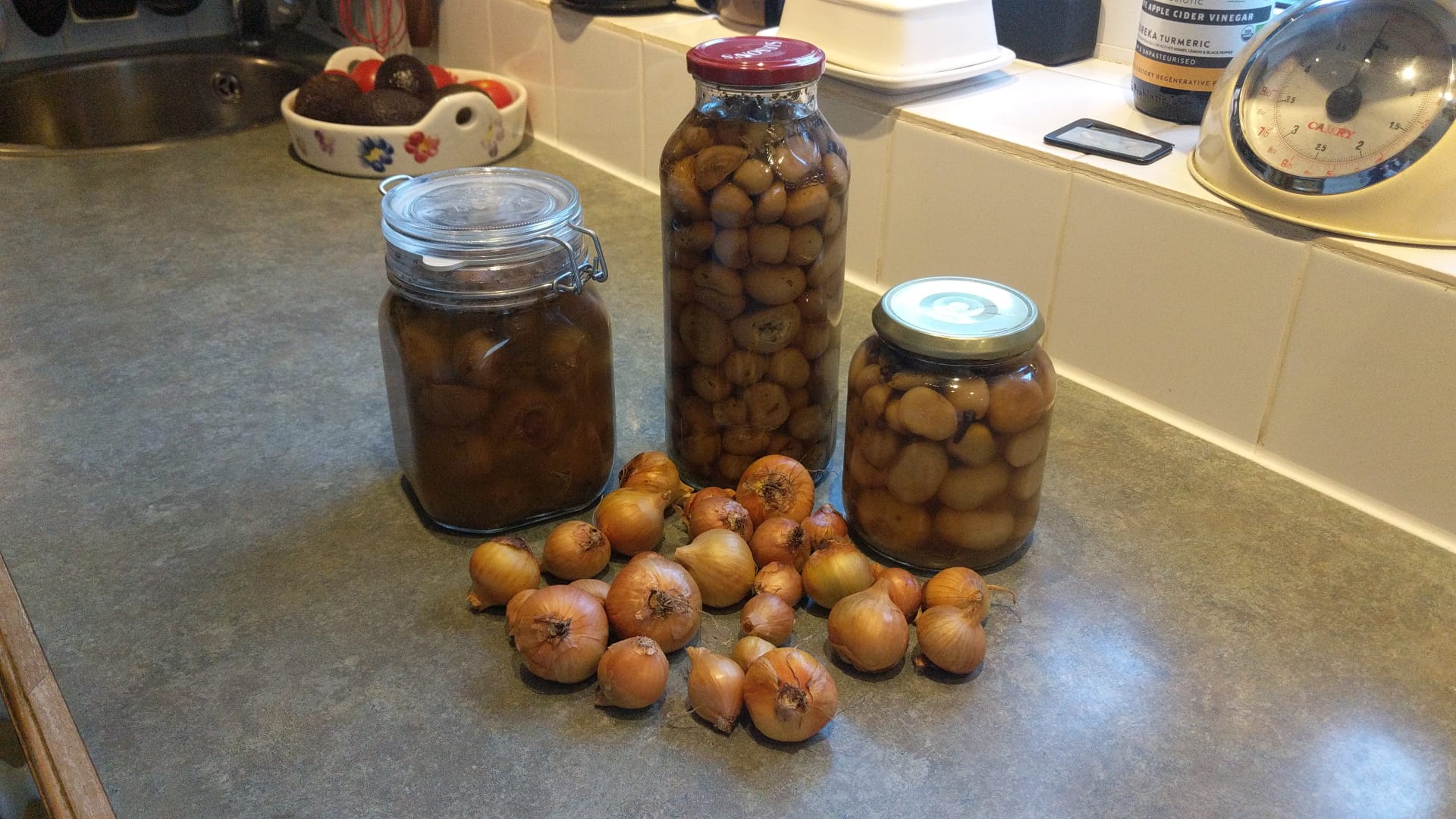
Personally, I’ve eaten pickled onions several years after making them with no issues — but shelf life depends heavily on acidity, preparation method, and storage conditions. Recommended storage times exist to account for variation between homes and recipes.
When in doubt, prioritise safety over saving food.
Final Thought
Food preservation doesn’t require mastering every method at once. Each technique suits different foods, spaces, and lifestyles.
Start with one or two methods that fit naturally into how you already grow and cook. Over time, these skills build confidence, reduce waste, and help you make better use of the food you produce.
This guide exists to give you a clear foundation — everything else builds from here.