
If you want to grow vegetables indoors in buckets, you don’t need a big garden. Most people think of windowsill herbs or salad leaves when they picture indoor food growing. That’s fine for flavour, but not for filling meals.
If you’re aiming for genuine self-sufficiency, you need calorie-dense crops like potatoes, beans, and root vegetables — even when space is limited.
Bucket growing is one of the simplest ways to do this indoors, especially in UK homes and flats. It fits neatly alongside other methods covered in our Complete Guide to Indoor Growing in the UK, where we explain the wider options for growing food indoors all year round.
The good news? With a few buckets, some compost, and decent light, you can grow these essential foods indoors — even in a small UK flat.
Why Grow Vegetables Indoors in Buckets?
- Space-saving: Ideal for balconies, spare rooms, or utility spaces.
- Self-reliance: Provides meaningful calories, not just garnish.
- Year-round harvests: No need to wait for summer.
- Practice for bigger projects: Buckets are a safe way to learn before scaling up to an allotment.
Which Vegetables Grow Well in Buckets?
Some vegetables are especially suited to confined containers. These are your best bets:
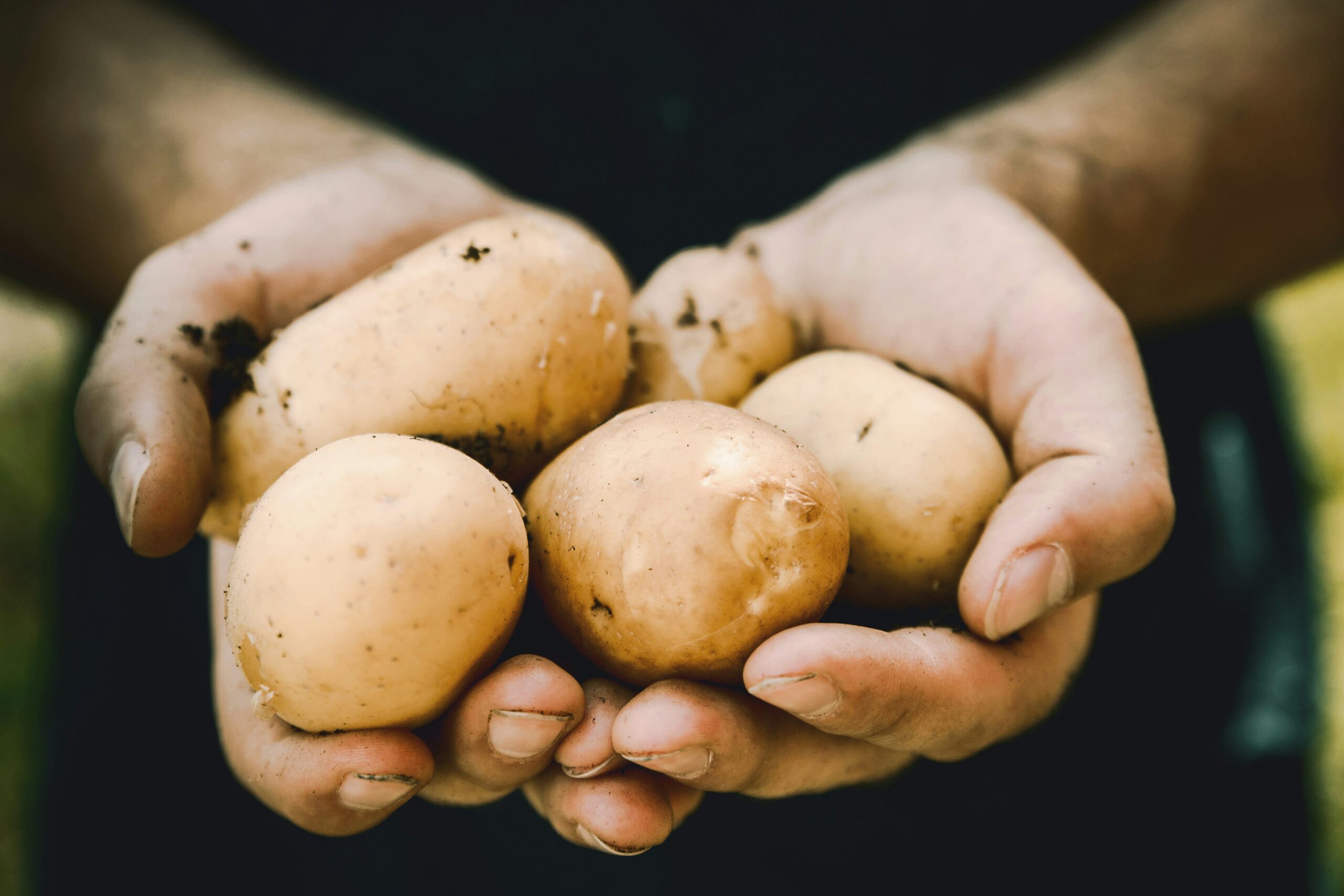
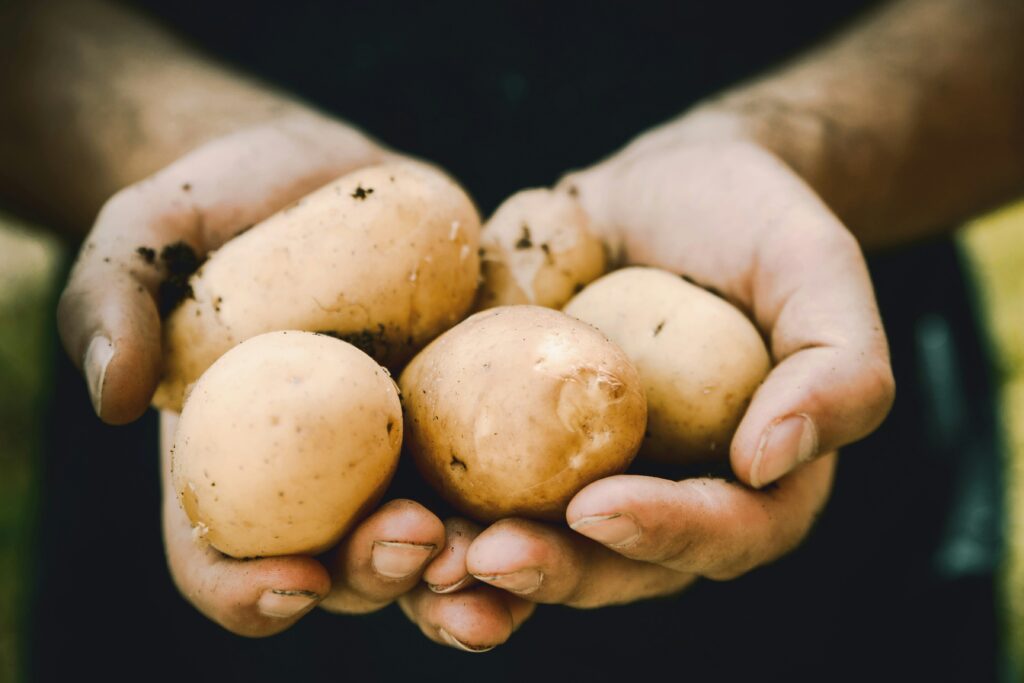
- Potatoes – the highest calorie return per bucket.
- Bush beans – compact, protein-rich, can be eaten fresh or dried.
- Onions and garlic – long shelf life, core ingredients in cooking.
- Root veg – carrots, beetroot, radishes for variety.
- Experiments – grains like barley or wheatgrass; not high-yield but fun for resilience practice.
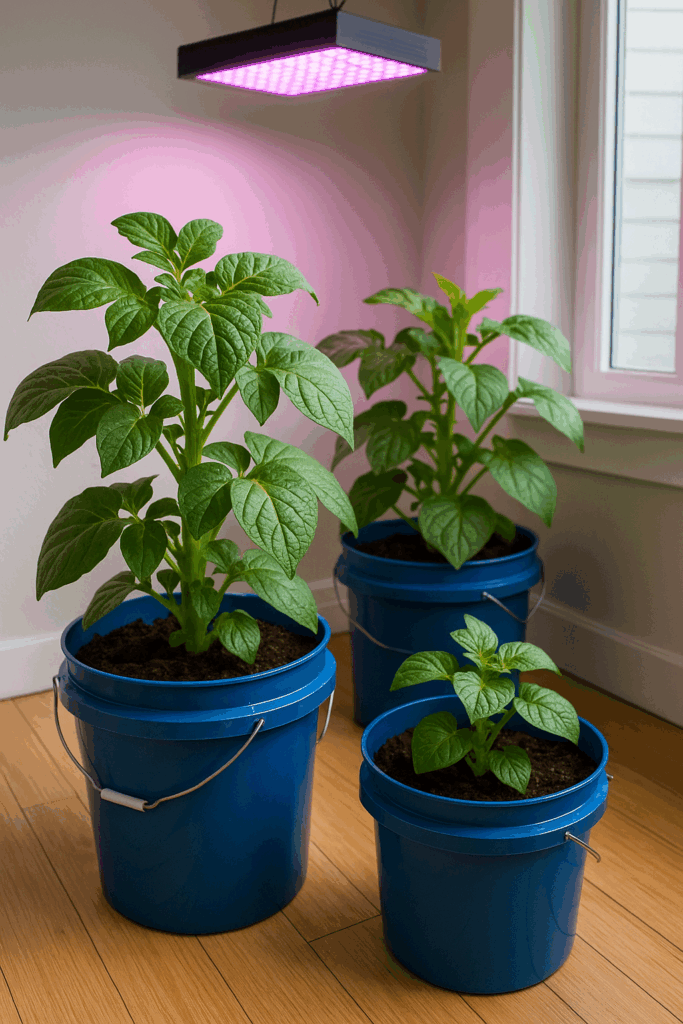
Young vegetable plants growing in buckets indoors, illustrating a simple container setup near a window.
How to Grow Potatoes Indoors in Buckets (Step by Step)
Potatoes are one of the easiest crops when you grow vegetables indoors in buckets, offering the highest calorie return.
- Prepare the bucket
- 10–15 litre container with drainage holes.
- Chit your potatoes
- Let them sprout in a bright, cool place before planting.
- Planting
- Add 10cm of compost, place 2–3 seed potatoes, cover with more compost.
- Hilling
- As plants grow, keep adding compost up the stem. This boosts yield.
- Care
- Light: 6–8 hours per day, grow lights if needed.
- Water: Moist but never waterlogged.
- Harvesting
- When leaves yellow and die back, tip the bucket out and collect your spuds.
Expected yield: 1–2kg per bucket.
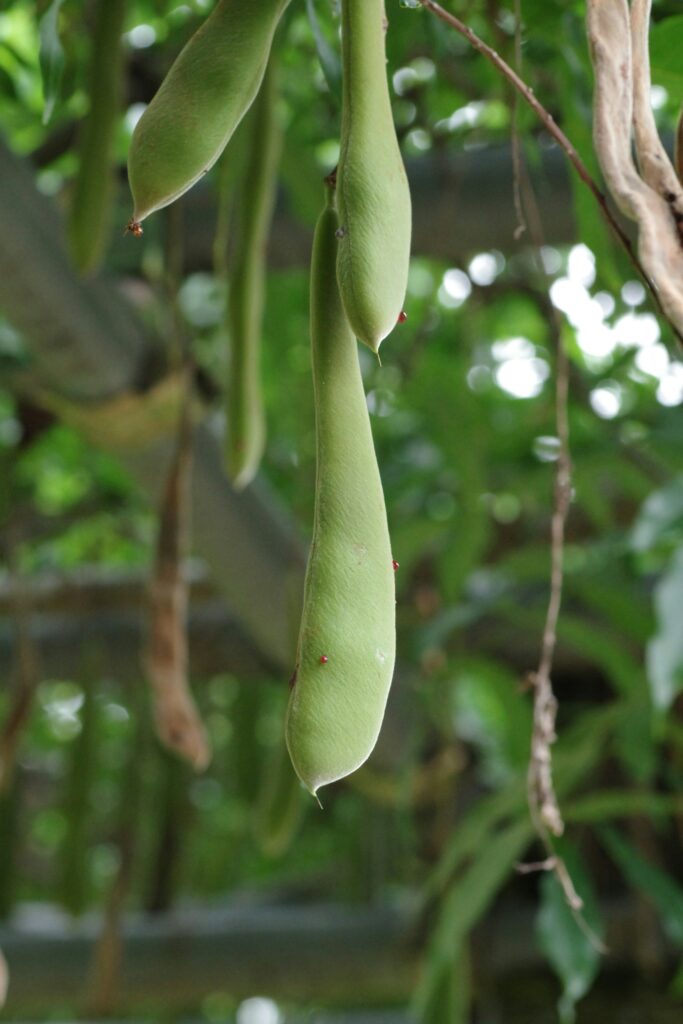
How to Grow Beans Indoors in Buckets
- Choose the right type
- Go for bush or dwarf beans. Climbing beans need too much space indoors.
- Prepare the bucket
- A 15-litre bucket with drainage holes works well.
- Planting
- Sow 4–5 beans evenly spaced in the bucket. Cover with 3–4cm of compost.
- Support
- Add short canes or a small frame. Even bush beans benefit from light support.
- Care
- Light: 8+ hours, or supplement with LEDs. Beans are sun-lovers.
- Water: Keep soil evenly moist; they don’t like drying out.
- Temperature: Aim for 18–24°C; beans sulk if it’s too cold.
- Harvesting
- Fresh pods: pick regularly to encourage more.
- For dried beans: leave pods to mature and dry fully before shelling.
Expected yield: Enough for regular fresh meals; a few hundred grams if dried.
For UK growers aiming to grow vegetables indoors in buckets, beans are a reliable source of protein.
How to Grow Onions and Garlic Indoors in Buckets
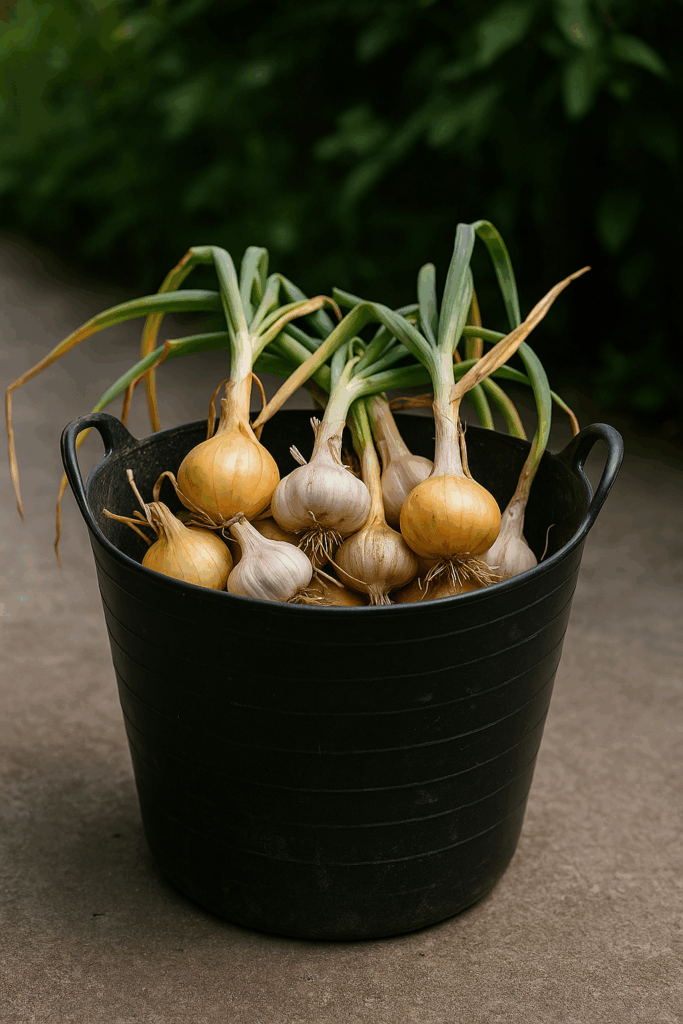
Onions and garlic don’t take up much room, making them perfect if you want to grow vegetables indoor in buckets for long term storage.
- Choose the right crop
- Onions: grow from sets (small immature bulbs).
- Garlic: grow from individual cloves.
- Prepare the bucket
- A shallow but wide container (20–25cm deep) with drainage is best.
- Planting
- Onions: plant sets 10cm apart, just below the soil surface.
- Garlic: plant cloves pointy-end up, 5–7cm deep, spaced 10cm apart.
- Care
- Light: 6–8 hours daily; onions and garlic can tolerate less intense light than beans.
- Water: Keep soil lightly moist; avoid waterlogging.
- Feeding: Occasional liquid feed helps bulb development.
- Harvesting
- Onions: when tops yellow and flop over, bulbs are ready.
- Garlic: harvest when half the leaves have turned brown.
- Storage
- Cure in a dry, airy space. Onions can store for months; garlic can last even longer if kept cool and dry.
Expected yield: A handful of bulbs per bucket — small, but highly valuable for flavour and storage.
How to Grow Carrots, Beetroot, and Radishes Indoors in Buckets
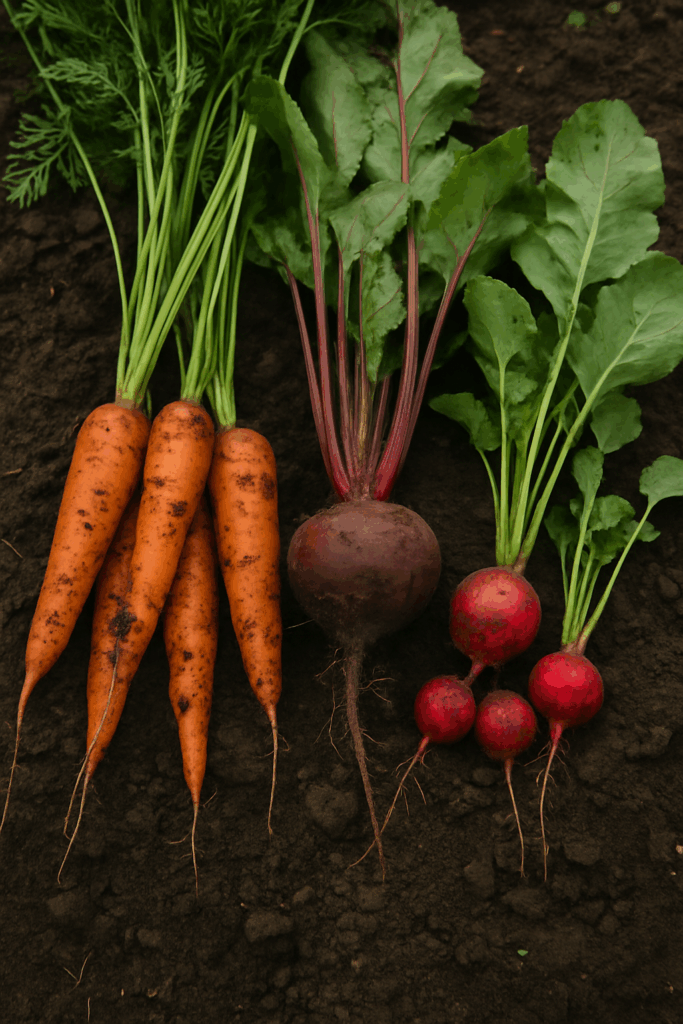
- Choose suitable varieties
- Carrots: go for short-rooted types like Chantenay.
- Beetroot: compact globe varieties.
- Radishes: most types are fast-growing.
- Prepare the bucket
- At least 20–25cm deep with good drainage. Roots need depth.
- Planting
- Sow thinly across the surface, cover lightly with compost.
- Aim to space seedlings about 5cm apart once they’ve sprouted.
- Care
- Light: 6–8 hours daily.
- Water: Keep soil evenly moist; inconsistent watering leads to woody roots or cracks.
- Thinning: Essential for carrots and beetroot; overcrowding reduces yields.
- Harvesting
- Radishes: ready in 3–5 weeks.
- Carrots: usually 8–10 weeks for baby carrots.
- Beetroot: pick young for tender roots, or let mature for bigger yields.
Expected yield: Several meals’ worth per bucket, with radishes as the fastest win.
These root crops add variety when you grow vegetables indoors in buckets, with radishes ready in just a few weeks.
Problems You Might Face When you Grow Vegetables Indoors in buckets(and fixes)
- Low light → Add LED grow lights or reflective foil.
- Too much water → Drill drainage holes; use a saucer to catch excess.
- Limited yields → Remember, this supplements your diet, not replaces outdoor gardening.
- Indoor pests → Fungus gnats and aphids can be managed with sticky traps, neem spray, or by letting soil dry slightly between waterings.
How Much Food Can You Really Expect?
- Potatoes: 1–2kg per bucket.
- Beans: fresh pods throughout summer, or 200–300g dried beans.
- Onions & garlic: a small but useful harvest; stores for months.
- Carrots & beetroot: enough for side dishes; radishes are quick and plentiful.
Conclusion
Buckets aren’t just for carrying water — they’re one of the easiest ways to grow vegetables indoors in buckets and turn limited space into real food.. With potatoes, beans, onions, and roots, you can grow calorie-dense crops indoors that actually add to your meals. For anyone in the UK who wants to be more self-sufficient, bucket growing is an easy, affordable first step.
For independent expert advice check out the RHS website.
📎 Related articles
- The Complete Guide to Indoor Growing in the UK
A clear overview of indoor growing methods, setups, and what works best in UK homes. - Best Soil for Growing Food Indoors in the UK
Choosing the right compost and peat-free mixes for productive indoor containers. - Hydroponics vs Soil Growing UK
A simple comparison to help you decide whether soil buckets or hydroponics suit your space.