
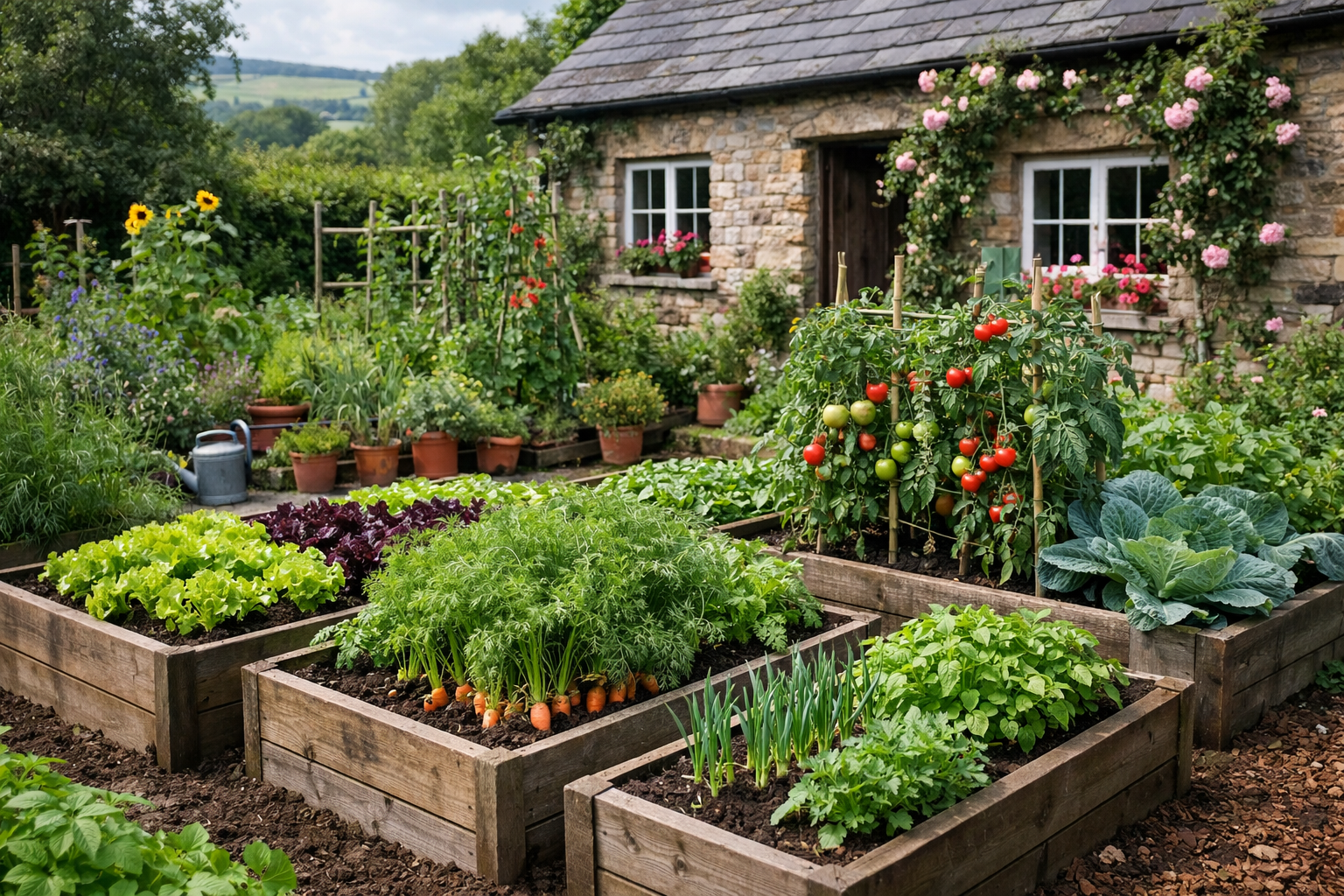
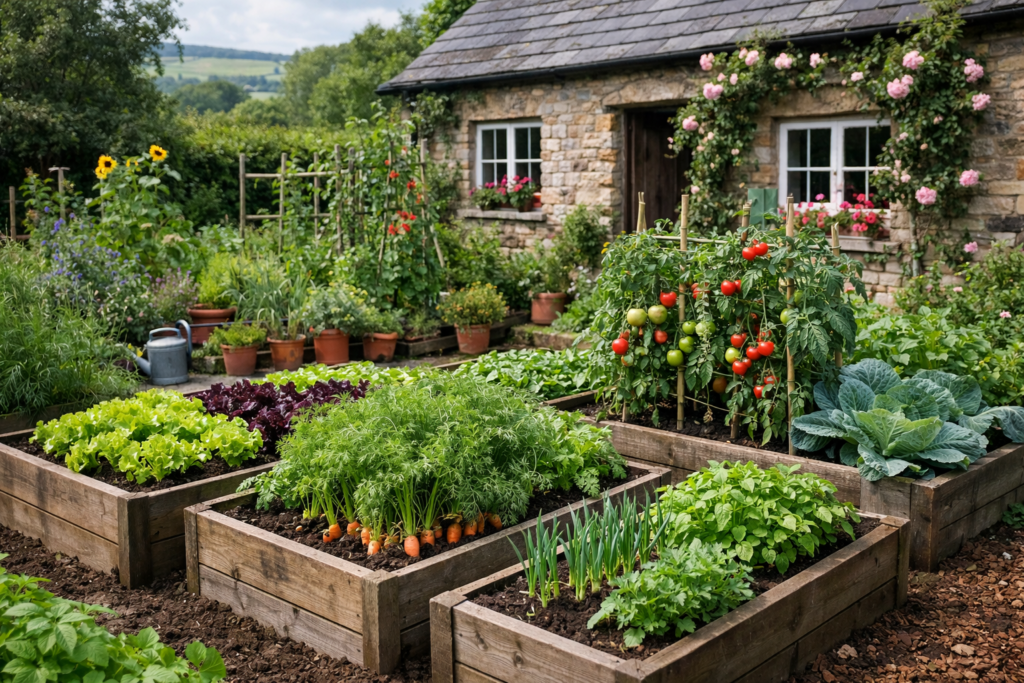
Outdoor growing is where most food growing begins — and where many people quietly lose confidence after a few difficult seasons.
The problem usually isn’t effort or enthusiasm. It’s that outdoor growing advice often assumes perfect soil, predictable weather, and far more space than most UK gardens actually have.
Real gardens are messier than that.
This guide sets a realistic foundation for growing food outdoors in everyday conditions. It brings together the core principles — soil, beds, watering, feeding, pruning, harvesting, and seasonal challenges — so everything else you read or try has something solid to rest on.
This page is the reference point for outdoor growing on HomeGrower. Every outdoor guide links back here.
Getting started with outdoor growing
Most outdoor growing success comes down to timing and expectations, not how hard you work.
Some crops are happy being sown directly outside. Others struggle unless they’re started under cover and moved out once conditions settle. Knowing the difference early saves wasted seed and frustration.
If you’re starting from scratch, it helps to understand when outdoor sowing actually works and when it doesn’t. Our guide on how to grow plants from seed explains the options clearly, including when to start indoors and when plants can cope outside.
At this stage, consistency matters more than ambition. A few reliable successes beat a garden full of half-failed experiments.
Monthly Planting Guides for the UK
Outdoor growing changes quickly through the year. A crop that is too early in March may be perfect in May, while June brings a completely different set of jobs around watering, pests and planting out tender crops.
These monthly guides give you a practical starting point for what to sow, plant out and manage at each stage of the UK growing season.
- What to Plant in March in the UK
Early-season sowing advice for vegetables, flowers and seedlings, including what to start indoors, under cover or outside. - What to Plant in April in the UK
A practical guide to April sowing, early outdoor planting, potatoes, late frosts and using greenhouses or cold frames. - What to Plant in May in the UK
What to sow, what to move outside, and how to handle the May gamble around tender plants, frost risk and hardening off. - What to Plant in June in the UK
A June growing guide covering sowing, planting out, watering, pests, bolting, summer maintenance and crops for later in the year.
UK soil types and ground preparation
Soil is the foundation of outdoor growing — and in the UK, soil type varies a lot more than most advice admits.
Understanding what you’re working with matters far more than copying generic techniques.
Most UK gardens fall into one (or a mix) of these soil types:
- Clay soil – heavy, slow to drain, cold in spring but nutrient-rich
- Sandy soil – light, free-draining, warms quickly but dries out fast
- Chalky soil – alkaline, often shallow, drains very quickly
- Loam – balanced, crumbly, and the easiest to grow in
- Greensand and silty soils – less common, often fertile but variable
Very few gardens are “pure” examples. Most sit somewhere in between, especially after years of building work, compaction, or imported topsoil.
Working with your soil, not against it
Each soil type has strengths as well as drawbacks:
- Clay holds nutrients well but needs structure and drainage
- Sandy soils drain beautifully but need organic matter to retain moisture
- Chalky soils suit some crops well but benefit from regular compost additions
The common mistake is trying to fix soil quickly. In reality, soil improves best through steady inputs over time.
Adding organic matter — compost, leaf mould, mulches — improves all soil types by:
- increasing biological activity
- improving structure
- buffering moisture and nutrients
One of the simplest ways to build organic matter consistently is by composting at home. Learning how to start composting gives you a steady supply of soil-improving material while reducing kitchen waste at the same time. Our guide on how to start composting explains the process step by step, including what to add, what to avoid, and how to prevent a smelly heap.
Low-disturbance and no-dig approaches work particularly well in UK gardens, especially on clay and chalky soils, where repeated digging can damage structure and reduce long-term fertility.
You don’t need perfect soil to grow food — just soil that’s improving year by year.
Composting: Building Better Soil Over Time
Composting is one of the simplest ways to improve soil in a UK garden — and one of the most overlooked.
Instead of relying entirely on bought products, composting lets you recycle kitchen scraps and garden waste into a steady supply of organic matter. Over time, this improves soil structure, moisture retention, and overall plant health.
In practical terms, compost helps:
- break up heavy clay soils
- improve water retention in sandy soils
- support beneficial soil life
- reduce the need for additional feeding
You don’t need anything complicated to get started. A simple heap or bin, a balance of “greens” and “browns”, and a bit of patience is enough.
If you’re starting from scratch, our guide on how to start composting walks through the basics step by step, including what to add and how to avoid common problems.
If you’re planning to use a bin, our guide to the best compost bins for UK gardens compares simple options that work well in real conditions.
👉 Composting isn’t a separate task — it’s part of how you build better soil year by year.
Growing methods: ground beds and raised beds
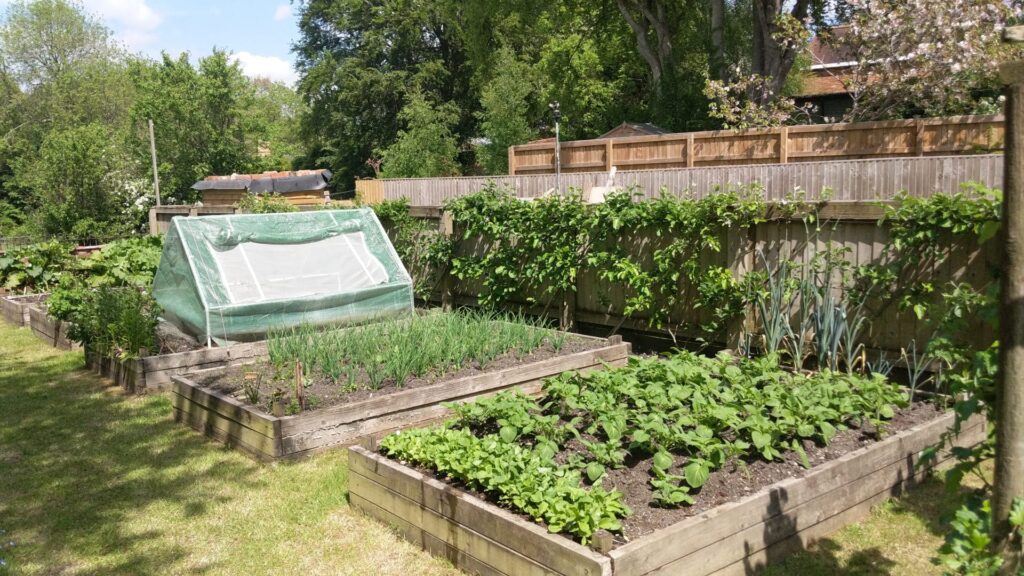
There is no single “best” way to grow outdoors — only what suits your space, soil, and physical comfort.
Growing directly in the ground works well where drainage is reasonable and the soil structure is already usable. It’s also the lowest-cost option, though it often requires more bending, kneeling, and soil improvement over time.
Raised beds are popular for several very practical reasons:
- Easier access – less bending and kneeling, simpler planting and harvesting
- Clear structure – defined growing space that’s easier to manage
- Better soil control – you choose the soil mix rather than inheriting what’s there
- Improved drainage – especially useful on heavy or compacted ground
- Earlier warming in spring – soil heats faster than surrounding ground
For many people, access alone is enough reason to choose raised beds. Being able to garden comfortably — even for short periods — often means plants get more consistent care, which matters far more than theoretical yield.
Simple, reachable layouts almost always outperform complex designs. Beds you can tend without strain get used more often, and consistency beats ambition every time.
Watering, feeding, and ongoing care
Outdoor growing rarely fails because of neglect. It fails because of inconsistent care, usually driven by weather.
Some summers bring weeks of rain. Others swing between drought and sudden downpours. Capturing and controlling water makes a huge difference.
If you don’t already collect rainwater, setting it up is one of the most useful upgrades you can make. Our guide on how to set up a water butt shows how to do this simply, even in smaller gardens.
For more controlled watering — especially during dry spells or holidays — drip irrigation systems deliver water slowly at soil level, reducing waste and plant stress.
Feeding should support growth, not replace good soil. If you’re unsure where fertiliser fits in, our overview of the best fertiliser options explains when feeding helps and when it’s unnecessary.
Pruning, training, and plant care
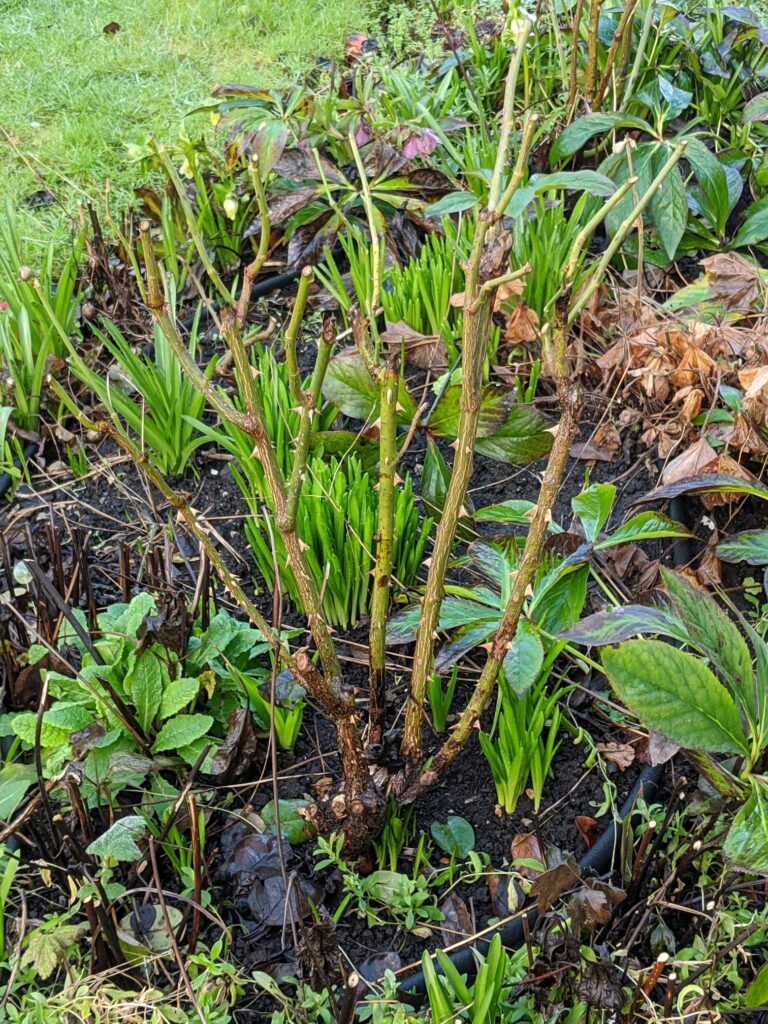
Winter pruning of roses, cut back to knee height with deadwood removed.
Pruning often feels like an advanced skill, but at its core it’s simply about directing a plant’s energy.
Not everything needs pruning, and timing matters more than technique. Some plants benefit from regular trimming, others resent it entirely.
As a general rule:
- remove damaged or congested growth
- improve airflow and light
- train plants early rather than correcting later
Pruning timing matters — some plants are cut back in winter, others in spring or after flowering, and pruning at the wrong time can reduce growth or flowering.
Small, regular actions usually do more good than dramatic interventions.
🍎 Harvesting and storing outdoor crops
Harvesting is the reward — but what you do after harvest matters just as much.
Many outdoor crops store surprisingly well with very little equipment. Apples, root vegetables, squash, and onions can last weeks or months if harvested at the right time and stored correctly.
Cool, dry, well-ventilated spaces are often enough. Simple handling and patience usually outperform complicated storage setups.
Where storage isn’t possible, preservation is often the better option. We cover the main ways of keeping homegrown food for longer in our food preservation guide.
🌦️ Seasonal challenges in outdoor growing
Outdoor growing in the UK is about adapting, not controlling.
Common challenges include:
- late spring frosts
- prolonged wet weather
- sudden heat spikes
- wind damage
The most resilient gardens aren’t the most protected — they’re the most flexible. Temporary covers, adjusted planting times, and accepting occasional losses are all part of the process.
Outdoor growing rewards persistence far more than perfection.
When outdoor conditions become the limiting factor, a greenhouse or polytunnel can extend the season and protect crops that struggle outdoors.
🌿 Final thought
Outdoor growing isn’t about mastering techniques. It’s about understanding how your garden behaves over time.
Once you learn how your soil responds, how water moves through your space, and how plants react to local conditions, everything else becomes simpler.
This guide exists to give you that foundation.