
Indoor growing in the UK sounds simple: bring plants inside, give them some light, and grow food all year. In practice, it’s more about working around constraints — short winter days, awkward spaces, and houses that weren’t designed with plants in mind.
This guide skips the “perfect system” sales pitch to look at how indoor growing actually works in a UK climate. It’s an honest breakdown of where the method succeeds, where it struggles, and how people realistically manage those limits. You won’t find any product pushing here—just a practical assessment of which crops are actually worth the effort indoors.
If you’re looking for a wider overview of growing food indoors — including seed starting, hydroponics, containers, and lighting — this guide sits within the broader Indoor Growing UK Hub Page, which brings all of HomeGrower’s indoor growing content together in one place.
🌿 What Indoor Growing Really Means
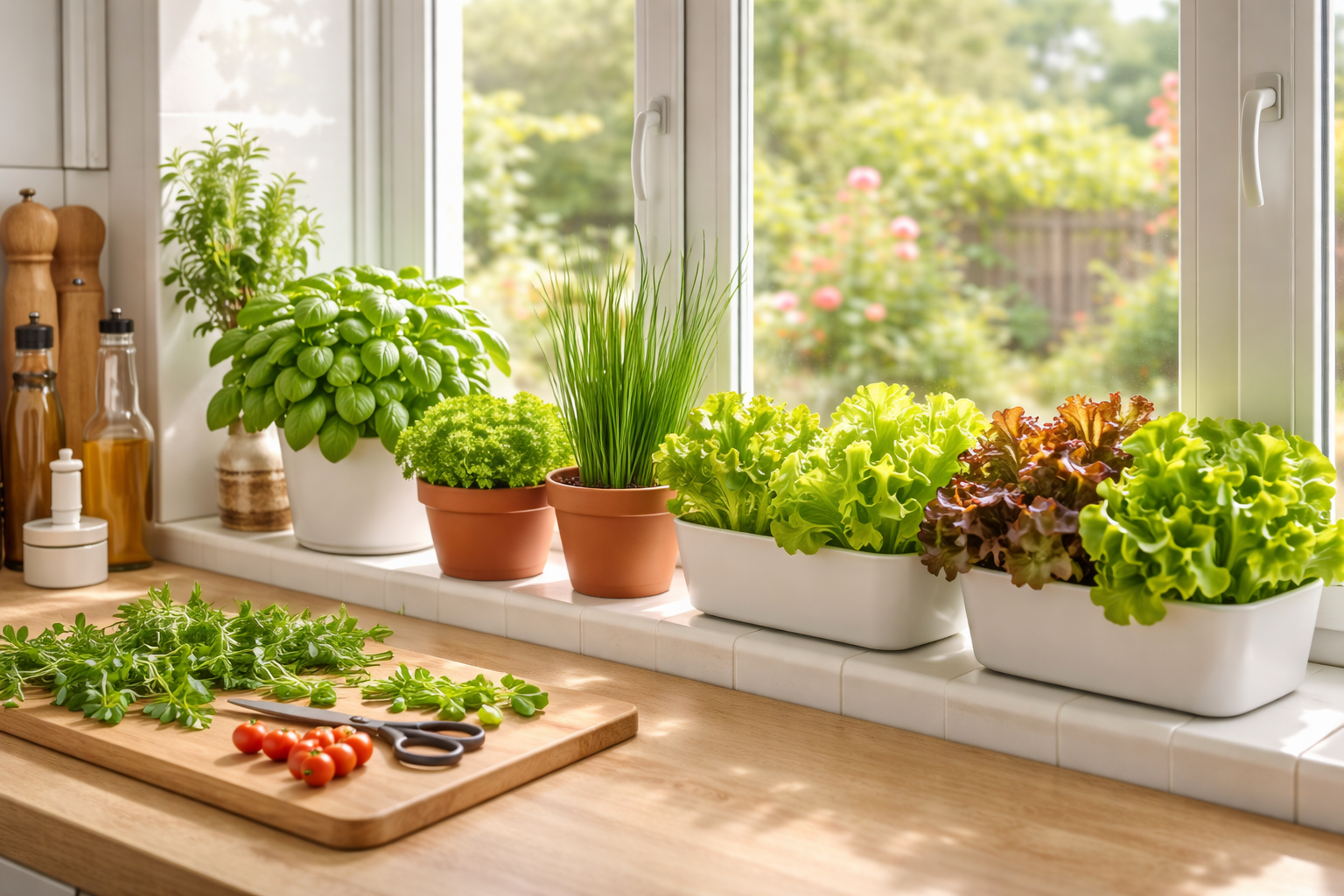
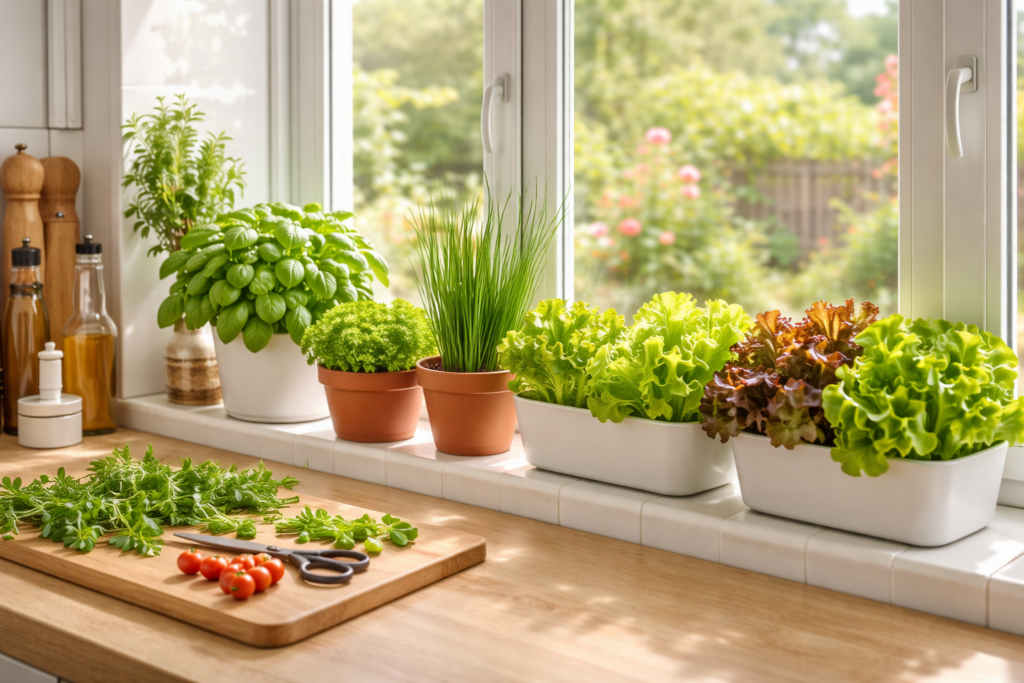
Indoor growing means growing plants inside your home or an enclosed indoor space, rather than outdoors in soil. In UK homes, that usually looks like herbs on a windowsill, salad leaves on a shelf, seedlings started early in the year, or a small indoor growing setup tucked into a spare room.
Most people using indoor growing in the UK fall into one of three groups:
- Growing small amounts of food regularly, such as herbs or salad leaves
- Starting plants indoors before moving them outside later
- Keeping a limited number of crops growing indoors all year
Many UK growers first turn to indoor growing when raising young plants early in the season. If that’s your goal, How to Grow Plants from Seed explains how to do this reliably indoors.
Indoor growing UK households use isn’t usually about replacing outdoor gardening. More often, it’s about reliability — keeping food growing when daylight, weather, or pests get in the way.
🇬🇧 Why Indoor Growing in the UK Makes Sense
The biggest challenge for indoor growing in the UK is light — or rather, the lack of it for much of the year.
From late autumn to early spring, daylight levels drop sharply. Even a bright south-facing window in February rarely provides enough usable light for steady growth. Plants may survive, but growth slows, stems stretch, and harvests become disappointing.
There’s also a very UK-specific issue: most windowsills sit directly above radiators. This creates a mix of bright light, dry air, and uneven heat. Some plants cope, but others — basil is a common example — struggle, bolt, or dry out under these conditions.
Indoor growing also saves you from those heartbreak moments — like coming out in the morning to find a row of seedlings decimated by slugs, or a sudden frost that undoes weeks of work.
🧭 The Main Ways People Grow Indoors
It’s easy to assume indoor growing is just a few pots on a windowsill. In reality, UK growers have become quite creative at finding space — from high-tech hydroponic setups to a simple bucket tucked into a utility room.
Most setups fall into one of these:
- Soil-based indoor growing using pots, trays, or buckets
- Hydroponic indoor growing, where plants grow in nutrient water
- Hybrid setups, combining soil growing with supplemental lighting
Many UK indoor growers use more than one method over time, depending on space, crops, and how much control they want.
🌱 What Grows Well Indoors (and What Needs Caution)
Indoor growing in the UK works best when crops match the space, light, and containers available.
🌿 Crops That Usually Do Well Indoors
These crops tend to give reliable results in typical UK homes:
- Salad leaves such as lettuce, rocket, mizuna, and cut-and-come-again mixes
- Herbs like basil, parsley, coriander, chives, and mint
- Leafy greens such as spinach and pak choi
- Young plants and seedlings raised indoors before planting outside
These plants have shallow root systems, respond well to regular harvesting, and don’t rely on long summer days — which makes them well suited to indoor growing UK conditions.
🚫 Crops That Often Struggle Indoors
Some crops are possible indoors but usually become more effort than they’re worth:
- Deep-rooted vegetables like carrots, parsnips, and beetroot
- Large fruiting plants such as pumpkins or courgettes
- Long-season crops that expect sustained summer light
⚠️ “Think Twice” Indoor Crops
Some popular crops sit in the middle:
- Tomatoes
- Chillies and peppers
- Cucumbers
These can be grown indoors in the UK, but they need strong, consistent light, large containers, and often manual pollination because there are no bees indoors. They’re best treated as level-two indoor growing crops rather than beginner options.
🪴 Soil-Based Indoor Growing
Soil-based indoor growing is the most familiar method. Plants grow in compost inside pots, trays, or containers.
It suits indoor growing in the UK because it’s intuitive, forgiving, and doesn’t require precise nutrient measurement. This makes it popular for herbs, salad leaves, and seed starting.
Indoors, compost choice matters more than many people expect. Poor drainage or low-quality compost can quickly lead to soggy roots or mould. Best Soil for Growing Food Indoors explains what works best in indoor conditions.
💧 Hydroponic Indoor Growing
Hydroponic indoor growing involves raising plants in water with added nutrients instead of compost.
In UK homes, hydroponics appeals because it can produce faster growth, cleaner setups, and more predictable results once established. It does require regular monitoring, which some indoor growers enjoy and others don’t.
If you want to understand how these systems work, How to Grow with Hydroponics explains the basics clearly. For a direct comparison, Hydroponics vs Soil Growing looks at which approach suits different indoor growing situations.
🪣 Containers, Buckets, and Small-Space Growing
Indoor containers behave very differently from outdoor ones.
In heated UK homes:
- Compost dries unevenly
- Air is often drier
- Pots near radiators lose moisture quickly
Plastic pots usually retain moisture better indoors, while terracotta can dry out herbs too quickly. Buckets are popular for indoor growing in the UK because they’re inexpensive, deep enough for many crops, and easy to move. How to Grow Vegetables Indoors in Buckets shows how this works in practice.
If you’re regularly away from home, or struggle to keep indoor containers evenly watered in summer, this indoor drip irrigation case study shows how a simple automated setup performed during a 22-day absence in a UK home.
💡 Light Indoors: Why Plants Stretch
Light is the biggest limiting factor for indoor growing in the UK.
When plants don’t receive enough usable light, they start to stretch — a process called etiolation. It often looks like the plant is desperately reaching for a window it can’t quite find.
Once a seedling becomes leggy, it’s often difficult to fully correct, which is why getting light levels right early on matters more than trying to fix problems later.
In summer, a bright window may be enough for some crops. In winter, even the best windows struggle to support active indoor growth. This is why many UK indoor growers eventually add supplemental LED lighting — not to chase maximum yields, but to provide steady, predictable light.
🌬️ Airflow, Humidity, and Indoor Problems
Indoor growing environments often have still air, which leads to issues rarely seen outdoors.
Common indoor growing problems include:
- Fungus gnats around compost
- Damping off in seedlings
- Mould forming on soil surfaces
Letting the top inch of soil dry out between waterings is often the simplest and most effective way to prevent fungus gnats from becoming a problem indoors.
Even gentle airflow can help prevent many of these issues. A small fan or occasional ventilation makes a noticeable difference in indoor growing UK setups.
🗓️ Indoor Growing Through the Year
One of the biggest advantages of indoor growing in the UK is continuity.
Instead of everything stopping in autumn, indoor growing allows you to:
- Keep herbs producing through winter
- Grow salad leaves when outdoor beds are empty
- Start seeds weeks earlier
- Spread planting and harvesting across the year
Indoor growing doesn’t eliminate seasons, but it does remove the long gaps where nothing grows.
✅ A Sensible Way to Start
If you’re new to indoor growing in the UK:
- Choose one space and one crop
- Pick soil or hydroponics, not both
- Observe how light, heat, and water behave
- Adjust before expanding
Most frustration comes from trying to do too much too quickly.
🌱 Final Thoughts
Indoor growing in the UK works best when it’s treated as a practical tool rather than a perfect system. It rewards realistic crop choices, attention to light and airflow, and a willingness to adapt when conditions change.
Once you understand what indoor spaces can — and can’t — offer, indoor growing stops feeling fragile and starts feeling dependable.
That’s when it becomes genuinely useful.
For broader horticultural guidance and plant care advice, the Royal Horticultural Society (RHS) provides a reliable, non-commercial reference that complements the practical indoor growing advice shared here.
📎 Related Articles
❓ Indoor Growing FAQs
Is indoor growing more expensive than just buying veg at the supermarket?
Initially, yes. If you are buying premium compost, pots, and seeds to grow a single head of lettuce, the “per-leaf” cost is high. However, indoor growing becomes cost-effective when you focus on “high-value” crops like herbs, which die quickly in the fridge, or salad mixes that you can harvest from for months rather than buying plastic bags of greens every week.
Do I really need grow lights, or is a windowsill enough?
From May to September, a bright windowsill is often enough for leafy greens and herbs. However, from October to March, the answer is almost always “yes” if you want actual growth rather than just survival. You don’t need a professional laboratory setup; a simple, low-wattage LED bar can be the difference between a healthy plant and a spindly one that eventually collapses.
Can I grow things in my conservatory or porch?
In the UK, these spaces are “hero or zero” environments. In summer, they can easily exceed 35c, which causes most leafy greens to bolt (go to seed) and taste bitter in days. In winter, if the temperature drops below 10c, growth for most herbs will effectively stop, and anything below 5c risks killing tender plants like Basil. They are brilliant for light, but you have to manage the “temperature see-saw” by using blinds in summer and moving plants into the main house during a frost.
How do I stop my plants from drying out when the heating is on?
Central heating creates very dry air, which is the enemy of leafy greens and tropical herbs like Basil. If your pots are near a radiator, the soil will dry from the bottom up while the leaves wilt from the top down. Try sitting your pots on a tray of wet pebbles; the water evaporates around the plant, creating a “micro-bubble” of humidity without making the soil soggy.
How do I deal with those tiny black flies (fungus gnats)?
If you grow plants indoors in the UK, you will eventually meet these annoying little houseguests. They thrive in damp, peat-heavy compost. The best “low-tech” fix is to stop overwatering; let the top inch of soil dry out completely so the larvae can’t survive. You can also add a layer of fine grit or sand to the top of the pot to stop them from laying eggs.
Can I use soil from my garden for indoor pots?
It’s tempting, but generally a bad idea. Garden soil is heavy, doesn’t drain well in a container, and—most importantly—is full of dormant bugs and weed seeds. When that cool garden soil hits a centrally heated living room, any dormant bugs think it’s mid-summer and start multiplying immediately — it’s a mistake you usually only make once.
Do I need to feed indoor plants differently?
It depends entirely on your light levels. Think of light as the “accelerator pedal” and feed as the “fuel.” If you are using grow lights, your plants will grow faster and need a half-strength liquid feed every 2 weeks. However, if you are relying on natural UK window light in winter, your plants are essentially in “low gear.” In this case, stop feeding entirely from November to March. Adding nutrients when a plant isn’t growing quickly can lead to a toxic build-up of salts in the compost that can burn the roots.