Cordless garden tools have transformed how we look after our homes and gardens — no cords, no fuel, just grab and go. But as every gardener soon discovers, not all batteries are created equal. Most brands now have their own power share battery systems that let you use the same battery across multiple tools.
This power share battery systems comparison (UK) looks at the most popular platforms — Worx PowerShare, Bosch Power For All, Ryobi ONE+, Makita LXT/XGT, and DeWalt PowerStack/FlexVolt — to help you choose a system that grows with you.
This guide sits within our wider guide to garden tools and equipment, which looks at how different tools fit together for long-term use in real UK gardens.
A power share or shared battery platform is a simple idea: one battery, many tools. Instead of buying separate batteries and chargers for each device, a single rechargeable pack powers everything from your cordless lawn mower to your drill or hedge trimmer.
This approach saves money, reduces clutter, and cuts waste. You can start with one or two batteries and build your cordless collection over time — as long as you stick within the same brand’s ecosystem.
For UK gardeners and DIYers, a good power share battery system means less hassle and more flexibility.
- Cost-effective: buy tools “bare” (without battery) and save.
- Eco-friendly: fewer chargers and dead batteries.
- Convenient: swap batteries in seconds, even mid-project.
- Future-proof: expand your setup as new tools are released.
With the right platform, your cordless garden and home tools can share power seamlessly — saving both time and money in the long run.
🔄 Choosing Once vs Switching Later
In practice, your battery platform becomes part of your garden infrastructure. Once you own three or four cordless tools, switching systems becomes expensive and inconvenient. Chargers multiply, batteries age at different rates, and storage becomes cluttered.
For most UK gardeners, the smartest move isn’t choosing the “most powerful” system — it’s choosing the one that fits your likely long-term workload. A compact suburban garden doesn’t need a trade-grade 40V platform. Equally, if you expect to expand into mowers, hedge trimmers and blowers, it’s worth choosing a brand with depth.
Think in terms of where you’ll be in five years — not just which tool you need today. Battery systems tend to lock in quietly — and most gardeners only realise that after they’ve bought their third tool.
You can see how different platforms perform in real-world use in our cordless lawn mower and cordless strimmer guides.
The Big Five Battery Platforms Compared
| Brand | System name | Voltage options | Tools supported | Typical battery + charger price | Key strengths |
|---|---|---|---|---|---|
| Worx | PowerShare | 20V / 40V (dual battery) | 75+ tools (garden & DIY) | ~£80 | Dual-battery flexibility; compact, practical tools suited to small–medium UK gardens. |
| Bosch | Power For All Alliance (18V) | 18V | 150+ products across 10+ brands | ~£70 | Multi-brand compatibility including Bosch, Gardena and Husqvarna Aspire tools. |
| Ryobi | ONE+ | 18V | 200+ tools | ~£70 | Very large ecosystem spanning garden, DIY and home tools; strong expansion potential. |
| Makita | LXT (18V) / XGT (40V) | 18V / 40V | 200+ professional tools | ~£100 | Trade-grade durability; long-term battery reliability for heavy use. |
| DeWalt | XR / FlexVolt | 18V / 54V | 100+ tools | ~£120 | High performance; FlexVolt auto-switching for demanding workloads. |
Voltage: 20V / 40V (dual battery)
Tools supported: 75+ tools
Typical price: ~£80
Strength: Compact, flexible system well suited to typical UK gardens.
Bosch – Power For All Alliance
Voltage: 18V
Tools supported: 150+ products across 10+ brands
Typical price: ~£70
Strength: Multi-brand ecosystem including Bosch, Gardena and Husqvarna Aspire.
Ryobi – ONE+
Voltage: 18V
Tools supported: 200+ tools
Typical price: ~£70
Strength: Very large ecosystem covering garden, DIY and household tools.
Makita – LXT / XGT
Voltage: 18V / 40V
Tools supported: 200+ professional tools
Typical price: ~£100
Strength: Built for heavy-duty, long-term use.
DeWalt – XR / FlexVolt
Voltage: 18V / 54V
Tools supported: 100+ tools
Typical price: ~£120
Strength: High-performance system for demanding workloads.
Notes: Tool counts and prices are typical UK ranges and may vary by retailer or kit. Committing to one platform maximises compatibility and long-term value.
Below is a summary of the UK’s best-known interchangeable battery systems and what makes each one stand out.
- Voltage: 20V single or 40V dual-battery setup
- Tools supported: 75+ across garden and DIY range
- Typical cost: around £80 (battery + charger)
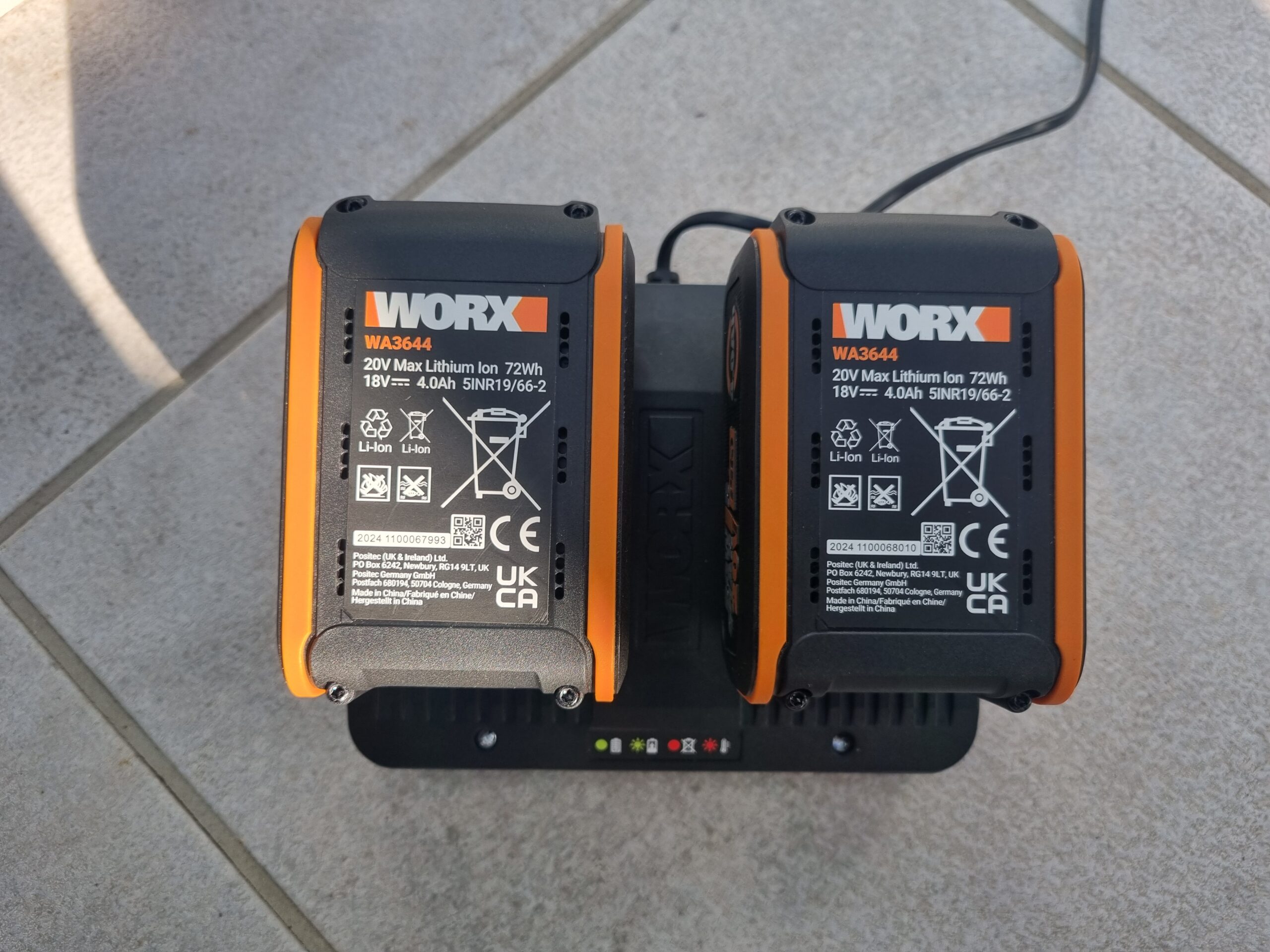
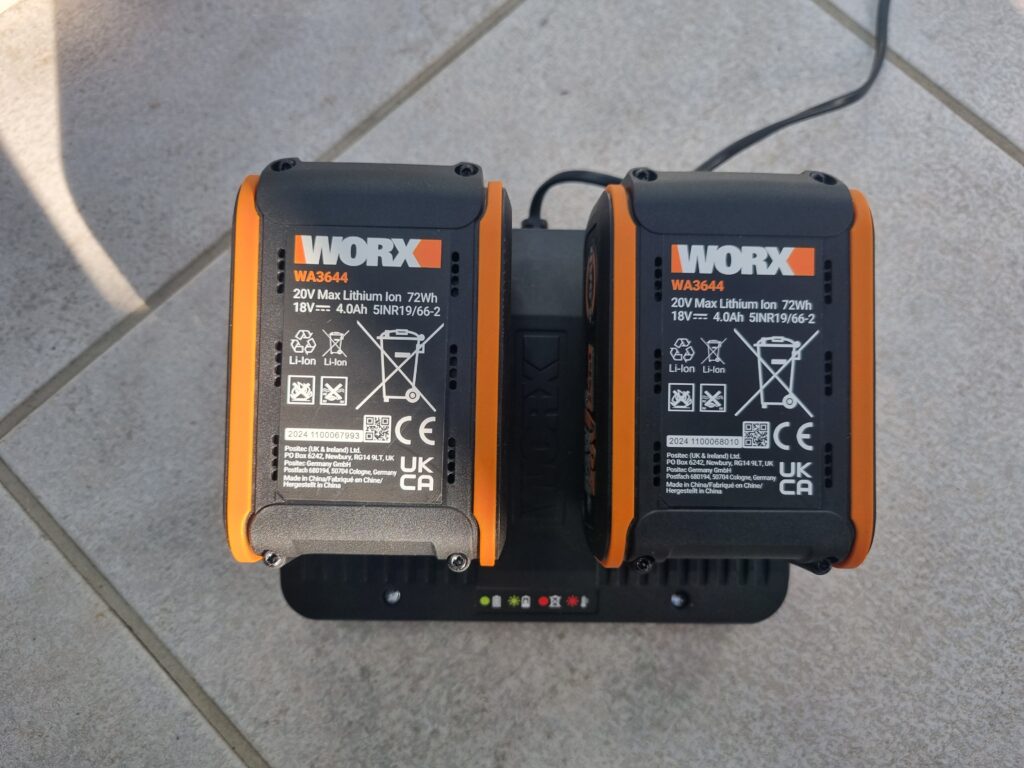
- Why choose: simple, reliable, and versatile. Dual-slot mowers like the Worx WG737E use two 20V batteries to double the power. Great for small to medium gardens.
⚙️ Bosch Power For All Alliance (18V)
- Voltage: 18V shared platform
- Tools supported: 150+ including Gardena, Flymo, and other partner brands
- Typical cost: around £70
- Why choose: broad compatibility across multiple household names. Perfect for people who want one battery for both home and garden tools.
- Bosch’s 18V Power For All Alliance is broader than a single-brand ecosystem. The same battery platform is shared across Bosch tools, Gardena equipment, and selected partner brands including Husqvarna’s Aspire range. For gardeners who want flexibility without being locked into one badge, that wider compatibility can be a genuine advantage.
⚙️ Ryobi ONE+ (18V)
- Voltage: 18V single platform
- Tools supported: 200+ tools — one of the biggest ecosystems available
- Typical cost: around £70
- Why choose: huge range, affordable tools, and wide UK availability. Excellent all-rounder for home users.
⚙️ Makita LXT / XGT (18V / 40V)
- Voltage: 18V (LXT) or 40V (XGT) for high-performance users
- Tools supported: 200+ professional-grade tools
- Typical cost: around £100
- Why choose: durable, high-quality batteries built for trade or serious gardeners. Pricier but long-lasting.
⚙️ DeWalt PowerStack & FlexVolt (18V / 54V)
- Voltage: 18V XR and 54V FlexVolt hybrid system
- Tools supported: 100+
- Typical cost: around £120
- Why choose: premium performance for demanding work. FlexVolt batteries automatically adjust to different voltages, powering both 18V and 54V tools.
🔋 Amp-Hours (Ah) Matter More Than Voltage
Many starter kits include 2.0Ah batteries. These are fine for light DIY tools, but for mowers or hedge trimmers, 4.0Ah or higher provides noticeably longer runtime and fewer charging interruptions — especially during the May growth surge in UK gardens.
If your main focus is cordless garden tools, these are the standout choices:
- Worx PowerShare: best for compact gardens and easy handling.
- Bosch Power For All: ideal for mixed home-and-garden tool users.
- Ryobi ONE+: unbeatable range and long-term flexibility.
- Makita / DeWalt: professional-level durability and power, but higher cost.
For many typical UK gardens, Worx and Bosch strike a practical balance between performance, price, and ecosystem flexibility.
Compatibility and Caution
Power share systems are brand-specific — a Worx battery won’t fit a Bosch tool, and vice versa. Once you start investing, it’s smart to commit to one platform to keep your batteries interchangeable.
When comparing brands, look at:
- Tool range (especially garden options)
- Battery voltage and amp-hour capacity (Ah)
- Availability of bare-tool versions
- Long-term support and replacement batteries
❄ UK Storage Tip
In many UK homes, unheated sheds shorten lithium battery lifespan over winter. Storing batteries indoors during prolonged frost helps preserve capacity and extends their usable life.
🧭 Quick Decision Guide
- Small urban garden → Worx or Bosch
- Large ecosystem builder → Ryobi
- Heavy-duty / trade use → Makita or DeWalt
- Budget entry → Einhell
A useful way to decide is to look at your most demanding garden job. Almost every brand makes a decent drill. Fewer make well-balanced hedge trimmers or long-reach tools that are comfortable to use for extended periods. Choose your battery platform based on your hardest garden task, not your easiest DIY one.
Final Thoughts
Choosing the right power share battery system can save you hundreds of pounds over time. Whether you go for Worx PowerShare, Bosch Power For All, or Ryobi ONE+, sticking with one platform ensures your tools work together — and your investment keeps paying off.
Power share battery systems let you use the same rechargeable battery across a range of cordless tools from the same brand. Instead of buying separate batteries for every tool, you simply swap one between your lawn mower, hedge trimmer, or drill — saving money and storage space.
The main UK brands with power share battery systems are Worx PowerShare, Bosch Power For All, Ryobi ONE+, Makita LXT/XGT, and DeWalt PowerStack/FlexVolt. Each has its own battery design and voltage options, so they aren’t cross-compatible.
No. Each brand’s power share battery system is unique, meaning you can’t use a Worx PowerShare battery in a Bosch Power For All or Ryobi ONE+ tool. Once you pick a system, it’s best to stay within that brand for maximum compatibility.
For most UK gardeners, Worx PowerShare and Bosch Power For All are the most convenient. Worx suits smaller gardens with lightweight cordless mowers and trimmers, while Bosch offers broad compatibility with household and garden tools in one system.
Most cordless garden tools run on 18V or 20V lithium-ion batteries. Some pro-level systems, such as Makita XGT (40V) or DeWalt FlexVolt (54V), offer extra power for demanding jobs like hedge cutting or construction work.
A good lithium-ion power share battery lasts around 500–1,000 charge cycles, depending on how it’s used and stored. Always store batteries in a cool, dry place and avoid full discharges to extend their lifespan.
Can I mix different amp-hour (Ah) batteries within one system?
Yes. Within the same power share battery system, you can use any Ah rating — for example, a 2.0Ah or 4.0Ah Worx PowerShare battery — as long as the voltage matches. Higher Ah batteries last longer between charges.
Yes — if you plan to buy multiple cordless tools, investing in a shared battery platform can save a lot over time. Once you own a few batteries and a charger, you can buy “bare” tools at lower prices and keep expanding your collection.
Ryobi ONE+ currently has one of the largest ecosystems, with more than 150 compatible tools in the UK. Bosch Power For All and Worx PowerShare are growing fast, making them solid options for long-term investment.
Some brands, such as Worx, use two 20V batteries together to create a 40V setup for extra power. The advantage is flexibility — you can use those same 20V batteries individually in smaller tools or pair them for bigger ones like cordless lawn mowers.
Can I use third-party batteries with my cordless tools?
You’ll find cheaper “compatible” batteries online. While they may work, they often lack the same thermal protection and cell balancing as original-brand batteries. In high-drain tools such as lawn mowers or hedge trimmers, this can lead to overheating or shorter lifespan. For cutting tools especially, sticking with genuine batteries is usually safer and more reliable long term.