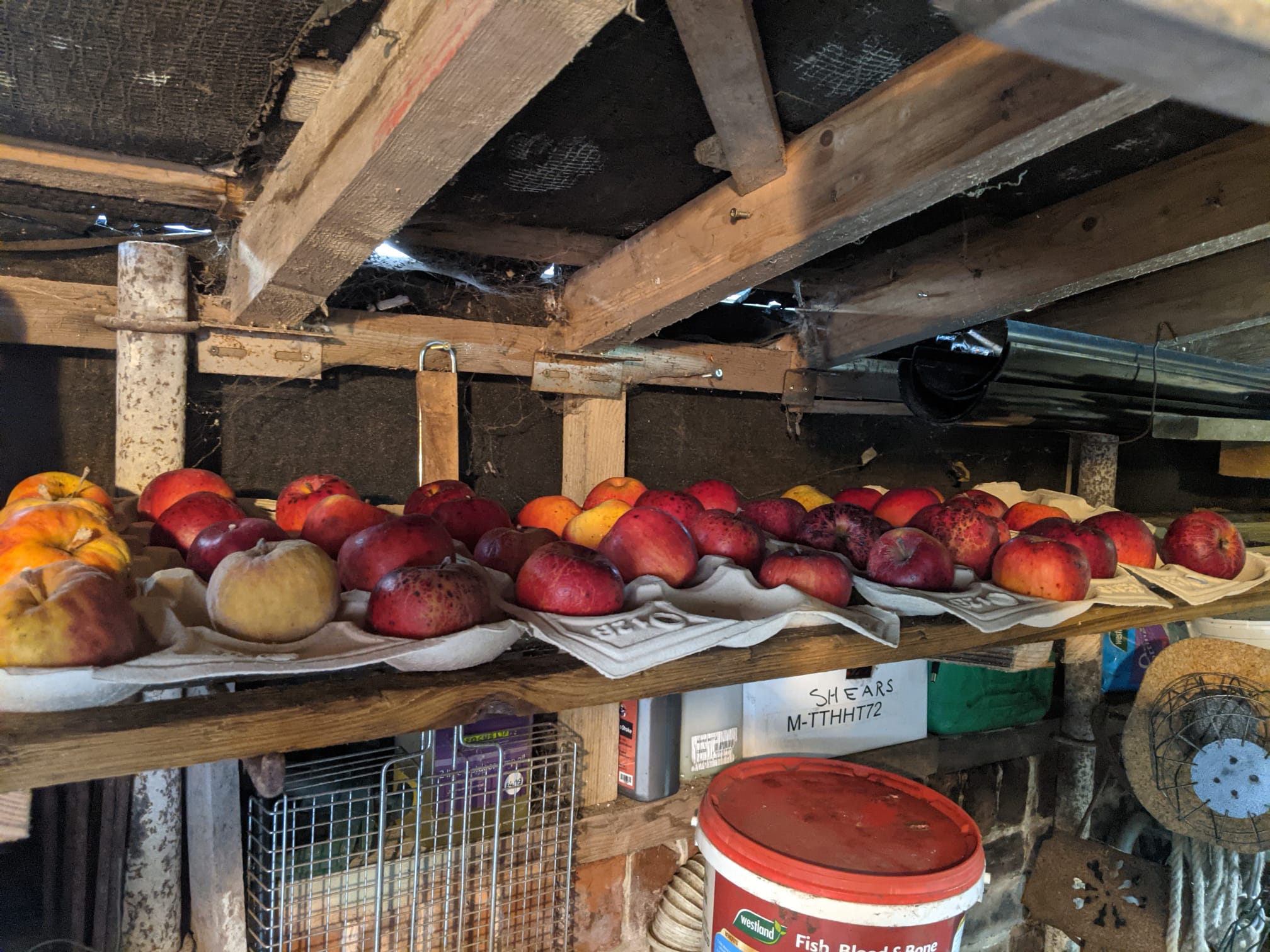
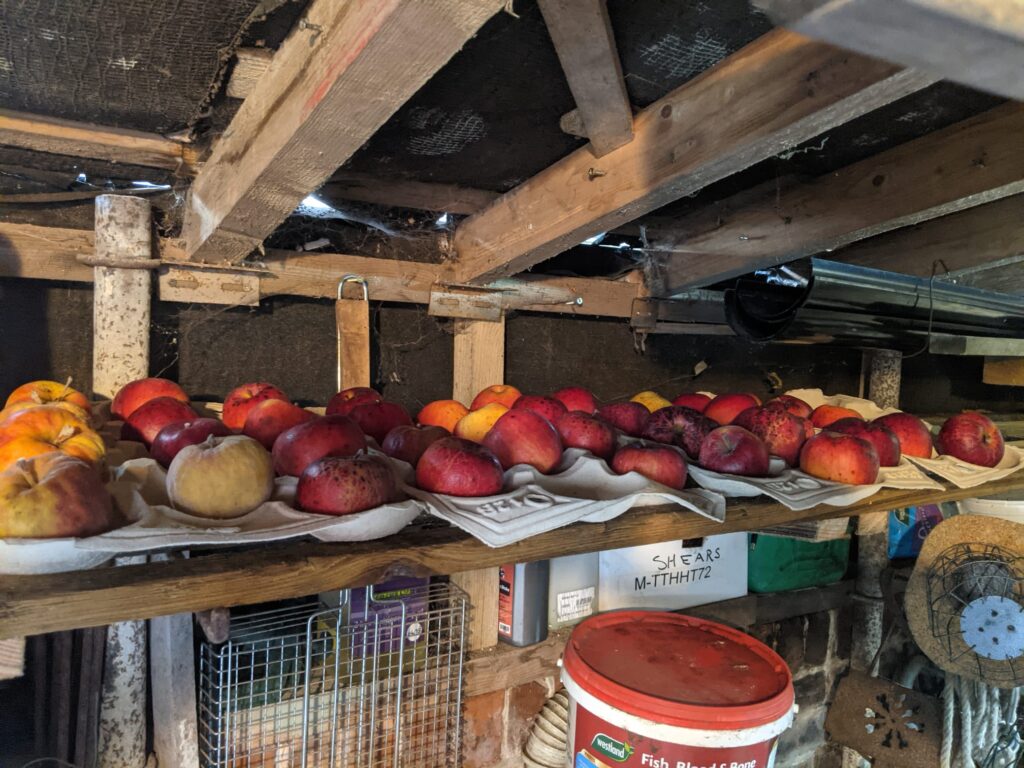
It’s February and I’m still eating apples harvested in September and October, and they’re still crisp and delicious.
They’re not supermarket perfect – our apple tree is 150 years old – but they taste great.
They haven’t been in a fridge.
They haven’t been treated or wrapped in anything fancy.
They’ve just been stored in a garden shed.
Done properly, a shed is one of the best places to store apples over winter — but only if you understand what actually matters.
In this guide, I will explain how to store apples in a shed over winter so that you can enjoy them months after harvest.
The One Rule That Matters Most
You’ve heard the saying:
“One bad apple spoils the whole bunch.”
With stored apples, that’s not a metaphor — it’s chemistry.
As apples ripen and decay, they release ethylene gas, which accelerates ripening in nearby fruit. If apples are touching, one damaged apple can trigger a chain reaction.
Keeping apples separated is more important than temperature, containers, or variety.
Everything else builds on that.
🍎 What We Actually Did (Simple Shed Method)
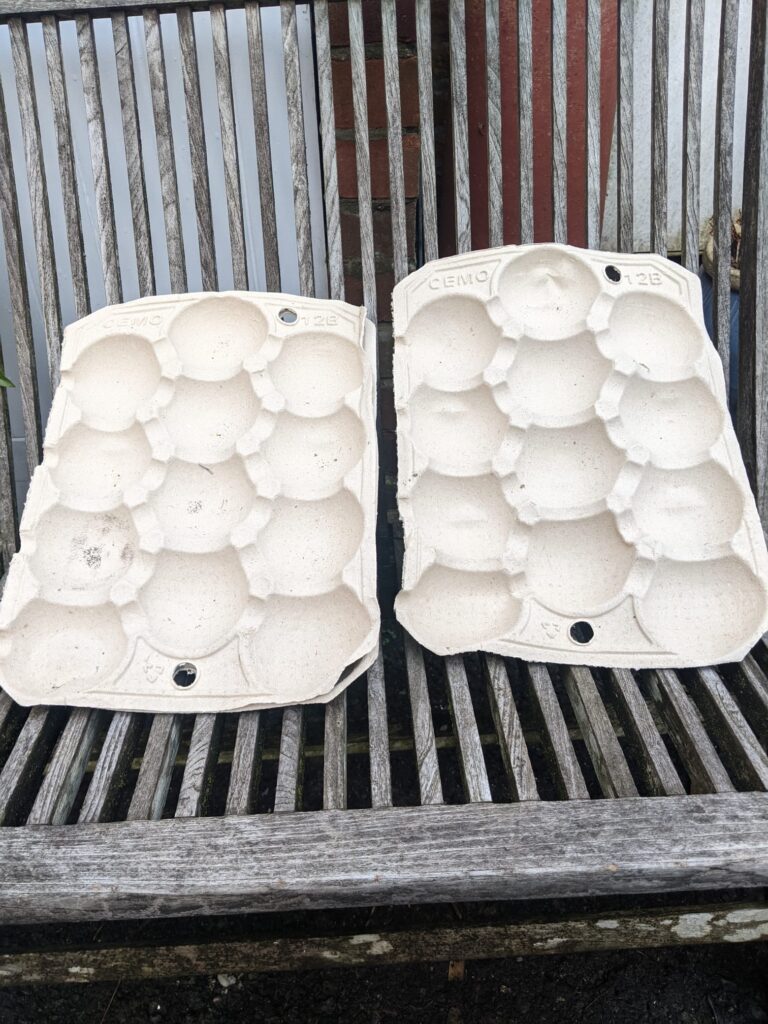
Apple trays keep fruit separated, allow airflow, and make it easy to spot any apples starting to turn.
Our apples were stored like this:
- In a cool garden shed
- On raised shelves, not on the floor
- In single layers
- Apples not touching
- Laid out in apple trays
Each apple has air around it. If one starts to turn, it doesn’t take the others with it.
This is the main reason they’ve lasted so well.
🏡 Why a Shed Works So Well for Apple Storage
A typical UK shed accidentally provides near-ideal conditions for apples.
Cool (but not freezing)
Sheds stay cold through autumn and winter without the drying effect of a fridge.
Ventilated
They’re not airtight, so ethylene gas doesn’t build up around the fruit.
Naturally Humid
Unlike heated rooms, sheds usually have enough background humidity to stop apples shrivelling — without encouraging mould.
This cool + ventilated + slightly humid balance is hard to achieve indoors and is exactly what long-keeping apples need.
As long as the shed is dry (no leaks or dripping condensation), it can outperform kitchens and even fridges for long-term storage.
⚠️ The Rodent Reality (Don’t Skip This)
One thing many guides forget:
a shed in winter is prime real estate for mice.
If you’re storing apples in a shed:
- Keep trays off the floor
- Use solid shelving
- Avoid cardboard boxes sitting directly on the ground
- Consider wire mesh bases if rodents are a known issue
In our case, the apples are stored high on shelves, which greatly reduces the risk. A single mouse can ruin both apples and confidence in your setup.
This is real-world storage — plan for wildlife.
Wrapping Apples: When It Helps
If you don’t have trays:
- Wrap apples individually in newspaper
- Place them in shallow crates or boxes
- Avoid stacking apples directly on top of each other
Wrapping helps isolate ethylene and limits spread if one apple turns, but proper spacing is still the gold standard.
❄️ Shed vs Garage vs Fridge (Quick Comparison)
| Storage location | Verdict | Why |
|---|---|---|
| Garden shed | ✅ Best overall | Cool, ventilated, naturally humid (ideal long-term balance). |
| Unheated garage | ✅ Very good | Similar to a shed if it stays dry and cool. |
| Fridge | ⚠️ Short-term | Cold but often too dry; can shrivel apples over time. |
| Kitchen / utility room | ❌ Poor | Too warm and dry; apples ripen and spoil much faster. |
| Airtight containers | ❌ Avoid | Traps ethylene gas and moisture; speeds spoilage and mould. |
Garden shed
Unheated garage
Fridge
Kitchen / utility room
Airtight containers
If you want apples to last months, ventilation beats refrigeration.
Why Annie Elizabeth Stores So Well (and Why You Rarely See It Now)
Annie Elizabeth isn’t a common apple today — and that’s part of why this result matters.
The variety dates back to the mid-1800s, when apples were bred to store through winter, not be eaten immediately. Many surviving trees are now well over a century old, including ours.
Annie Elizabeth stores so well because it has:
- Thick skin
- High acidity
- Dense flesh
- Late ripening
These traits were intentional. Older apples prioritised keeping quality; modern apples prioritise sweetness and appearance.
Annie Elizabeth isn’t widely planted anymore, but it is still available from specialist nurseries. If your intention is to store apples over winter rather than eat them straight off the tree, choosing a heritage variety bred for keeping quality — like Annie Elizabeth — can make a bigger difference than any storage method.
Common UK Apples Today — and How They Compare
Most apples planted in UK gardens now behave very differently.
Very Common Modern Apples (Poor Storers)
These are widely sold — and the reason many people think apple storage “doesn’t work”.
- Discovery – Extremely common; early, soft, poor keeper
- Katy (Katja) – Popular and productive; short storage life
- Gala – Common; stores briefly but softens quickly
No shed setup will turn these into winter apples. They’re meant to be eaten fresh.
Common Cooking Apples
- Bramley – Still extremely common; stores well for a cooking apple
Bramley is one of the few widely grown apples where long storage genuinely makes sense.
Older or Less Common Apples That Store Better
Mostly found in older gardens or specialist plantings.
- Annie Elizabeth – Excellent keeper; now largely a heritage variety
- Egremont Russet – Fairly common; moderate to good storage
- Cox’s Orange Pippin – Historically widespread; average storage life
A Simple Rule That Actually Works
If an apple:
- ripens early
- tastes sweet straight off the tree
- softens quickly
…it’s unlikely to store well, no matter how carefully you handle it.
Late-ripening, sharper apples with firm flesh are the ones that reward storage.
Check Apples Regularly
Every couple of weeks:
- Inspect trays or wrapped apples
- Remove anything softening or marking
- Don’t “leave it and see”
This is where the proverb becomes practical again:
one bad apple really can spoil the rest if ignored.
The Takeaway
You don’t need a fridge, cellar, or specialist kit to store apples over winter.
You need:
- Separation
- Cool air
- Ventilation
- A little humidity
- Awareness that mice exist
A simple shed, used properly, can keep apples crisp for months.
🌱 What Happens to Nutrition During Storage?
Storing apples over winter does cause some gradual nutrient loss, but it’s far less dramatic than many people assume.
- Vitamin C declines slowly over time, particularly after several months
- Fibre, natural sugars, and most minerals remain largely unchanged
- Antioxidants reduce gradually, but apples still retain useful nutritional value well into winter
In practical terms, a properly stored apple in winter is still a nutritious food — and often comparable to supermarket apples that have been stored for months in controlled conditions before sale.
Taste, texture, and freshness tend to matter more than small changes in vitamin content, and well-stored apples remain a valuable part of a winter diet.
Homegrown vs Supermarket Apples
One important difference with homegrown apples is how they’re grown and handled.
Supermarket apples are typically:
- grown with approved pesticide programmes
- harvested early
- stored for long periods in controlled-atmosphere facilities
- sometimes treated post-harvest to extend shelf life
By contrast, our apples are:
- homegrown
- untreated
- stored naturally in a shed
- eaten exactly as harvested
While approved pesticide use is regulated and considered safe within limits, many people prefer homegrown fruit for peace of mind and simplicity — especially when the apples are eaten regularly.
The biggest nutritional advantage of homegrown apples often comes from freshness, variety choice, and reduced processing, rather than any single nutrient difference.
Final Thoughts
Storing apples properly doesn’t require specialist equipment or complicated systems. With good airflow, careful separation, and the right varieties, you can keep fruit crisp for months using nothing more than a cool shed or garage.
Whether you grow your own or source locally, learning how to store apples well is one of the simplest and most rewarding food preservation skills. It reduces waste, stretches the harvest, and keeps seasonal fruit on the table long after autumn has passed.
📎 Related Articles
If you’re building practical food storage and kitchen skills, these guides may also help:
- The HomeGrower Guide to Food Preservation
A complete overview of traditional methods including cool storage, drying, fermenting, bottling, and long-term pantry skills for UK homes. - How to Make Sourdough Bread at Home
A simple, no-stress method for baking sourdough using a fridge-kept starter, stretch-and-fold technique, and overnight fermentation.