
There’s a 150-year-old apple tree in our garden that still crops heavily every autumn. It stays productive because we focus on the basics: feeding the soil well, pruning it carefully each winter, and then leaving it alone to do what trees have always done.
Learning how to start composting is probably the single most useful skill you can develop if you want a self-sufficient garden. My first compost heap failed because I treated it like a bin — I piled in peelings and forgot the cardboard. It smelled terrible for weeks. Once I understood the balance, everything changed.
Composting is simply a way of turning kitchen scraps and garden waste into something your soil can actually use — even in a soggy UK winter.
If you grow food outdoors, composting is one of the foundations covered in our HomeGrower Guide to Outdoor Growing, because everything starts with soil.
🌱 What Is Composting (Really)?
Composting is controlled decay.
Microorganisms break down organic material into a dark, crumbly soil improver that:
- Improves soil structure
- Increases moisture retention
- Encourages beneficial soil life
- Slowly releases nutrients
In the UK climate — cool, damp, and rarely extreme — composting is less about overheating a pile and more about balance.
How to Start Composting at Home
If you’re wondering how to start composting, begin with what you already have.
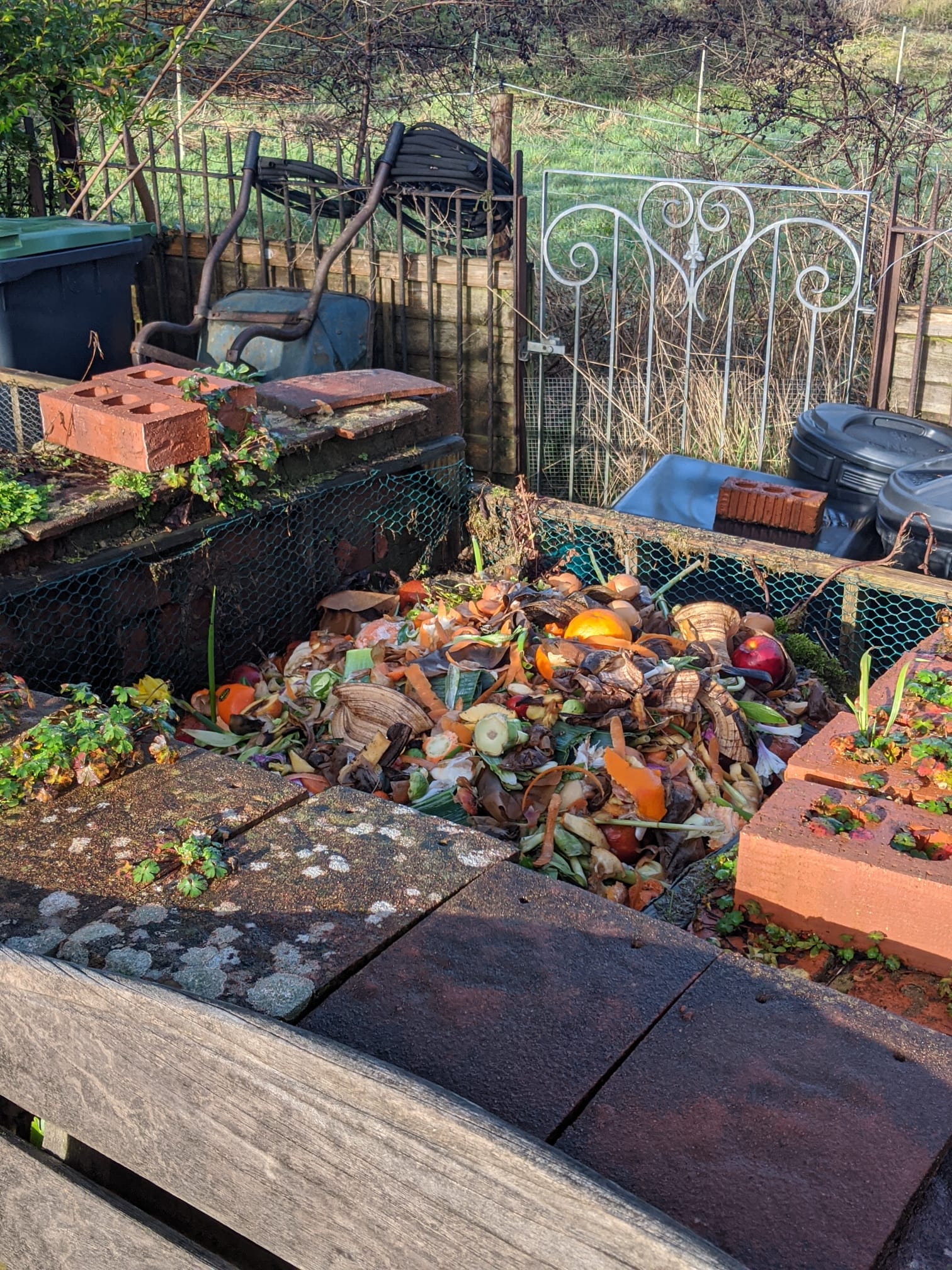
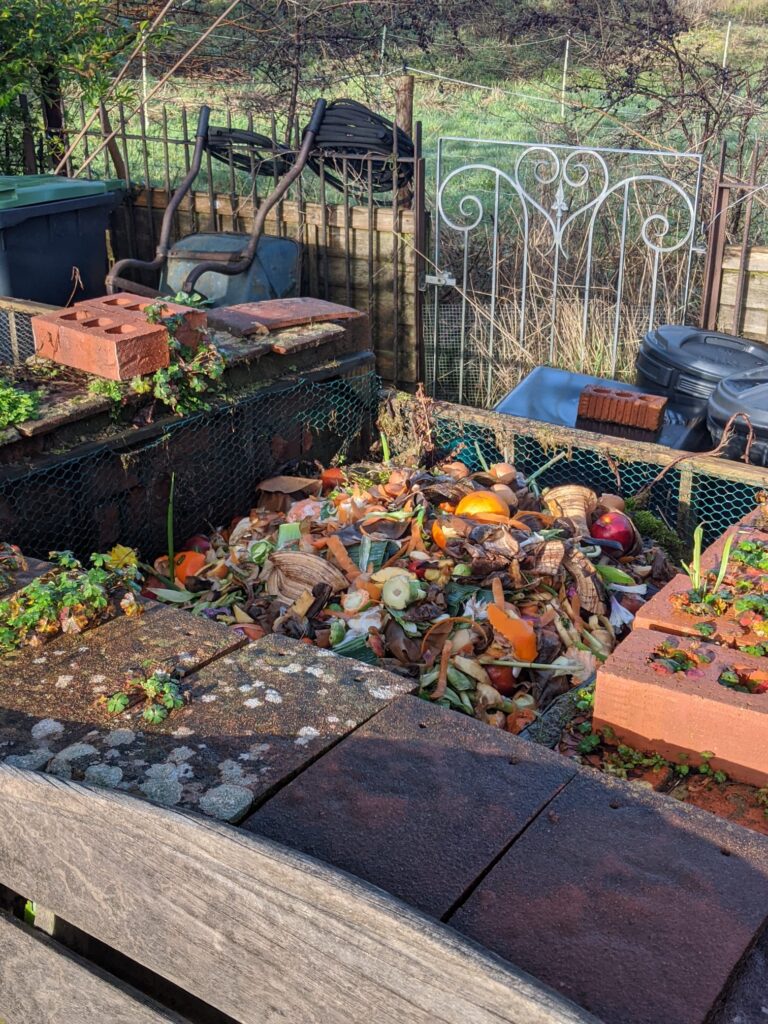
Choose a quiet corner of the garden — somewhere accessible but out of the way. You don’t need a special system to begin with. An open heap on bare soil works perfectly well, or a simple compost bin if you prefer something neater.
Start by adding a small layer of browns (cardboard or dry leaves), then add your kitchen scraps on top. Cover those scraps with more browns. From the beginning, get into the habit of adding cardboard every time food waste goes in. That balance is what prevents smells and keeps the pile healthy.
Keep the heap moist — like a wrung-out sponge — but not waterlogged. Turn it occasionally with a fork if you can, though even that isn’t essential at first.
Get the balance roughly right and the microbes do most of the work. You can largely leave it alone after that.
📦 The Secret Most Beginners Miss (Cardboard)
If your compost heap smells like a swamp, you haven’t failed — you just forgot the cardboard.
Most UK households generate plenty of “greens”:
- Vegetable peelings
- Fruit scraps
- Grass clippings
But beginners forget the “browns”.
I keep torn-up Amazon boxes and egg cartons next to the bin. Every time kitchen scraps go in, a handful of shredded cardboard goes in too.
That simple habit is the difference between:
- A slimy, smelly heap
- Compost that smells like a forest floor
If in doubt, add cardboard.
What You Can Compost
Think in two categories.
🟢 Greens (Nitrogen-rich)
- Vegetable peelings
- Fruit scraps
- Coffee grounds
- Tea bags (plastic-free)
- Grass clippings
- Fresh garden trimmings
- Soft weeds (before they seed)
🟤 Browns (Carbon-rich)
- Torn cardboard
- Egg boxes
- Paper (non-glossy)
- Dead leaves
- Straw
- Untreated sawdust
- Wood chips
Aim for roughly 50/50 by volume.
The pile should feel like a wrung-out sponge — moist but not dripping.
🚫 What NOT to Put in Compost
Avoid adding:
- Cooked food
- Meat or fish
- Dairy
- Oils and fats
- Bread and pasta
- Glossy magazines
- Coal ash
- Diseased plants
- Perennial weeds (bindweed, couch grass, dandelion roots)
- Dog poo or other pet waste
A Direct Word on Dog Waste
I get asked this often.
Technically, dog waste will break down.
But unless you are running a properly managed hot composting system reaching 60°C+ consistently, harmful bacteria and parasites may survive.
If you’re growing food in that soil, it simply isn’t worth the risk.
Keep pet waste out of garden compost.
Composting Do’s and Don’ts
✅ Do
- Add cardboard regularly
- Chop larger scraps smaller
- Keep the pile moist
- Turn it occasionally
- Add autumn leaves whenever possible
❌ Don’t
- Add food scraps without browns
- Let it dry out completely
- Add cooked leftovers
- Add pet waste
- Expect instant results
Most compost problems are balance problems.
Do You Need a Compost Bin?
No — not in the beginning.
You don’t need to buy a special system to start composting. The microbes don’t care what container they live in.
You can compost using:
- A simple open heap in a quiet corner
- A plastic compost bin
- Wooden compost bays
- Even a basic enclosure made from pallets
All of them work.
What matters is balance, moisture and airflow — not branding.
Start with what you have.
If you do decide to use a bin, our guide to the best compost bins for UK gardens compares simple options that work well in real conditions.
📍 Where Should You Put a Compost Bin?
Location matters more than the type of bin you choose.
Ideally, place your compost heap:
- On bare soil (so worms and microbes can enter naturally)
- In partial shade
- Somewhere sheltered from strong wind
- Close enough to the kitchen to use regularly
Avoid placing it:
- On concrete or paving
- In a permanently waterlogged area
- At the very bottom of a slope where rain collects
If you have no choice but to place it on concrete or paving, add a few shovelfuls of garden soil to the bottom of the pile to introduce microbes and worms manually.
In the UK climate, full sun can dry a pile out in summer, while deep shade can keep it too damp in winter. A lightly shaded spot against a fence or hedge is often ideal.
Most importantly, put it somewhere convenient. If it’s awkward to reach, you’ll be less likely to use it.
❄️ Composting in Different UK Seasons
Composting happens year-round in the UK — but the speed changes.
🍂 Autumn
This is the best time to start. Fallen leaves provide an abundance of browns, and garden clear-outs add greens. A well-built autumn heap often produces usable compost by spring.
🌬 Winter
The pile slows down as temperatures drop. It won’t stop completely, but activity is reduced. Keep adding material and layering browns — it will catch up when spring arrives.
🌱 Spring
As temperatures rise, microbial activity increases. Turning the heap in early spring can dramatically speed up decomposition.
☀️ Summer
Warm weather accelerates breakdown, but watch moisture levels. If the pile dries out, decomposition slows. Add water during prolonged dry spells and continue balancing with cardboard.
Understanding the seasons helps set expectations. Composting isn’t instant — it’s a natural process that moves with the weather.
⏳ How Long Does Compost Take?
In typical UK conditions:
- 3–6 months if turned regularly
- 6–12 months if left alone
Finished compost should be:
- Dark brown
- Crumbly
- Earthy smelling
- Unrecognisable as its original ingredients
If you can still see peelings, it needs more time.
🌿 What Can You Use Compost For?
Compost is a soil improver, not just “fertiliser”.
Use it to:
- Mulch vegetable beds
- Feed fruit trees
- Improve clay soil
- Top-dress lawns
- Enrich greenhouse beds
- Mix into potting compost
Spoiled apples from shed storage can go straight into the heap. Even flour dust or a failed sourdough starter can be returned to the soil.
That’s the closed-loop system working properly.
🔧 Compost Troubleshooting Guide
| Problem | Likely Cause | Simple Fix |
|---|---|---|
| Smells bad or swampy | Too many greens | Add shredded cardboard or dry leaves |
| Lots of ants | Pile too dry | Add water and fresh greens |
| Not breaking down | Too dry or compacted | Turn the pile and add greens |
| Slimy texture | Lack of browns | Mix in paper, cardboard or straw |
| Weeds growing in compost | Added perennial weeds | Remove and avoid adding roots next time |
🌍 Why Composting Matters
When food waste goes to landfill, it breaks down without oxygen and produces methane — a powerful greenhouse gas. The Royal Horticultural Society encourages composting at home as a way to return nutrients to the soil rather than sending them to landfill.
A well-managed compost heap breaks down organic material with oxygen. Instead of producing significant methane, it turns kitchen scraps into soil.
One locks nutrients away in landfill.
The other puts them back into your garden.
Composting reduces waste, improves soil naturally, and strengthens your garden’s independence from bought fertilisers.
It is one of the foundations of practical self-sufficiency.
Final Thoughts
Start small.
Add cardboard.
Keep pet waste out.
Be patient.
What looks like rubbish today becomes better soil next season — and better soil grows better food.
📎 Related Articles
- The HomeGrower Guide to Outdoor Growing
A complete overview of growing food outdoors in the UK, from soil preparation to seasonal planting. - Best Compost Bins for UK Gardens
A practical guide to choosing a compost bin, including simple options that work well in real UK conditions. - Best Fertiliser UK | Top Garden Feeds
Compare the best fertilisers for vegetables, lawns and fruit trees to support healthy soil and strong growth.