
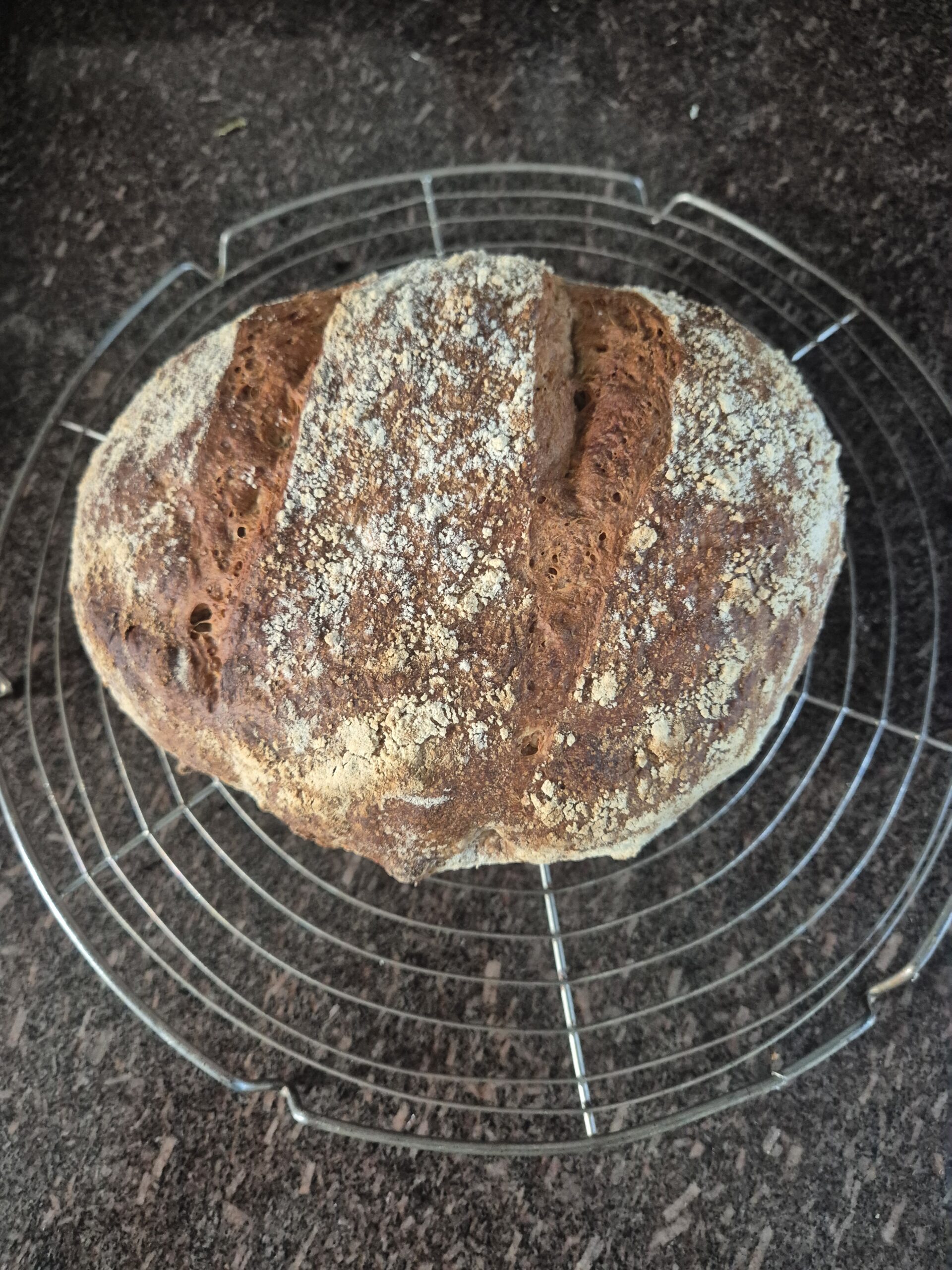
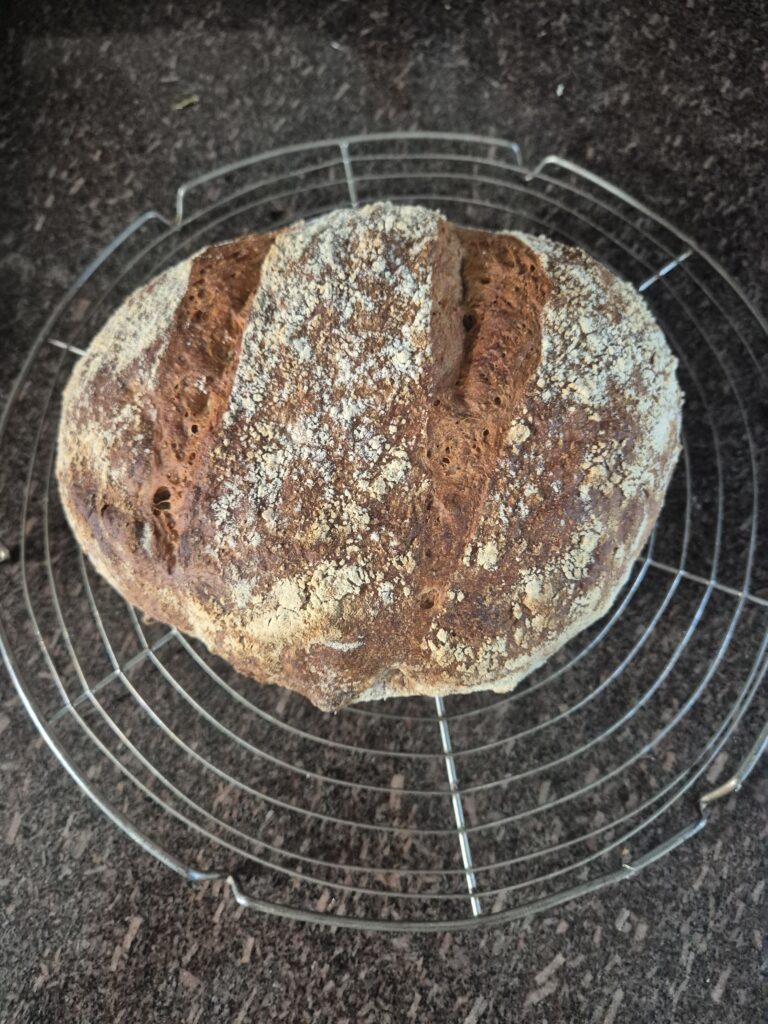
Learning how to make sourdough bread at home doesn’t have to be complicated or fussy.
Despite its reputation for being slightly pretentious and overly technical, sourdough is really just flour, water and time.
We don’t use Dutch ovens. We don’t follow a rigid scientific schedule. And we don’t obsess over the perfect crumb.
This is the simplified method we use to keep fresh bread in the house without letting the process take over our lives.
If you’re building practical kitchen skills, this sits alongside drying, bottling and traditional storage methods in our Food Preservation guide.
🌾 The Starter (Your Living Ingredient)
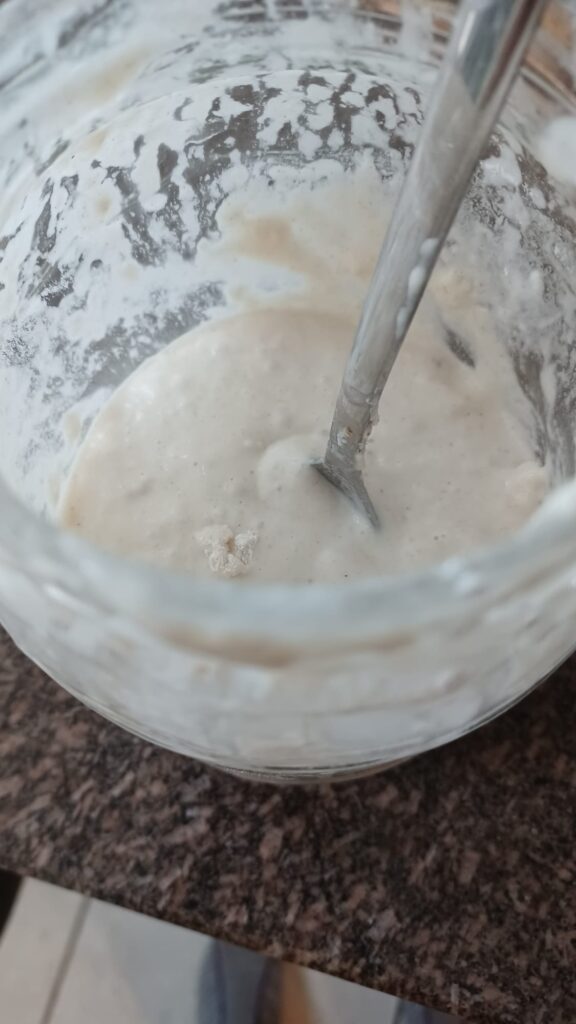
A sourdough starter is just flour, water, and wild yeast working together.
Daily Feeding (When Active)
- 1 large spoon of flour
- Roughly the same amount of water
- Stir well
- Keep in the fridge
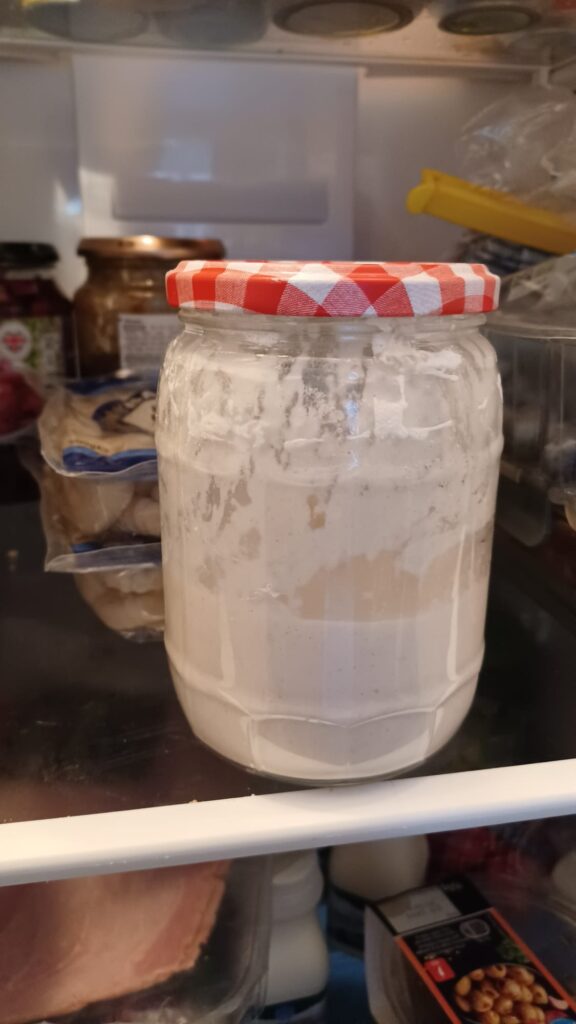
If the jar gets too full and you’re not baking, discard a little before feeding.
Think of your starter like a hardy garden plant, not a delicate pet. Keeping it in the fridge means you only have to think about it occasionally. If it develops a grey liquid on top after being neglected for a while, just pour it off and feed it again.
You’re looking for:
- Bubbles
- A light sour smell (not unpleasant)
- A rise after feeding
That’s it.
🍞 Prep Day
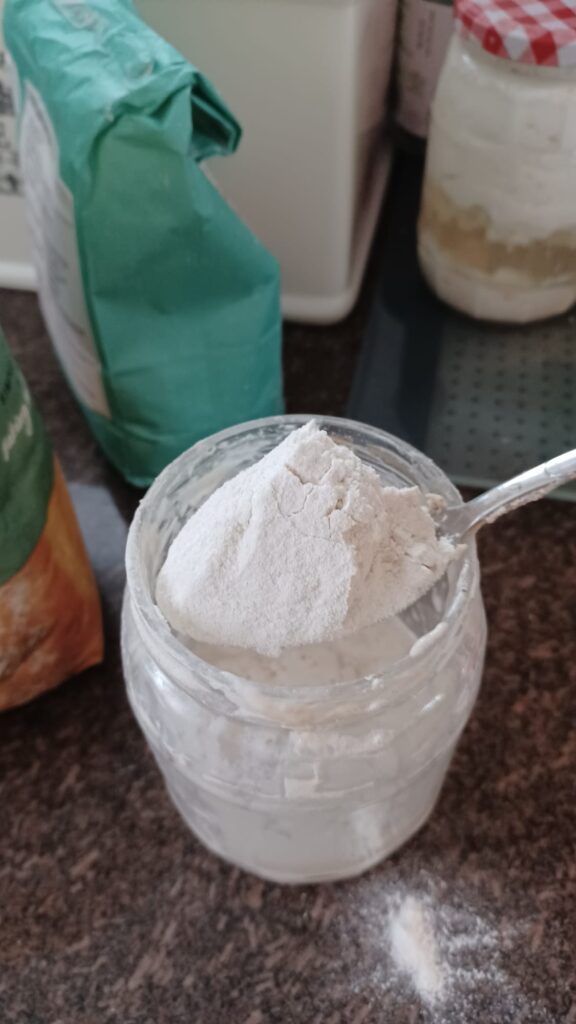
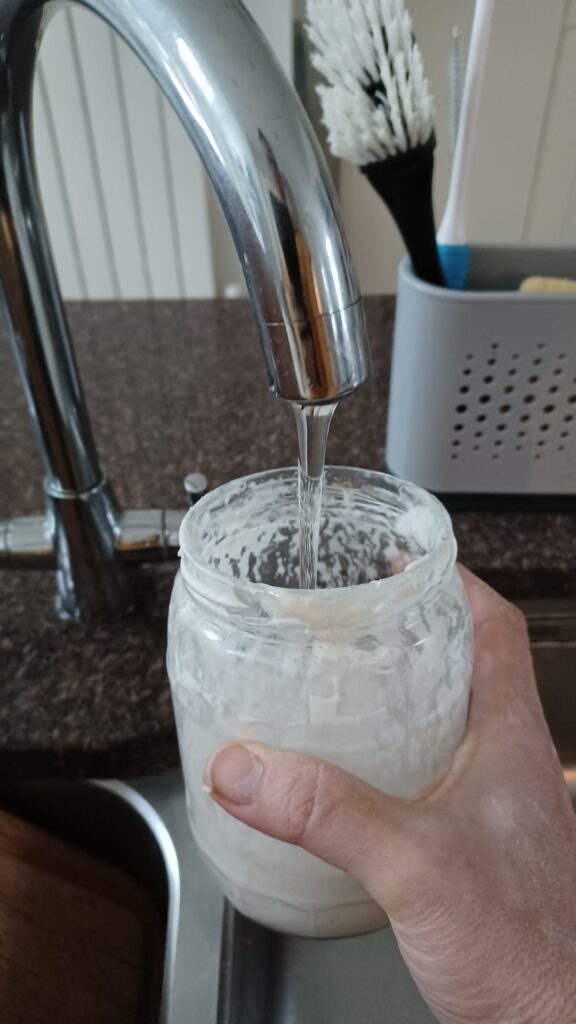
Morning
Remove your starter from the fridge and feed it with:
- 1 large spoonful of flour
- Roughly the same amount of water
Stir well and leave at room temperature until bubbly and active (usually 4–6 hours).
2pm – Mix to “Shaggy Mass” Stage
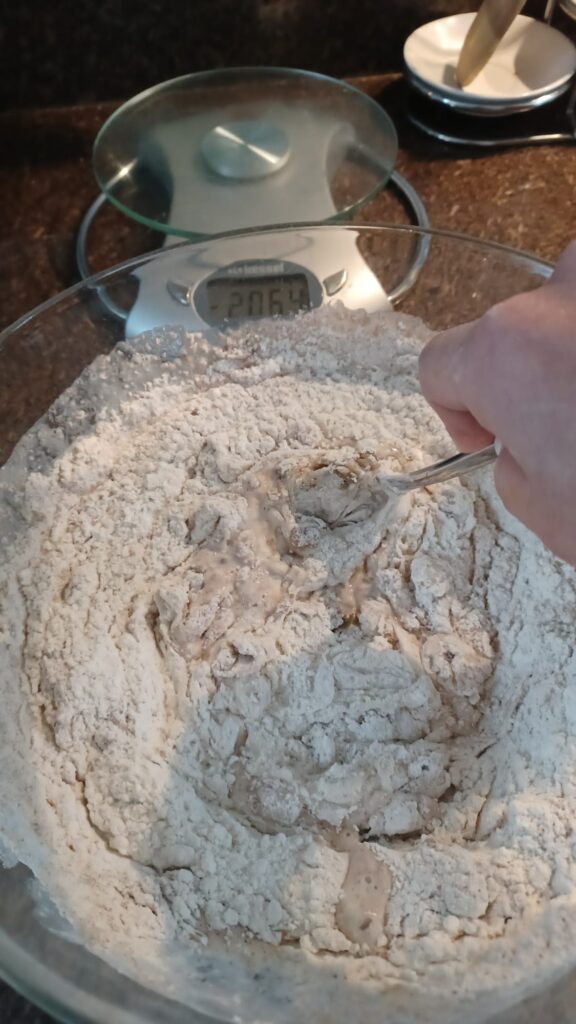
Add everything into a bowl and stir until combined.
Ingredients:
- 100g bubbly starter
- 200g white flour
- 200g wholemeal flour
- 250ml water
- 10g salt
- 30ml olive oil
- 30g seeds (optional)
When you first mix everything together, it will look messy. Sticky, uneven and nothing like a loaf.
Don’t panic — this is exactly how it should be. This is called the “shaggy mass” stage. The dough develops structure later during folding and the overnight rest, not in the mixing bowl.
Cover with a damp tea towel and leave it alone.
🔁 Afternoon – Stretch & Fold
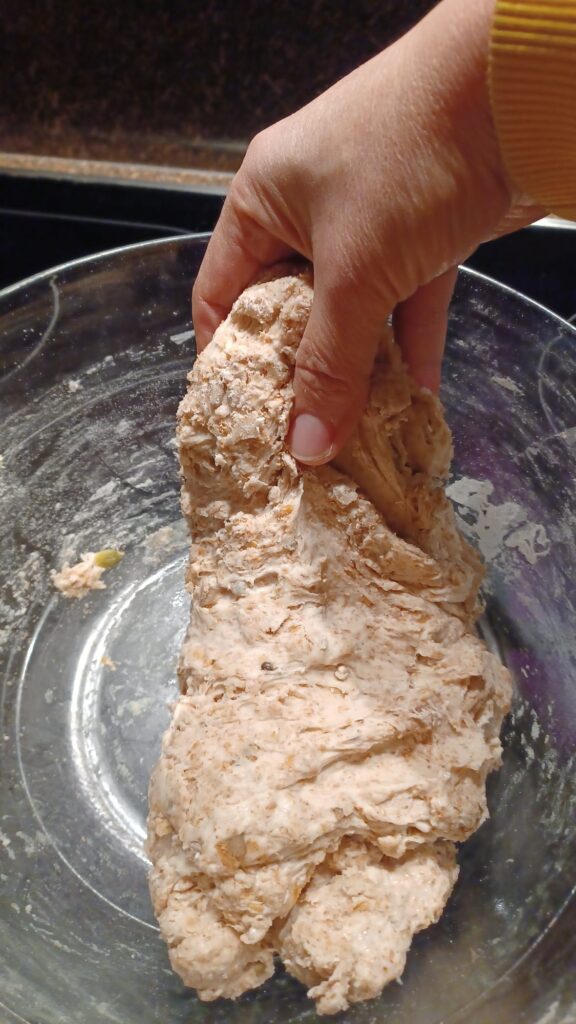
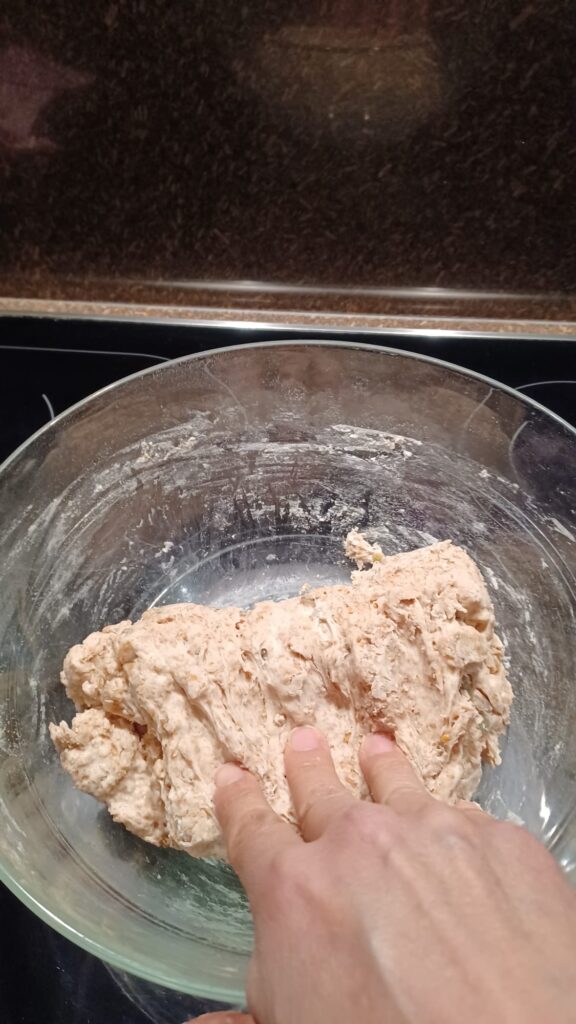
Over the next few hours:
- Fold the dough in half
- Turn the bowl a quarter turn
- Repeat
Do this 3–4 times across the afternoon whenever you remember. No strict schedule needed.
Keep the tea towel damp so the dough doesn’t dry out.
This builds structure without kneading.
🌙 Evening – Cold Proof
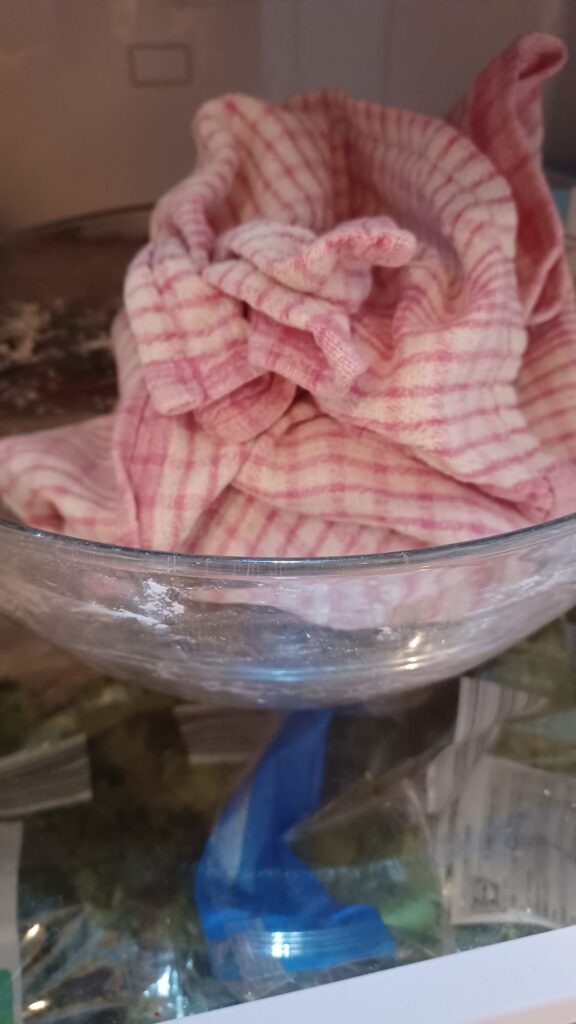
- Flour the inside of a tea towel
- Wrap the dough in it
- Place in the fridge overnight
This slow fermentation improves flavour and digestibility.
🔥 Bake Day
Morning
- Remove dough from fridge
- Let it come to room temperature (about 1 hour)
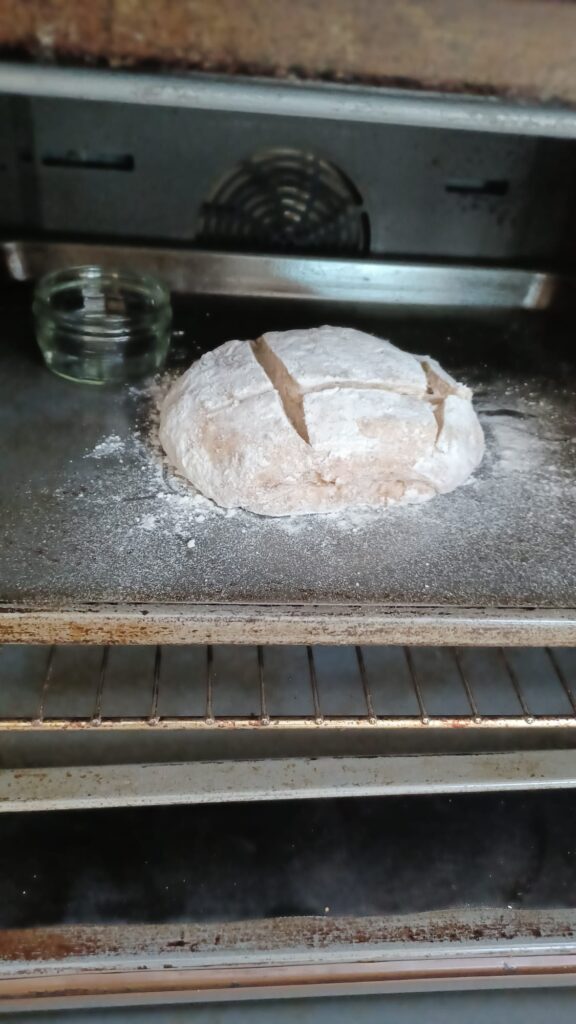
- Preheat oven to 240°C (220°C for fan oven)
- Place a ramekin of water in the oven (for steam)
Turn the dough out onto a baking tray.
Slash the top with a sharp knife.
Bake for 30 minutes.
Remove and leave to cool fully.
Do not cut while hot.
The texture continues developing as it cools.
🌾 Why It’s Worth Learning
Sourdough isn’t about perfection. It’s about knowing you can turn flour, water and a spoonful of starter into proper bread.
Once your starter is established, you’re no longer dependent on shop yeast. You can bake whenever you like. If the shops are empty, it doesn’t matter.
It’s a small skill — but it’s a real one.
And like most traditional food skills, it becomes easier the more you do it.
📎 Related Articles
If you’re building practical kitchen and food storage skills, you may also find these helpful:
- The HomeGrower Guide to Food Preservation
A complete overview of traditional food storage methods including drying, bottling, fermenting and long-term pantry skills. - How to Store Apples in a Shed
Practical guidance on keeping homegrown apples fresh through the winter using simple, low-tech methods.
FAQs About How to Make Sourdough Bread
How do I know if my sourdough starter is ready to use?
Your starter should look bubbly, slightly risen, and smell mildly sour (not unpleasant). If it roughly doubles in size within a few hours of feeding at room temperature, it’s usually strong enough to bake with.
Why didn’t my sourdough bread rise?
The most common causes are an underactive starter, a cold kitchen, or not enough folding. Make sure your starter is properly bubbly and active before mixing, and give the dough time to develop structure during the stretch-and-fold stage.
Can I use a fan oven when making sourdough bread?
Yes. For a fan oven, reduce the temperature slightly (around 220°C fan). Keep the ramekin of water in the oven to create steam, which helps the crust develop well.
What is the grey liquid on top of my starter?
That liquid is often called “hooch”. It usually appears when the starter is hungry. Pour it off (or stir it in if you prefer a more sour flavour), then feed your starter as normal.
How often do I need to feed my starter?
If you keep it in the fridge, feeding once a week is usually enough. If you’re baking, feed it on prep day (or the morning you start) and use it once it becomes bubbly and active.
Why is my sourdough crust very hard?
A very hard crust can come from baking too long, running the oven too hot, or letting the loaf dry out while cooling. Next time, try shaving 5 minutes off the bake time, and always cool the loaf uncovered on a rack.