
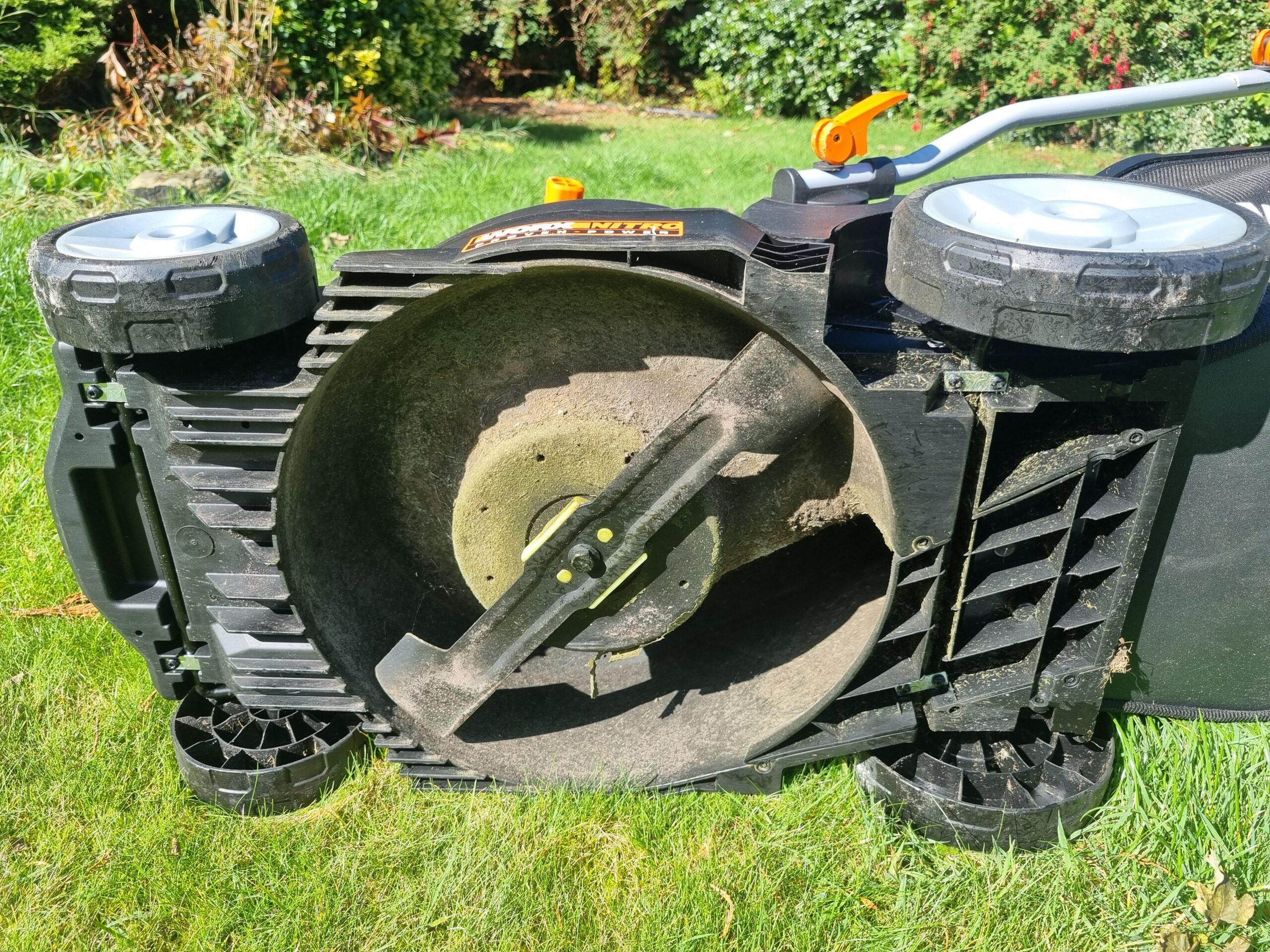
Grass build-up under my own cordless mower after a damp spring cut — this is what eventually turns into “green concrete” if left untreated.
Cordless garden tools are far lower maintenance than petrol models — but they’re not maintenance-free.
A few simple habits will extend battery life, keep blades cutting cleanly, and prevent the gradual performance drop that many people assume is “just how cordless tools are”.
In this guide, we’ll cover how to maintain cordless garden tools (lawnmowers, hedge trimmers and strimmers) properly in real UK conditions — including cleaning, blade care, battery management and winter storage.
For a broader look at tool types, buying advice and long-term ownership considerations, see our complete Garden Tools and Equipment guide.
Quick Tool Health Cheat Sheet
| Tool | Monthly check | Winter prep |
|---|---|---|
| Mower | Scrape deck; inspect blade for nicks | Deep clean; store off concrete floor |
| Hedge trimmer | Resin spray; check blade bolts | Oil blades; store with sheath fitted |
| Strimmer | Clear head of wrapped grass | Loosen line tension; clean vents |
| Batteries | Recharge around 20–30% | Store indoors at ~50% charge |
Mower
Scrape deck; inspect blade for nicks
Deep clean; store off concrete floor
Hedge trimmer
Resin spray; check blade bolts
Oil blades; store with sheath fitted
Strimmer
Clear head of wrapped grass
Loosen line tension; clean vents
Batteries
Recharge around 20–30%
Store indoors at ~50% charge
🧽 Cleaning After Use
Cordless Lawn Mowers
After mowing:
- Remove the battery first.
- Tip carefully (follow manufacturer guidance).
- Brush off compacted grass from the deck.
If you leave wet grass under the deck after a damp March mow, it sets like “green concrete.”
By summer, that hardened layer disrupts the airflow that lifts the grass upright before cutting. The result? Straggling bits left behind — which many people wrongly blame on “weak cordless power.”
Use a plastic spatula, not a metal scraper. Metal scratches the protective coating on the deck and encourages rust.
Avoid pressure washers. Water forced into bearings and motor housings shortens lifespan significantly.
If you’re choosing or upgrading equipment, see our cordless lawn mower buying guide for current recommendations.
Hedge Trimmers
Sap is the silent killer of hedge trimmers.
Warm soapy water works for light trimming. But if you’ve tackled:
- Leylandii
- Pine
- Conifers
…you’ll need a proper resin solvent.
I use STIHL Superclean because it works as both a solvent and light lubricant, but any quality resin remover from a garden centre will do. Avoid relying on WD-40 as a long-term blade lubricant — it’s primarily a cleaner and not thick enough to protect blades during heavy cutting.
Practical tip:
- Spray lightly on blades
- Run the trimmer for 1–2 seconds to spread
- Wipe clean
It prevents your battery from working noticeably harder just to move sticky blades.
For help selecting the right blade length and power level, see our cordless hedge trimmer guide.
Strimmers
- Remove grass wrapped around the head.
- Clear vents.
- Check the spool housing.
Long grass wrapped tightly around the shaft traps heat. Over time, heat is what reduces cordless motor lifespan — not “power”.
Our cordless strimmer buying guide covers spool types and battery compatibility in more detail.
✂️ Blade and Cutting Care
Dull blades strain batteries.
Signs you need sharpening:
- Grass tips look torn or white.
- Hedge leaves are shredded.
- You’re going over areas twice.
Typical home use guidance:
- Mower blade: once per season
- Hedge trimmer blades: every 1–2 seasons
- Strimmer line: replace as needed
Sharp blades = less resistance = longer runtime.
🔋 Lithium-Ion Battery Care
Batteries are the most expensive part of your cordless setup.
Good care can add a year or more of usable life.
Avoid Running Them Completely Flat
Lithium-ion prefers partial discharge.
Recharge when you reach roughly 20–30%, rather than waiting for full shutdown every time.
Repeated deep discharge shortens total lifecycle.
The 80% Rule (Advanced Tip)
If you don’t need maximum runtime every session, charging to around 80% instead of 100% can extend overall cell lifespan noticeably.
Many modern lithium batteries degrade fastest when kept at 100% for long periods.
If you’re just trimming edges for 15 minutes, full charge isn’t necessary.
UK Winter Storage: The Utility Room Rule
In Britain, “store somewhere dry” is vague advice.
A typical garden shed in January means:
- Cold
- Damp
- Condensation
Best practice:
- Bring batteries indoors.
- Store around 40–60% charge.
- Never store at 0% over winter.
- Avoid kitchens (cooking humidity).
- A utility room or cupboard under the stairs is ideal.
A simple clip-top plastic storage box keeps batteries dust-free and reduces moisture exposure — especially helpful if you use interchangeable systems like Worx or Bosch batteries.
If you’re unsure how your particular brand manages charging cycles or cell protection, see our Guide to Power Share Battery Systems, where we explain how different battery platforms handle storage and charge levels.
Lithium-ion batteries should always be stored and charged according to manufacturer guidance. For broader electrical safety advice in UK homes, see guidance from Electrical Safety First.
🍂 Seasonal Reset Checklist
At the end of the growing season:
Lawn Mower
- Remove “green concrete” build-up fully
- Inspect blade
- Empty grass box
- Store off cold concrete floors
Hedge Trimmer
- Resin clean
- Light oil coat
- Fit blade sheath
Strimmer
- Clean spool head
- Loosen line tension
- Inspect guard
Batteries
- Charge to ~50%
- Store indoors
- Keep away from freezing conditions
This “reset” prevents most spring start-up issues.
⚠️ When Performance Drops
If your cordless tool feels weaker:
Common causes:
- Deck airflow blocked
- Resin-heavy blades
- Cold weather use
- Battery ageing
- Vent obstruction
Cold batteries temporarily lose performance. A battery used at 5°C can feel dramatically weaker than at 18°C.
Clean and warm before assuming failure.
Is it Difficult to Maintain Cordless Garden Tools?
No. Once you understand how to maintain cordless garden tools properly, the routine becomes quick and predictable — far simpler than servicing petrol equipment.
Compared to petrol:
- No oil changes
- No carburettors
- No fuel stabiliser
- No spark plugs
But they reward light, consistent care.
Neglect shows up as declining runtime and cutting quality — not dramatic breakdown.
Final Thoughts
Cordless garden tools are designed for convenience — and they deliver it.
But their lifespan depends less on brand and more on maintenance habits.
Five minutes after use.
Sensible battery storage.
Seasonal reset before winter.
That’s the difference between tools lasting three years… or seven.
📎 Related Guides
- The HomeGrower Guide to Garden Tools and Equipment A complete overview of cordless tools, battery platforms, storage, and long-term ownership in real UK gardens.
- Worx WG737E Review: Cordless Mower Real-world testing of this cordless mower, including cutting performance, battery runtime, and long-term ownership.
- Worx WG252E Review: Cordless Pole Trimmer A detailed look at reach, balance, battery compatibility, and real garden performance.
Frequently Asked Questions
How long should cordless garden tools last with proper maintenance?
If you maintain cordless garden tools consistently, most quality models should last five to seven years or more. Regular cleaning, blade care and sensible battery storage make a significant difference to long-term performance.
Can you leave cordless garden tools in a shed over winter?
Tools can usually remain in a shed, but batteries should be stored indoors in a dry, frost-free location. Knowing how to maintain cordless garden tools through winter conditions helps prevent moisture damage and capacity loss.
Why does my cordless mower feel weaker after a year?
Reduced cutting performance is often caused by blade dullness, deck build-up or battery ageing rather than motor failure. Proper maintenance helps maintain cordless garden tools at their intended efficiency and restores runtime.
What happens if you don’t maintain cordless garden tools regularly?
If you don’t maintain cordless garden tools, performance usually declines gradually rather than failing suddenly. Deck build-up, dull blades and poor battery storage reduce efficiency and shorten overall lifespan.
Is it expensive to maintain cordless garden tools?
No. When you maintain cordless garden tools properly, the costs are minimal. Occasional blade sharpening, replacement line and sensible battery care are far cheaper than servicing petrol equipment.