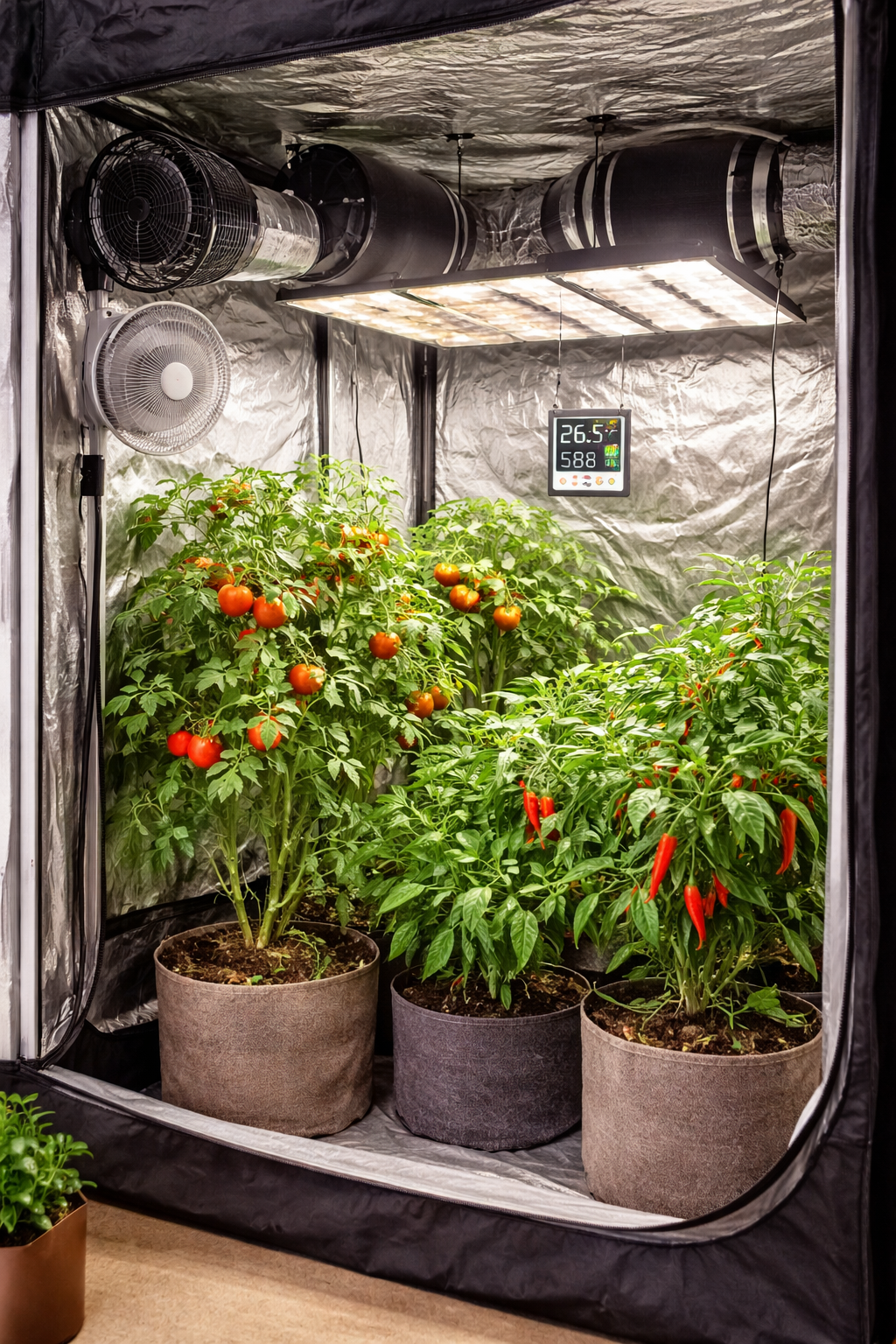
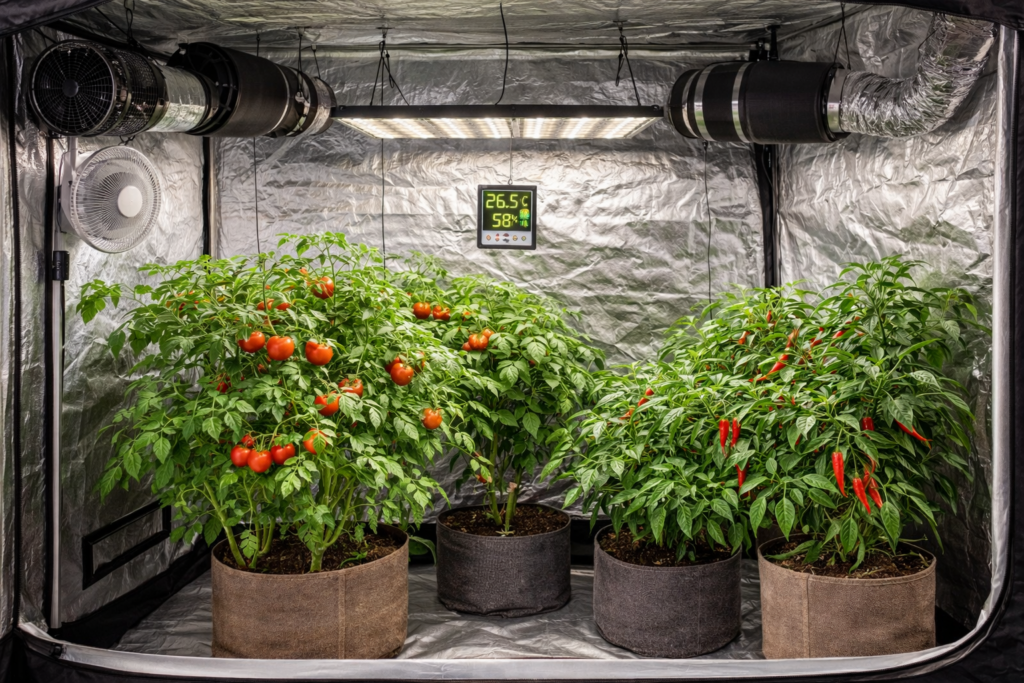
Keeping heat and humidity in a grow tent under control is one of the most misunderstood parts of using a grow tent — especially in the UK.
Some people assume you need heaters, humidifiers, and constant monitoring. Others give up entirely, blaming “bad lights” or “cheap tents” when plants struggle.
The truth is simpler.
Most grow tent problems come from too much heat, trapped moisture, or trying to control the wrong thing.
If you’re new to tents, this guide works best alongside The HomeGrower Guide to Grow Tents, which explains sizing, basic setup, and where tents actually work well in UK homes. Once that foundation is in place, heat and humidity are the next real hurdles.
This guide explains how temperature and humidity behave in real UK conditions — what ranges actually matter, and how to stabilise them without overcomplicating your setup or driving up running costs.
If you’re dealing with unstable temperatures specifically — such as cold garages in winter or overheating lofts in summer — see our dedicated guide to grow tent temperature control, which goes deeper into seasonal fixes and temperature-only problems.
🌡️ Why Heat and Humidity in a Grow Tent Matter
A grow tent is a controlled environment — but it’s also a confined one.
Lights generate heat. Plants release moisture. Fabric walls slow heat loss. Without airflow, small changes build quickly.
When heat or humidity drift too far:
- Growth slows
- Leaves curl or droop
- Mould and mildew become a risk
- Running costs creep up as people try to “fix” the wrong problem
The goal isn’t perfection.
It’s stable, reasonable conditions that suit your plants and your home.
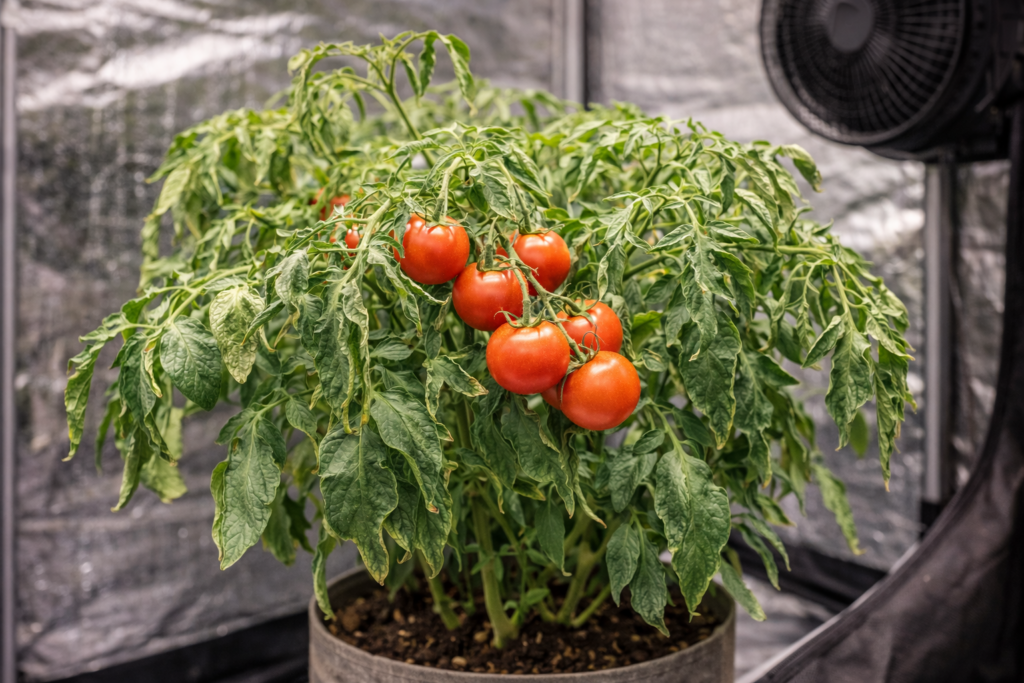
Wilting and leaf curl are common signs of heat stress in tomato plants grown inside a grow tent.
The “Sensory Check” Most Growers Ignore
Numbers on a screen help — but your senses matter too.
When you unzip a healthy tent, it should feel:
- Warm but not stuffy
- Bright and airy
- Fresh, not heavy
If your tent smells like:
- A damp forest floor
- A laundry room
- Stale, wet fabric
…your humidity is too high regardless of what the display says.
This simple check often catches problems before instruments do.
Ideal Temperature & Humidity Ranges (Realistic, Not Theoretical)
You’ll see a lot of very precise numbers online. In practice, ranges matter more than targets.
Temperature (lights on)
- Most leafy crops & herbs: 18–24°C
- Fruit-bearing plants: 20–26°C
- Short spikes to 28°C: Usually fine with good airflow
Temperature (lights off)
- A drop of 3–6°C is normal and healthy
- Avoid prolonged drops below 12°C indoors
Relative Humidity (RH)
- Seedlings & young plants: 55–70%
- Established plants: 40–60%
- Dense or late growth: 40–50%
If your readings sit near these ranges and stay steady, you’re doing well — even if they’re not textbook perfect.
🇬🇧 The UK Reality Check: Rainy Days & Damp Air
In the UK, outdoor humidity regularly hits 90–95%, especially in autumn and winter.
On a rainy October Tuesday, your extraction fan becomes a double-edged sword:
- It removes stale air ✅
- But it also pulls in already damp air ❌
This is where people panic and overspend.
Instead of buying a bigger fan, focus on:
- Internal circulation fans (moving air across leaves)
- Preventing moisture from settling
- Keeping temperatures stable
When outside air is wet, airflow inside the tent matters more than extraction volume.
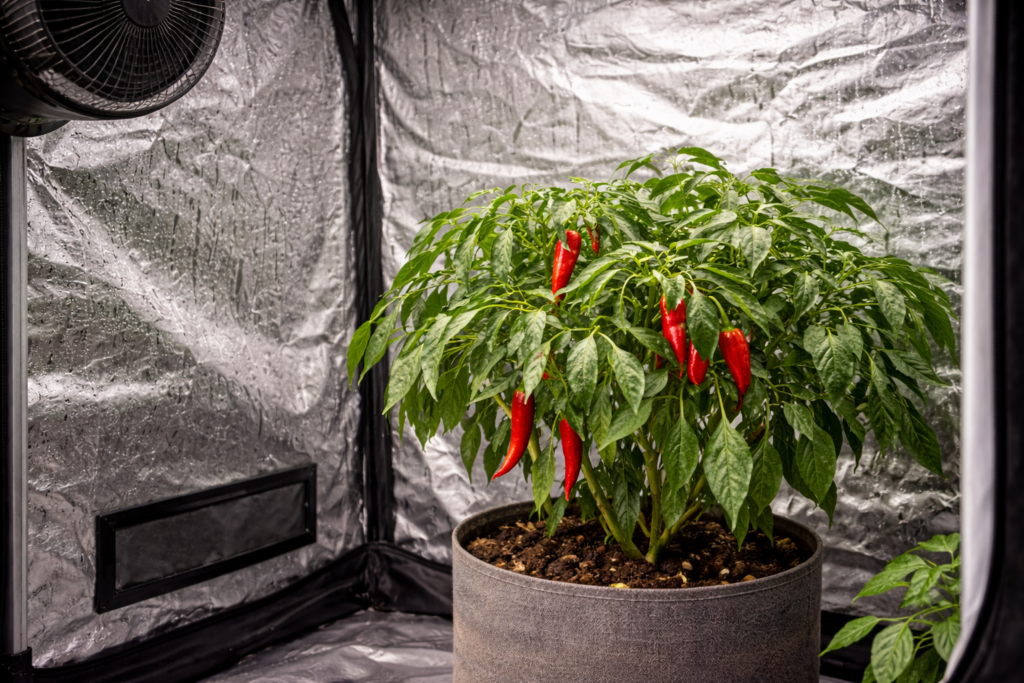
High humidity inside a grow tent often shows up first as condensation on the walls.
Introducing VPD (Without the Scary Jargon)
Plants don’t respond to temperature or humidity in isolation — they respond to the relationship between the two.
This relationship is called Vapour Pressure Deficit (VPD).
You don’t need charts, apps, or daily calculations. You just need to understand the principle:
- Warm air needs higher humidity
- Cool air needs lower humidity
If the air is too hot and dry, the plant loses water too fast — it effectively pants.
If it’s too cool and damp, moisture lingers and gas exchange slows — the plant chokes.
For context only, VPD can be simplified as:VPD≈Psat−Pair
Think of it as a Goldilocks zone:
You want the air to have just enough “thirst” to pull water through the plant — but not so much that it sucks it dry.
If that balance sounds familiar, it’s because it mirrors everything else in this guide: moderation over perfection.
🌬️ How to Control Temperature (Without Wasting Money)
1. Ventilation comes first
Heat problems are rarely solved with heaters.
A properly set extraction system:
- Removes hot air
- Draws in cooler room air
- Stabilises temperature naturally
If your tent runs hot, improving airflow almost always works better than lowering light power.
This is where → How to Set Up Ventilation in a Grow Tent (Fans, Filters & Airflow Basics) becomes essential once it’s live.
2. Light height matters more than wattage
Many heat issues are caused by lights being too close.
Before turning power down:
- Raise the light
- Spread heat over a wider area
- Check leaf temperature, not just air temperature
3. Use the room, not just the tent
A tent can’t cool itself below the room temperature it sits in.
Simple fixes:
- Open the room door
- Vent into a larger space
- Avoid sealing tents into cupboards or alcoves
4. When heaters actually make sense
Small heaters or heat mats help only when:
- The room is genuinely cold
- Lights alone can’t maintain minimum temps
- Airflow is already sorted
If heat disappears as fast as you add it, the issue isn’t heating — it’s airflow.
💧 How to Control Humidity (The Counter-Intuitive Fix)
Plants create humidity. That’s normal.
Humidity becomes a problem when:
- Air doesn’t move
- Moisture can’t escape
- Temperatures fluctuate sharply
⭐ The UK Shortcut Most Guides Miss
If humidity is too high in your grow tent, dehumidify the room, not the tent.
Small tent dehumidifiers:
- Struggle in enclosed spaces
- Add heat
- Cost more to run per litre removed
A room-level dehumidifier:
- Lowers the moisture of all incoming air
- Lets your extraction system work properly
- Is quieter, cheaper, and more effective
This is especially important during wet UK weather, when outside air is already close to saturation.
🌙 The Lights-Off Danger Window
The most dangerous moment for humidity is 10–20 minutes after lights go out.
As temperature drops:
- Cool air holds less moisture
- Water condenses out of the air
- Risk of mould and bud rot increases
If this is an issue:
- Run extraction slightly higher for the first hour of darkness
- Maintain circulation even when lights are off
⚠️ Common Beginner Mistakes
- Sealing tents too tightly “to keep heat in”
- Oversizing fans without speed control
- Running humidifiers without airflow
- Heavy watering in already humid conditions
- Chasing perfect numbers instead of stability
Simple, balanced setups win long-term.
🛠️ Quick Troubleshooting Guide
| Symptom | Likely Cause | The HomeGrower Fix | Cost |
|---|---|---|---|
| Water on tent walls | Cold room + warm tent | Insulate underneath with cardboard or a rug | £0 |
| Crispy leaf edges | Heat stress / low RH | Raise the light height before increasing fan speed | £0 |
| Powdery white spots | Stagnant air | Add a second clip fan below canopy | £10–£20 |
| Big RH spikes at night | Lights-off temperature drop | Increase extraction for the first dark hour (timer/controller) | £0 |
Water on tent walls
Cold room + warm tent
Insulate underneath with cardboard or a rug
£0
Crispy leaf edges
Heat stress / low RH
Raise the light height before increasing fan speed
£0
Powdery white spots
Stagnant air
Add a second clip fan below canopy
£10–£20
Big RH spikes at night
Lights-off temperature drop
Increase extraction for the first dark hour (timer/controller)
£0
When Heat & Humidity Still Won’t Settle
If you’ve:
- Adjusted light height
- Improved extraction
- Reduced room moisture
…and conditions still swing wildly, airflow design is almost always the missing piece.
That’s where → How to Set Up Ventilation in a Grow Tent becomes the natural next step.
This principle mirrors traditional greenhouse growing, where organisations like the Royal Horticultural Society emphasise ventilation and air movement as the first defence against damp conditions.
Final Thought
You don’t need a perfect environment to grow successfully in a tent — especially in the UK.
You need:
- Reasonable ranges
- Steady airflow
- Fewer interventions, not more
Get those right, and heat and humidity stop being problems — they become background details you barely think about.