Heating a greenhouse is one of the most misunderstood parts of UK gardening. Some growers assume heat is essential, while others avoid it entirely, worried about costs or safety.
The truth sits somewhere in the middle.
We’ve all been there: it’s February, seed catalogues look tempting, and you want to get a head start. But in the UK, heating a cold glass greenhouse in mid-winter can feel like trying to warm a shed with the door open. Before you plug anything in, the real question is this — are you heating for survival, or for growth?
This guide explains how to heat a greenhouse in the UK, when heating is genuinely useful, and when it’s unnecessary. It’s designed to help you make calm, informed decisions — before you worry about heaters, running costs, or equipment.
If you’d like a broader overview, see our HomeGrower guide to greenhouses and polytunnels . It explains how the different greenhouse and polytunnel options compare, how they’re typically used in UK gardens, and links out to our more detailed guides so you can explore specific topics in more depth when you’re ready.
🌱 How to Heat a Greenhouse: Do You Actually Need Heating in the UK?
In most cases, no — not all greenhouses need heating.
A greenhouse already provides several benefits without any heater at all:
- Protection from wind and rain
- Higher daytime temperatures
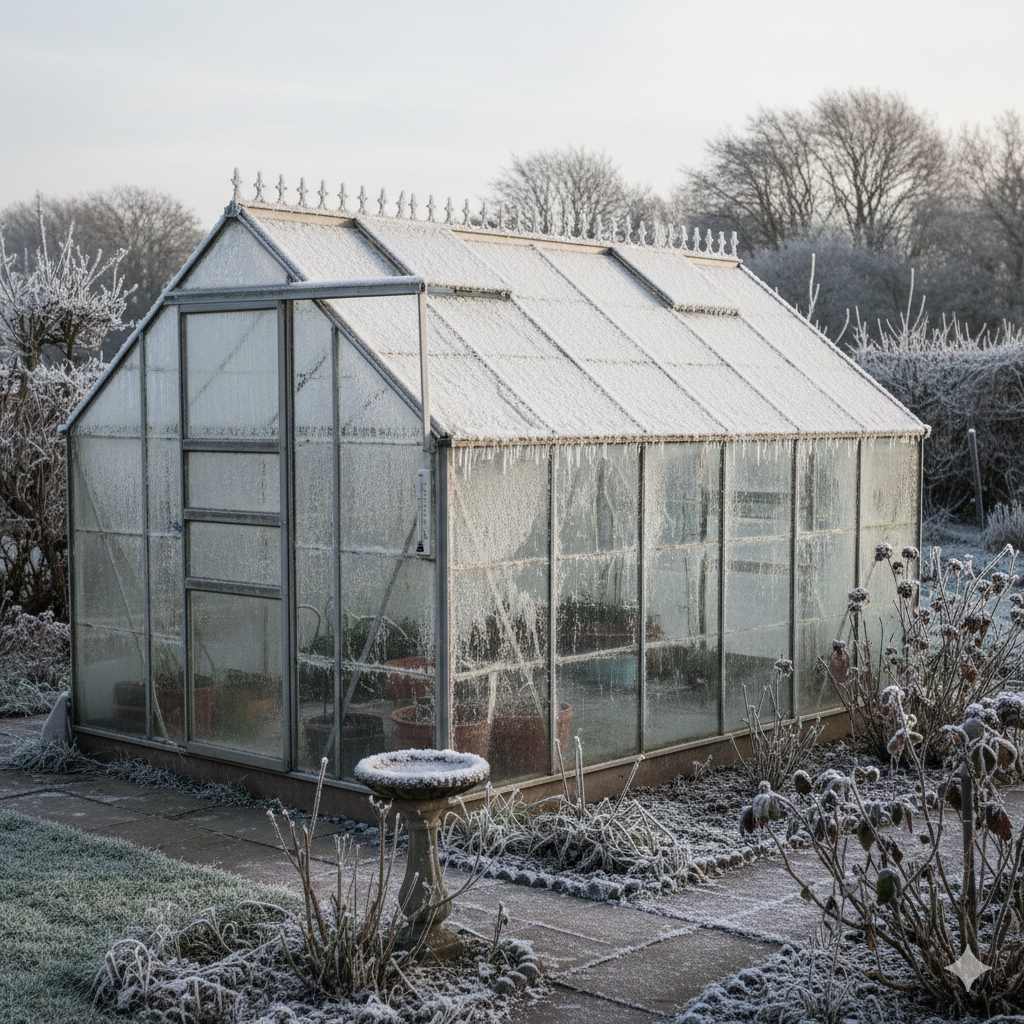
- Reduced frost exposure
- Earlier spring starts and later autumn harvests
For many UK gardeners growing hardy vegetables, salads, or overwintering plants, this passive protection is enough — especially when paired with the right greenhouse design and placement.
Heating becomes relevant when:
- You want to prevent frost damage, not just slow growth
- You’re growing tender plants (chillies, tomatoes, citrus)
- You want year-round or early-season production
- Your greenhouse is small, thin-glazed, or exposed
Think of heating as a tool, not a requirement.
❄️ When Heating Is Worth It — and When It Isn’t
Heating is worth considering if:
- Night temperatures regularly drop below 0°C
- You’re starting seeds in late winter
- You grow frost-sensitive plants
- You want reliable growth, not just survival
Heating is often unnecessary if:
- You only overwinter hardy plants
- You grow spring–summer crops only
- Your goal is frost avoidance, not warmth
- You use insulation and thermal mass well
Many UK gardeners overheat when all they really need is frost protection — particularly in smaller structures such as mini greenhouses or compact lean-to designs.
🔌 Electric Greenhouse Heaters (Controlled & Reliable)
Electric heaters are the most common greenhouse heater option in the UK, particularly for home gardeners.
How they work
They use mains electricity and often include:
- Thermostats
- Fan-assisted heat circulation
- Frost-protection modes
Pros
- Precise temperature control
- Clean (no fumes or moisture)
- Low fire risk when installed correctly
- Ideal for seed starting and tender plants
Cons
- Running costs can add up
- Requires safe outdoor electrics
- Less suitable for off-grid setups
Electric greenhouse heaters are best used to maintain minimum temperatures, not to create tropical conditions — especially in smaller greenhouses where heat builds quickly.
💷 Greenhouse Heating Costs (Realistic UK Estimates)
These are realistic ballpark figures for a 6×8 ft greenhouse in the UK. Estimates assume basic insulation (e.g., bubble wrap). Without insulation, costs can easily double.
| Heating goal | Method | Typical cost | Best for |
|---|---|---|---|
| Frost protection (keep above 2°C) | Small electric fan heater with thermostat | ~£0.50–£1.50 per night | Overwintering hardy plants |
| Gentle warmth (around 8–10°C) | Electric heater on thermostat | ~£3–£6 per night | Citrus, early sowings |
| Emergency cold snaps | Small paraffin heater | ~£1.50–£2.00 per fill | Short-term frost |
| Zone heating only | Heated propagator / heat mat | ~£0.05–£0.15 per day | Seed germination |
Grower’s note: Heating without insulation is the fastest way to burn money. Bubble wrap, fleece, and reducing draughts often save more than switching heaters.
If you want to estimate running costs more precisely, you can also use our grow light cost calculator. While it’s designed for lighting, the maths is the same for electric greenhouse heaters — simply enter your heater’s wattage and the number of hours it runs to see an estimated electricity cost.
It won’t tell you how warm your greenhouse will get, but it’s a useful way to sanity-check running costs before you plug anything in.
Tip: Most small greenhouse heaters are 500W–2,000W. Check the rating plate before estimating costs.
☀️ Solar Greenhouse Heaters (Limited but Useful)
A solar greenhouse heater sounds ideal, but expectations matter — particularly in the UK climate.
What solar can realistically do in the UK
- Provide daytime warmth
- Power small fans or heat-storage systems
- Support passive heating setups
What it usually can’t do
- Provide reliable overnight heat in winter
- Prevent frost on its own
Most solar-based greenhouse heating works best when combined with:
- Thermal mass (water barrels, stone)
- Good insulation
- Backup frost protection
Solar is best viewed as a support system, not a standalone solution.
🔥 Paraffin Greenhouse Heaters (Traditional but Tricky)
The paraffin greenhouse heater has been used in UK gardens for decades and still appears in many traditional setups.
Pros
- No electricity required
- Relatively cheap to buy
- Produces some CO₂ as a by-product
Cons
- Ongoing fuel costs
- Fire risk if poorly placed
- Adds moisture (can increase mould risk)
- Ventilation is essential
Paraffin heaters can be effective for basic frost protection, but they demand care, monitoring, and good airflow — particularly in enclosed or smaller greenhouses.
These heaters are a classic “grandad” solution, but be warned — they have a strong smell and release a lot of moisture. If you use one, you’re not just fighting the cold, you’re fighting condensation. Without ventilation, that moisture can rot plants from the top down even when temperatures are safe.
🧱 Passive Greenhouse Heating Methods (Often Overlooked)
Passive heating methods often deliver the biggest gains for the lowest cost — and can significantly reduce the need for active heating.
Thermal mass
- Water barrels
- Stone slabs
- Brick or masonry walls
These absorb heat during the day and release it slowly overnight.
Insulation
- Bubble wrap glazing
- Insulated north walls
- Draught sealing around doors and vents
A quick word of caution on bubble wrap: it’s excellent for reducing heat loss, but it also blocks some light. In a dark UK February, that matters. If possible, insulate the sides and north-facing panels first, and leave the sunniest roof panels clear so plants still get every scrap of winter light.
Fleece and covers
- Protect plants directly
- Reduce overnight heat loss
- Very low cost and flexible
For many UK growers, passive methods combined with frost protection outperform heaters alone — particularly in polytunnels and unheated greenhouses.
🎯 Heat the Pot, Not the Greenhouse
If you’re only growing a few trays of seedlings, heating the entire greenhouse is usually unnecessary.
It’s like heating a whole house just to warm a mug of tea.
Instead:
- Use a heated propagator or heat mat
- Warm the soil, not the air
- Keep seedlings in a small, insulated zone
This approach costs pennies per day and is often more effective than running a heater overnight — especially for chillies, peppers, and early sowings.
💷 Running Costs & Efficiency (What Matters Most)
Exact costs vary widely, but efficiency depends far more on heat retention than heat generation.
Key factors that reduce running costs:
- Insulation before heating
- Smaller heated zones
- Thermostats and timers
- Avoiding unnecessary temperature targets
A lightly heated, well-insulated greenhouse often costs less to run than a poorly insulated one with a powerful heater. For most UK gardeners, reducing heat loss delivers bigger savings than upgrading heaters.
⚠️ Safety Considerations You Shouldn’t Ignore
Electric heaters
- Use outdoor-rated sockets and RCD protection
- Keep cables off wet ground
- Avoid cheap extension leads
Paraffin heaters
- Maintain clearance from plants and plastics
- Ventilate regularly
- Never refuel when hot
General safety
- Avoid open flames near dry materials
- Keep heaters stable and level
- Don’t heat more than necessary
Safety always matters more than speed or plant growth.
🌡️ What Temperatures Do Common Crops Actually Need?
Many beginners aim too high.
Approximate minimum temperatures:
- Hardy salads: 0–5°C
- Brassicas: 0°C
- Tomatoes & chillies: 10°C+
- Seedlings: 12–18°C
- Citrus & tender plants: 5–10°C
Often, the goal is preventing damage, not encouraging rapid growth.
🚫 Common Beginner Mistakes with Greenhouse Heating
- Heating without insulating first
- Trying to grow summer crops in mid-winter
- Overestimating solar heating capability
- Ignoring humidity build-up
- Heating the entire greenhouse instead of zones
Understanding why you’re heating is more important than how.
🌿 Final Thoughts: Heat with Purpose, Not Habit
In the UK, greenhouse heating works best when it’s:
- Targeted
- Minimal
- Combined with passive methods
Many successful growers use little or no heating, relying instead on insulation, timing, and plant choice.
Once you understand these principles, you’ll be in the perfect position to decide whether active heating is worth it — and, if so, which type makes sense for your setup.
For further guidance grounded in UK growing conditions, the Royal Horticultural Society also offers practical advice on heating greenhouses efficiently
❓ Greenhouse Heating FAQs
How to heat a greenhouse in the UK without spending a lot on energy?
The most effective way to heat a greenhouse cheaply in the UK is to reduce heat loss before adding any heater. Insulation, bubble wrap glazing, fleece, and thermal mass (such as water barrels) often make a bigger difference than active heating. Many gardeners find that once insulation is improved, only minimal heating — or none at all — is required.
How to heat a greenhouse without electricity?
If you want to know how to heat a greenhouse without electricity, your options are limited but still workable. Paraffin heaters can provide basic frost protection, while passive methods like thermal mass, insulation, and plant covers help retain daytime warmth. In the UK climate, these approaches are usually aimed at preventing frost rather than maintaining warm growing temperatures.
How warm does a greenhouse actually need to be in winter?
Understanding how to heat a greenhouse properly starts with knowing plant requirements. Many hardy crops only need temperatures kept just above freezing, while tender plants may need 5–10°C or more. Heating beyond what your plants actually need wastes energy and can encourage weak, leggy growth.
Is it better to heat the whole greenhouse or just certain areas?
For most home growers, the most efficient approach to how to heat a greenhouse is zoning. Heating a small area — such as a seed tray bench or propagation zone — uses far less energy than heating the entire structure. This is especially effective in small greenhouses and lean-to designs.
How much does it actually cost to heat a small greenhouse overnight?
For a small, insulated greenhouse, basic frost protection typically costs under £2 per night using an electric heater on a thermostat. Costs rise quickly if insulation is poor or if higher temperatures are needed. For most UK gardeners, preventing frost is far cheaper than maintaining steady warmth.