
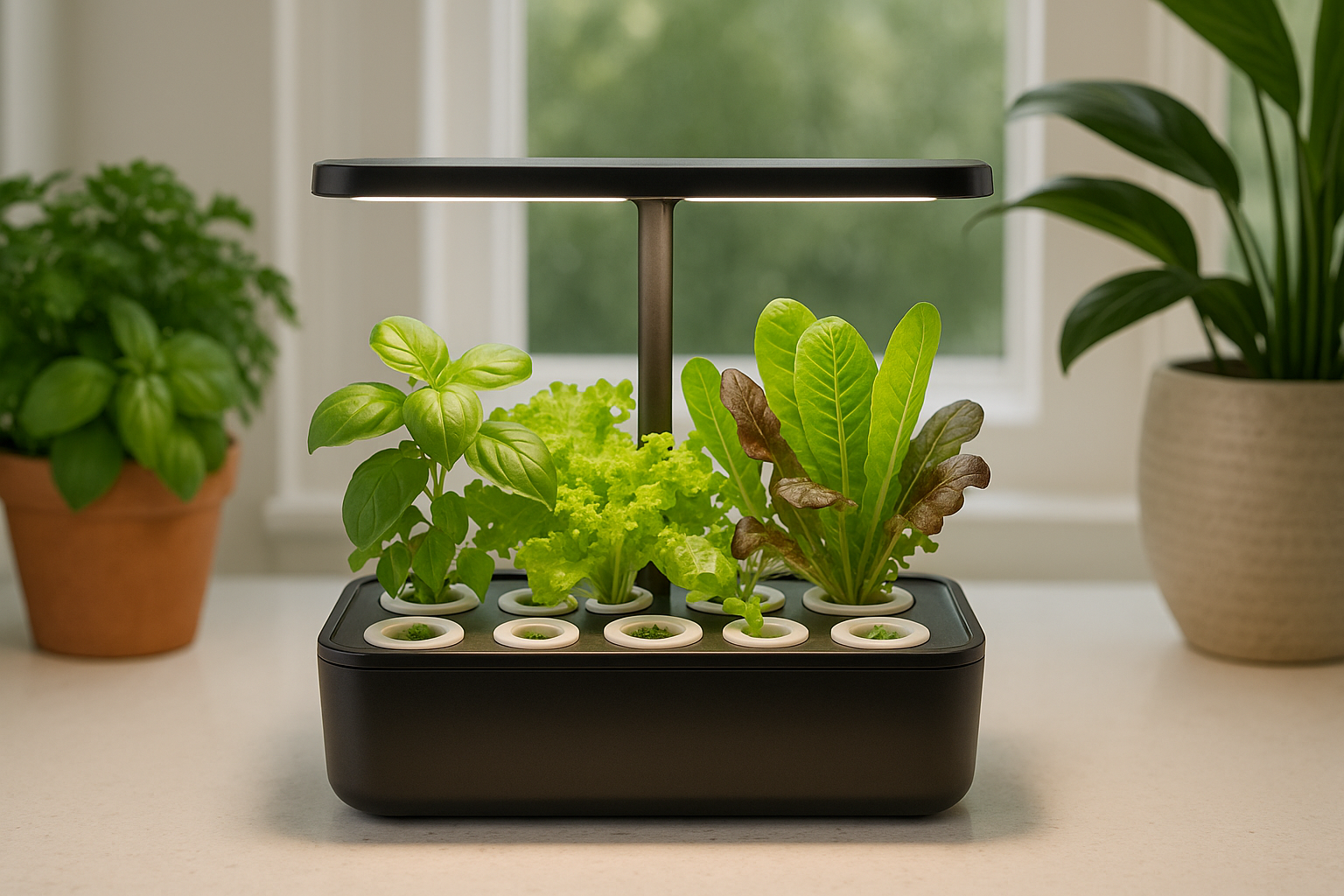
When you purchase through links on our site, we may earn an affiliate commission at no extra cost to you.
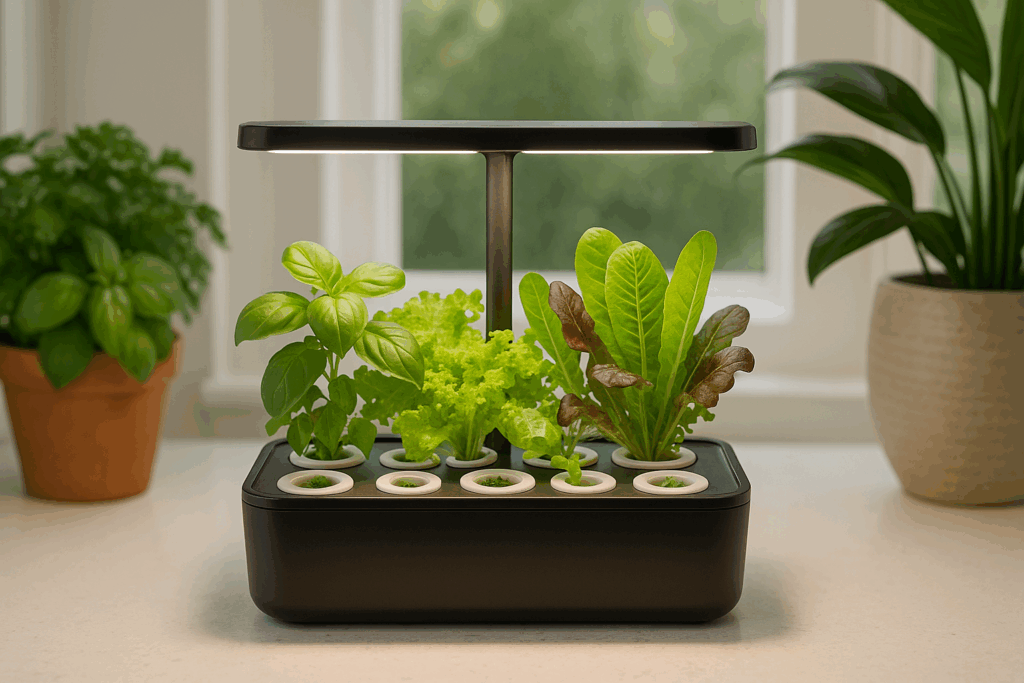
If you’d love to grow herbs, salad greens or even tomatoes indoors without dealing with soil,
a hydroponic growing system could be your ideal solution. Hydroponics grows plants using nutrient-rich water instead of compost, helping them develop faster, cleaner and with far less mess — perfect for UK homes and flats.
Looking for a specific hydroponic system?
If you’ve already researched a particular model, you can jump straight to it below:
- LETPOT 12-Pod Smart Hydroponics Garden
- iDOO 12-Pod Hydroponics Kit
- Yoocaa 12-Pod Hydroponics Garden
- inbloom 12-Pod Hydroponics System
- Yoocaa App-Controlled Hydroponics System
- GROWNEER HydroEasy 1.0 (32-Pod)
- GroWell 60-Pod Hydroponics System
- LIROPAU 30-Pod Hydroponic Tower
- Alternative: Click & Grow (simpler, pod-based)
Hydroponic systems are especially useful in the UK, where winter daylight is limited and space is often tight. With the right setup, you can grow basil, lettuce, spinach and other leafy greens all year round on a kitchen worktop, windowsill, or in a spare room. For a wider overview of indoor growing — including soil, hydroponics, containers, and lighting — see The Complete Guide to Indoor Growing in the UK.
If you’re still deciding whether hydroponics is right for your home, our Hydroponics vs Soil Growing guide compares both methods side by side for UK conditions.
This guide focuses specifically on helping you choose the best hydroponic growing system for your space, budget, and growing goals, with practical comparisons of the most reliable UK-available systems.
🏆 Our #1 Pick for Most UK Beginners
If you want a reliable, easy-to-use hydroponic system that grows herbs and salads quickly without any fuss, the iDOO 12-Pod Hydroponics Kit is the best starting point for most UK homes. It combines simple setup, built-in LED lighting and a quiet circulation pump in one compact unit that fits easily on a kitchen worktop or windowsill.
- 12 growing pods – ideal for herbs, salad leaves and small veg
- Integrated full-spectrum LED grow light with adjustable height
- Built-in circulation pump with automatic on/off cycles
- Beginner-friendly controls – no app or complex programming required
- Excellent value compared to similar UK hydroponic systems
Best for: complete beginners, gifts, small kitchens, and anyone who wants their first hydroponic system to “just work” with minimal effort.
I’ve also tested the smaller 8-pod version at home with basil. You can read my full iDOO hydroponics growing system review for a closer look at setup, light height, maintenance and the real-world strengths and limits of this type of indoor garden.
See the iDOO 12-Pod Hydroponics Kit on Amazon UK
💡 Best Hydroponic Growing Systems UK
The best hydroponic growing systems in the UK are compact, easy-to-use indoor kits designed to grow herbs and vegetables without soil. Instead of compost, they use nutrient-rich water and built-in LED lighting to support faster, cleaner and more consistent growth — especially in UK homes where natural light is limited.
Below is a quick comparison of some of the most reliable and best-rated hydroponic systems available in the UK right now, ranging from simple countertop herb gardens to larger multi-layer setups designed for higher yields and year-round indoor growing.
| Product | Type | Best For | Price |
|---|---|---|---|
| LETPOT 12-Pod Smart Hydroponics Garden | Smart countertop hydroponics kit | Beginners • herbs • compact kitchens | £110–£130 |
| iDOO 12-Pod Hydroponics Kit | Budget smart garden | First-time growers • everyday indoor herbs | £60–£80 |
| Yoocaa 12-Pod Hydroponics System | Compact LED hydroponic system | Budget indoor herb growing | £50–£70 |
| inbloom 12-Pod Hydroponics Garden | Stylish smart garden | Herbs • salad greens • modern kitchens | £85–£100 |
| Yoocaa App-Controlled Hydroponics System | App-controlled smart hydroponics | Tech-focused growers • easy automation | £65–£90 |
| GROWNEER HydroEasy 1.0 – 32-Pod Dual Layer | Medium dual-layer system | Families • higher yields • salad production | £120–£150 |
| GroWell 60-Pod Hydroponics System | Large multi-layer hydroponics rack | High-volume indoor growing • experienced users | £550–£700 |
| LIROPAU 30-Pod Hydroponic Tower | Vertical aeroponic tower | Conservatories • balconies • space-saving growers | £120–£160 |
Want something simpler than a true hydroponic system?
If the fully featured hydroponic systems above feel like more than you need, Click & Grow offers a much simpler, pod-based alternative.
Rather than mixing nutrients or managing settings, Click & Grow uses pre-seeded pods with built-in nutrients, plus automated watering and lighting. It’s designed to be as close to “plug in and grow” as indoor gardening gets.
The trade-off for that simplicity is flexibility. Click & Grow systems rely on proprietary pods, which are easy to use but cost more long-term than using your own seeds and nutrients in systems like iDOO or LETPOT.
Best for: hands-off growing, kitchens, complete beginners, and gift buyers who want something that works with almost no learning curve.
How We Chose These Hydroponic Systems
We shortlisted these hydroponic systems by focusing on what actually matters in UK homes: build quality, LED performance, pump reliability, ease of use, noise levels, and long-term running costs. We also weighed up customer feedback, value for money, and how well each system performs in real indoor conditions — including limited space and low winter light.
Only well-rated systems with consistent results and dependable long-term performance made the list.
Quick Look at the Best Hydroponic Growing Systems
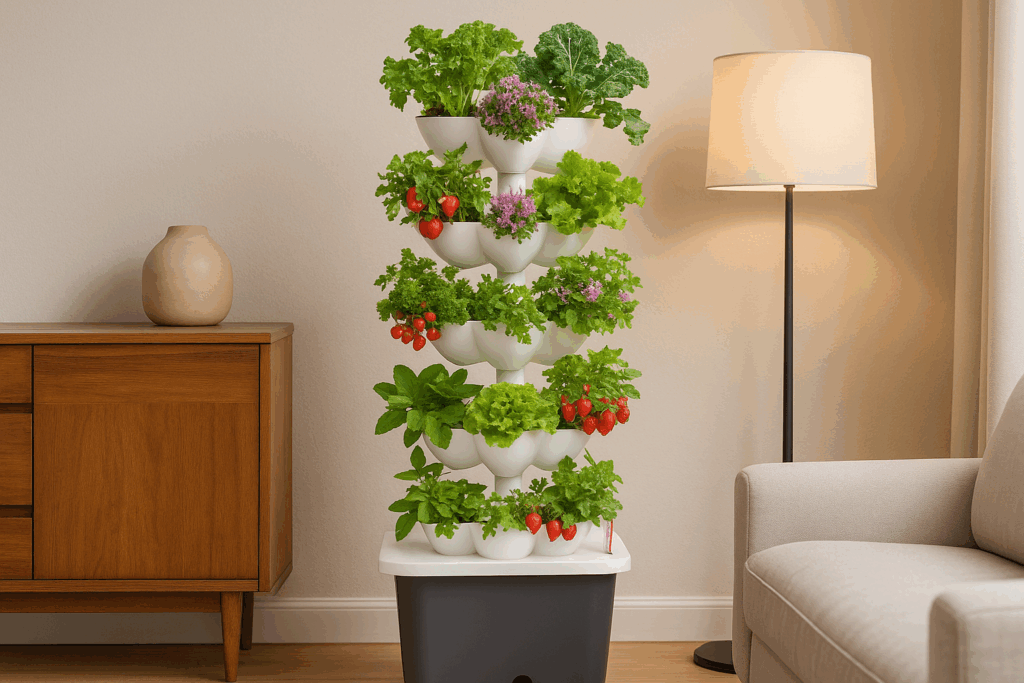
A vertical hydroponic tower system suited to narrow indoor spaces, making use of height where floor space between furniture is limited.


Best for: smart countertop growing in modern kitchens.
The LETPOT 12-Pod system is a good fit for growers who want automation without complexity. It sits firmly in the “set it up once, then mostly leave it alone” category, which makes it appealing if you’re growing herbs or salad greens alongside everyday life rather than as a hobby project.
The standout feature is the app-controlled lighting and timer system. You can adjust light schedules from your phone, which is genuinely useful if the unit lives in a kitchen or shared space where you don’t want to be fiddling with manual timers. Once set, day-to-day maintenance is minimal.
In practical terms, the 12 pods are best suited to:
- herbs (basil, parsley, coriander, chives)
- compact salad greens
- smaller leafy veg rather than large fruiting plants
The adjustable light height helps extend the usable growing window, but this is still a countertop system, not a replacement for a grow tent or larger hydroponic setup.
What we like
- Simple setup with very little ongoing input
- App control is genuinely useful, not just a gimmick
- Quiet pump and low power draw
- Compact footprint that works well in UK kitchens
Things to be aware of
- Limited root space compared to larger systems
- Best suited to greens and herbs rather than heavy feeders
- App features are helpful, but not essential for growth
Bottom line
If you want a clean, modern hydroponic system that keeps effort low and fits neatly into a kitchen or living space, the LETPOT is a solid choice. It’s not aimed at maximising yield, but for reliable, everyday indoor growing, it strikes a good balance between automation and simplicity.

Best for: first-time growers and anyone who wants a simple, affordable way to grow herbs indoors.
The iDOO 12-Pod system is best thought of as a straightforward entry point into hydroponics. It skips app control and extra tech in favour of a design that’s quick to set up and easy to live with day to day.
Lighting and watering are handled automatically, so once seeds are planted and the reservoir is filled, there’s very little to manage. The two light modes are pre-set rather than configurable, which actually works in its favour for beginners — there’s less to tweak and less to get wrong.
In real use, this system is well suited to:
- everyday kitchen herbs
- small salad leaves
- compact greens rather than fruiting plants
The adjustable light height helps accommodate growth over time, but like most countertop systems, space and root volume are the limiting factors rather than lighting power.
What we like
- Simple setup with minimal configuration
- Automatic lighting and watering without needing an app
- Quiet operation suitable for kitchens or living spaces
- Lower price point compared to app-controlled systems
Things to be aware of
- No app or remote control features
- Limited customisation of light schedules
- Best suited to herbs and greens, not larger crops
Bottom line
If you want a reliable, budget-friendly hydroponic kit that does the basics well, the iDOO is a sensible choice. It’s not the most flexible or feature-rich system on the list, but for first-time growers or anyone prioritising simplicity and cost, it offers good value and dependable results.

Best for: tight budgets and straightforward indoor herb growing.
The Yoocaa 12-Pod system is a simple, cost-effective option for growers who want to get started with indoor hydroponics without paying for extra features they won’t use. It focuses on the basics: automatic lighting, a built-in timer, and a compact footprint that fits easily on a kitchen worktop.
Unlike app-controlled systems, everything here is handled directly on the unit. Light cycles and water circulation run automatically once set, which keeps day-to-day maintenance low while avoiding unnecessary complexity. The adjustable light height is a useful practical touch, helping prevent plants from stretching or scorching as they grow.
In everyday use, this system is best suited to:
- kitchen herbs such as basil, mint, and parsley
- salad leaves and small greens
- growers who want results without constant tweaking
As with most countertop hydroponic gardens, pod spacing and root volume limit what you can grow, so it’s not designed for larger or fruiting plants.
What we like
- Affordable entry point into hydroponics
- Automatic lighting and pump with no app required
- Adjustable light height for different growth stages
- Compact and quiet enough for everyday living spaces
Things to be aware of
- Fewer customisation options than smart systems
- No remote or app-based control
- Best for herbs and greens rather than heavy feeders
Bottom line
If you’re looking for a budget-friendly, no-nonsense hydroponic system, the Yoocaa delivers exactly that. It won’t appeal to growers who enjoy fine-tuning settings, but for simple indoor herbs and salad greens at a lower cost, it’s a practical and dependable choice.

Best for: design-conscious growers who want a more polished indoor herb garden without moving into app-based systems.
The inBloom 12-Pod system sits a step above basic budget models, with a stronger focus on design and quality-of-life features rather than raw automation. It’s aimed at growers who want something that looks good on a worktop while still keeping daily effort low.
One of the practical standouts is the low-water alert, which removes a lot of guesswork for indoor growing. Combined with the automatic timer and circulation system, this makes it easier to maintain consistent conditions without constantly checking levels or schedules. The full-spectrum LED lighting is well suited to herbs and leafy greens, and the adjustable height helps accommodate growth over time.
In everyday use, the system is best suited to:
- kitchen herbs and salad greens
- growers who value appearance as well as function
- households where simplicity matters more than fine-tuning
Like all countertop hydroponic systems, it’s not designed for large or fruiting plants, but pod spacing and root room are adequate for steady, healthy leafy growth.
What we like
- Clean, modern design that suits visible living spaces
- Built-in water-level alerts reduce maintenance guesswork
- Automatic lighting and circulation with minimal setup
- Quiet operation suitable for kitchens and living areas
Things to be aware of
- No app or remote control features
- Limited customisation compared to smart systems
- Availability can vary, as this model periodically goes out of stock
Bottom line
If you want a more refined indoor hydroponic system that prioritises ease of use and design over advanced controls, the inBloom is a strong option. When available, it offers a noticeable step up in finish and convenience compared to basic budget models, without the added complexity of app-based systems.

Best for: growers who want app control and automation at a lower price point, and don’t need a larger pod count.
This Yoocaa app-controlled model is aimed at people who like the idea of remote control and automation, but want to keep costs down. Compared to simpler countertop systems, the app adds convenience rather than complexity — you can adjust lighting schedules and timers from your phone without needing external plugs or manual switches.
The smaller 8-pod layout makes this system more compact than most 12-pod gardens, which suits kitchens or shelves where space is limited. It also makes expectations clearer: this is best used for herbs and small leafy greens rather than larger or high-yield crops.
In everyday use, the system works well for:
- herbs such as basil, mint, and coriander
- small salad greens
- growers who want to automate routines and then leave things alone
The adjustable light height and automatic pump keep conditions consistent, while the app control is most useful if the unit sits somewhere slightly out of reach, or if you like checking and adjusting settings remotely.
What we like
- App control adds convenience without being overwhelming
- Automatic lighting and pump reduce day-to-day effort
- Compact size works well in smaller kitchens
- Generally quiet operation for shared living spaces
Things to be aware of
- Fewer pods than most countertop systems
- App adds convenience, but isn’t essential for plant growth
- Not as refined or premium as higher-end smart models
Bottom line
If you want a smart hydroponic system on a budget, this Yoocaa model offers a practical way to add app control without paying for premium branding or extras. It’s best suited to smaller grows and everyday herbs, and works well as a compact, automated alternative to manual countertop gardens.

Best for: households that want higher yields, regular harvests, and the ability to grow more than just a handful of herbs.
The GROWNEER HydroEasy 1.0 is a step up from compact countertop systems, both in size and intent. With its dual-layer, 32-pod layout, it’s designed for growers who want to produce a meaningful amount of fresh greens indoors rather than treating hydroponics as a small kitchen add-on.
The two-tier design makes better use of vertical space, allowing you to grow multiple crops at the same time without taking over an entire room. Independent circulation zones help keep nutrients and oxygen moving evenly, which is especially useful when growing larger batches of lettuce, salad mixes, or herbs with different growth rates.
In practical use, this system is well suited to:
- salad greens grown in rotation
- herbs used frequently in cooking
- families or households aiming for regular harvests
- growers who want more output without moving to a full grow tent
While it’s still straightforward to set up, this is not a “plug it in and forget it on the windowsill” system. You’ll need a bit more space and a willingness to manage a larger reservoir, but the payoff is consistency and volume rather than convenience alone.
What we like
- Significantly higher capacity than countertop gardens
- Dual-layer design maximises output without excessive footprint
- Consistent circulation supports even growth across all pods
- Well suited to ongoing salad and herb production
Things to be aware of
- Takes up more space than single-layer systems
- Better suited to dedicated growing areas than small kitchens
- Overkill if you only want a few herbs at a time
Bottom line
If you’re looking to move beyond small countertop systems and want a more productive indoor hydroponic setup, the GROWNEER HydroEasy 1.0 makes sense. It’s aimed at growers who value yield and consistency over compactness, and works well as a bridge between entry-level hydroponics and more involved indoor growing setups.
No products found.
Best for: experienced growers or households aiming for high-volume indoor food production rather than small, occasional harvests.
The Growell 60-Pod system sits firmly at the top end of home hydroponics. This is not a countertop garden or a casual add-on for a kitchen — it’s a large, vertical growing system designed for people who want consistent, sizeable harvests indoors.
With space for up to 60 plants at once, the focus here is on capacity and throughput. The vertical layout makes efficient use of floor space, but you’ll still need a dedicated area to accommodate the system’s height and footprint. It’s best thought of as a home-scale growing rack rather than a decorative indoor garden.
In practical terms, this system is well suited to:
- continuous harvests of salad greens and herbs
- growing multiple crop types at the same time
- households that cook frequently with fresh produce
- growers who want output closer to a small allotment than a windowsill setup
Lighting, circulation, and timers are built in, keeping daily maintenance reasonable for a system of this size. That said, managing 60 plants does require more planning than smaller systems — nutrient levels, spacing, and harvest timing matter more when yields increase.
What we like
- Very high capacity compared to home hydroponic gardens
- Vertical design maximises output without spreading out horizontally
- Suitable for ongoing, rotational growing rather than one-off harvests
- A clear step up for serious indoor growers
Things to be aware of
- Requires a dedicated space rather than a standard kitchen worktop
- More involved to manage than small countertop systems
- Likely excessive if you only want herbs or occasional greens
Bottom line
If you’re looking for maximum indoor growing capacity at home, the Growell system delivers scale that smaller hydroponic gardens simply can’t match. It’s best suited to committed growers who value volume and consistency over compactness, and who are ready to treat indoor hydroponics as a serious food-growing setup rather than a convenience feature.

Best for: bright locations such as windows, conservatories, greenhouses, or balconies where natural light is available.
This 30-pod vertical hydroponic tower is designed for growers who want to maximise planting space without adding artificial lighting. Unlike most indoor hydroponic systems in this guide, it does not include built-in grow lights, which means placement and natural daylight play a much bigger role in how well it performs.
The vertical, top-down circulation design allows water and nutrients to flow evenly through the tower while keeping the footprint small. This makes it a good option for homes where floor space is limited but light levels are good — such as conservatories, sunrooms, or positions close to large windows.
In practical use, this system works best for:
- herbs grown in quantity
- leafy greens like lettuce, spinach, and pak choi
- bright indoor spaces or sheltered outdoor areas
- growers who want a low-energy setup with minimal electricity use
Because it relies on daylight rather than LEDs, the tower benefits from thoughtful positioning. When placed in a consistently bright spot, it can support steady, healthy growth without the running costs or visual impact of additional lighting.
What we like
- Very space-efficient vertical design
- No integrated lights means lower energy use
- Simple circulation system with minimal daily maintenance
- Works well in conservatories, greenhouses, and bright rooms
Things to be aware of
- Does not include grow lights, so light levels matter
- Less flexible than fully self-contained indoor systems
- Not ideal for low-light homes or winter-only indoor growing
Bottom line
If you have access to good natural light and want a compact way to grow a large number of plants, this vertical hydroponic tower makes sense. It’s best viewed as a daylight-powered growing system rather than a standalone indoor garden, and it works particularly well in conservatories, greenhouses, or bright living spaces where artificial lighting isn’t necessary.
🌱 What Is a Hydroponic Growing System?
A hydroponic growing system lets plants grow without soil by delivering water, oxygen and nutrients directly to the roots. Instead of compost, roots sit in — or are misted by — a nutrient-rich solution, allowing plants to absorb what they need more efficiently than with traditional soil growing.
For indoor growing in the UK, hydroponics solves several common problems at once. It removes the mess and pests that come with compost, works reliably during low-light winter months, and allows steady growth in homes where outdoor conditions are unpredictable.
With the right setup, you can grow herbs, salads, leafy greens and even compact tomatoes all year round — whether that’s on a kitchen counter, in a conservatory, or in a spare room.
The most common hydroponic growing systems you’ll come across include:
- Deep Water Culture (DWC): roots are suspended in a nutrient tank with air bubbling through the water.
- Wick Systems: simple, passive designs that draw nutrients up into the growing medium.
- Nutrient Film Technique (NFT): a thin, continuous flow of nutrient solution runs over the roots.
- Drip Systems: controlled feeding through drippers, more common in larger or multi-plant setups.
Most countertop and home hydroponic kits used in the UK are variations of DWC or wick-based systems, designed to be simple, low-maintenance and beginner-friendly.
If you’d like a clear explanation of how each method works — and which ones make sense for home use — see our full guide: How to Grow with Hydroponics (UK Guide) .
Whichever style you choose, the benefits are the same: faster growth, cleaner harvests, fewer pests, and the ability to grow fresh food indoors regardless of the weather or season.
🪴 How to Choose the Best Hydroponic Growing System
Choosing the best hydroponic growing system comes down to three things: space, crops, and how hands-off you want to be. UK homes vary hugely, so the “best” system is simply the one that fits your layout, light levels and expectations.
These are the key factors that make the biggest difference for UK indoor growers:
1. System Size and Pod Count
Smaller countertop systems with 10–12 pods are ideal for herbs and salad leaves and fit comfortably on kitchen worktops. Multi-layer or tower designs allow you to grow much larger quantities in the same footprint.
If you want continuous harvesting or are growing for more than one person, look for systems with 20–60 pods.
2. Grow Light Quality
Because UK daylight is limited for much of the year, reliable LED grow lighting is essential for consistent results. Systems with adjustable, full-spectrum LEDs produce healthier plants and prevent weak, leggy growth.
- Height-adjustable LED panels
- Full-spectrum white or red/blue LEDs
- Low energy consumption for everyday use
3. Circulation and Root Oxygenation
Good water movement keeps nutrients evenly mixed and roots well oxygenated. Look for systems with a quiet, automatic pump that cycles throughout the day.
This becomes especially important in larger systems, where stagnant water can quickly cause root problems.
4. Ease of Use and Automation
Most UK beginners prefer systems that manage lighting and circulation automatically. More experienced growers may enjoy adjusting schedules or using app control.
- Manual vs automatic light cycles
- Optional app control (helpful, not essential)
- Clear water-level indicators
- Simple nutrient top-ups
5. Space Available in Your Home
Countertop systems work well in kitchens, utility rooms and conservatories. If you have a spare room, shed or bright conservatory, vertical towers or multi-layer systems let you scale up without using much floor space.
6. What You Want to Grow
Different systems suit different crops:
- Herbs & leafy greens: all 10–12 pod countertop systems work well
- High-yield salad growing: dual-layer or 30–60 pod systems
- Compact tomatoes & dwarf veg: stronger LEDs and deeper reservoirs
7. Budget and Long-Term Value
Budget systems grow herbs and salads reliably. Mid-range and premium systems offer stronger lighting, higher yields and more automation.
- Budget starters: simple, effective, low-maintenance
- Smart mid-range: better lighting and automation
- High-capacity systems: best for year-round indoor food production
Ultimately, the right system is the one that fits your space and keeps you enjoying the process. Modern hydroponic kits remove most of the complexity — the only real decision is how much food you want to grow.
🌿 Tips for Success with Indoor Hydroponics
Hydroponic growing is very forgiving once you settle into a simple routine. These practical tips will help you keep plants healthy, productive and low-maintenance — especially in UK homes where light, temperature and water quality can vary more than people expect.
1. UK Water Hardness (Important)
Water quality matters more in hydroponics than in soil. If you live in a hard water area (common in London, the South East, and parts of the Midlands), you may notice white limescale buildup on pods, pipes or inside the water tank over time.
Using filtered water, rainwater, or adding a small amount of pH Down helps prevent mineral buildup and keeps circulation pumps running smoothly long-term.
2. Keep Your pH in the Right Range
Most herbs and leafy greens grow best at a pH of 5.5–6.5. If pH drifts outside this range, plants struggle to absorb nutrients even when everything else looks fine.
A basic pH test kit is inexpensive and one of the easiest upgrades you can make for more reliable growth.
3. Use Proper Hydroponic Nutrients
Always use nutrients designed specifically for hydroponics rather than soil feeds. UK brands like Vitalink and Plant Magic are reliable, widely available and beginner-friendly.
For most systems, refreshing the nutrient solution every 10–14 days keeps plants growing steadily without complications.
4. Keep Water Levels Topped Up
Hydroponic systems lose water faster than many people expect — especially in warm kitchens, conservatories or rooms near radiators.
Check water levels every few days and top up before pumps run dry or roots are left exposed (particularly in DWC-style systems).
5. Give Roots Plenty of Oxygen
Healthy roots need oxygen just as much as nutrients. Most systems include a circulating pump, but if water looks stagnant or roots appear pale, increasing circulation can make a noticeable difference.
In larger systems, adding a small air stone is often a simple and inexpensive fix.
6. Don’t Ignore Root Growth
In compact countertop systems, roots can eventually fill most of the tank. Don’t be afraid to trim roots carefully with clean scissors if they start blocking water flow or pump intakes.
Keeping roots under control improves circulation and helps prevent pump failure.
7. Position Grow Lights Correctly
Most LED grow lights perform best around 20–30 cm above the plant canopy. Too close can scorch leaves; too far away leads to slow, leggy growth.
Raise the light gradually as plants grow — especially fast growers like basil.
8. Control Temperature for Steadier Growth
Most hydroponic plants thrive between 18–24°C. Lower temperatures slow root activity, while excessive heat reduces oxygen levels in the water.
Kitchens, conservatories and spare rooms usually offer the most stable balance.
9. Prevent Algae with Simple Hygiene
Algae loves light, warmth and standing water. Cover unused pods, block light from the water tank and give your system a quick clean every few weeks.
A deeper clean every couple of months using warm water and a mild, food-safe disinfectant helps keep pumps and pipes working properly long-term.
10. Start with Fast-Growing Plants
If you’re new to hydroponics, begin with forgiving crops such as basil, lettuce, coriander, parsley, pak choi and spinach.
They grow quickly, recover well from mistakes and give you early wins while you learn how your system behaves.
With a consistent routine and the right setup, hydroponics becomes one of the simplest and most reliable ways to grow fresh food indoors — whatever the season.
For comparison, if you’re still experimenting with soil methods, you can also see our guide on Best Soil for Growing Food Indoors in the UK.
⚠️ Common Hydroponic Pitfalls (and How to Avoid Them)
Hydroponic systems are easier than soil growing, but most early problems come from a handful of predictable mistakes. Avoiding these will save time, plants, and frustration — especially in the first few months.
1. Letting the Water Level Drop Too Low
Hydroponic plants drink more than many people expect. If water levels fall too far, pumps can run dry and roots may be left exposed.
Check levels every few days and top up before the tank gets low — particularly in warm kitchens or during faster growth phases.
2. Forgetting to Clean the System
Light leaking into the tank encourages algae, while roots can gradually tangle around pump intakes. Skipping cleaning is one of the quickest ways to shorten pump life.
A quick rinse every few weeks and a deeper clean every couple of months keeps everything running smoothly.
3. Placing the Grow Light Too Far Away
If plants look tall, thin, or floppy, the light is usually too high. This is common when people forget to raise lights gradually as plants grow.
Most LED grow lights work best around 20–30 cm above the canopy.
4. Using the Wrong Nutrients
Soil fertilisers are not suitable for hydroponics and can cause nutrient lockout or residue buildup. Always use nutrients designed specifically for hydroponic systems.
5. Letting Roots Block Water Flow
In small countertop systems, roots can eventually fill much of the tank. If they start blocking circulation or pump intakes, growth can stall.
Carefully trimming roots with clean scissors improves water flow and keeps pumps healthy.
6. Expecting the Wrong Crops for the System Size
Compact 10–12 pod systems are excellent for herbs and leafy greens, but they’re not designed for large fruiting plants or high yields.
Matching expectations to system size is the fastest way to stay happy with hydroponics.
🌼 Final Thoughts
A hydroponic growing system is one of the most practical ways to grow fresh food indoors — no soil, no mess, and no waiting for the weather to cooperate. Modern systems remove most of the complexity, making it easy for complete beginners to enjoy reliable harvests of herbs, salads and leafy greens all year round, even in UK homes with limited natural light.
Whether you choose a compact countertop garden for everyday herbs or a larger multi-layer or vertical setup for steady salad production, there’s a hydroponic system that fits both your space and your routine. The systems covered above are well suited to UK homes, offering a good balance of performance, ease of use and long-term reliability.
Hydroponics works best when it’s treated as a simple, repeatable process rather than a high-tech experiment. Once you find a system that suits your space, growing fresh food indoors becomes less about effort — and more about habit. With the right setup, it’s one of the easiest ways to keep something growing on your plate all year round.
📎 Related Articles
Best Hydroponic Systems UK – Faqs
What is the best hydroponic growing system in the UK?
It depends on your space and what you want to grow. Compact 10–12 pod countertop systems are ideal for herbs and salads, while multi-layer or vertical tower systems suit people who want higher yields or continuous harvesting. For most UK beginners, a simple countertop system with built-in LED lighting is the easiest and most reliable starting point.
Do hydroponic systems use a lot of electricity?
No, even the best hydroponic growing systems UK gardeners choose are highly energy-efficient. They use low-wattage LED grow lights and small pumps that typically cost only a few pounds per month to run, making hydroponic growing one of the most efficient indoor gardening methods in the UK.
Can I grow vegetables indoors using a hydroponic system?
Yes — the best hydroponic growing systems UK growers recommend are designed exactly for that. You can grow lettuce, spinach, herbs, tomatoes, and strawberries indoors all year round. With proper lighting and nutrients, these hydroponic systems deliver fresh food faster than traditional soil gardening.
Are hydroponic growing systems worth it in the UK?
Absolutely. The best hydroponic growing systems UK home gardeners rely on save space, reduce mess, and use up to 90% less water than soil gardening. They grow plants faster, work in any UK climate, and provide clean, reliable indoor harvests every month of the year.
Do I need special nutrients for hydroponic growing systems?
Yes, all hydroponic plants require water-soluble nutrients because there’s no soil to provide minerals. The best hydroponic growing systems UK suppliers sell often include starter nutrient packs. For ongoing use, UK brands like Vitalink or Plant Magic give excellent results for herbs, leafy greens, and fruiting plants.
Can beginners use hydroponics successfully?
Definitely. Most modern systems are designed for complete beginners and automate the lighting and water circulation for you. As long as you top up the water, refresh nutrients and follow basic pH guidelines, hydroponics is one of the simplest ways to grow indoors.
How often do I need to clean a hydroponic system?
A light clean every 2–3 weeks (when you refresh the nutrient solution) keeps everything running smoothly. A deeper clean every 1–2 months helps prevent algae and keeps pumps working efficiently.