
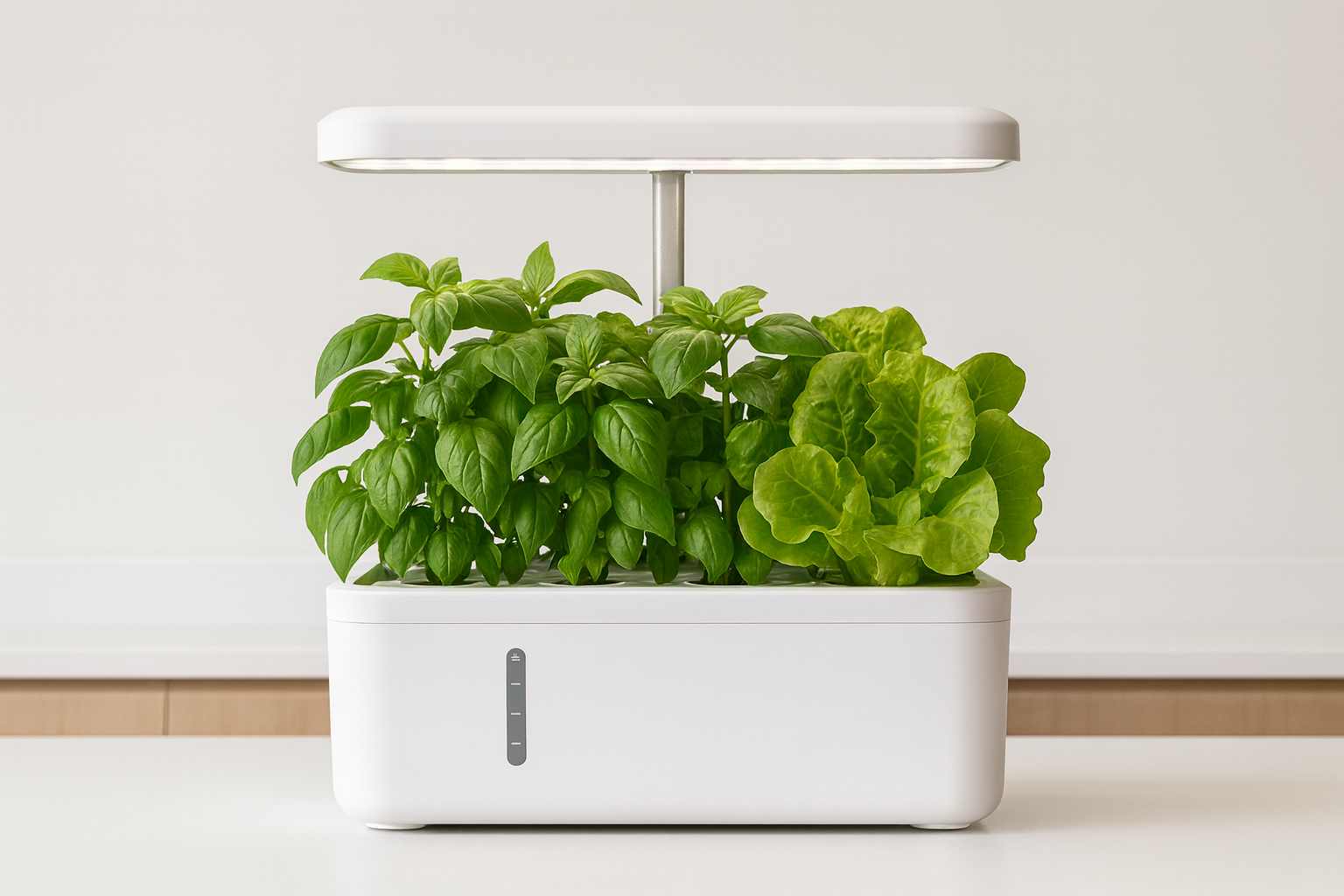
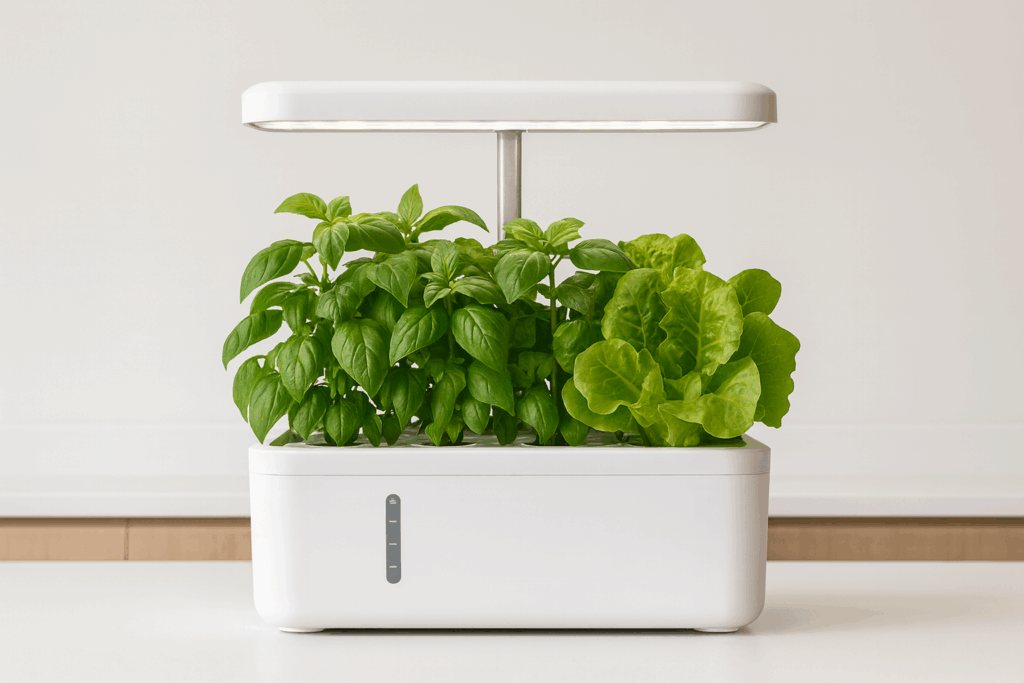
Hydroponics lets you grow fresh herbs, salads, and vegetables indoors all year round—without soil, mess, or large space requirements. This guide explains how to grow with hydroponics step by step and helps you choose the best beginner-friendly method for UK homes.
This beginner’s guide covers everything from hydroponic systems and nutrients to lighting, pH, planting, and troubleshooting.
This guide focuses on hydroponics as one indoor growing method, and sits alongside our complete guide to indoor growing in the UK, which covers soil, containers, lighting, and year-round setups in more detail.
What Is Hydroponic Growing?
Hydroponics is a method of growing plants without soil. Instead, roots sit in a nutrient-rich water solution and absorb exactly what they need. For indoor UK gardeners, hydroponic growing offers:
- Faster growth
- Higher yields in small spaces
- Cleaner, controlled indoor conditions
- Low water use
- Almost zero mess
Whether you want to grow basil on a windowsill or tomatoes in a compact grow tent, hydroponics makes it possible.
Is Hydroponic Growing Easy for Beginners?
Yes — hydroponics is much easier than many traditional soil methods. Once you understand how nutrients, lighting, and pH work, it becomes one of the simplest and cleanest ways to garden indoors.
Most beginners start with a small countertop system or a Kratky jar to learn how to grow with hydroponics without needing pumps or complex equipment.
If you want to compare growing methods, see: Hydroponics vs Soil Growing UK.
What You Need to Start Hydroponics
Hydroponic growing looks high-tech, but you only need a few simple components.
1. A Water Reservoir
This holds the nutrient solution. It can be:
- a bucket (DWC)
- a plastic tub (Kratky or wick)
- a countertop hydroponic system
- a purpose-built hydroponic reservoir or tank
2. Net Pots & Growing Media
These support your plants. Popular choices:
- clay pebbles
- rockwool cubes
- coco coir
- perlite mixes
3. Hydroponic Nutrients
Plants need a balanced NPK + micronutrient mix formulated for hydroponics.
Avoid soil fertilisers — they are not designed to dissolve cleanly in water.
4. pH and EC Meters
These help you maintain stable water chemistry for healthy growth.
For a deeper technical explanation of pH and EC, see this helpful overview from Bluelab.
5. Air Pump or Wick (depending on system)
- DWC systems use an air pump to oxygenate the water
- Kratky or wick systems need no electricity
6. Grow Lights (for indoor setups)
Plants need enough light to photosynthesise effectively.
Typical distances from plants:
- LED panels: 20–40 cm
- Herbs/greens: lower intensity
- Tomatoes/peppers: higher intensity
For indoor hydroponic setups, reliable lighting is essential. In most UK homes, LED grow lights are used to provide consistent light levels, especially during autumn and winter when natural daylight is limited.
Beginner-Friendly Hydroponic Systems
These hydroponic methods work perfectly for UK indoor gardeners.
1. Kratky Method (No Electricity)
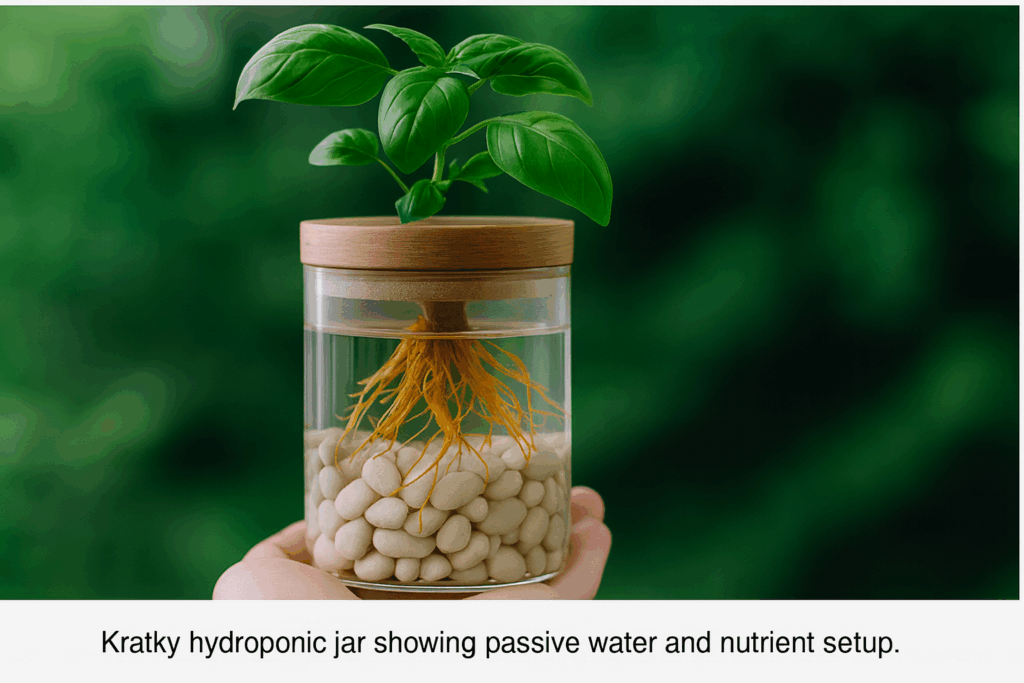
The simplest hydroponic method.
How it works:
Plants sit in a container filled with nutrient water. As roots grow, they create an air gap for oxygen.
Best for: Lettuce, basil, mint
Pros: Silent, cheap, no pumps
Cons: Not suitable for fruiting plants
2. DWC – Deep Water Culture (“Bubbler System”)
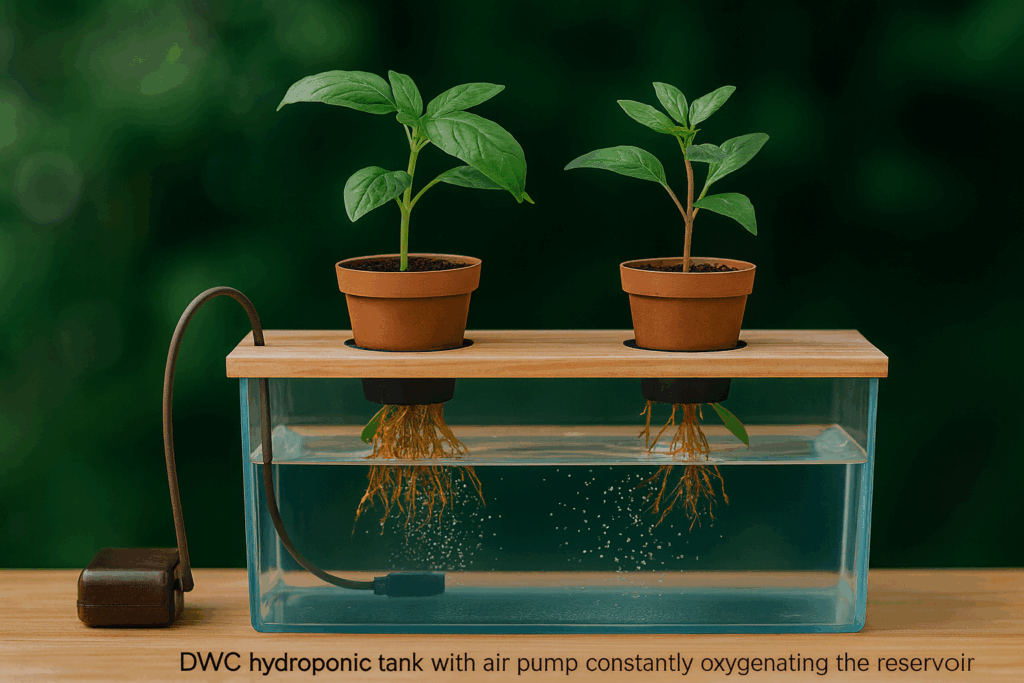
Net pots sit above a reservoir that is constantly oxygenated by an air pump.
Best for: Lettuce, herbs, tomatoes, peppers
Pros: Fast growth, reliable
Cons: Requires electricity and regular cleaning
3. Wick System
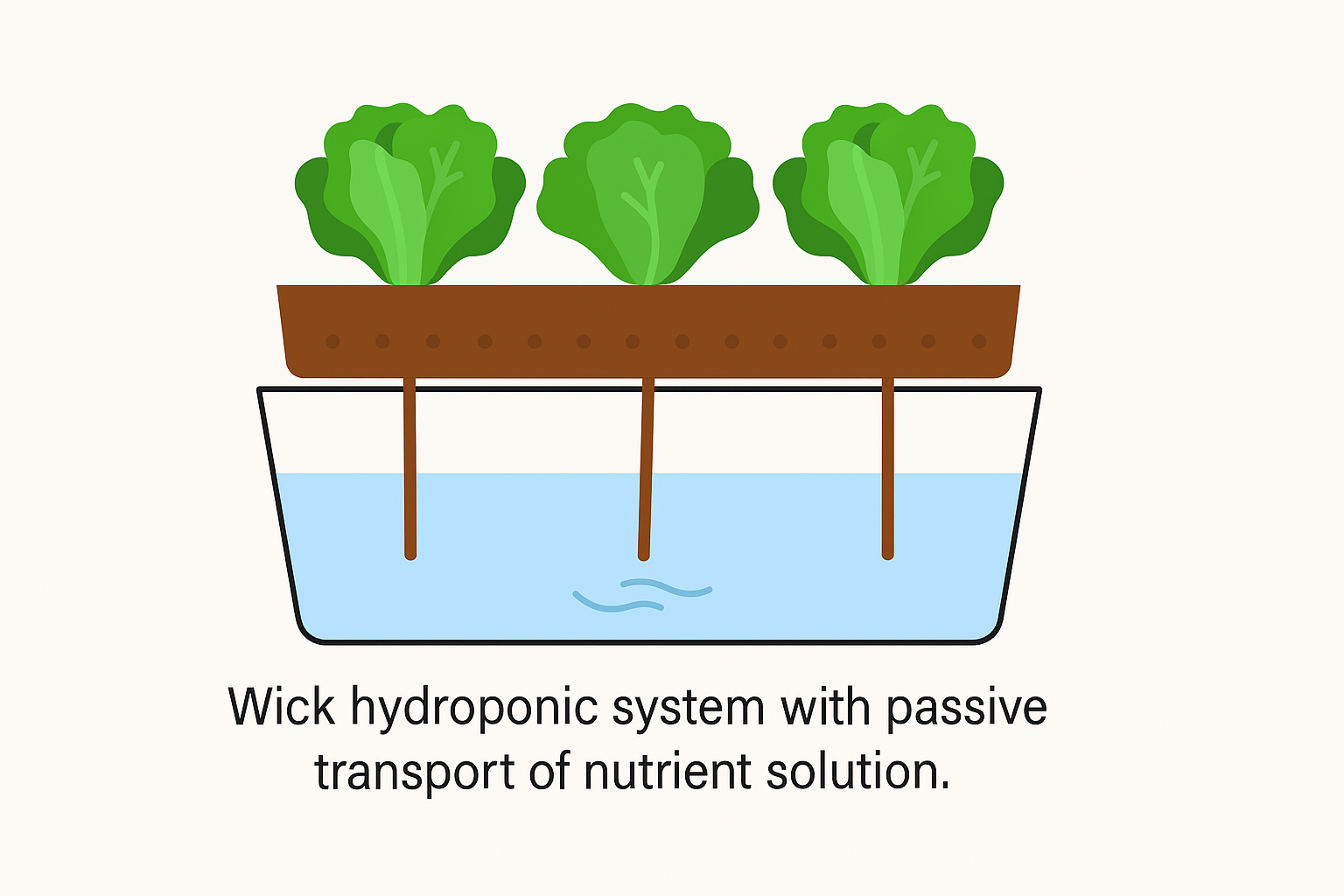
Nutrients are drawn up into the growing media through absorbent wicks.
Best for: Herbs, small greens
Pros: No electricity, simple
Cons: Limited nutrient flow for bigger plants
4. Ebb & Flow (Flood & Drain)
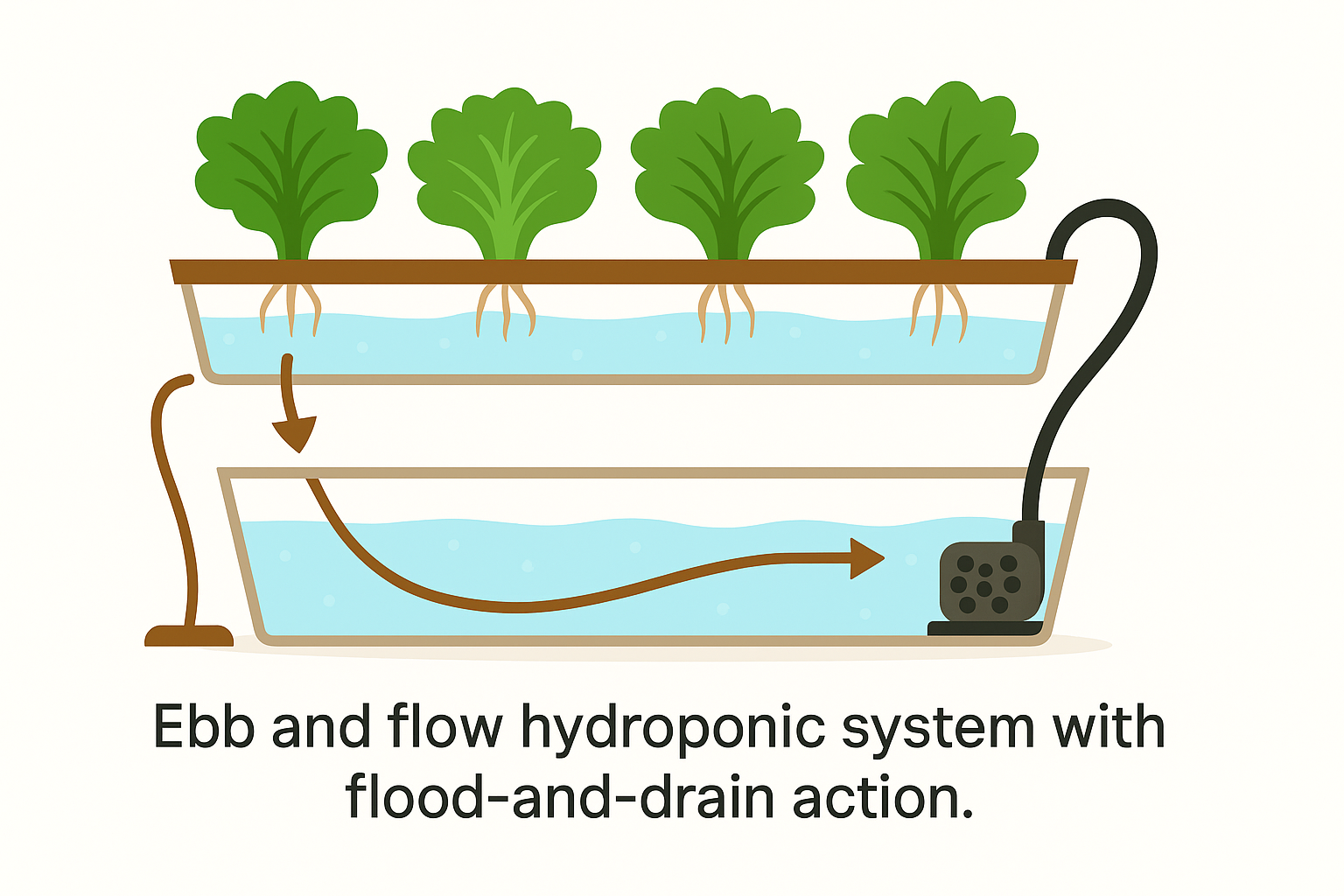
The tray periodically floods with nutrients, then drains back into a tank.
Best for: Herbs, greens, compact tomatoes
Pros: Productive, versatile
Cons: Requires timers and more components
5. NFT – Nutrient Film Technique
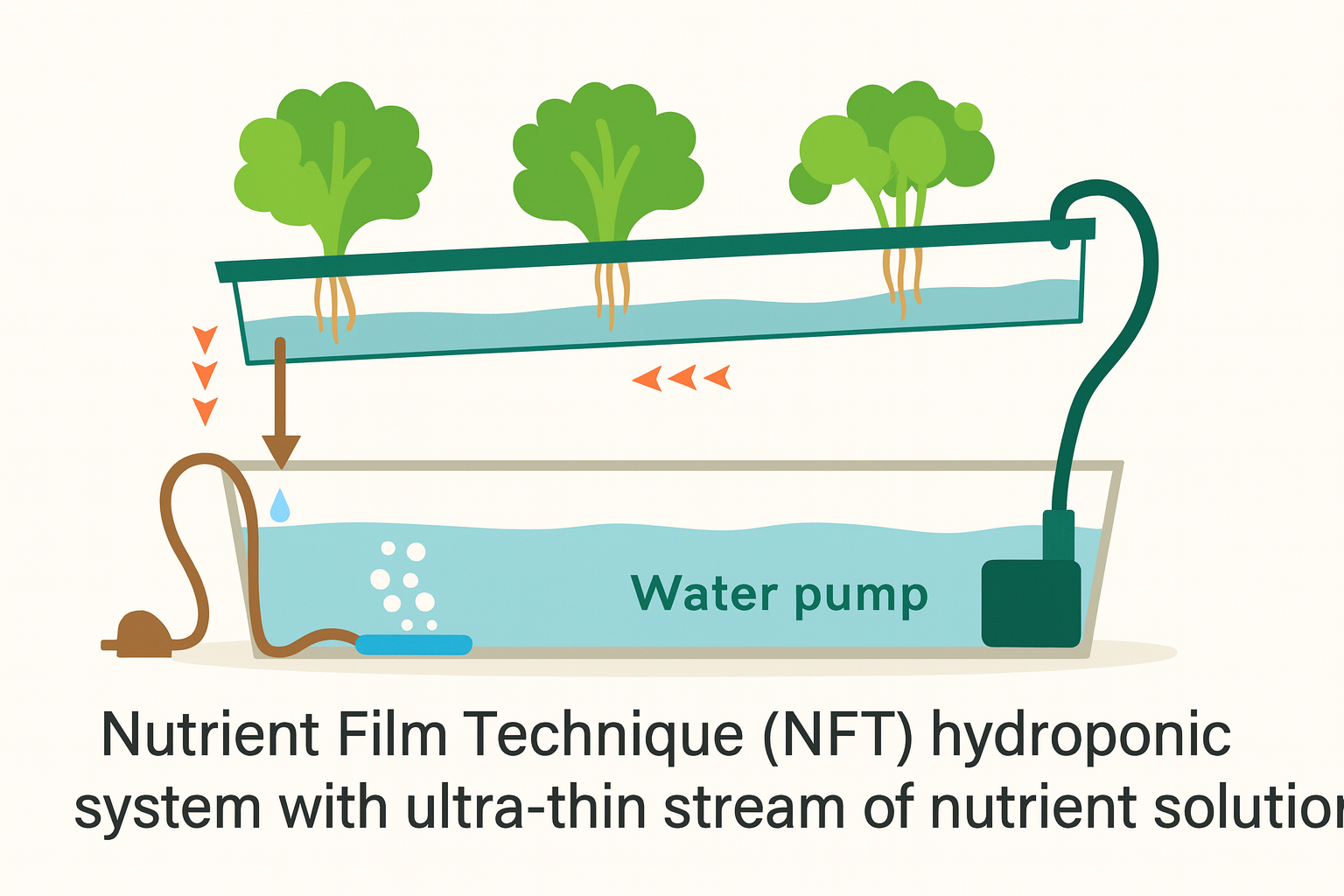
A thin nutrient film flows continuously across plant roots.
Best for: Lettuce and leafy greens
Pros: Efficient, high yields
Cons: Pumps must run continuously
Step-by-Step: How to Grow With Hydroponics
Here’s the simplest workflow for anyone learning how to grow with hydroponics at home.
1. Choose Your System
Start with:
- Kratky → no electricity, easiest
- DWC → best all-round beginner system
Explore pre-built options: Best Hydroponic Growing Systems UK
2. Fill the Reservoir & Add Nutrients
Use tap water that has stood for a few hours to release chlorine (or use filtered water).
Mix nutrients according to the manufacturer’s instructions.
3. Adjust the pH
Most hydroponic plants prefer pH 5.8–6.2.
Use “pH Up” or “pH Down” solutions to adjust.
4. Add Your Seedlings
Start seeds in:
- rockwool
- seed plugs
- coco pellets
Once roots appear, move them into net pots with clay pebbles.
For propagation advice, see: How to Grow Plants from Seed.
5. Set Up Your Grow Lights
Hydroponic plants need 10–14 hours of light per day.
Typical light distances:
- Seedlings: 25–35 cm
- Leafy greens: 20–30 cm
- Tomatoes/peppers: 20–25 cm
6. Monitor Water, pH & EC
Every 2–3 days:
- Top up with plain water
- Check pH
- Check EC
- Ensure water temperature stays below 21°C
Change the entire reservoir every 1–2 weeks.
7. Harvest
Most herbs and greens can be harvested using the “cut-and-come-again” method.
Best Plants to Grow in Hydroponics
Hydroponics is ideal for fast-growing crops.
Herbs
- Basil
- Mint
- Parsley
- Coriander
Leafy Greens
- Lettuce
- Spinach
- Rocket
- Pak choi
These crops are perfect when you’re learning how to grow with hydroponics for the first time.
Fruiting Plants
- Tomatoes
- Peppers
- Chillies
- Strawberries
These require stronger lighting and more attention to nutrients but are highly rewarding.
Common Hydroponic Problems (+ Easy Fixes)
1. Yellow Leaves
Caused by:
- low nitrogen
- incorrect pH
- insufficient light
Fix: Adjust nutrients; correct pH; increase light intensity.
2. Algae Growth
Caused by light reaching the nutrient water.
Fix: Use opaque containers; block light from the reservoir.
3. Root Rot
Common in warm, poorly oxygenated water.
Fix:
- Increase oxygenation
- Keep water below 21°C
- Refresh reservoir
4. Slow Growth
Usually from:
- weak nutrients
- poor lighting
- cold room temperatures
- pH instability
Adjust each area systematically.
Hydroponic pH Troubleshooting Table
| Problem | Likely Cause | pH Range | Fix |
|---|---|---|---|
| Yellowing | pH high | 6.4+ | Add pH Down |
| Leaf curl | pH low | < 5.5 | Add pH Up |
| Stalled growth | pH swings | unstable | Reset reservoir |
| Nutrient lockout | incorrect pH | outside 5.8–6.2 | Maintain stable range |
Simple Weekly Nutrient Routine
Weekly:
- Change reservoir
- Mix fresh nutrients (correct EC)
- Set pH to 5.8–6.2
Every 2–3 days:
- Top up with plain water
- Check pH
- Check EC
This routine simplifies how to grow with hydroponics for beginners.
How Much Does Hydroponic Growing Cost to Run?
Electricity
Minimal, even with lights and a pump.
A small system typically costs £1.50–£5 per month.
Nutrients
Usually £5–£10 per month, depending on the system size and crops grown.
Water Use
Much lower than soil because hydroponics recirculates water.
Hydroponics is one of the most efficient ways to grow indoors with predictable monthly costs.
⭐ Final Thoughts
Hydroponics is one of the easiest and most rewarding ways to grow fresh herbs, salads, and vegetables indoors — even in small UK homes. Now that you know how to grow with hydroponics, you can start simple, learn the basics of nutrients and lighting, and expand your setup as your confidence grows.
Whether you want a constant supply of basil by the kitchen window or a full indoor salad garden, hydroponic growing offers clean, fast, and consistent results all year round.
Related indoor growing guides
- The complete guide to indoor growing in the UK – a practical overview of soil, hydroponics, containers, lighting, and year-round indoor setups.
- Best hydroponic growing systems UK – a comparison of beginner-friendly systems for growing herbs, salads, and vegetables indoors.
❓ How to Grow With Hydroponics – FAQs
What do I need to get started with hydroponics?
To begin growing with hydroponics, you only need a simple reservoir, net pots, hydroponic nutrients, a pH meter, and a light source. Many UK beginners start with a Kratky jar or a small DWC system because they require minimal equipment.
Is hydroponic growing easy for beginners?
Yes. Hydroponics is easier than soil once you understand the basics of water, nutrients and light. Most systems become nearly hands-off after setup, making hydroponics ideal for beginners who want a clean indoor growing method.
How often should I change the hydroponic nutrient solution?
Change the reservoir every 1–2 weeks, depending on plant size and temperature. In between changes, top up with plain water and keep the pH between 5.8 and 6.2 for steady growth.
Do I need special grow lights for hydroponics?
You don’t strictly need LED grow lights if you have very bright natural light, such as a south-facing window or a conservatory. Herbs and leafy greens can grow hydroponically using natural sunlight alone.
However, in most UK homes, natural light is not strong or consistent enough for fast hydroponic growth — especially in winter. That’s why most indoor hydroponic gardeners use LED grow lights to provide 10–14 hours of reliable light each day.
What pH range is best for hydroponics?
Most hydroponic plants grow best at pH 5.8–6.2. Outside this range, nutrients become harder for plants to absorb, which slows growth and causes yellowing or curling leaves.
Which plants grow best in hydroponic systems?
Leafy greens (lettuce, spinach, pak choi) and herbs (basil, mint, coriander, parsley) are the easiest crops when learning how to grow with hydroponics. Tomatoes, peppers and strawberries also grow extremely well once you understand nutrient and light strength.
Can I grow hydroponic plants without electricity?
Yes — the Kratky method grows herbs and lettuce using no pumps and no power. The plant forms an air gap as it grows, so it can access oxygen while drinking the nutrient solution.
Is hydroponic gardening expensive to run?
No — hydroponics is surprisingly low-cost. A small indoor system typically uses £1.50–£5 per month in electricity, and nutrients cost around £5–£10 per month depending on plant load. Water use is far lower than soil growing because hydroponics recirculates water.
What plants grow best in hydroponics indoors?
The most reliable beginner crops are lettuce, spinach, rocket, basil, mint, coriander and parsley. These grow quickly, use moderate nutrients, and perform well under simple LED lighting. Fruiting plants like tomatoes, peppers and strawberries also work but require stronger lights and closer monitoring.
How do I stop algae growing in my hydroponic system?
Block light from reaching the nutrient reservoir. Use opaque containers, keep tubing covered, and avoid clear materials. Algae grows only where light and water meet — remove one, and the problem disappears.
Why are my hydroponic leaves turning yellow?
Yellowing can be caused by incorrect pH, insufficient nitrogen, weak nutrients, or lack of light. First check pH (target 5.8–6.2), then ensure your EC is in range. If using LED lights, raise intensity or reduce distance.
Can you start seeds directly in hydroponic systems?
Yes — start seeds in rockwool cubes, coco plugs or peat-free seed plugs. Once roots are visible, transfer them into net pots. This avoids transplant shock and gives a smoother start to hydroponic growth.