Grow tent temperature control is one of the biggest factors in healthy growth — and one of the most misunderstood.
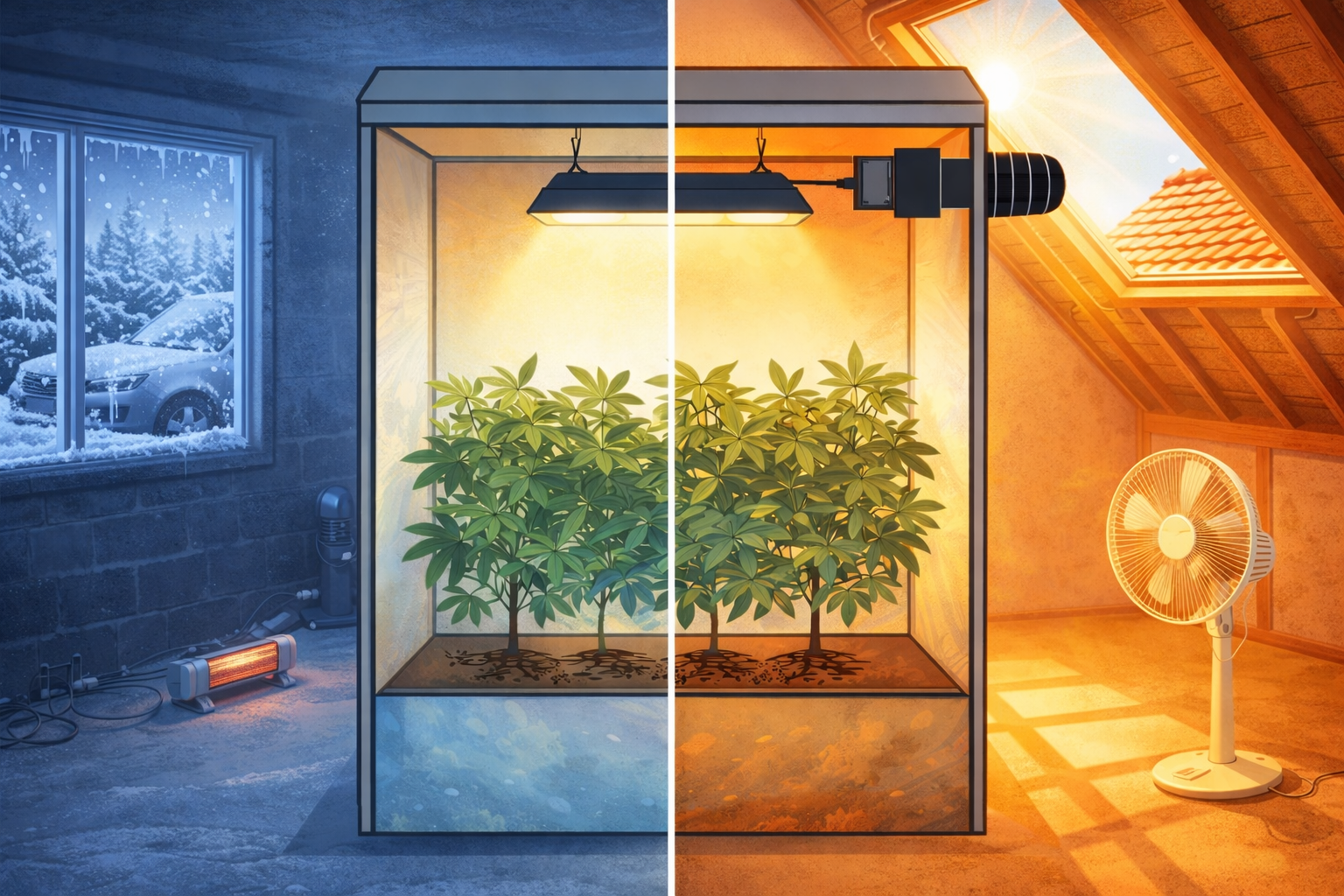
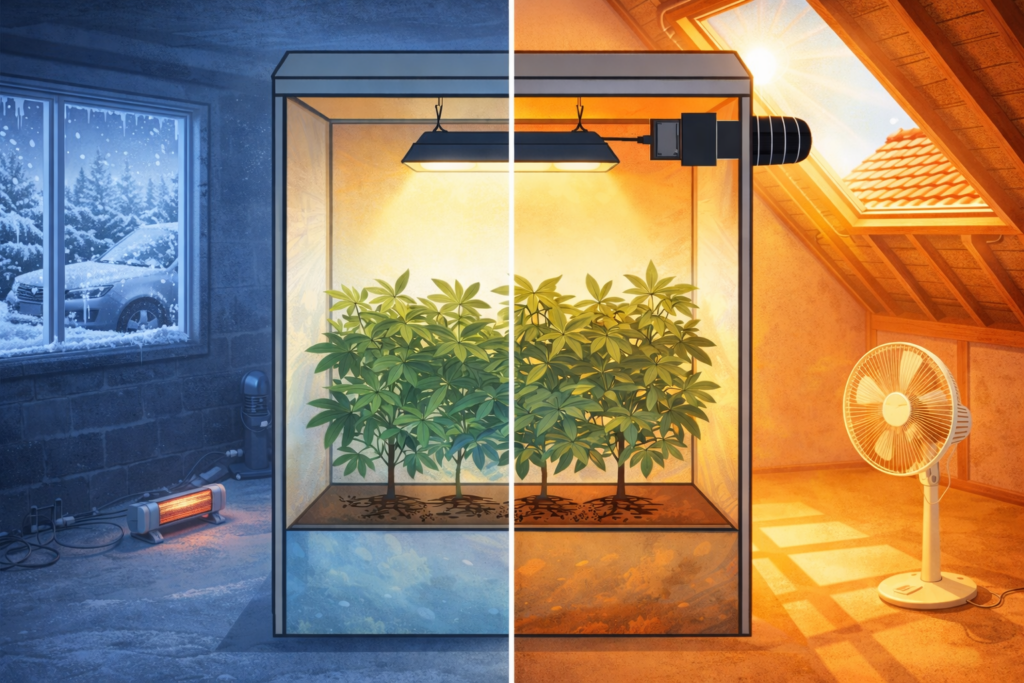
Many growers focus on lights or nutrients first, but even the best setup can struggle if temperatures swing too far in either direction. In the UK especially, cold nights, warm grow lights, and unpredictable rooms can all work against you. Garages, for example, can become extremely cold in winter, while lofts may swing between cold and dangerously hot depending on the season.
Because of this, there’s no single “perfect” solution. Each grow tent setup needs tailored temperature control, whether that means adding gentle heat, improving ventilation, or adjusting how and when equipment runs.
If you’re new to grow tents, this guide fits into the wider picture covered in HomeGrower Guide to Grow Tents. Here, we’ll focus specifically on how to keep temperatures stable and realistic, without chasing idealised numbers that are hard to maintain in real homes.
🌡️ Why temperature control matters more than you think
Temperature affects almost everything a plant does:
- Growth speed
- Nutrient uptake
- Transpiration
- Resistance to pests and disease
Too hot, and plants become stressed, stretched, or prone to deficiencies.
Too cold, and growth slows dramatically — sometimes stopping altogether.
Unlike humidity, which plants can tolerate within a wider range, temperature swings often cause immediate problems.
🎯 Ideal grow tent temperature ranges (realistic, not theoretical)
You’ll often see very precise numbers quoted online, but in real home setups, stability matters more than precision.
As a general guide:
- Seedlings prefer warm, steady conditions
- Vegetative growth benefits from slightly higher temperatures
- Flowering often prefers slightly cooler air
- Lights on will always be warmer than lights off
The key takeaway is simple:
A tent that stays within a sensible range all day will outperform one that briefly hits a “perfect” temperature, then crashes overnight.
With LED grow lights especially, leaf temperature can differ significantly from air temperature — which is why chasing air readings alone often leads to confusion.
🔥 Why grow tents get too hot
Overheating is common, particularly in small tents.
Typical causes include:
- Powerful lights in compact spaces
- Undersized extraction fans
- Carbon filters restricting airflow
- Warm intake air from the room
- Running lights during the day in summer
Many growers try to solve heat problems with clip fans alone. While circulation fans help move air around, they do not remove heat. If hot air isn’t being exhausted from the tent, temperatures will continue to rise.
This is where proper airflow becomes essential — something covered in detail in our guide to Grow Tent Ventilation.
❄️ Why grow tents get too cold (a very UK problem)
Cold is often overlooked, but it can be just as damaging as excess heat.
Common UK causes include:
- Winter nights in spare rooms, garages, sheds or conservatories
- LED grow lights producing less background heat than traditional grow lights
- Large temperature drops when lights switch off
🧊 Why cold floors cause nutrient lockout
For roughly every 10°C drop in temperature, a plant’s metabolic rate can halve. This is why a 12°C garage or conservatory floor can effectively “lock out” nutrients — even if you’re feeding the best liquid fertiliser.
When roots are cold, nutrient uptake slows dramatically. The plant isn’t deficient because of what you’re feeding — it’s deficient because it physically can’t absorb it.
This is one of the most common hidden causes of winter growth problems.
🔌 Heating a grow tent: what actually works
For small to medium tents, heating the room is usually safer and more effective than heating the tent directly.
Practical options include:
- Keeping the grow room itself warmer
- Low-wattage tube heaters
- Gentle background heating paired with a thermostat
Root-zone warmth also matters. Cold roots will limit growth even if the air temperature looks fine.
⚠️ What to avoid
- Cheap fan heaters without thermostats
- Overloaded extension leads
- High-wattage heaters left unattended inside tents
If you heat the tent itself, temperature control is essential. Heaters should cycle gently, not blast on and off.
❄️ Cooling a grow tent (without AC fantasies)
Air conditioning is often suggested online, but for most home growers it’s expensive, inefficient, and unnecessary.
What actually helps:
- Adequately sized extraction fans
- Cooler intake air
- Running lights overnight during summer
- Reducing unnecessary heat sources in the room
In most cases, ventilation solves heat problems far more effectively than extra equipment, which is why temperature and airflow are closely linked.
🌙 Day vs night temperature swings
Plants can tolerate some difference between lights-on and lights-off temperatures, but extreme drops cause stress.
Try to avoid:
- Sudden temperature crashes when lights turn off
- Cold air pooling at floor level
- Roots becoming much colder than foliage
Simple changes — such as adjusting light schedules seasonally — often make a big difference without costing anything.
📊 Monitoring temperature properly
Many temperature problems go unnoticed because readings are misleading.
Best practices:
- Measure temperature at canopy height
- Avoid placing sensors directly under lights
- Track both daytime and night-time values
A tent that looks fine during the day may be far too cold overnight.
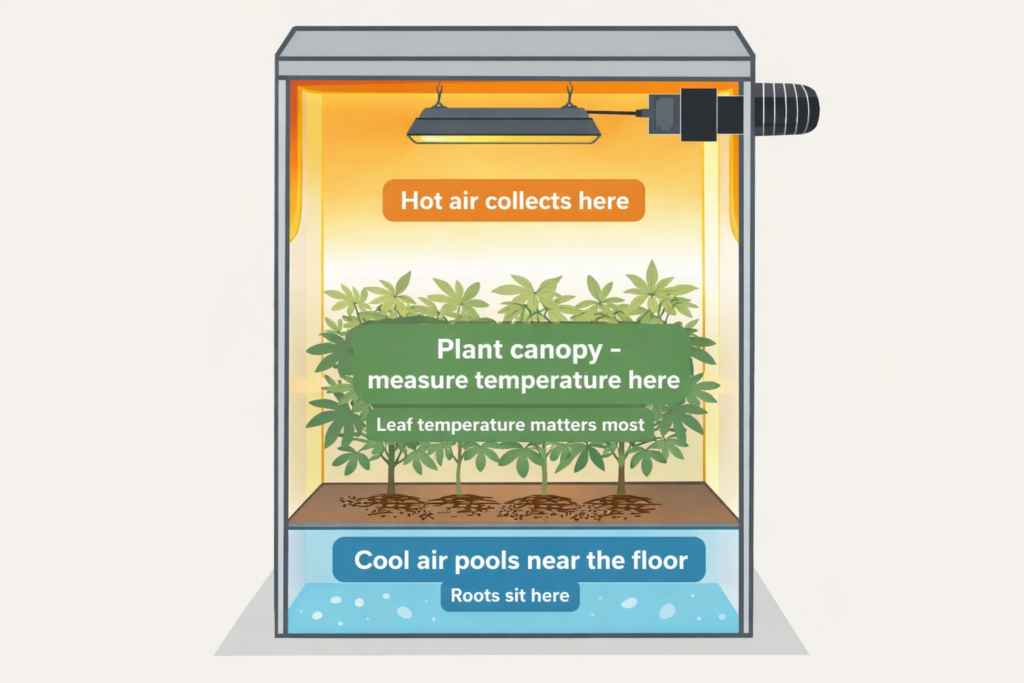
Why temperature readings at the top of a grow tent can be misleading.
Hot air rises, while cold air pools near the floor — exactly where roots sit.
⚠️ Common grow tent temperature mistakes
- Oversizing lights for the tent
- Undersizing extraction fans
- Ignoring winter conditions
- Chasing exact numbers instead of stability
- Heating the tent instead of the surrounding room
If temperature problems persist, they’re often linked to moisture and airflow — something which we cover in our article on Heat and Humidity in a Grow Tent.
🌡️ Grow Tent Winter Survival Checklist (UK)
If you’re growing through winter, this quick checklist will prevent most temperature-related issues before they start:
✔ Run lights during the coldest hours (often overnight)
✔ Avoid placing tents directly on cold concrete floors
✔ Check night-time temperatures, not just daytime highs
✔ Heat the room where possible, not just the tent
✔ Always use thermostats with heaters
✔ Avoid overpowered extraction in winter
✔ Watch for condensation and cold root zones
🔄 Temperature, humidity and ventilation work together
Temperature doesn’t exist in isolation.
- Warm air holds more moisture
- Cold air increases condensation risk
- Poor airflow magnifies both problems
That’s why temperature control works best when combined with proper ventilation and humidity management — not treated as a standalone issue.